Skip to content
Seniors Secrets

Secrets Every American 60+ Should Know

Seniors Secrets

Secrets Every American 60+ Should Know

  • Home
  • Medicare
    • Medicare Advantage
    • Benefits & Coverage
    • Prescription Drug Savings
    • Free Preventive Screenings
    • Medicare Appeals
    • Medicare Guides Hub
    • Free Medicare Checklist
  • Money & Benefits
  • Senior Health
    • Neuropathy
  • Nutrition
  • Fitness
  • About
  • Home
  • Medicare
    • Medicare Advantage
    • Benefits & Coverage
    • Prescription Drug Savings
    • Free Preventive Screenings
    • Medicare Appeals
    • Medicare Guides Hub
    • Free Medicare Checklist
  • Money & Benefits
  • Senior Health
    • Neuropathy
  • Nutrition
  • Fitness
  • About
Close

Search

A pair of walking shoes on a sidewalk
Balance & Fitness

How Many Steps a Day Should Seniors Walk? What the Research Supports

Photo of Khasim Basha Shaik
By Khasim Basha Shaik
May 2, 2026 4 Min Read
0

You do not need 10,000 steps a day after 65. That round number came from a Japanese pedometer marketing campaign decades ago, not from a medical guideline. For older adults, studies that track health outcomes tend to show benefits starting around 4,000 steps a day, with more benefit as you move toward 6,000–8,000, as long as you build up gradually and can walk safely.

Think of steps as one way to hit the broader federal recommendation for older adults: at least 150 minutes a week of moderate activity (brisk walking counts) plus muscle-strengthening work on 2 or more days, and activities that help with balance. The CDC’s guidelines for older adults add one line I wish more people heard: if you can’t meet the recommendations, be as active as your abilities and conditions allow. Some activity is better than none.

I’m a researcher comparing official guidance for readers, not a doctor or physical therapist. Match any new walking plan to your own health history.

Table of Contents

Toggle
  • A practical step target
  • How to make walking stick
  • Steps vs. intensity: which matters more?
  • When to get clearance first
  • A sample week that builds steps without burning out
  • Common questions
    • Is 10,000 steps a day necessary for seniors?
    • How many steps should a 70-year-old walk?
    • Does walking count as moderate exercise?
    • Can I break my steps into short walks?
    • What if I can’t walk much?
  • Related guides

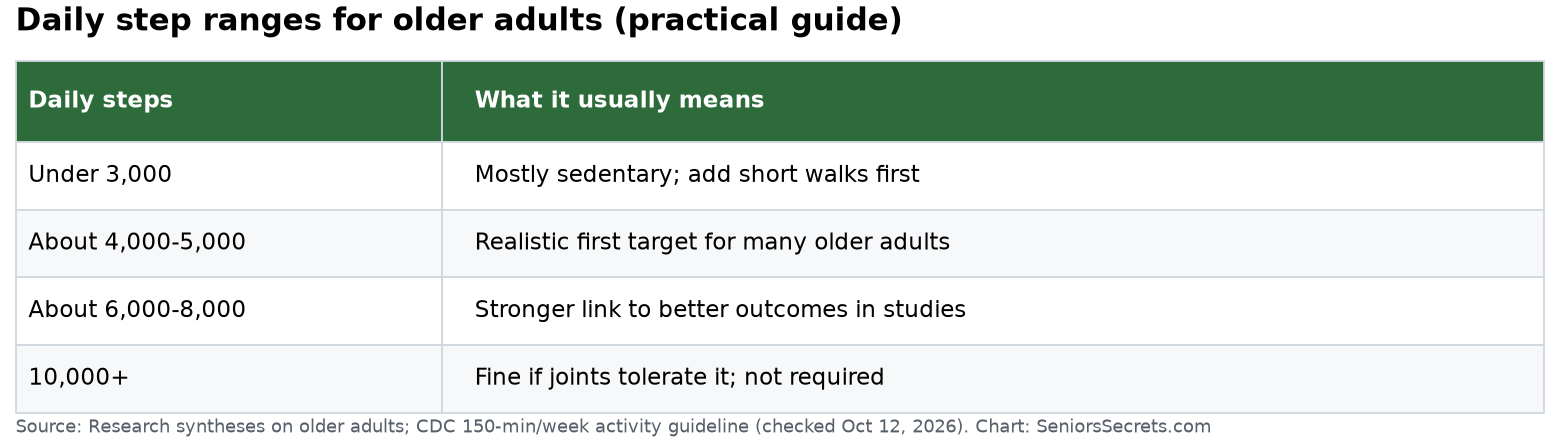
A practical step target

Table of daily step ranges for older adults with what each level typically means for health
Start where you are and add a few hundred steps a week. Chart: SeniorsSecrets.com.
Daily steps (rough guide)What it usually means
Under 3,000Mostly sedentary; aim to add short walks first
About 4,000–5,000A realistic first target for many older adults
About 6,000–8,000Stronger association with better health outcomes in studies of older adults
10,000+Fine if you enjoy it and your joints tolerate it; not a requirement

If you currently walk 2,000 steps a day, jumping to 8,000 next week is a recipe for sore knees. Add 500–1,000 steps a day each week until you settle on a number you can keep.

How do steps map to the 150-minute guideline? A brisk 30-minute walk is often roughly 3,000–4,000 steps, depending on height and pace. Five of those across the week get you near both targets without obsessing over a single daily number.

How to make walking stick

  1. Break it up. Three 10-minute walks count. Short bouts after meals are easier to keep than one long session.
  2. Use what you already do. Park farther away, walk while on phone calls, or take a short loop after meals.
  3. Check your footwear and route. Smooth sidewalks, good lighting and supportive shoes cut fall risk. CDC’s STEADI resources emphasize home and outdoor safety for walkers.
  4. Add strength and balance. Steps alone don’t cover everything. Pair walking with chair exercises, balance work, or the routines in my exercises over 75 guide.
  5. Track simply. A phone, watch or $15 pedometer is enough. The number matters less than the habit.
  6. Have a weather plan. Mall walking, indoor tracks and covered parking garages keep you moving when ice or heat make outdoor walks unsafe.

Walking shoes on a sidewalk
Comfortable shoes and a familiar route matter more than hitting a round number. Photo: Courtney Carmody, CC BY-SA 2.0.

Steps vs. intensity: which matters more?

Step counts are easy to understand, but intensity still matters. A slow shuffle around the house adds steps; a brisk walk that makes conversation slightly harder counts as moderate activity toward the 150-minute weekly goal. If arthritis limits speed, longer easy walks still help with endurance and mood — just don’t assume every step is equal.

Pace cues that work without a heart-rate monitor:

  • You can talk in full sentences but not sing comfortably → roughly moderate.
  • You need to stop to finish a sentence → too hard; slow down.
  • You could easily chat and laugh for minutes → pick up the pace a little if your joints allow.

When to get clearance first

Talk to your doctor before raising your walking goal if you have unstable heart disease, recent surgery, dizziness, chest pain with activity, or a history of falls. If you have diabetes, neuropathy or joint replacements, start with shorter walks and supportive shoes; my guides on exercise with diabetes and exercises after knee replacement cover the adjustments.

If you can’t walk much at all, chair-based movement, water exercise and physical therapy still count. See my chair exercises and water aerobics guides rather than forcing a step target that isn’t safe.

A sample week that builds steps without burning out

DayWalkingExtra
MonTwo 15-minute neighborhood loops5 minutes of balance near a counter
TueOne 20-minute mall walkChair strength (sit-to-stand, wall push-ups)
WedThree 10-minute after-meal walksEasy stretch
ThuRest or a short strollStrength again
Fri25–30 minutes outdoors or indoorsBalance
SatWalk with a friend or family memberWhatever pace you can talk through
SunOptional easy 10 minutesSo you never go two full days without moving

Adjust the minutes down if you’re recovering from illness or joint pain. Consistency beats a heroic Saturday.

Common questions

Is 10,000 steps a day necessary for seniors?

No. It’s a popular target, not a medical requirement. Many older adults get meaningful benefit from fewer daily steps, built up gradually.

How many steps should a 70-year-old walk?

A common research-backed range is roughly 4,000 to 8,000 steps a day, adjusted for your fitness and health. Start from your current average and add slowly.

Does walking count as moderate exercise?

Brisk walking that raises your breathing and heart rate counts toward the 150 minutes a week of moderate activity recommended for older adults.

Can I break my steps into short walks?

Yes. Several short walks add up and are often easier to stick with than one long session.

What if I can’t walk much?

Chair-based movement, water exercise and physical therapy still count. See my chair exercises and water aerobics guides.


Written by Khasim Basha Shaik. I research senior health topics and compare official sources for readers. I’m not a doctor or physical therapist. This article summarizes federal activity guidance and published research and isn’t medical advice. Last reviewed October 12, 2026.

Khasim Basha Shaik
Founder & editor · Researcher, not a licensed agent

Khasim Basha Shaik is the founder and editor of Seniors Secrets. He spends his time digging through Medicare plan documents, government sources and the fine print, so readers can compare their options without the jargon. Every guide here links to its sources, and we update posts when the rules or numbers change. Seniors Secrets offers research and education, not licensed insurance or medical advice, so please confirm plan details with Medicare.gov or a licensed advisor before enrolling. About Seniors Secrets →

Related guides

Balance & Fitness
Heart Failure Exercises for Seniors: 8 Safe Moves Cardiologists Recommend (2026)
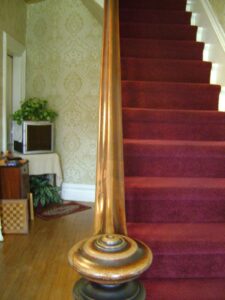
Wooden staircase with a sturdy handrail and banister in a home
Balance & Fitness
Stair Climbing for Seniors: What the Heart Research Shows, How Many Flights Count, and How to Start Safely
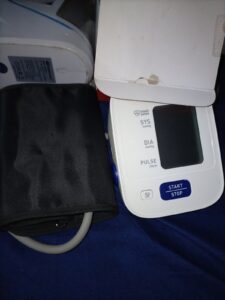
An automatic home blood pressure monitor with its arm cuff
Balance & Fitness
Wall Sits for Seniors: What the Blood Pressure Research Shows and How to Start Safely

Tags:

daily steps elderlyhow many steps seniorssenior exercise guide 2026senior fitness 2026steps per day seniors 2026walking longevity seniorswalking seniors health benefits
Photo of Khasim Basha Shaik
Author

Khasim Basha Shaik

Khasim Basha Shaik is the founder and editor of Seniors Secrets. He spends his time digging through Medicare plan documents, government sources and the fine print, so readers can compare their options without the jargon. Every guide here links to its sources, and we update posts when the rules or numbers change. Seniors Secrets offers research and education, not licensed insurance or medical advice, so please confirm plan details with Medicare.gov or a licensed advisor before enrolling.

Follow Me
Other Articles
Plate method diagram: half non-starchy vegetables, a quarter lean protein and a quarter high-fiber carbohydrates
Previous

Best Foods for Neuropathy: What to Eat (and Avoid) to Support Nerve Health After 60

Next

Best Affordable Hearing Aids for Seniors 2026: From $99

No Comment! Be the first one.

    Leave a Reply Cancel reply

    Your email address will not be published. Required fields are marked *

    Khasim Basha Shaik
    Founder & editor · Researcher, not a licensed agent

    Khasim Basha Shaik is the founder and editor of Seniors Secrets. He spends his time digging through Medicare plan documents, government sources and the fine print, so readers can compare their options without the jargon. Every guide here links to its sources, and we update posts when the rules or numbers change. Seniors Secrets offers research and education, not licensed insurance or medical advice, so please confirm plan details with Medicare.gov or a licensed advisor before enrolling.

    About Seniors Secrets →

    Popular guides

    • Table of Social Security and SSI payment dates from October 2026 through December 2027, by birthday group, SSI and 3rd-of-month recipientsSocial Security Payment Dates for 2026 and 2027: Your Exact Day by Birthday, SSI Dates and Holiday Shifts
    • Senior woman reviewing Medicare Part D 2027 plan options and prescription costs at a kitchen tableMedicare Part D 2027: New $2,400 Cap, Costs & Enrollment
    • Bar chart of 2026 monthly income limits for QMB, SLMB and QI for a single person and a married coupleMedicare Savings Programs 2026: QMB, SLMB, QI and QDWI Limits, What They Pay and How to Apply
    • Senior couple at home checking finance on credit card from aboveMedicare Plan G 2027 Rates: How Premiums Work and How to Shop by ZIP
    • Older woman talking on the phone while sitting at a table with a laptop10 Medicare Benefits Most Seniors Never Claim (2027 Open Enrollment Guide)

    Browse topics

    • Senior Health129
    • Nutrition62
    • Medicare47
    • Balance & Fitness44
    • Medicare Benefits43
    • Financial Assistance for Seniors41
    • Neuropathy17
    • Senior Tips14
    • Free Preventive Screenings12
    • Medicare Advantage10

    Quick Links

    • Privacy Policy
    • Terms & Conditions
    • About Us
    • Contact Us
    • Medical Disclaimer
    • Editorial Guidelines
    Copyright 2026 — Seniors Secrets. All rights reserved.