Skip to content
Seniors Secrets

Secrets Every American 60+ Should Know

Seniors Secrets

Secrets Every American 60+ Should Know

  • Home
  • Medicare
  • Senior Health
  • Balance & Fitness
  • Nutrition
  • Medicare Benefits
  • Neuropathy
  • Home
  • Medicare
  • Senior Health
  • Balance & Fitness
  • Nutrition
  • Medicare Benefits
  • Neuropathy
Close

Search

Balance & Fitness

Best Exercises for Seniors Over 75: 8 Doctor-Approved Moves + 2026 Science

By Margaret Collins
May 19, 2026 10 Min Read
0

Table of Contents

  • Why Exercise Becomes Even More Critical After 75
  • Best Exercises for Seniors Over 75: The Essential 8
  • What the 2026 Research Says About Exercise at 75+
  • Sample Weekly Exercise Schedule
  • Exercises to Approach With Caution After 75
  • How to Track Your Progress After 75
  • Medicare Benefits That Support Exercise After 75
  • Frequently Asked Questions

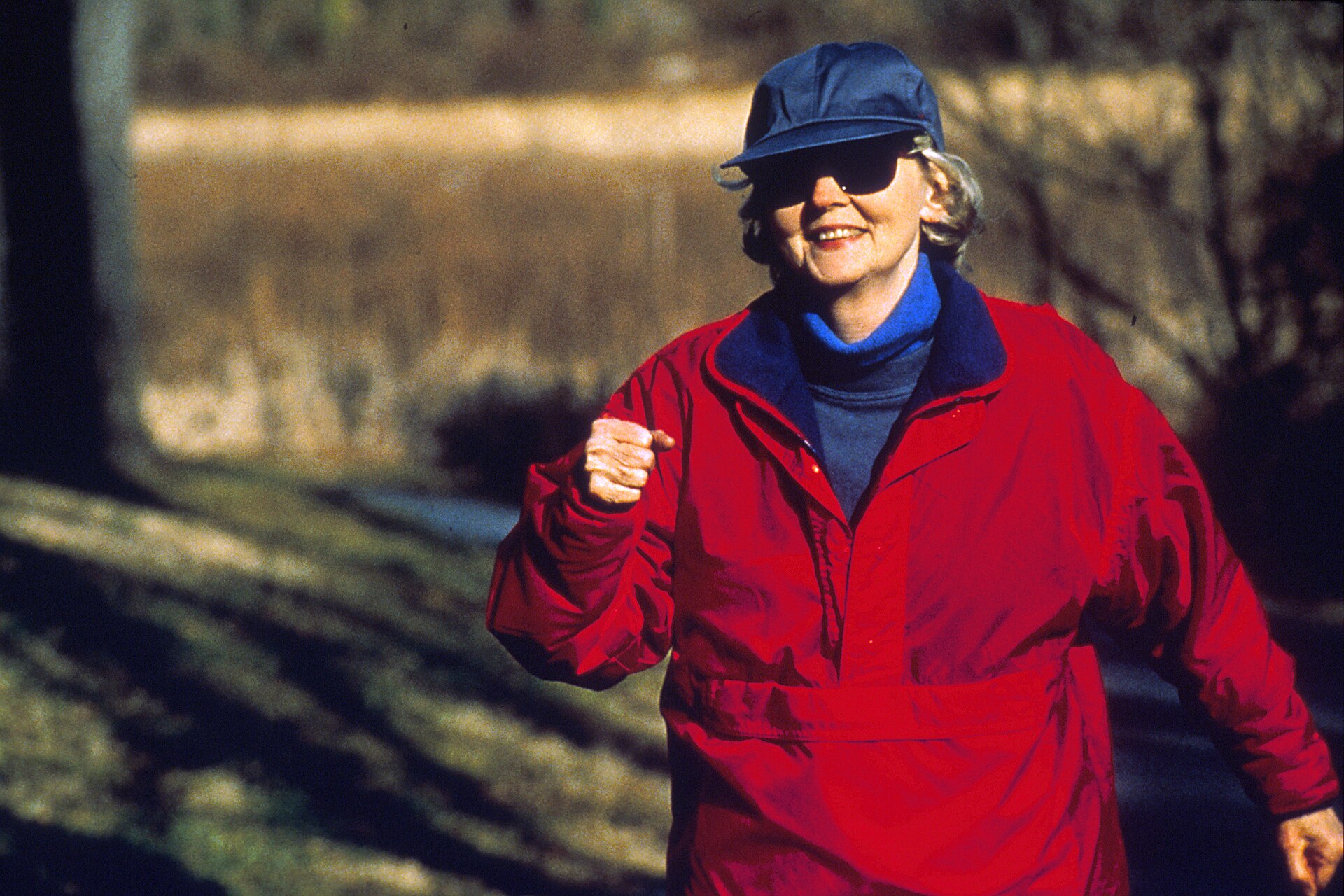
The best exercises for seniors over 75 are quite different from what works at 65 — and understanding that difference is critical for safety and results. After age 75, the body faces accelerated muscle loss, increased fall risk, reduced cardiovascular capacity, and lower bone density. The good news: research in 2026 confirms that the right exercise program can reverse many of these trends, preserve independence, and significantly extend both lifespan and healthspan. Here is the doctor-approved guide for adults 75 and older.

Why Exercise Becomes Even More Critical After 75

According to AARP and leading exercise researchers, adults over 75 experience accelerated physical decline without regular exercise. Muscle mass falls at 1 to 2 percent per year, cardiovascular capacity drops up to 10 percent per decade, and fall risk increases sharply compared to the 65-to-74 age group. The critical difference at 75-plus is not whether to exercise — it is how. Intensity must be moderated, recovery time honored, and high-impact activities avoided. Consistency beats intensity at this stage of life.

Best Exercises for Seniors Over 75: The Essential 8

1. Sit-to-Stand (Functional Strength)

The ability to rise from a chair without using your arms is one of the strongest predictors of longevity and functional independence in older adults. From a sturdy chair, rise slowly (taking 3 to 4 seconds), stand fully, then lower back down with control. Begin with 8 to 10 repetitions twice daily. This single exercise trains the quadriceps, glutes, and core simultaneously.

2. Tai Chi (Balance and Fall Prevention)

Multiple studies show Tai Chi reduces fall risk by up to 47 percent in adults over 75. Its slow, flowing movements train balance, proprioception, and muscle coordination at the same time. A 2025 randomized controlled trial published in PLOS ONE confirmed that three Tai Chi sessions per week for 12 weeks significantly improved balance and cognitive function in adults 75 and older. The Tai Chi for Health Institute and SilverSneakers both offer programs designed specifically for older adults.

3. Water Walking and Aquatic Exercise (Low-Impact Cardio)

Water reduces body weight by up to 90 percent through buoyancy, making aquatic exercise ideal for seniors with joint pain, arthritis, or osteoporosis. Walking in waist-deep water for 20 minutes three times per week provides meaningful cardiovascular and strength benefits without the injury risk of land-based exercise. Many Medicare Advantage plans with SilverSneakers cover pool access at no additional cost.

4. Resistance Band Training (Strength and Bone Density)

Resistance bands are the ideal strength tool for adults over 75. They build muscle and bone density, can be used seated or standing, and are adjustable to any fitness level. Key exercises include seated rows, bicep curls, overhead press, seated leg extensions, and ankle strengthening. Aim for 2 sets of 10 to 12 repetitions per exercise, two to three days per week with at least one rest day between sessions.

5. Walking With Purpose (Cardiovascular Health)

Walking remains the most accessible and sustainable exercise for seniors over 75. Research shows benefits plateau earlier for older adults, so aim for 7,000 to 8,000 steps daily rather than the often-cited 10,000. Walk on level, even surfaces. Use properly fitted supportive shoes. Consider trekking poles or a rollator walker if balance is a concern — they actively reduce fall risk and engage upper body muscles.

6. Single-Leg Balance Practice (Fall Prevention)

Stand on one foot near a kitchen counter or sturdy chair. Start with 10 seconds per leg; build toward 30 seconds. Once comfortable, close your eyes while balancing — a significantly more powerful proprioceptive challenge. Done daily, this simple exercise can dramatically reduce fall risk within 8 weeks by retraining your balance system and strengthening stabilizing muscles in the feet and ankles.

7. Chair Yoga (Flexibility and Pain Relief)

Flexibility declines rapidly after 75, contributing to stiffness, pain, and injury. Chair yoga maintains flexibility without requiring floor work, making it safe for seniors with arthritis, hip replacements, or balance concerns. A Florida State University study found chair yoga reduced chronic pain by 55 percent in seniors with osteoarthritis. Practice 3 to 5 times per week for 15 to 20 minutes for best results.

8. Diaphragmatic Breathing (Often Overlooked)

Deep breathing exercises improve lung capacity, lower blood pressure, reduce cortisol, and enhance sleep quality. Inhale deeply through the nose for 4 counts, hold briefly, then exhale slowly through pursed lips for 6 to 8 counts. Practice 5 to 10 minutes daily, seated comfortably. This is especially valuable for seniors with COPD or anxiety, and can be paired with any cool-down period after other exercise.

Sample Weekly Exercise Schedule

What the 2026 Research Says About Exercise Intensity at 75+

One of the most consequential findings from the past two years of exercise physiology research is that the traditional recommendation of “moderate intensity” for all older adults significantly underestimates what adults over 75 can safely achieve — and needs to be individualized. A 2025 systematic review in Age and Ageing analyzing 34 randomized controlled trials found that adults aged 75 to 85 who performed supervised resistance training at 70 to 80 percent of their one-repetition maximum gained an average of 1.1 kg of lean mass over 16 weeks and improved chair-stand test performance by 28 percent — substantially better than lower-intensity protocols. The mechanism is straightforward: sarcopenia (age-related muscle loss) is driven by anabolic resistance, and this requires a sufficient mechanical stimulus to overcome.

For cardiovascular exercise, VO₂max — the gold standard of aerobic capacity — declines at roughly 10 percent per decade after age 25, and this rate accelerates after 70. However, a 2024 study in JAMA Network Open following 2,110 adults aged 70 to 85 found that those who maintained even 150 minutes of moderate-intensity walking per week preserved VO₂max at levels associated with a 34 percent lower all-cause mortality compared to sedentary peers. The practical implication: consistency over intensity is the primary driver of cardiovascular protection in this age group.

Bone density response to exercise in adults over 75 is slower but measurable. Weight-bearing and resistance exercises stimulate osteoblast activity via mechanical loading of bone. A 2023 Cochrane review confirmed that 12 to 24 months of weight-bearing exercise reduces vertebral fracture risk by 14 percent. This effect is augmented by adequate calcium (1,200 mg/day) and vitamin D (800 to 1,000 IU/day), both of which are frequently deficient in adults over 75 due to reduced dietary intake and limited sun exposure.

How to Track Your Progress After 75: 5 Clinical Measures

Objective progress tracking is critical for maintaining motivation and adjusting your program safely. Clinicians use several validated tools that you can apply at home:

TestHow to Do ItTarget (Avg. for 75+)Why It Matters
30-Second Chair StandCount sit-to-stands in 30 sec11–14 repsLower-body strength & fall risk
4-Meter Gait SpeedTime a 4-meter walk<5.3 secondsPredicts hospitalization & mortality
Single-Leg BalanceHold one-leg stance, eyes open10+ secondsFall risk & vestibular function
6-Minute Walk TestDistance walked in 6 minutes350–450 metersCardiovascular endurance
Grip StrengthHandgrip dynamometer>26 kg (men), >16 kg (women)Surrogate for full-body muscle mass

Retest every 8 to 12 weeks. If gait speed drops below 0.8 meters per second (5 seconds over 4 meters), this is a clinically significant threshold associated with sharply increased frailty risk — discuss with your physician or physical therapist immediately.

Sample Weekly Exercise Schedule for Seniors Over 75

DayActivityDuration
MondayWalking + single-leg balance20 min walk + 5 min balance
TuesdayResistance bands + chair yoga20 min strength + 15 min yoga
WednesdayTai Chi or aquatic exercise30 minutes
ThursdayRest + deep breathing10 min breathing
FridaySit-to-stands + walking3 sets + 20 min walk
SaturdayAquatic exercise or Tai Chi30 minutes
SundayLight stretching + breathing20 minutes

Exercises to Approach With Caution After 75

  • High-impact aerobics or jumping: Significantly increases fracture risk in those with osteoporosis
  • Heavy free weights without supervision: Balance challenges make dropped weights a fall hazard
  • Hot yoga: Heat regulation is impaired in older adults; hyperthermia risk is elevated
  • Running for beginners over 75: Transition to brisk walking first; joint and fracture risk is much higher
  • Unsupported floor exercises: Getting up and down from the floor safely becomes increasingly difficult; use chairs or wall support

Medicare Benefits That Support Exercise After 75

Medicare provides several avenues to support your exercise program. SilverSneakers is available through many Medicare Advantage plans, providing free gym access and senior-specific fitness classes. Medicare Part B covers physical therapy for medically necessary balance, strength, and mobility goals — an excellent starting point after a fall or surgery. Cardiac rehabilitation provides up to 36 supervised exercise sessions for qualifying cardiac conditions. Finally, the free Annual Wellness Visit under Part B is the perfect opportunity to discuss a safe exercise plan with your doctor.

Important: Before beginning any new exercise program, especially after age 75, consult your physician or physical therapist. They can identify exercise-limiting conditions, recommend appropriate modifications, and refer you to medically supervised programs when needed.

Frequently Asked Questions

How many times per week should a 75-year-old exercise?

Current guidelines from the American College of Sports Medicine recommend adults over 75 aim for at least 150 minutes of moderate aerobic activity per week (e.g., five 30-minute walks), plus muscle-strengthening activities on 2 to 3 non-consecutive days. If you have not been exercising regularly, starting with three 15-minute walks per week and building gradually is both safe and evidence-supported.

What is the single best exercise for fall prevention in adults over 75?

Tai Chi has the strongest evidence base for fall prevention in this age group, with multiple randomized controlled trials showing 43 to 47 percent reduction in fall frequency. However, fall prevention is most effective as a multicomponent program combining balance training (Tai Chi or single-leg stance), strength training (sit-to-stands, resistance bands), and gait training — no single modality addresses all fall risk factors simultaneously.

Is it safe to start exercising at 75 if I have never worked out?

Yes — starting exercise at any age provides measurable health benefits, and adults who begin resistance or aerobic training in their 70s show significant improvements in strength, balance, and cardiovascular function. The key is to start at a low intensity and progress slowly. Your physician can perform a pre-exercise evaluation and refer you to a certified senior fitness specialist or physical therapist if you have multiple chronic conditions.

Should seniors over 75 do strength training or just cardio?

Both are essential, but strength training becomes increasingly important with age. Sarcopenia (muscle loss) and dynapenia (strength loss) are independent risk factors for falls, fractures, hospitalizations, and early mortality. Cardio preserves heart and lung function, but strength training directly counters the loss of muscle mass and bone density that accelerates after 75. The ideal program includes 3 to 4 days of aerobic activity plus 2 days of resistance training per week.

Does Medicare cover exercise programs for seniors over 75?

Medicare covers several exercise-related benefits: physical therapy under Part B for medically necessary strength, balance, or mobility goals (no annual cap since 2018); cardiac rehabilitation (up to 36 sessions) after qualifying cardiac events; and pulmonary rehabilitation for COPD. SilverSneakers fitness program membership is available through many Medicare Advantage plans at no additional cost. The free Annual Wellness Visit under Medicare Part B is also the right place to request an exercise referral.

Sources

  • AARP — The 4 Exercises Every Adult Over 50 Should Do
  • NIH/PubMed — Tai Chi, Balance, and Cognitive Function in Older Adults (RCT)
  • CDC — Fall Prevention for Older Adults

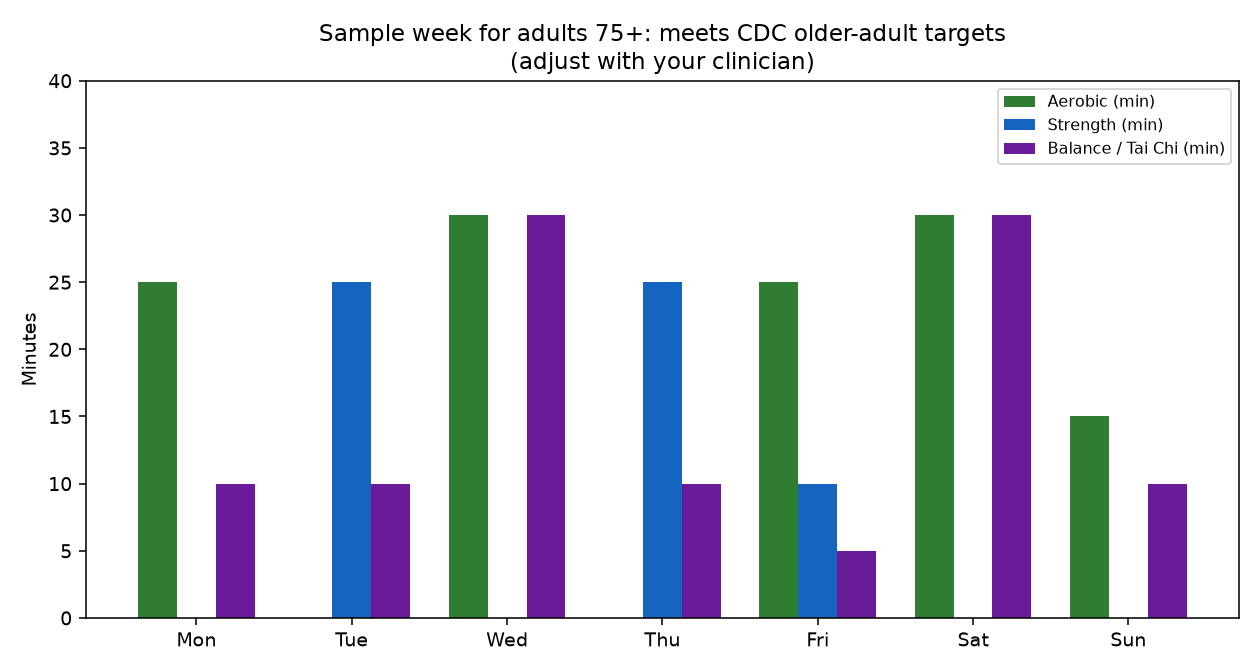
How Often Should You Exercise After 75? A Weekly Plan

The exercise targets for seniors over 75 are the same as the federal guidelines for all older adults, simply applied with more patience: about 150 minutes of moderate aerobic activity per week, muscle-strengthening on two or more days, and — uniquely important after 75 — dedicated balance training several times a week to cut fall risk. The sample week below shows how to fit all four pillars (aerobic, strength, balance, and flexibility) together without overdoing any single day.

DayFocusExample
MondayAerobic + balance20–30 min brisk or Nordic walking; single-leg stands
TuesdayStrengthSit-to-stands, wall push-ups, resistance bands
WednesdayFlexibility + light aerobicGentle stretching; easy walk or chair yoga
ThursdayStrengthStep-ups, heel raises, seated rows with band
FridayAerobic + balanceWalking or pool workout; heel-to-toe walking
SaturdayBalance + mobilityTai chi or balance drills
SundayRest or gentle stretchLight mobility, recovery

Two principles make this sustainable after 75. First, progress slowly — add a few minutes or one extra repetition only when the current level feels comfortable; the goal is consistency over months, not a hard first week. Second, do not skip balance work, which is the pillar most often neglected and the one most directly tied to preventing the falls and hip fractures that threaten independence. If 30 continuous minutes is too much, three 10-minute sessions across the day deliver the same benefit.

One safety note specific to this age group: always begin with a 5-minute warm-up of easy movement to loosen joints and raise your heart rate gradually, and stop any exercise that causes chest pain, dizziness, or sharp joint pain. If you have heart disease, recent surgery, or significant arthritis, ask your doctor or a physical therapist to tailor this plan to you before you begin.

For low-impact ways to hit your aerobic minutes, two options pair especially well with this plan: Nordic walking, a full-body workout with built-in stability, and a structured daily walking routine geared to seniors. To round out the balance pillar, see our balance exercises for seniors over 70.

Related Articles You May Find Helpful

  • Senior Fitness Guide 2026: Best Exercises for Healthy Aging & Fall Prevention
  • Fall Prevention for Seniors 2026: 10 Proven Strategies That Work
  • 10 Stretching Exercises for Seniors 2026: Stay Flexible
  • Chair Yoga for Seniors 2026: 8 Seated Poses for Pain Relief
  • Aquatic Exercise for Seniors 2026: Low-Impact Pool Workouts
  • Sarcopenia Warning: Why Every Senior Needs Strength Training in 2026

Tags:

balance exercises seniorsbest exercises seniors over 75exercise seniors over 75 2026fall prevention exercise seniorsfitness elderly 2026seniors exercise guide 2026strength training seniors 75
Author

Margaret Collins

Margaret Collins is a Senior Health Expert and Certified Medicare Counselor (SHIP) with over 20 years of experience helping older Americans navigate Medicare, Social Security, and senior wellness. She holds a Master of Public Health (MPH) from Johns Hopkins University and has been quoted in AARP, Healthline, and The Wall Street Journal on issues affecting seniors. Margaret is dedicated to making complex health and benefits information accessible, accurate, and actionable for adults 65 and over.

Follow Me
Other Articles
Previous

Medicare Part B Late Enrollment Penalty 2026: Avoid Costly Mistakes

Next

Social Security Benefits Calculator 2026: Maximize Your Check

No Comment! Be the first one.

    Leave a Reply Cancel reply

    Your email address will not be published. Required fields are marked *

    Recent Posts

    • Social Security Payments July 2026: 3 Checks & Exact Dates
    • Rowing Machine for Seniors 2026: Safe Full-Body Cardio
    • Cottage Cheese for Seniors 2026: Protein, Bones & Sleep
    • Mini-Stroke (TIA) in Seniors 2026: Warning Signs & 90-Day Risk
    • Does Medicare Cover Walk-In Tubs in 2026? The Real Answer

    Recent Comments

    No comments to show.

    Archives

    • July 2026
    • June 2026
    • May 2026
    • April 2026

    Categories

    • Balance & Fitness
    • Financial Assistance for Seniors
    • Free Preventive Screenings
    • Medicare
    • Medicare Advantage
    • Medicare Appeals
    • Medicare Benefits
    • Neuropathy
    • Nutrition
    • Prescription Drug Savings
    • Senior Health
    • Senior Tips

    Quick Links

    • Privacy Policy
    • Terms & Conditions
    • About Us
    • Contact Us
    Copyright 2026 — Seniors Secrets. All rights reserved.