Stair Climbing for Seniors: What the Heart Research Shows, How Many Flights Count, and How to Start Safely

Climbing stairs is a short burst of real exercise that most of us can find at home, at the library or in a parking garage. In a UK study of 458,860 adults, people who climbed 6 or more flights a day had about a 16% to 23% lower risk of heart disease and stroke than people who climbed none. A 2026 review of nine studies found stair climbing was linked to 39% lower risk of dying from cardiovascular disease.
These are observational studies, so they show a link rather than proof. Still, the message is practical: a few flights spread through the day count as exercise, and keeping the habit seems to matter. If stairs are hard on your knees or balance, there are safe ways to build up, which I cover below.
What the research found
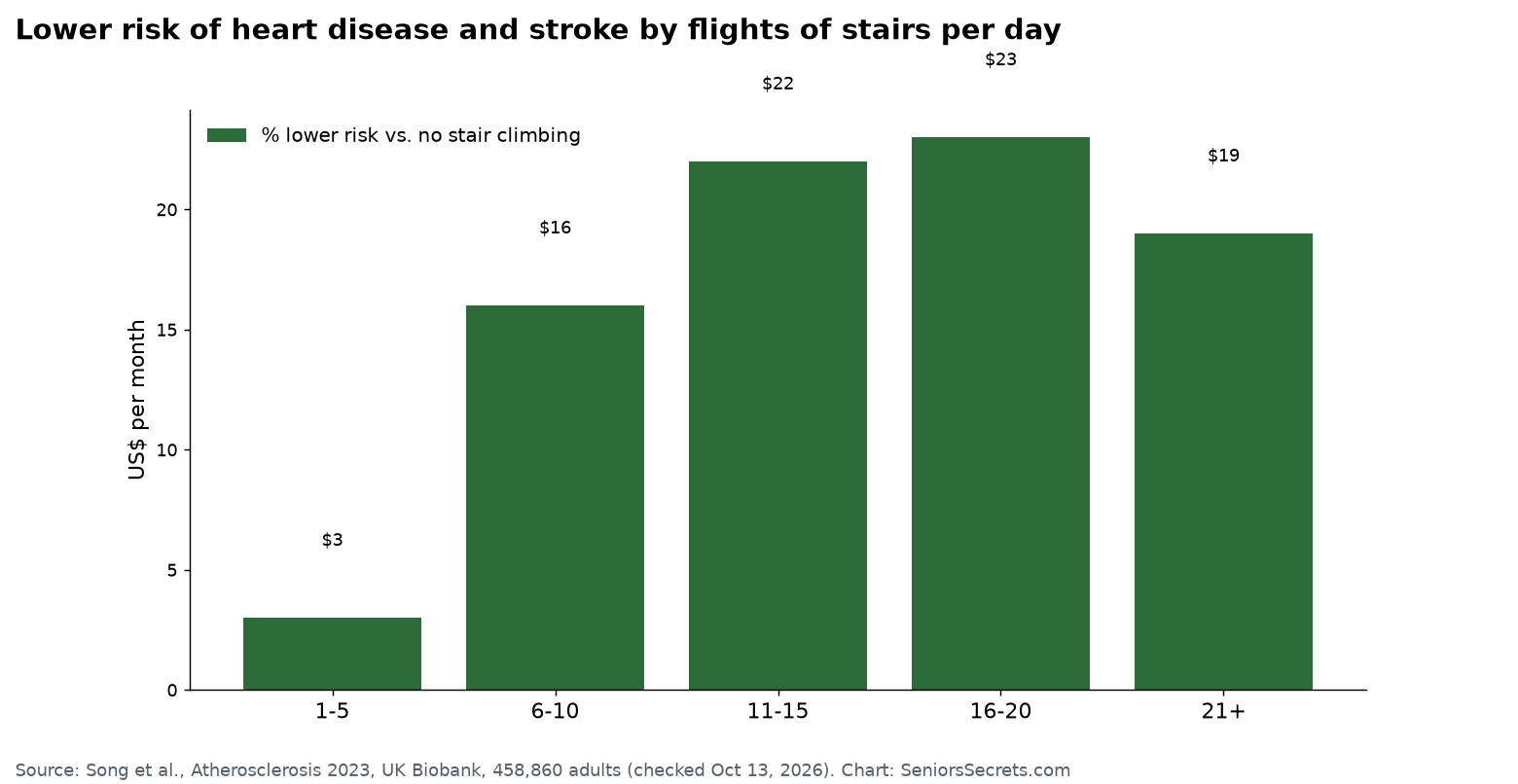
Researchers followed UK Biobank participants for a median of 12.5 years (Song et al., Atherosclerosis 2023). Compared with people who reported climbing no stairs:
| Flights per day | Risk of heart disease or stroke |
|---|---|
| 1–5 | About 3% lower (not statistically clear) |
| 6–10 | 16% lower |
| 11–15 | 22% lower |
| 16–20 | 23% lower |
| 21 or more | 19% lower |
A flight was about 10 steps. The authors concluded that more than five flights a day (about 50 steps) was linked to lower risk, even in people with a family history or higher genetic risk.
The finding I’d pay most attention to: people who climbed stairs at the start and then stopped five years later had a 32% higher risk than people who never climbed regularly. Benefits seem to depend on keeping at it.
A 2026 review and meta-analysis pooled nine studies with 480,479 people. Stair climbing was linked to 39% lower risk of cardiovascular death and 24% lower risk of death from any cause (Paddock et al., Am J Cardiovasc Drugs 2026).
Why stairs work
Going up stairs raises your heart rate fast, so even a minute or two counts as moderate to vigorous activity. It also strengthens the thigh and hip muscles you use to stand up from a chair and catch yourself if you trip. Those are the same muscles worked by wall sits and resistance band exercises.
How stairs fit the exercise guidelines
The CDC recommends older adults get 150 minutes a week of moderate activity, muscle-strengthening on 2 days a week, and activities that improve balance (CDC). Stairs can count toward the first two. A few ideas:
- Take the stairs for one or two floors instead of the elevator.
- At home, go up and down your stairs 3 to 5 times in a row, once or twice a day.
- Use a parking garage or stadium stairs for a longer session with rest breaks.
How to start safely
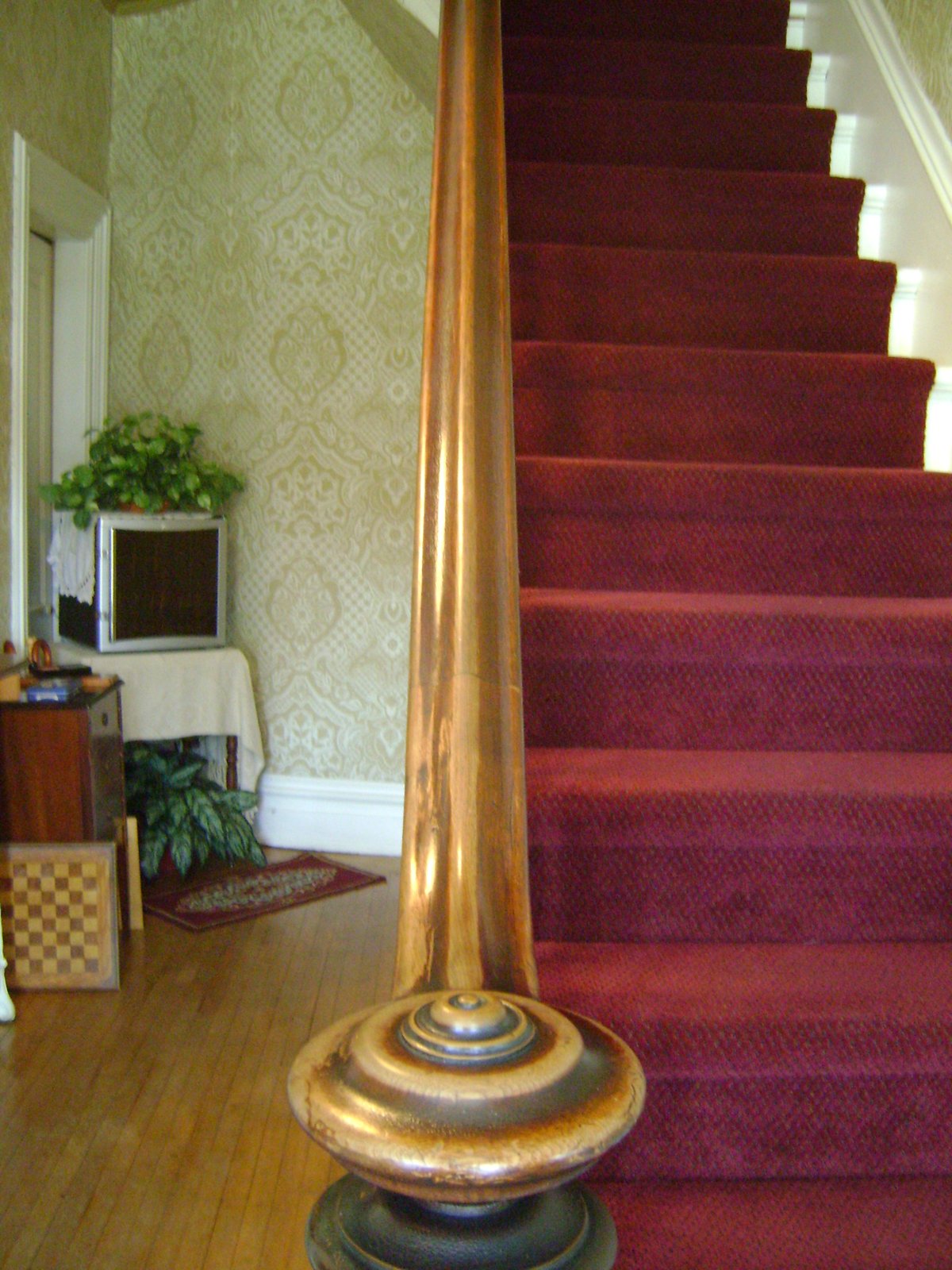
- Hold the handrail every time, going up and especially coming down. Most stair falls happen on the way down.
- Light the stairs well and keep them clear of shoes, bags and laundry.
- Wear shoes with a firm sole, not socks or loose slippers.
- Go at a pace where you can still talk. Pause on a landing if you need to.
- Start small: one flight, a few times a day, for the first week or two. Add a flight each week.
- Lead with your stronger leg going up and your weaker leg coming down. Physical therapists teach it as “up with the good, down with the bad.”
If stairs are hard on your knees or balance
- Step-ups on a single low step (4 to 6 inches) next to a counter or rail, 10 times per leg.
- Sit-to-stand from a sturdy chair, 10 times, which builds the same muscles. My chair exercise routine walks you through it.
- Balance work first, if you feel unsteady. See my balance exercises.
After a knee replacement, follow your therapist’s stair plan rather than any general advice.
Who should check with a doctor first
- You have chest pain, pressure or unusual shortness of breath with exertion. Stop and get checked.
- You have heart failure, a recent heart attack, or a heart rhythm problem.
- You’ve fallen in the past year, use a cane or walker, or have dizziness.
- You have severe knee or hip arthritis.
Pros and cons of stairs as exercise
| Pros | Cons |
|---|---|
| Free and available in most homes and buildings | Fall risk, especially going down |
| Raises heart rate quickly, so short bouts count | Can aggravate knee arthritis |
| Builds leg strength used for everyday tasks | Hard to do if you’re very deconditioned |
| Easy to repeat through the day | Large studies show a link, not proof |
Common questions
How many flights of stairs a day is good for seniors?
In a study of 458,860 adults, climbing 6 or more flights a day (about 60 steps) was linked to 16% to 23% lower heart disease and stroke risk. Start with one flight and build up.
Is climbing stairs better than walking?
Stairs raise your heart rate faster and build more leg strength in less time. Walking is easier on joints and balance. Both count toward the 150 minutes a week the CDC recommends.
Is stair climbing safe for older adults?
For most people, yes, if you use the handrail, have good lighting and go at a comfortable pace. Check with a doctor first if you have chest pain, heart failure or a recent fall.
Is climbing stairs bad for your knees?
It can bother knees with arthritis, especially going down. Step-ups on one low step, chair stands, and leading with your stronger leg going up can help.
Does stopping stair climbing matter?
Yes. In the UK study, people who stopped climbing stairs had a 32% higher heart disease risk than people who never climbed regularly.
Written by Khasim Basha Shaik. I research health topics for older adults using peer-reviewed studies and CDC guidance. I’m not a doctor or physical therapist, and this isn’t medical advice. Last reviewed October 13, 2026.
Related guides