
No food or diet cures peripheral neuropathy. But diet affects several of its most common causes. High blood sugar is the leading cause of neuropathy in the U.S. Low vitamin B12 and heavy drinking damage nerves too. And a popular supplement, vitamin B6, can cause neuropathy when taken in high doses for a long time.
So the best “neuropathy diet” does a few practical things: it keeps blood sugar steady, supplies enough B12 and other B vitamins, limits alcohol, and supports your heart and blood vessels, which feed your nerves.
I’m a researcher, not a doctor or dietitian. This guide draws on the NIH and the National Institute of Diabetes and Digestive and Kidney Diseases (NIDDK). Work with your doctor to find the cause of your neuropathy. Diet supports treatment; it doesn’t replace it.
Why diet matters for nerve health
Blood sugar. According to the NIDDK, keeping blood glucose close to your target is the most important way to prevent diabetic nerve damage or keep it from getting worse. Diet is a big part of that.
B12. B12 deficiency causes numbness, tingling and balance problems, and it’s common after 60. Metformin and acid reducers raise the risk. See my guide to vitamin B12 deficiency.
Alcohol. Heavy drinking is directly toxic to nerves and drains B vitamins. Alcohol-related neuropathy can improve when drinking stops.
Blood vessels. Nerves depend on healthy circulation. Eating patterns that protect your heart, like the Mediterranean diet, support blood flow to nerves too.
Foods that help
1. Fish, especially fatty fish. Salmon, trout, sardines and canned light tuna provide B12, protein and omega-3 fats. Aim for two servings a week.
2. Eggs and dairy. Good B12 sources if you eat them. Choose lower-fat options if your cholesterol is a concern.
3. Fortified breakfast cereals and nutritional yeast. After 50, the NIH says it’s best to get most B12 from fortified foods or supplements, because they’re easier to absorb.
4. Leafy greens. Spinach, kale, collards and romaine supply folate and fiber with very little effect on blood sugar.
5. Beans, lentils and chickpeas. They provide fiber, plant protein and folate, and they digest slowly, which helps keep blood sugar steady.
6. Whole grains. Oats, barley, brown rice, quinoa and whole-wheat bread. Their fiber slows the rise in blood sugar compared with white bread and rice.
7. Nuts and seeds. Walnuts, almonds, flaxseed and chia seeds offer healthy fats and fiber. Keep portions to a small handful.
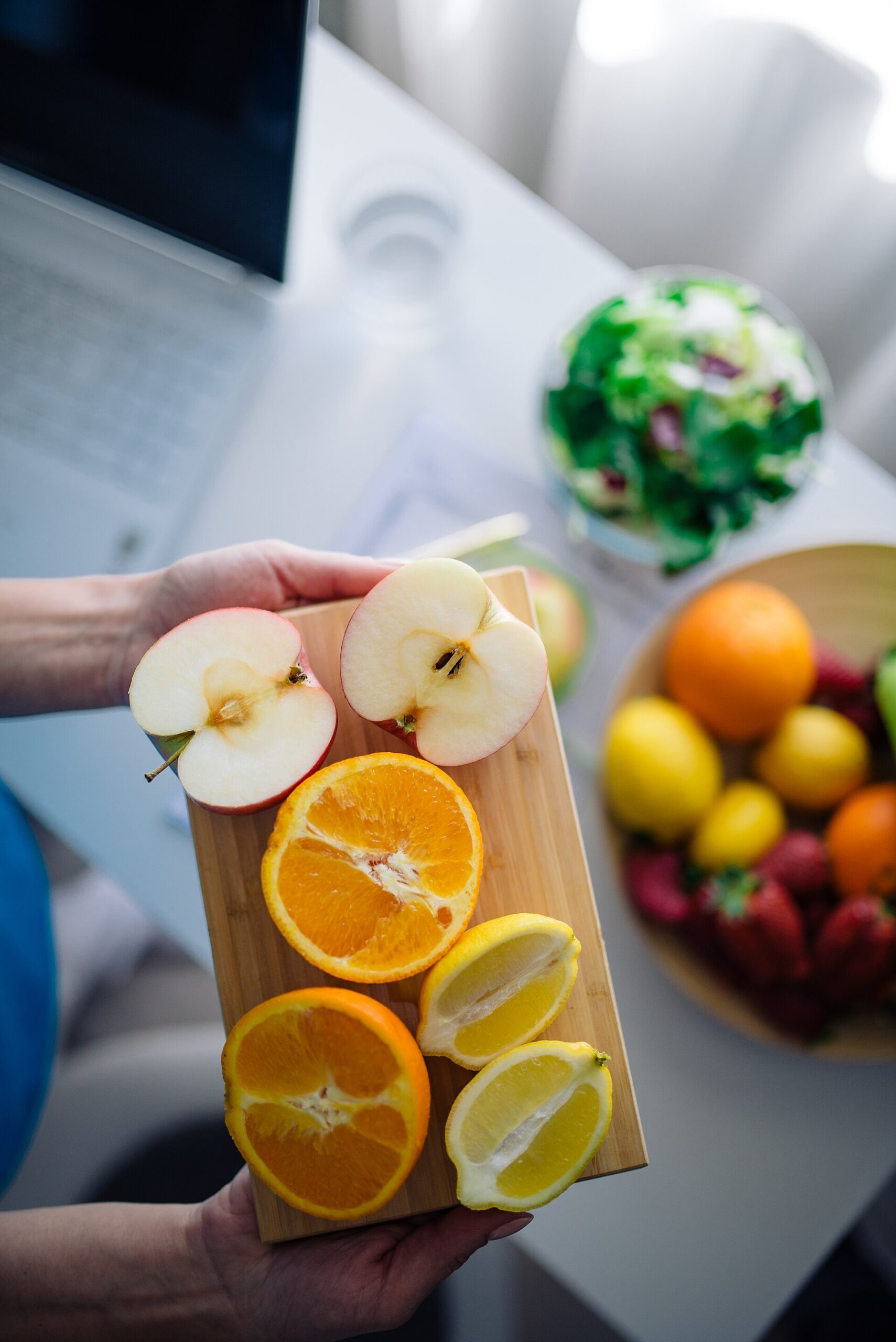
8. Berries and other whole fruit. Fruit is fine in reasonable portions, even with diabetes. Whole fruit beats juice.
9. Olive oil. It’s a heart-healthy fat for cooking and dressings.
What to limit or avoid
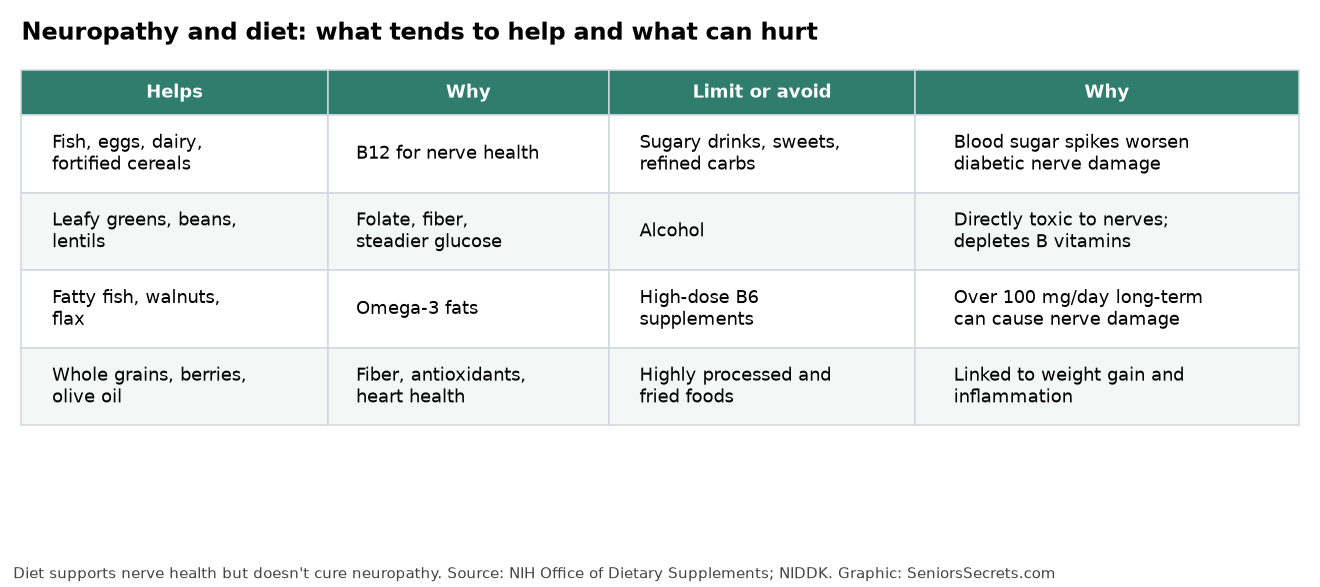
- Sugary drinks, sweets and refined carbs. Soda, sweet tea, juice, pastries and white bread spike blood sugar. If you have diabetes, these are the first things to cut.
- Alcohol. If you have neuropathy, ask your doctor whether you should stop drinking entirely.
- High-dose vitamin B6 supplements. This one surprises people. According to the NIH Office of Dietary Supplements, taking high amounts of B6 from supplements for a year or longer can cause severe nerve damage. The U.S. upper limit for adults is 100 mg a day, and Europe set a much lower limit of 12 mg in 2023. B6 hides in many “nerve support” products, B-complex pills and energy drinks, so check every label.
- Highly processed and fried foods. They add salt, unhealthy fat and calories, and they make weight and blood sugar harder to control.
- Too much salt, if you have high blood pressure.
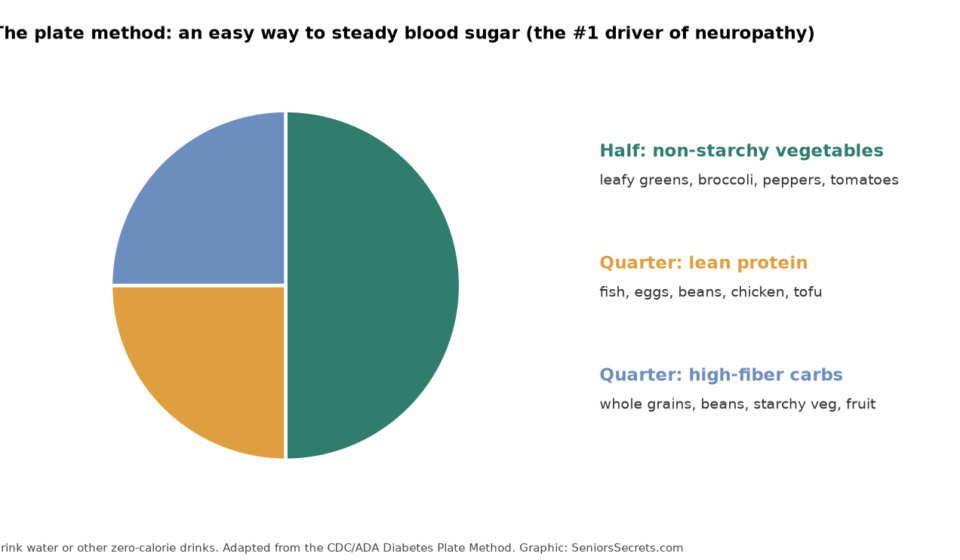
The plate method: an easy daily framework
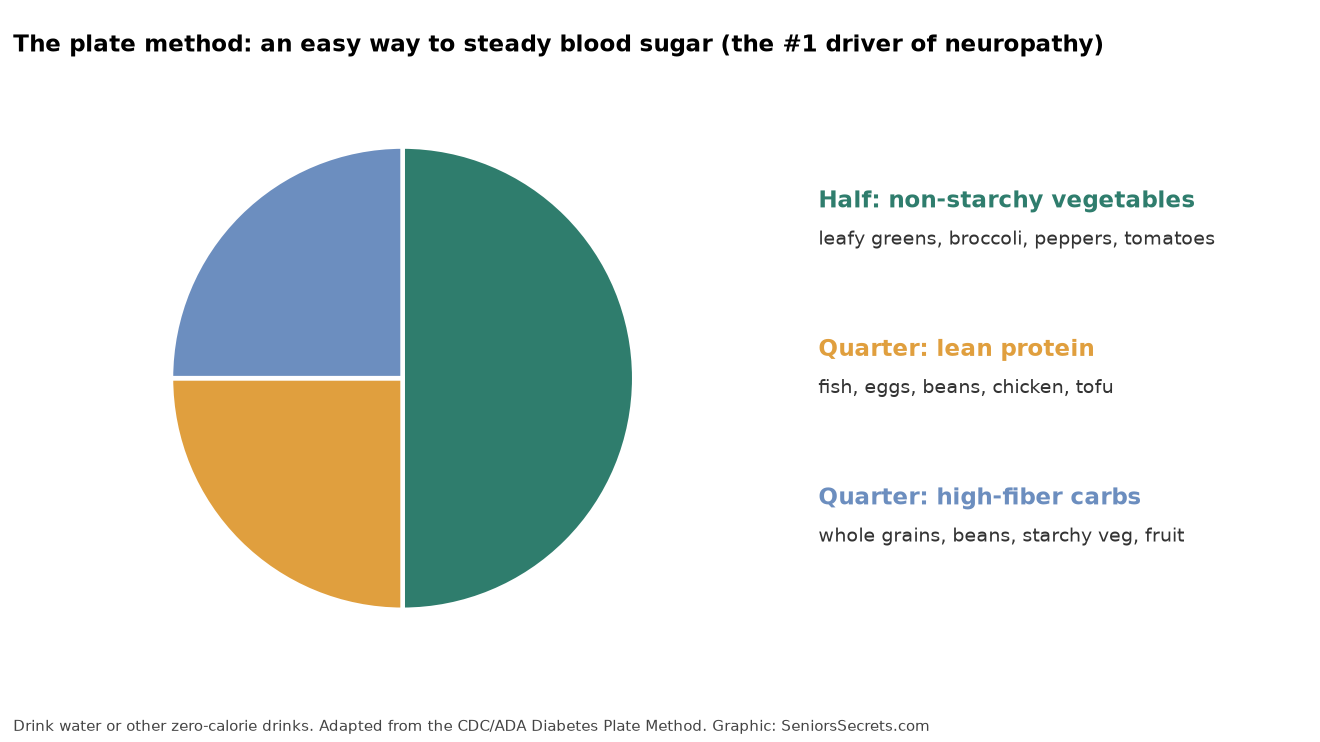
You don’t need to count everything. For lunch and dinner:
- Fill half your plate with non-starchy vegetables.
- Fill a quarter with lean protein: fish, eggs, beans, chicken or tofu.
- Fill a quarter with high-fiber carbohydrates: whole grains, beans, starchy vegetables or fruit.
- Drink water or another zero-calorie drink.
A sample day
| Meal | Example |
|---|---|
| Breakfast | B12-fortified whole-grain cereal or oatmeal with berries, walnuts and milk |
| Lunch | Big salad with greens, chickpeas, canned tuna or salmon, and olive oil dressing; whole-grain roll |
| Snack | Plain yogurt, or an apple with a tablespoon of peanut butter |
| Dinner | Baked salmon or chicken, half a plate of roasted broccoli and peppers, and ½ cup brown rice |
What about supplements for neuropathy?
Supplements are heavily marketed for nerve pain, but the evidence is mixed.
- B12 helps if you’re actually deficient. Get tested before you supplement.
- Alpha-lipoic acid has some evidence for diabetic neuropathy symptoms, but it can lower blood sugar. See my review of alpha-lipoic acid.
- Avoid megadoses, especially of B6.
Always tell your doctor and pharmacist about any supplement, because some interact with medications.
Beyond diet
Food is one piece. Other steps that make a real difference:
- Work with your doctor on blood sugar, blood pressure and cholesterol.
- Stay active. Walking and balance exercises help circulation and lower fall risk.
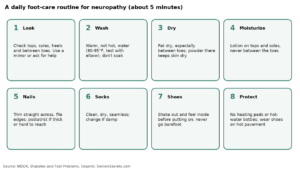
- Check your feet every day, and wear protective shoes. See my guide to protecting your feet with neuropathy.
- Ask about treatment options for pain. See diabetic neuropathy treatment.
- Medicare Part B covers diabetes self-management training and medical nutrition therapy with a dietitian when your doctor refers you.
FAQ
What is the best diet for neuropathy?
One that keeps blood sugar steady, provides enough B12, limits alcohol and supports heart health, like a Mediterranean-style diet built around the plate method.
What foods make neuropathy worse?
Sugary drinks, sweets and refined carbs (especially with diabetes) and alcohol. High-dose vitamin B6 supplements can also cause nerve damage.
Can neuropathy be reversed with diet?
Some causes, like B12 deficiency or alcohol, can improve when the cause is treated. Diabetic nerve damage usually can’t be reversed, but good blood sugar control can slow or stop it from getting worse.
Is vitamin B6 good or bad for neuropathy?
Normal amounts from food are fine. Long-term high-dose B6 supplements can cause nerve damage. Check supplement labels, and ask your doctor.
Are bananas good for neuropathy?
Bananas are fine in normal portions. If you have diabetes, a small banana paired with protein, like yogurt or peanut butter, is gentler on blood sugar.