Anti-Inflammatory Diet for Seniors: What the Research Really Shows, 10 Everyday Foods and an Easy Plan

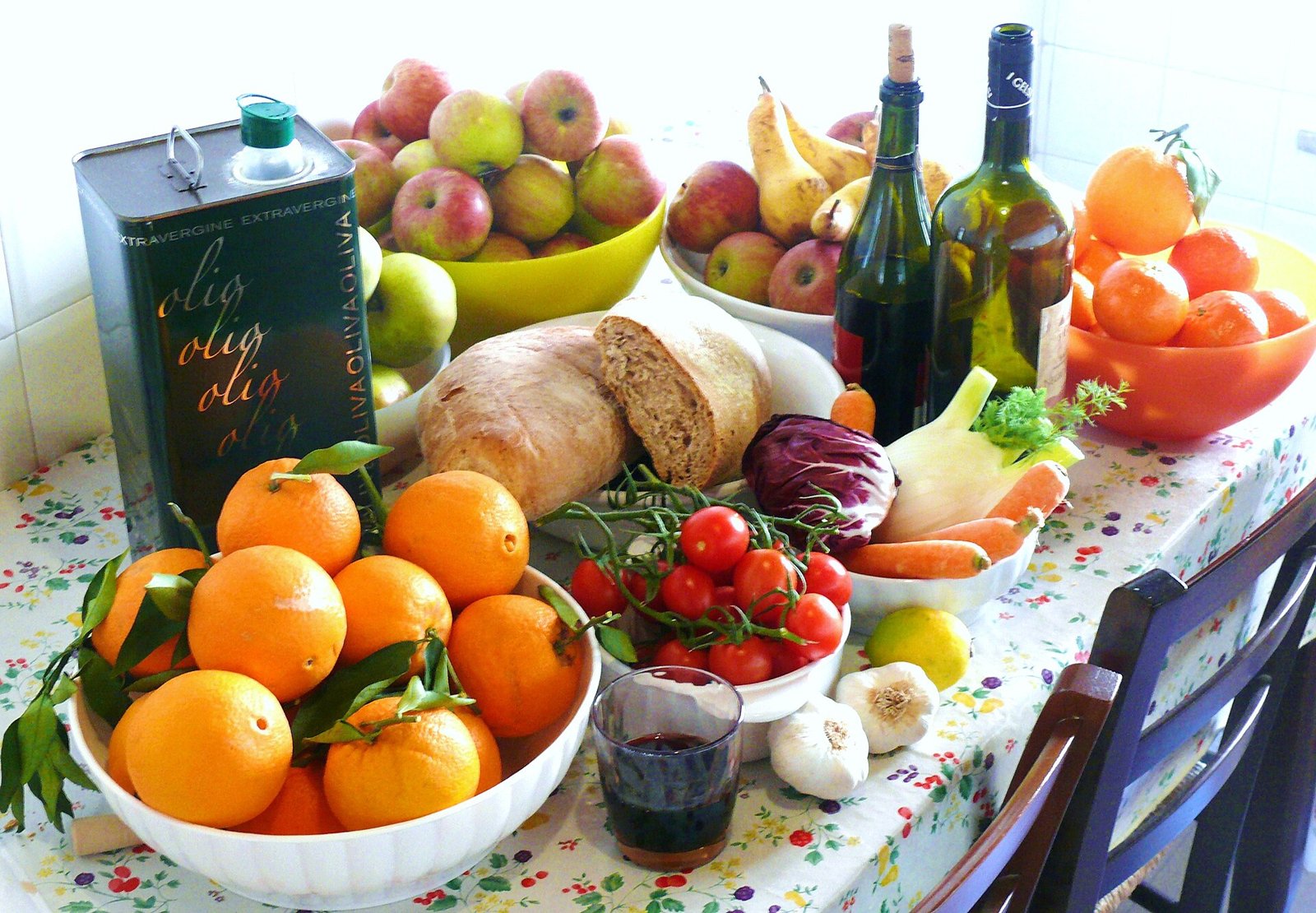
An “anti-inflammatory diet” for seniors is mostly a Mediterranean-style way of eating: lots of vegetables, fruit, beans, whole grains, nuts, fish, and extra-virgin olive oil, with less red meat, processed meat, and added sugar. It is not a strict menu, and there is no single magic food.
The strongest proof comes from the PREDIMED trial. It followed 7,447 adults ages 55 to 80 at high risk of heart disease. People who ate a Mediterranean diet with extra olive oil had a 31% lower rate of heart attack, stroke, or heart death than a low-fat control group. Those who added nuts had a 28% lower rate (Estruch, NEJM 2018).
I research health and nutrition topics for older readers. I am not a doctor or dietitian. If you have kidney disease, take a blood thinner, or follow a special diet, check with your care team before big changes.
What “inflammation” means here
Inflammation is your body’s repair system. A short burst helps you heal a cut or fight a cold. The problem is low-grade inflammation that lasts for years. It is linked to heart disease, type 2 diabetes, and joint pain.
Food is one of several things that affect it. Others include weight, activity, sleep, smoking, and gum health. No diet “cures” inflammation, but a better eating pattern is one of the few things you control every day.
What the PREDIMED trial found
Here are the real numbers over about 5 years:
| Group | What they ate | Major heart events |
|---|---|---|
| Mediterranean + olive oil | About 1 liter of extra-virgin olive oil a week, for the household | 3.8% |
| Mediterranean + nuts | About 30 grams (1 ounce) of mixed nuts a day | 3.4% |
| Control | Advice to eat a lower-fat diet | 4.4% |
Two honest notes. First, the trial was redone and republished in 2018 after problems with how some people were assigned to groups. The results held up. Second, the benefit was mostly fewer strokes. It did not show people lived longer overall.
10 everyday foods worth eating more often
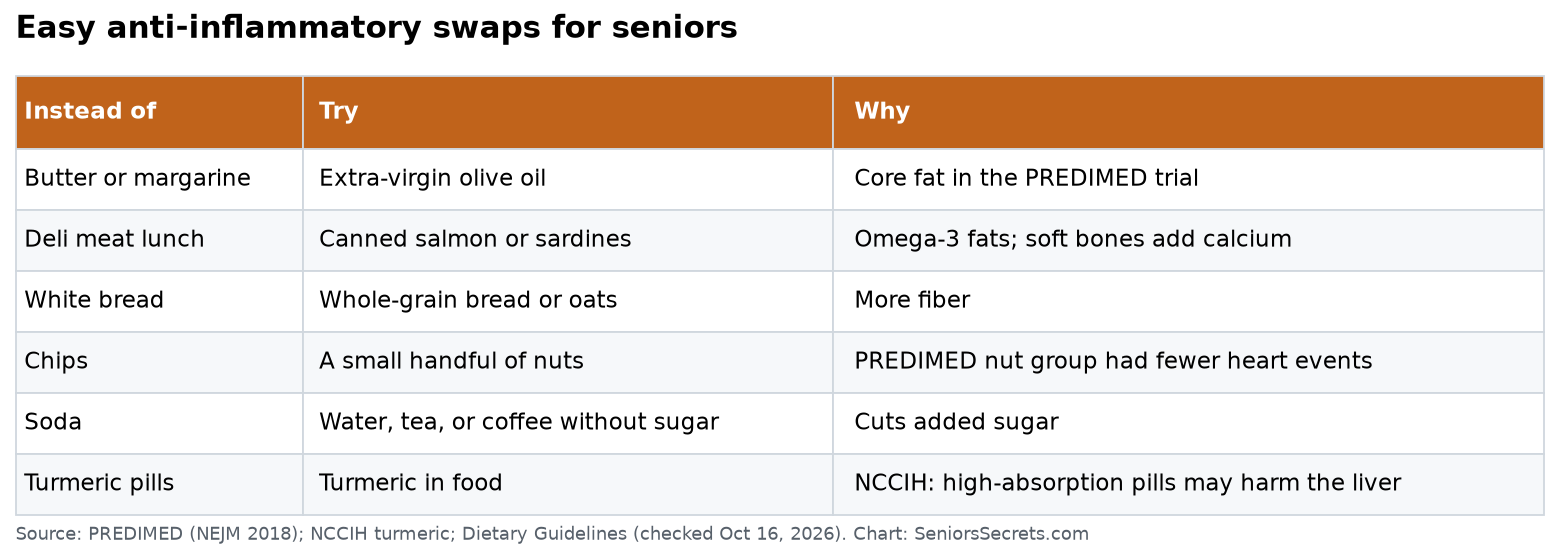
- Extra-virgin olive oil. Use it in place of butter or margarine for cooking and dressing.
- Nuts. A small handful a day. Walnuts, almonds, and hazelnuts were used in PREDIMED. See walnuts for seniors.
- Fatty fish. Salmon, sardines, and mackerel have omega-3 fats. The American Heart Association suggests 2 servings a week, about 3 ounces cooked each (AHA). Canned sardines are cheap and soft enough to chew easily.
- Beans and lentils. Cheap protein and lots of fiber.
- Leafy greens. Spinach, kale, and collards. Frozen is fine. If you take warfarin, keep your vitamin K intake steady instead of cutting greens out.
- Berries. Fresh or frozen. See blueberries for seniors.
- Whole grains. Oats, brown rice, whole-wheat bread, and barley.
- Tomatoes. Cooked tomato sauce with olive oil is a Mediterranean staple.
- Plain yogurt. A good protein snack. Choose plain and add fruit.
- Herbs and spices. Garlic, ginger, turmeric, cinnamon, and oregano add flavor without salt.
What the new 2025-2030 Dietary Guidelines add
The newest federal Dietary Guidelines for Americans, 2025-2030 point the same way. They say to:
- Cook with oils like olive oil when you add fat to meals.
- Pick fiber-rich whole grains and cut back on white bread, crackers and packaged breakfast foods.
- Avoid highly processed snacks like chips, cookies and candy, and skip sugary drinks.
- Keep added sugar to 10 grams or less in any one meal.
For older adults, the guidelines add one more point that matters a lot. Some of us need fewer calories but the same or more protein, vitamin B12, vitamin D and calcium. So fill your plate with foods that pack in nutrients, like fish, eggs, beans, yogurt and vegetables, instead of just eating less of everything.
Foods to cut back on
- Processed meat like bacon, hot dogs, and deli meat
- Sugary drinks like soda and sweet tea
- Refined carbs like white bread, pastries, and many packaged snacks
- Deep-fried fast food
- Too much alcohol. If you do not drink, do not start for health reasons.
You do not have to give these up forever. Swap one at a time.
What about turmeric and other supplements?
Turmeric is a tasty spice. But the National Center for Complementary and Integrative Health says there is not enough good evidence that turmeric or curcumin pills help most health problems. It also warns that some high-absorption curcumin products have been linked to liver injury, and that turmeric may interact with some medicines (NCCIH).
Using turmeric in food is fine. Ask your doctor or pharmacist before taking pills, especially if you take a blood thinner or diabetes medicine.
Fish oil pills are a separate topic with mixed results. See our omega-3 guide.
A simple day of eating
- Breakfast: Oatmeal with berries and a spoon of chopped walnuts. Coffee or tea.
- Lunch: Lentil soup and a slice of whole-grain bread with olive oil.
- Snack: Plain yogurt with a little fruit.
- Dinner: Baked salmon, roasted vegetables in olive oil, and brown rice.
- Dessert: An orange or a few dates.
For a full week of meals, see our Mediterranean diet guide for seniors.
Tips that make it work after 60
- Get enough protein. Many older adults eat too little. Fish, beans, eggs, yogurt, and nuts all help keep muscle.
- Go slow with fiber. Add beans and whole grains a little at a time, and drink water, to avoid gas and bloating. See high-fiber foods.
- Watch the salt in canned foods. Choose “low sodium” or rinse canned beans.
- Make it easy to chew. Soups, stews, canned fish, and soft cooked beans work well with dental problems.
- Shop on a budget. Frozen vegetables, canned fish, dried beans, and oats are cheap and keep a long time.
Who should check first
- Kidney disease: You may need limits on potassium (beans, tomatoes, greens) or phosphorus (nuts).
- Warfarin: Keep leafy greens steady from week to week.
- Swallowing problems: Ask about texture changes.
- Weight loss you did not plan: Talk to your doctor before cutting foods.
Common questions
What is the best anti-inflammatory diet for seniors?
A Mediterranean-style diet has the strongest research. It is rich in vegetables, beans, whole grains, nuts, fish, and extra-virgin olive oil.
What did the PREDIMED study show?
Adults 55 to 80 at high heart risk who ate a Mediterranean diet with olive oil or nuts had about 30% fewer heart attacks, strokes, and heart deaths than a low-fat group.
Does turmeric reduce inflammation?
There is not enough good evidence that turmeric pills help most conditions. NCCIH warns some high-absorption products have been linked to liver injury.
How fast does an anti-inflammatory diet work?
It is a long-term pattern, not a quick fix. PREDIMED results came over about 5 years.
Can I still eat meat?
Yes. Choose fish and poultry more often, and keep red and processed meat as smaller, less frequent parts of meals.
Written by Khasim Basha Shaik. I research health and nutrition topics for older readers. I am not a doctor, dietitian, or licensed professional. This article is general education, not medical advice. Last reviewed October 16, 2026.