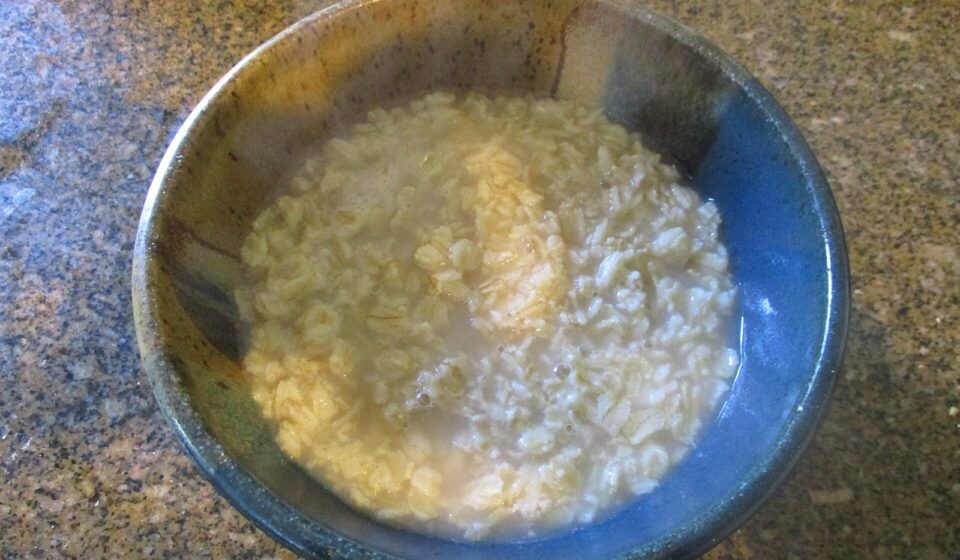

Men age 51 and older need about 30 grams of fiber a day, and women need about 21 grams, according to the Administration for Community Living’s nutrition brief on fiber for older adults. Those same targets apply at 71 and beyond. Most adults get less. ACL notes that about 95% of adults fall short of adequate fiber.
Fiber helps with constipation, keeps you fuller longer, and is linked to lower risk of heart disease and type 2 diabetes. It has even been tied to lower inflammation in some research ACL cites. The trick for seniors isn’t finding exotic superfoods. It’s adding familiar plant foods slowly, drinking enough water, and picking textures that are easy to chew.
Best high-fiber foods for older adults
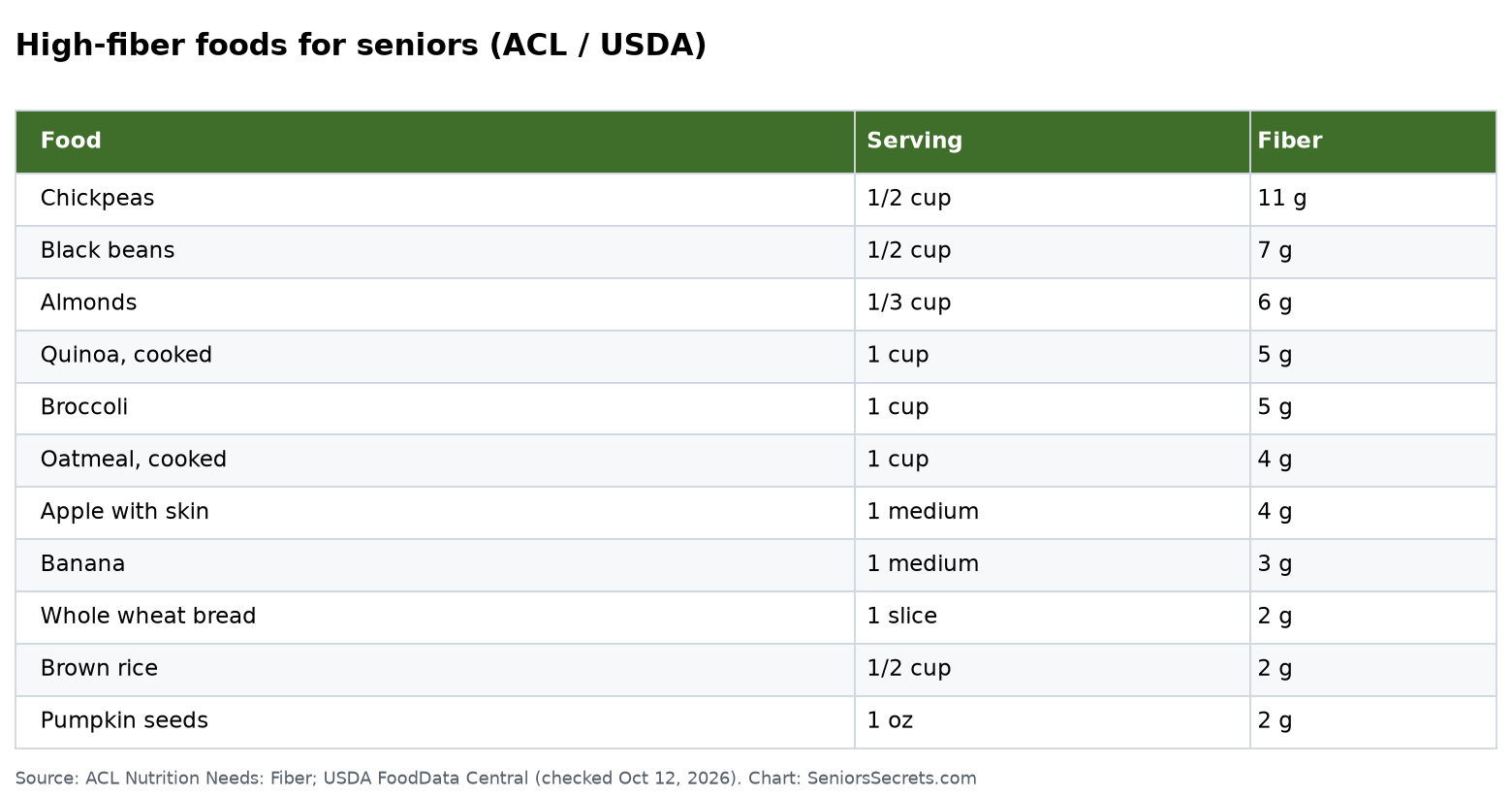
| Food | Serving | Fiber |
|---|---|---|
| Chickpeas | ½ cup | 11 g |
| Black beans | ½ cup | 7 g |
| Almonds | ⅓ cup | 6 g |
| Quinoa, cooked | 1 cup | 5 g |
| Broccoli | 1 cup | 5 g |
| Oatmeal, cooked | 1 cup | 4 g |
| Apple, with skin | 1 medium | 4 g |
| Banana | 1 medium | 3 g |
| Whole wheat bread | 1 slice | 2 g |
| Brown rice | ½ cup | 2 g |
| Cabbage, raw | 1 cup | 2 g |
| Pumpkin seeds | 1 oz | 2 g |
Source: ACL fiber brief, based on USDA FoodData Central. Beans and lentils are the easiest way to hit the daily number; a half cup of chickpeas alone covers more than a third of a woman’s goal.
A simple day that lands near 21–25 grams: oatmeal with berries for breakfast, a bean-and-vegetable soup for lunch, an apple as a snack, and brown rice with broccoli at dinner. My Mediterranean diet guide and senior nutrition guide build meals around these foods.
Soluble vs. insoluble fiber (and why both matter)
You don’t need to track the two types separately, but it helps to know what each does:
- Soluble fiber (oats, beans, apples, psyllium) dissolves in water and forms a gel. It can help lower cholesterol and steady blood sugar after meals.
- Insoluble fiber (whole wheat, brown rice, many vegetable skins) adds bulk and helps food move through the gut.
Most plant foods give you some of both. If constipation is your main issue, focus on fluids plus a mix of cooked vegetables, fruit with the skin when you can chew it, and oats. If cholesterol is the bigger concern, oats and beans earn a daily spot.
How to add fiber without the bloating
ACL and dietitians warn that jumping fiber too fast causes gas, bloating and cramps. A safer approach:
- Add about 5 grams a day for a week, then another 5, until you reach your goal.
- Drink more water. Fiber works by holding fluid; without it, constipation can get worse.
- Cooked, chopped and soft options (oatmeal, canned beans rinsed and heated, cooked greens) are easier to chew than raw salads and whole nuts if you have dental issues.
- Read labels. Look for at least 3 grams of fiber per serving on packaged foods, and prefer “whole grain” as the first ingredient.
- Supplements last. ACL notes that some older adults need a fiber supplement such as psyllium or methylcellulose when food alone isn’t enough. Talk to your doctor or dietitian first, especially if you take medicines that can bind to fiber.
A practical grocery list: rolled oats, canned chickpeas or black beans (low-sodium if you can find them), frozen broccoli, apples, bananas, and a loaf of 100% whole wheat bread. That covers most of the table above without hunting specialty aisles.
A one-week starter plan
| Day | Add this | Approx. fiber added |
|---|---|---|
| Mon–Tue | 1 cup cooked oatmeal at breakfast | ~4 g |
| Wed–Thu | Keep oatmeal; add an apple with skin | ~8 g total |
| Fri–Sun | Keep both; add ½ cup beans to soup or salad | ~15 g total from the adds |
That ladder gets many people from a low baseline toward the women’s 21-gram target without a single specialty product. Men aiming for 30 grams can double the bean portion or add a second fruit later in the week.
When to check with a doctor first
Ask before making big fiber changes if you:
- Have diverticulitis that’s currently flaring (see my diverticulitis guide)
- Have chronic kidney disease and are on a potassium or phosphorus limit (beans and some bran cereals are high in both; my CKD diet guide covers this)
- Take blood thinners or other medicines that interact with high-fiber meals (fiber can change how some medicines absorb)
- Have unexplained weight loss, blood in stool or a sudden change in bowel habits
Fiber is also only one piece of the plate. Pairing it with enough protein and safer food handling matters just as much; my guide to foods seniors should handle carefully covers the food-safety side.
Common questions
How much fiber should a 70-year-old eat?
About 30 grams a day for men and 21 grams for women, according to ACL. Those numbers apply from age 51 onward.
What is the best high-fiber food for seniors?
Beans and lentils give the most fiber per bite. If those bother your stomach, start with oatmeal, cooked vegetables and fruit with the skin.
Can you get too much fiber?
Yes. Too much too fast causes gas, bloating and cramping. Raise intake gradually and drink water.
Are fiber supplements safe for seniors?
Often, when food isn’t enough, but check with your doctor. Supplements can interact with medicines and need extra fluid.
Does fiber help constipation in older adults?
Yes. Fiber plus fluids is a first-line approach for many people with constipation. If it persists, see your doctor.
Written by Khasim Basha Shaik. I research senior health topics and compare official sources for readers. I’m not a doctor or dietitian. This article summarizes ACL and USDA guidance and isn’t medical advice. Last reviewed October 12, 2026.
Related guides