Sardines for Seniors: Calcium, Vitamin D and Omega-3s in One Cheap Can
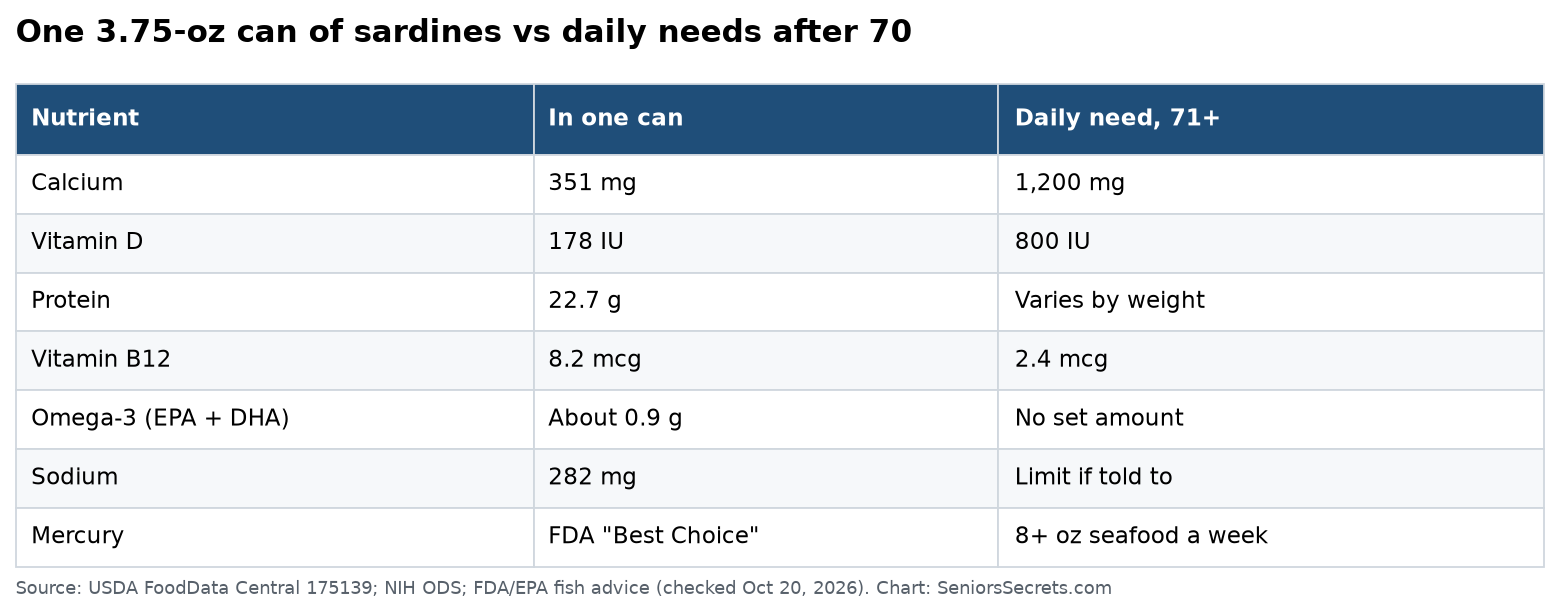
Canned sardines pack a lot of the nutrients seniors need into one small, cheap can. One 3.75-ounce can of sardines in oil, drained, with the bones, gives you about 351 mg of calcium, 23 grams of protein, 178 IU of vitamin D and close to 1 gram of omega-3 fats (USDA FoodData Central).
They’re also one of the lowest-mercury fish you can buy. Here are the numbers and how they fit your needs after 65.
Nutrients in one can
These USDA figures are for one 3.75-ounce (92-gram) can of Atlantic sardines canned in oil, drained, with bones (FoodData Central entry 175139).
- Calories: 191
- Protein: 22.7 grams
- Calcium: 351 mg
- Vitamin D: 178 IU (4.4 mcg)
- Omega-3s (EPA + DHA): about 0.9 grams
- Vitamin B12: 8.2 mcg
- Selenium: 48.5 mcg
- Potassium: 365 mg
- Sodium: 282 mg
- Cholesterol: 131 mg
How a can fits what you need after 65
Calcium for bones
Women 51 and older and everyone 71 and older need 1,200 mg of calcium a day. Men 51 to 70 need 1,000 mg (NIH ODS). One can gives you about 29% of the 1,200 mg goal. The calcium comes from the soft, edible bones, so don’t pick them out. Boneless sardines have much less.
If you have osteoporosis, food calcium is the first step. Our osteoporosis medications guide covers treatment.
Vitamin D
Adults over 70 need 800 IU of vitamin D a day, and adults 19 to 70 need 600 IU (NIH ODS). One can gives about 22% of the 800 IU goal. Few foods have much vitamin D naturally, so this matters. Our vitamin D guide explains blood levels and doses.
Protein for muscle
At 22.7 grams, one can gives as much protein as about 3 to 4 eggs. Many older adults don’t get enough protein to keep muscle. See our protein needs guide.
Vitamin B12
Adults need 2.4 mcg of B12 a day (NIH ODS). One can has 8.2 mcg, more than 3 days’ worth. There’s a catch, though. NIH says many older adults don’t have enough stomach acid to absorb the B12 that’s naturally in food. It advises people over 50 to get most of their B12 from fortified foods or supplements. Metformin and acid reducers like omeprazole can also lower B12. So sardines help, but they may not be enough on their own. Ask your doctor whether to check your level.
Omega-3 fats
Sardines are an oily fish rich in EPA and DHA, the omega-3 fats found in seafood. One can has close to 1 gram. Eating fish is a better first choice than pills for most people. Our omega-3 fish oil guide compares food and supplements.
Low in mercury
The FDA and EPA put sardines on their “Best Choices” list, the group lowest in mercury (FDA). The Dietary Guidelines for Americans advise at least 8 ounces of seafood a week. That’s a little over 2 cans of sardines.
Sardines vs. other canned fish
All of these are on the FDA’s lower-mercury lists:
- Sardines: Best Choice. Soft bones add calcium.
- Salmon: Best Choice. Canned salmon with bones also adds calcium.
- Canned light tuna (including skipjack): Best Choice.
- Canned albacore (white) tuna: Good Choice, which means it has more mercury. Eat it less often.
Mixing these up keeps meals interesting and keeps mercury low. Sardines stand out because a small can gives calcium, vitamin D and B12 together.

Who may benefit most
- People who don’t eat dairy. One can gives almost a third of the daily calcium goal after 70.
- People with a small appetite. A small can packs protein, calcium, vitamin D and B12 into about 190 calories.
- People who wear dentures. Sardines are soft and easy to chew, bones included.
- People who want more fish. A little over 2 cans a week meets the 8-ounce seafood goal with very little mercury.
- People who rarely get sun. Few foods have natural vitamin D, and sardines are one of them.
Who should be careful
People watching sodium. One can has 282 mg of sodium. That’s moderate, but sardines in tomato sauce or with added flavors can have more. Look for “no salt added” or “low sodium” on the label if you have high blood pressure or heart failure. Rinsing oil-packed sardines can remove a little salt from the surface.
People with gout. Gout happens when urate builds up in the blood. Urate comes from purines, which are found in many foods, mostly from animal sources (NIAMS). Like other fish and meats, sardines have purines. If you have gout, ask your doctor how often you can eat them.
People on blood thinners. Fish in normal food amounts is generally fine, but tell your doctor about big diet changes. That’s good practice with any blood thinner.
People with a fish allergy should avoid sardines.
Calories. Oil-packed sardines have more calories than those packed in water. Drain them if you’re watching calories.
How to pick a good can
- Bone-in, skin-on for the most calcium and omega-3s
- Packed in water or olive oil rather than other oils, if you prefer
- “No salt added” if you limit sodium
- Check the date and avoid dented or bulging cans
- Try different brands. Some are milder, which helps if you’re new to sardines.
Easy ways to eat them
- On whole-grain toast with lemon and pepper
- Mashed into a spread with a little mustard or plain yogurt, like tuna salad
- Tossed into pasta with garlic, olive oil and spinach
- On a salad with beans and tomatoes
- With crackers and sliced cucumber for a quick lunch
Soft sardines are easy to chew, which helps if you wear dentures. For more brain- and heart-friendly foods, see our walnuts guide.
Common questions
Are sardines good for seniors?
Yes, for most. One can gives a lot of calcium, protein, vitamin D, B12 and omega-3s, with low mercury.
How many sardines should a senior eat?
The Dietary Guidelines advise at least 8 ounces of seafood a week. That’s about 2 cans of sardines, or a mix with other fish.
Do sardines have a lot of mercury?
No. The FDA and EPA list sardines as a Best Choice, the lowest-mercury group.
Should I eat the bones?
Yes. The soft bones are safe to eat and supply most of the calcium.
Are sardines bad for gout?
They contain purines, which can raise urate. If you have gout, ask your doctor how often to eat them.
Written by Khasim Basha Shaik. I research and compare Medicare plans and health topics for readers. I am not a doctor, dietitian or licensed insurance agent. This article summarizes USDA, NIH, FDA and NIAMS data and is not medical advice. Last reviewed October 20, 2026.