Mediterranean Diet for Seniors: A Beginner’s Guide With a 7-Day Meal Plan and Shopping List

The Mediterranean diet isn’t a set of rules or a calorie count. It’s a way of eating built on vegetables, fruit, beans, whole grains, nuts, fish and plenty of extra-virgin olive oil, with little red meat or processed food. The American Heart Association describes it as a heart-healthy pattern. It’s also flexible enough to work with a smaller appetite, dental problems or a tight budget.
Below is what the research shows (and what it doesn’t), how often to eat each food group, how to adapt the diet after 65, a 7-day meal plan and a shopping list.
I’m a researcher, not a dietitian. If you have kidney disease, take warfarin, or are managing diabetes with medication, check with your doctor or a dietitian before changing how you eat.
What the research shows
Heart disease and stroke. The strongest evidence comes from Spain’s PREDIMED trial. It enrolled 7,447 people aged 55 to 80 with high cardiovascular risk but no heart disease at the start. In the corrected 2018 analysis in the New England Journal of Medicine, people assigned to a Mediterranean diet supplemented with extra-virgin olive oil or nuts had about 30% fewer major cardiovascular events (heart attack, stroke or cardiovascular death) than those advised to follow a reduced-fat diet. The difference was mainly driven by fewer strokes. This was a large, randomized trial in an older population, which makes it unusually strong evidence for a diet study.
Brain health. Many observational studies link Mediterranean-style eating with slower cognitive decline. Randomized proof is thinner. In a 2023 NEJM trial of the related MIND diet, people on the MIND diet and a control group (both with mild calorie restriction) improved their cognitive scores by similar amounts over three years. It’s reasonable to eat this way for your heart and overall health, and treat any brain benefit as a possible bonus. See my MIND diet guide for more.
Blood sugar and weight. The pattern is high in fiber and low in refined carbohydrates, which helps steady blood sugar. It’s also satisfying, so it’s easier to stick with than strict diets.
How often to eat what
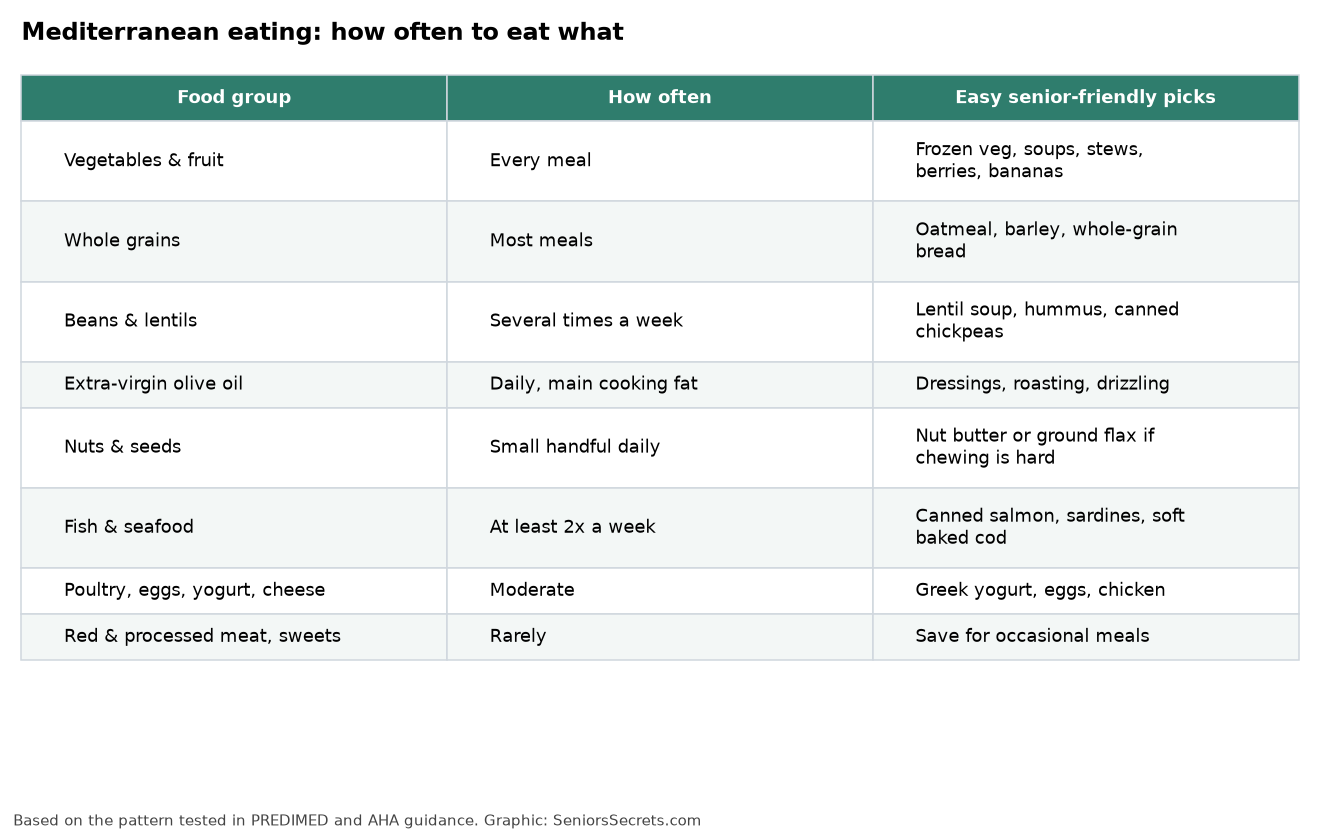
- Every meal: vegetables and fruit, plus whole grains at most meals.
- Daily: extra-virgin olive oil as your main fat, and a small handful of nuts or seeds.
- Several times a week: beans, lentils and chickpeas.
- At least twice a week: fish and seafood, especially oily fish like salmon and sardines.
- In moderation: poultry, eggs, yogurt and cheese.
- Rarely: red and processed meats, sweets and sugary drinks.
Herbs, garlic, lemon and spices carry the flavor, so you need less salt. If you’re watching your blood pressure, pair this with ideas from my DASH diet guide.
Adapting it after 65
Get enough protein
Traditional Mediterranean meals can run light on protein, and older adults need more of it to keep muscle. Many experts suggest 1.0 to 1.2 grams per kilogram of body weight per day for healthy older adults. That’s about 68 to 82 grams for a 150-pound person. Spread it across meals: Greek yogurt or eggs at breakfast, beans or fish at lunch, fish or chicken at dinner. See how much protein seniors need. People with kidney disease should ask their doctor for a target.
Make it easy to chew
Soups, stews, hummus, soft-baked fish, well-cooked grains, ripe fruit and yogurt-and-berry smoothies all fit. Nut butters and ground flax give you the benefits of nuts without the crunch.
Keep vitamin K steady if you take warfarin
Leafy greens are rich in vitamin K, which affects warfarin. You don’t have to avoid greens. Keep your intake consistent from week to week, and tell your anticoagulation clinic before making a big change. (This doesn’t apply to newer blood thinners like apixaban, but check with your pharmacist.)
Go easy on alcohol
Older descriptions of the diet included wine with meals. Current guidance doesn’t recommend starting to drink for health, and alcohol interacts with many medicines and raises fall risk.
Watch sodium in some staples
Olives, feta, canned beans and canned fish can be salty. Rinse beans, and choose low-sodium versions.
A 7-day meal plan
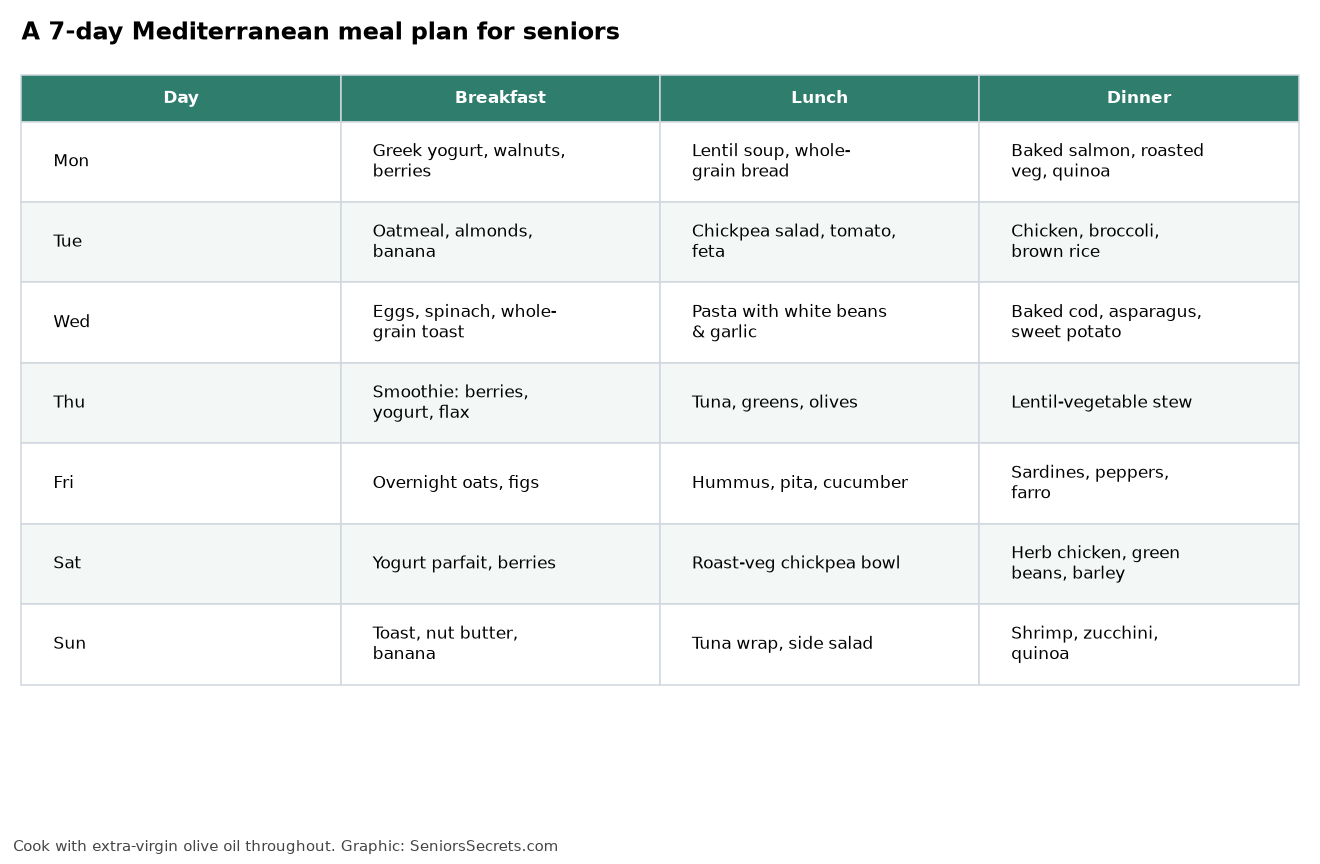
Use the plan as a template, not a prescription. Swap meals freely, and repeat favorites. Leftover lentil stew makes a great next-day lunch. If you snack, choose fruit, a small handful of nuts, yogurt, or hummus with vegetables.
Shopping list
- Fats: extra-virgin olive oil, walnuts, almonds, natural nut butter, avocados
- Protein: canned salmon, sardines and tuna; frozen fish fillets; eggs; plain Greek yogurt; lentils; canned chickpeas and white beans
- Vegetables: tomatoes (canned are fine), spinach, kale, zucchini, peppers, onions, garlic, frozen mixed vegetables
- Fruit: berries (frozen work well), oranges, apples, bananas, figs or dates
- Whole grains: rolled oats, whole-grain bread, barley, brown rice, whole-wheat pasta, quinoa
- Flavor: lemons, oregano, basil, rosemary, cumin, red wine vinegar
Frozen and canned produce is just as nutritious, lasts longer and keeps costs down.
Five steps to start this week
- Switch your cooking fat to extra-virgin olive oil.
- Have fish twice this week. Canned salmon counts.
- Swap one meat meal for beans, like lentil soup or a chickpea stew.
- Fill half your plate with vegetables at lunch and dinner.
- Keep a small jar of nuts where you’ll see it.

Can Medicare help?
Medicare Part B covers medical nutrition therapy with a registered dietitian for people with diabetes or kidney disease, or who’ve had a kidney transplant in the last 36 months, with a doctor’s referral. You pay nothing if the provider accepts assignment. A dietitian can help you build a Mediterranean-style plan around your conditions and medicines. For related reading, see my heart-healthy diet guide.
FAQ
Is the Mediterranean diet good for seniors?
Yes, for most. It has strong evidence for lowering cardiovascular events in older, high-risk adults, and it’s flexible. Make sure to get enough protein.
Do I have to drink wine?
No. Current guidance doesn’t recommend starting to drink for health, and alcohol interacts with many medications.
Is the Mediterranean diet expensive?
It doesn’t have to be. Beans, lentils, oats, frozen vegetables, canned fish and canned tomatoes are some of the cheapest foods in the store.
Can I follow it if I take warfarin?
Usually yes. Keep your intake of leafy greens steady from week to week, and tell your anticoagulation clinic before making big changes.
How is it different from the DASH or MIND diet?
They overlap a lot. DASH puts more focus on cutting sodium and including low-fat dairy for blood pressure. MIND is a hybrid that emphasizes leafy greens and berries for brain health.