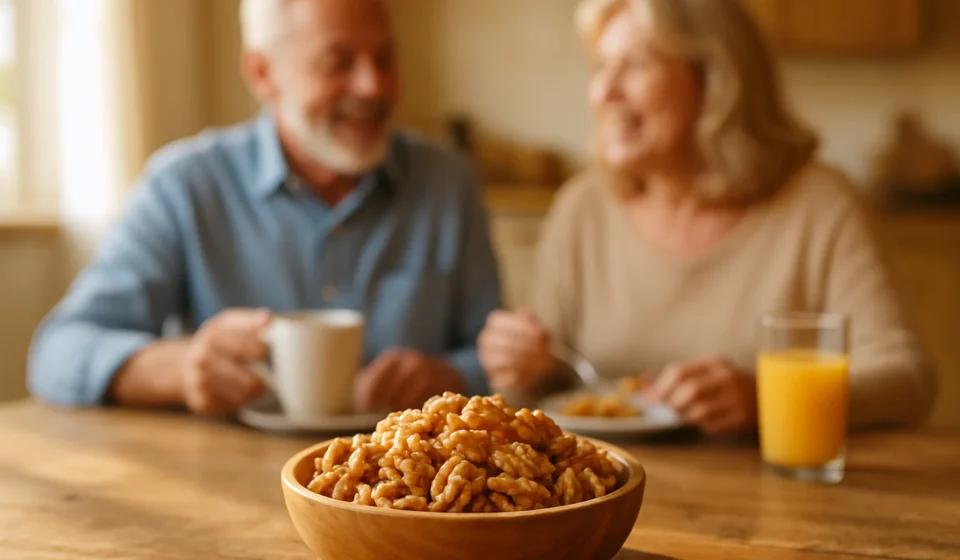

Few foods pack as much research behind them as the humble walnut. If you’re considering walnuts for seniors as a daily habit, you’re looking at one of the most studied nuts in nutrition science — including a landmark two-year trial designed specifically around healthy aging. As a senior health writer, I’m always cautious about “superfood” hype, but walnuts earn a place on the plate for reasons grounded in real cardiovascular and metabolic data. Here’s what the evidence actually shows, how much to eat, and the cautions that matter after 65.
Table of Contents
- Why Walnuts Are Different From Other Nuts
- Heart Health: The Strongest Evidence
- Brain & the WAHA Aging Study
- Other Benefits: Gut, Blood Sugar & Inflammation
- How Many Walnuts Should a Senior Eat?
- Cautions and Interactions
- Frequently Asked Questions
Why Walnuts Are Different From Other Nuts
Walnuts stand apart because of their fat profile. They are the only common nut that is a rich plant source of alpha-linolenic acid (ALA), a plant-based omega-3 fatty acid — a single ounce (about 14 halves) delivers roughly 2.5 grams of ALA, more than your daily target. They also carry a distinctive package of polyphenols (especially ellagitannins), the antioxidant vitamin E in the form of gamma-tocopherol, magnesium, and small amounts of melatonin. Researchers believe it’s this combination — omega-3s plus polyphenols — that drives walnuts’ effects on the blood vessels and brain.
Heart Health: The Strongest Evidence
The cardiovascular case is where walnuts shine brightest. Across many controlled feeding studies, regular walnut consumption modestly lowers LDL (“bad”) cholesterol and total cholesterol without lowering protective HDL, and improves the function of the endothelium — the thin lining of your arteries that governs how well vessels relax and dilate. Because they replace less healthy snacks and saturated fats, walnuts fit squarely within the heart-protective dietary patterns, like the Mediterranean diet, that consistently reduce cardiovascular events.
For an older adult managing blood pressure or cholesterol, a daily ounce of walnuts is a low-effort, evidence-backed addition. It pairs naturally with the rest of a senior nutrition plan built around fiber, fish, and produce.
The Brain and the WAHA Aging Study
The most ambitious test of walnuts in older adults is the Walnuts and Healthy Aging (WAHA) study — a two-year randomized controlled trial that enrolled 708 cognitively healthy adults (average age 69) at centers in Barcelona and Loma Linda, California. One group added walnuts at about 15% of daily calories (roughly 30–60 grams a day) to their usual diet; the other avoided walnuts. The trial achieved an impressive 90% retention over two years.
The honest result: across the whole group, walnut eaters did not show significantly slower cognitive decline than the control group on the main tests — an important reminder that no food is a magic bullet. However, brain imaging suggested reduced decline in certain regions, and in a pre-specified subgroup of participants from the lower-income Loma Linda site (whose baseline diets were less healthy), walnut eaters did show better outcomes. The fair takeaway is that walnuts are clearly good for the vascular system that supports the brain, even if they’re not a proven memory pill. For cognition, combine them with the broader habits in my brain fitness protocol.
Other Benefits: Gut, Blood Sugar and Inflammation
Beyond heart and brain, walnuts offer several smaller but worthwhile perks for seniors:
- Gut health: Their fiber and polyphenols act as food for beneficial gut bacteria, nudging the microbiome in a favorable direction.
- Blood sugar: Because walnuts are low in digestible carbohydrate and high in fat, fiber, and protein, they blunt the rise in blood sugar when eaten with a meal — useful for the many seniors with prediabetes.
- Inflammation: Several markers of chronic inflammation tend to improve with regular nut intake.
- Satiety and weight: Despite being calorie-dense, nuts are linked to better weight control, likely because they’re filling and not all their calories are absorbed.
How Many Walnuts Should a Senior Eat?
The sweet spot in the research is about 1 ounce (28 grams) per day, which is roughly 14 walnut halves or a small handful — about 185 calories. Studies using 30–60 grams a day also showed benefits, so there’s room to go a bit higher if your overall calories allow. Choose raw or dry-roasted, unsalted walnuts to avoid added sodium, and store them in the refrigerator or freezer, because their omega-3 fats can go rancid at room temperature.
| Amount | Approx. Calories | ALA Omega-3 | Best For |
|---|---|---|---|
| 1 oz (14 halves) | ~185 | ~2.5 g | Daily heart-healthy serving |
| ½ oz (7 halves) | ~93 | ~1.3 g | Topping for oatmeal or salad |
| 2 oz (28 halves) | ~370 | ~5 g | WAHA-style intake (watch calories) |
Easy ways to work them in: chop into morning oatmeal or yogurt, toss onto a salad, blend into a smoothie, or simply keep a portioned snack bag handy. Pairing them with other proven foods like flaxseed gives you an even broader omega-3 and fiber base.
Cautions and Interactions
Walnuts are safe for most people, but a few cautions matter after 65. Tree-nut allergy is serious and absolute — if you have one, avoid them entirely. Because walnuts contain vitamin E and ALA that can have a mild blood-thinning effect, people on warfarin or other anticoagulants should keep their intake steady rather than swinging from none to large amounts, and mention regular nut use to their doctor. Whole nuts can be a choking or chewing hazard for those with swallowing difficulty or dentures — finely chopped or ground walnuts (or walnut butter) solve this. And remember they are calorie-dense, so they should replace, not add to, other snacks.
Frequently Asked Questions
Are walnuts good for seniors’ brains?
Walnuts support the blood vessels that nourish the brain, and the two-year WAHA trial hinted at benefits for some participants. They did not prove to be a memory cure across all older adults, so view them as part of a brain-healthy diet rather than a standalone solution.
How many walnuts a day is healthy?
About one ounce a day — roughly 14 halves or a small handful — matches the amount used in most positive studies and delivers about 2.5 grams of plant omega-3s. Choose unsalted and let them replace less healthy snacks.
Do walnuts lower cholesterol?
Yes, modestly. Controlled studies show regular walnut intake lowers LDL and total cholesterol without reducing protective HDL, especially when walnuts replace saturated fats in the diet.
Can walnuts interact with blood thinners?
Walnuts have a mild natural blood-thinning effect from their vitamin E and omega-3 content. If you take warfarin or another anticoagulant, keep your intake consistent and tell your doctor — sudden large changes are what cause problems, not a steady daily handful.
Related Articles You May Find Helpful
- Senior Nutrition Guide 2026
- Flaxseed for Seniors 2026: Benefits, Dose & Cautions
- Brain Fitness for Seniors 2026: The Science-Backed Protocol
- High-Fiber Foods for Seniors 2026: Best Picks & Amounts
- Creatine for Seniors 2026: Muscle, Strength & Brain Benefits
Sources
- American Journal of Clinical Nutrition — Walnuts and Healthy Aging (WAHA) randomized controlled trial
- National Institutes of Health, Office of Dietary Supplements — Omega-3 Fatty Acids
- U.S. Department of Agriculture — FoodData Central, Walnuts
This article is for educational purposes and is not personal medical advice. Talk with your doctor before major dietary changes, especially if you take blood thinners. See our Medical Disclaimer.