Insomnia in Older Adults: Why Sleep Changes After 65, CBT-I and Which Sleep Aids to Avoid

Sleep changes with age. After 65 most people sleep more lightly, wake more often and get sleepy earlier in the evening. That’s normal. Insomnia is different: trouble falling asleep, staying asleep or waking too early at least three nights a week for three months or more, with tiredness, poor focus or low mood during the day.
The best treatment for chronic insomnia isn’t a pill. It’s a short, structured program called cognitive behavioral therapy for insomnia (CBT-I), which the American College of Physicians and the American Academy of Sleep Medicine recommend first. Meanwhile, the most popular over-the-counter sleep aids are on the list of drugs older adults should avoid.
I’m a health researcher, not a doctor. Use this to prepare for a conversation with your clinician, and don’t stop any prescribed medicine on your own. Sources include the American College of Physicians insomnia guideline, the American Geriatrics Society Beers Criteria and the National Institute on Aging, checked October 1, 2026.
What’s normal sleep after 65, and what isn’t
Normal with age:
- Less deep sleep and more light sleep
- Waking briefly two to four times a night
- Getting sleepy around 8 or 9 p.m. and waking at 4 or 5 a.m. (an “advanced” body clock)
- Needing a few more minutes to fall asleep
Most older adults still need about seven to eight hours. The need for sleep doesn’t shrink much; the ability to get it in one stretch does.
Not normal, and worth raising with a doctor:
- Lying awake 30 minutes or more most nights
- Feeling tired, irritable or foggy most days
- Snoring with pauses or gasping (possible sleep apnea)
- An urge to move your legs at night (possible restless legs syndrome)
- Acting out dreams, punching or shouting in sleep (REM sleep behavior disorder, which needs evaluation)
Common causes of insomnia in older adults
Insomnia after 65 usually has more than one cause. Finding them is the first step.
- Medical conditions: arthritis and other pain, heartburn, COPD, heart failure, an overactive bladder or enlarged prostate, Parkinson’s disease, and menopause symptoms.
- Medications: diuretics taken late in the day, some antidepressants, steroids like prednisone, decongestants, beta-blockers and some asthma inhalers. A pharmacist can review the timing of every pill you take.
- Mood: depression, anxiety, grief and caregiver stress. Insomnia is often both a symptom and a cause of depression.
- Habits: long or late naps, too much time in bed, irregular wake times, caffeine after noon and alcohol in the evening. Alcohol helps you fall asleep but breaks up sleep later in the night.
- Body clock shifts: going to bed early because you’re bored, then waking at 3 a.m. with nothing left in the tank.
- Environment: noise, light, a hot room or a partner who snores.
CBT-I: the first-line treatment
CBT-I is usually four to eight weekly sessions with a trained therapist, in person, by video or through a guided app. Most people see improvement in a few weeks, and the gains tend to last after treatment stops. That’s the key difference from sleeping pills, which usually stop helping when you stop taking them.
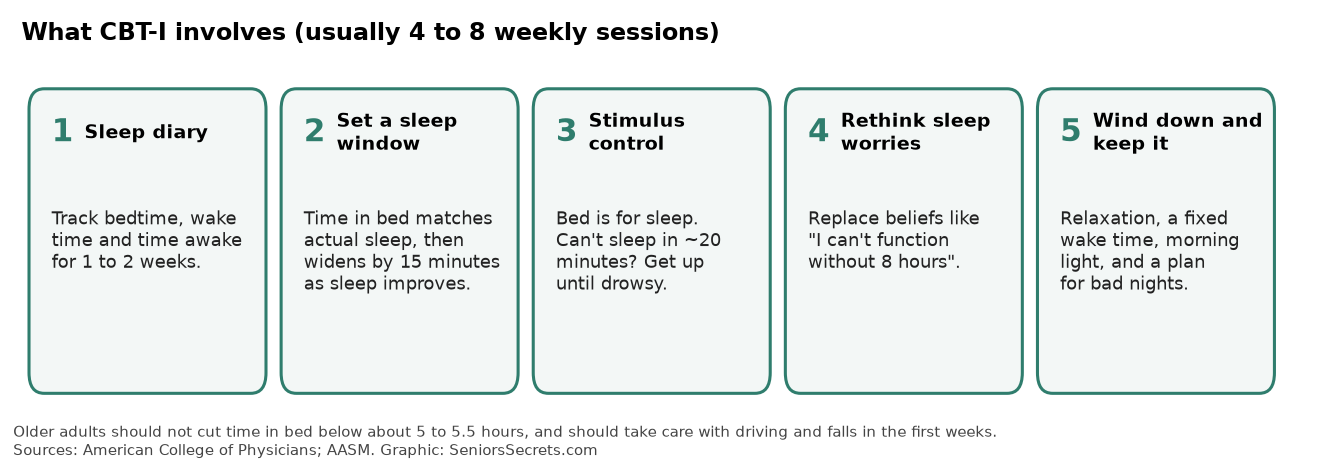
The main parts:
- A sleep diary. For one to two weeks, you note when you go to bed, roughly when you fall asleep, how long you’re awake at night and when you get up.
- A sleep window (sleep restriction). You spend in bed only about as long as you actually sleep, with a fixed wake time. As your sleep becomes more solid, the window widens by about 15 minutes a week. It’s the most effective part and the hardest at first. Older adults shouldn’t cut their window below about 5 to 5.5 hours, and should be careful with driving and stairs in the first weeks.
- Stimulus control. The bed is for sleep and sex only. If you can’t sleep in about 20 minutes, get up, sit somewhere dim and calm, and go back to bed when you’re drowsy.
- Rethinking sleep worries. Thoughts like “if I don’t sleep tonight, tomorrow is ruined” keep your brain on alert. A therapist helps you test and replace them.
- Relaxation and habits. Breathing exercises or muscle relaxation, a wind-down hour, morning daylight and a plan for bad nights.
How to get CBT-I, including with Medicare
- Ask your doctor for a referral to a psychologist or therapist trained in CBT-I, or to a behavioral sleep medicine specialist. The Society of Behavioral Sleep Medicine directory lists providers.
- Medicare Part B covers it as outpatient mental health therapy when a covered clinician provides it, including psychologists, clinical social workers, and since 2024, licensed mental health counselors and marriage and family therapists. After the $283 deductible, you usually pay 20%. Video visits from home count. See Medicare mental health coverage.
- Digital CBT-I apps that guide you through the same steps work well for many people. Some, like Somryst, are FDA-authorized and prescribed by a clinician. Free options include the VA’s CBT-i Coach app, which anyone can download.
- Books such as workbooks based on CBT-I are a reasonable start if you can’t find a therapist.
Sleep aids: what older adults should avoid
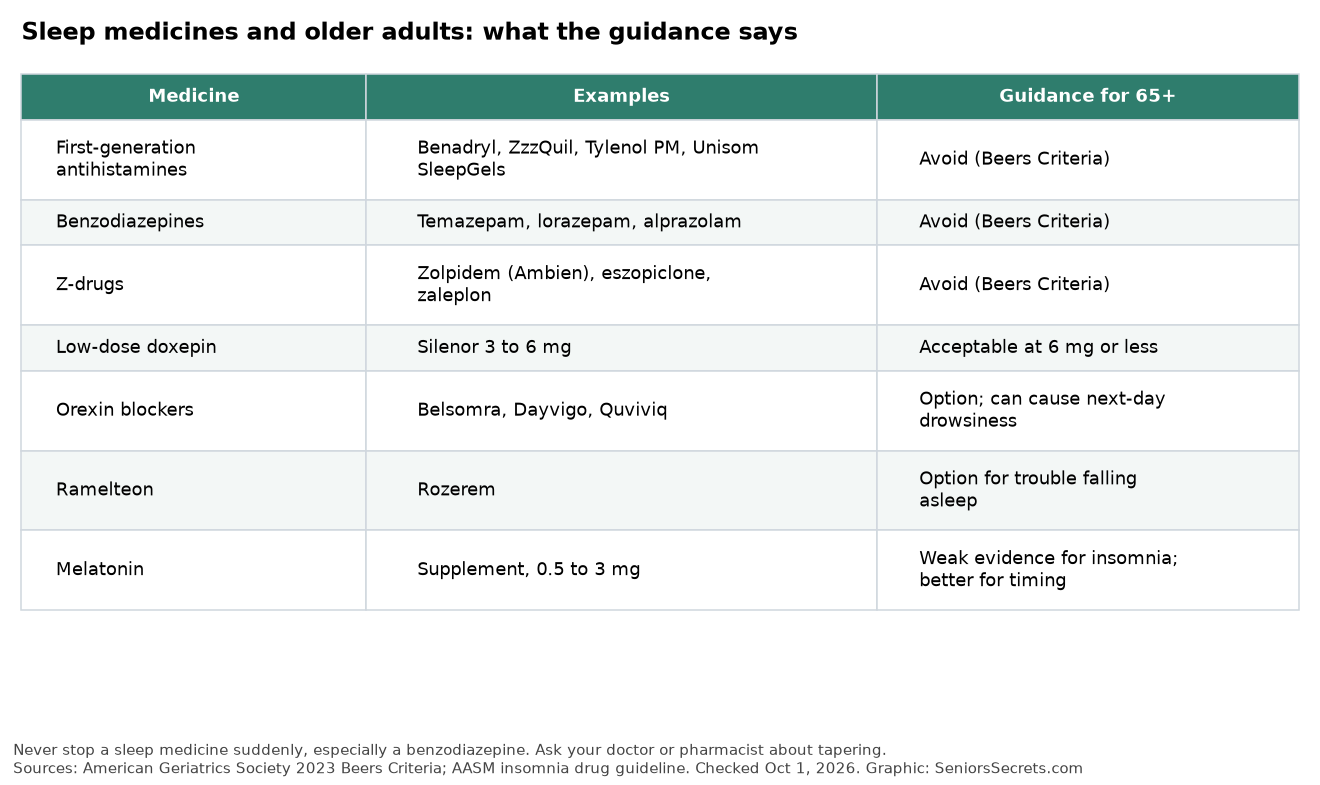
Diphenhydramine and doxylamine. These antihistamines are the active ingredient in Benadryl, ZzzQuil, Unisom and “PM” pain relievers like Tylenol PM and Advil PM. The 2023 Beers Criteria say older adults should avoid them because they cause confusion, constipation, trouble urinating, next-day grogginess and falls. Long-term use of drugs in this class has been linked to dementia in observational studies. Check labels: many people take them without realizing it.
Benzodiazepines (such as temazepam, lorazepam and alprazolam) and Z-drugs (zolpidem, eszopiclone, zaleplon) are also on the avoid list because they raise the risk of falls, fractures, car crashes and memory problems. If you’ve taken one for years, don’t stop suddenly. Benzodiazepines especially need a slow, supervised taper, and CBT-I during the taper makes success more likely.
Options your doctor may consider if a medicine is needed alongside CBT-I:
- Low-dose doxepin (6 mg or less), for waking during the night
- Ramelteon, for trouble falling asleep
- Orexin blockers (suvorexant, lemborexant, daridorexant), which work differently from older pills but can still cause next-day drowsiness
Melatonin has weak evidence for chronic insomnia. It’s more useful for shifting your body clock. If you try it, use a low dose, 0.5 to 3 mg, taken a couple of hours before bed. Supplement doses vary, so look for a USP Verified label.
Trazodone is often prescribed off-label for sleep, but the evidence is thin, and it can cause dizziness and falls in older adults. Ask about the risks.
Natural remedies: what the evidence shows
- Tart cherry juice: small studies suggest a modest benefit. See tart cherry juice for seniors.
- Magnesium: evidence is limited and mixed. It’s reasonable to try if your doctor agrees, but avoid it if you have kidney disease.
- Valerian and chamomile: generally safe for most people, with little evidence they help.
Daily habits that support CBT-I
- Get up at the same time every day, including weekends. A fixed wake time anchors your body clock more than a fixed bedtime.
- Get daylight in the morning, 20 to 30 minutes outside if you can. If you fall asleep too early in the evening, get bright light in the late afternoon instead.
- Keep naps short and early: 20 to 30 minutes before about 2 p.m., or none at all during CBT-I.
- Be active during the day. Regular exercise improves sleep in older adults. See poor sleep and dementia risk for why it matters beyond feeling rested.
- Stop caffeine by noon and keep alcohol light and early.
- Keep the bedroom cool, dark and quiet, and the clock turned away from you.
- Limit fluids in the two hours before bed if you get up to urinate.

When to see a doctor
Talk to your doctor if poor sleep has lasted more than a few weeks, if you’re relying on sleep aids, if you snore or gasp at night, or if low mood is part of the picture. Depression and anxiety are treatable, and treating them often improves sleep. See anxiety in seniors.
FAQ
How many hours of sleep do older adults need?
About seven to eight hours, the same as younger adults. What changes is how deep and continuous the sleep is.
Is waking up at night normal after 65?
Waking briefly a few times is normal. Lying awake for long stretches most nights, with tiredness during the day, is insomnia and can be treated.
Does Medicare cover CBT-I?
Yes, as outpatient mental health therapy from a covered clinician. You usually pay 20% after the Part B deductible, including for video visits.
Is melatonin safe for older adults?
It’s generally safe at low doses but works modestly at best for chronic insomnia. It can interact with blood thinners and some other drugs, so check with your pharmacist.
Why should older adults avoid Benadryl for sleep?
Diphenhydramine can cause confusion, falls, constipation and trouble urinating, and the sleepiness fades within days. The American Geriatrics Society lists it as a drug to avoid after 65.
Related guides