
Anxiety in later life is common and treatable, and many of the best treatments don’t involve pills. Talk therapy called cognitive behavioral therapy (CBT) is the “gold standard” for anxiety, according to the National Institute of Mental Health (NIMH). In a 2023 trial, an 8-week mindfulness class worked about as well as a common anxiety drug, with far fewer side effects.
This guide covers nine drug-free steps, ranked by how strong the evidence is. It also covers when to see a doctor and what Medicare pays.
Normal worry or an anxiety disorder?
Everyone worries about health, money or family at times. That’s normal. It becomes generalized anxiety disorder (GAD) when:
- Worry is hard to control on most days for at least 6 months, and
- You have at least 3 of these: feeling restless or on edge, tiredness, trouble concentrating, irritability, muscle tension or sleep problems (NIMH).
In older adults, anxiety often hides. It may show up as stomach trouble, a racing heart, poor sleep or constant worry about health. It also often comes with depression.
Rule out medical causes first. Thyroid problems, heart rhythm problems, low blood sugar, breathing problems and some medicines can cause anxiety symptoms. Common culprits include steroids, decongestants, some asthma inhalers and too much thyroid medicine. Bring all your pill bottles to your doctor. Our polypharmacy guide explains how to get a medicine review.
Why “natural” options matter more after 65
Doctors sometimes prescribe benzodiazepines (like lorazepam, alprazolam or diazepam) for anxiety. They work fast. But the American Geriatrics Society’s Beers Criteria list them as drugs older adults should usually avoid. They raise the risk of falls, fractures, memory problems and car crashes, and they can be habit-forming (AGS Beers Criteria 2023, PubMed 37139824).
That is why drug-free steps are worth trying first, or alongside other treatment.
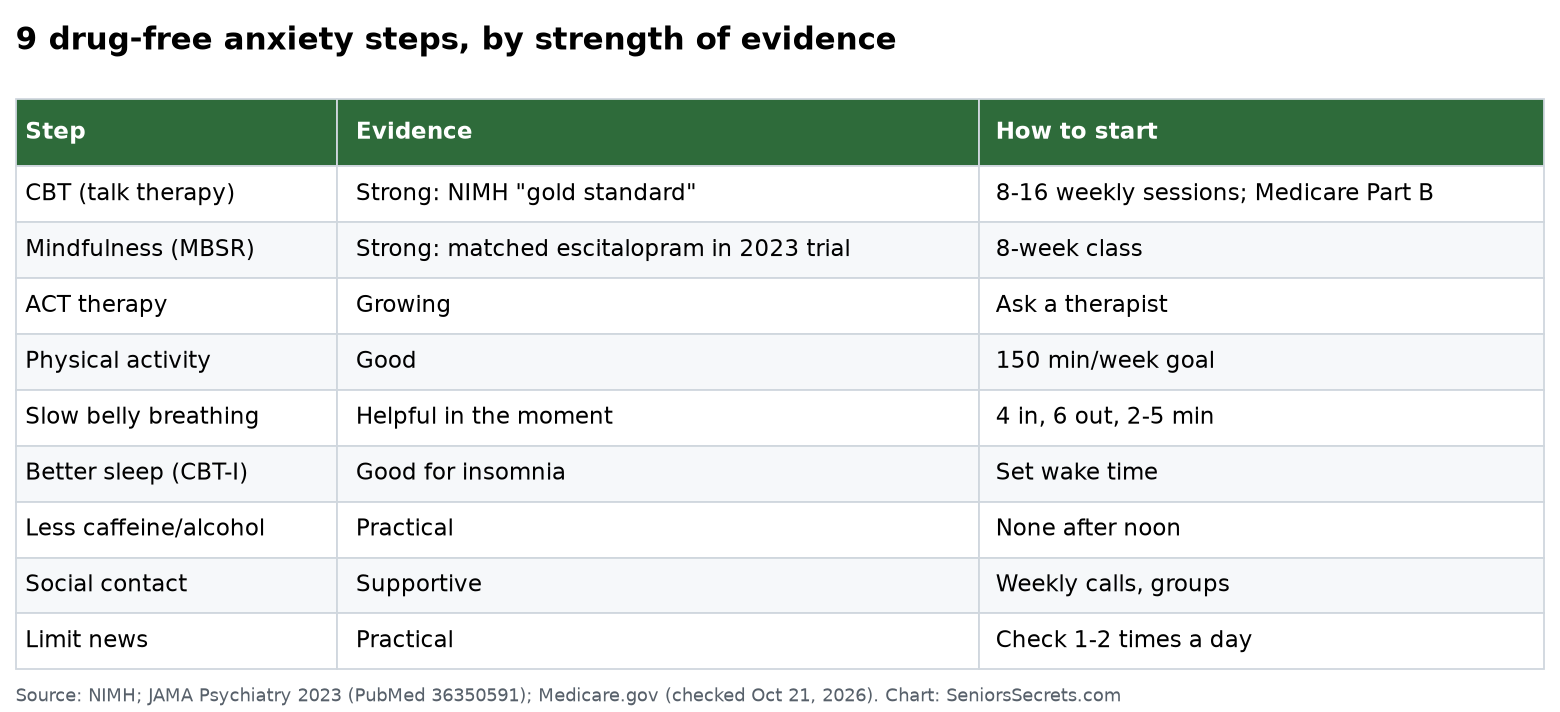
The 9 steps, strongest evidence first
1. Cognitive behavioral therapy (CBT)
CBT teaches you to spot worried thoughts, test whether they are true and change the habits that keep anxiety going. It is well studied and works in person or by video (NIMH). Most courses run about 8 to 16 weekly sessions.
Tip: ask the therapist directly, “Do you use CBT for anxiety, and how many sessions do you expect?” A clear plan is a good sign.
2. Mindfulness-based stress reduction (MBSR)
MBSR is an 8-week class that teaches breathing, body awareness and gentle stretching. In a 2023 trial in adults with anxiety disorders, MBSR was as good as escitalopram (Lexapro), a common anxiety drug. Side effects were reported by 78.6% of the drug group but only 15.4% of the MBSR group (JAMA Psychiatry, PubMed 36350591).
Many hospitals, senior centers and online programs offer MBSR. Look for a trained teacher and the full 8-week format.
3. Acceptance and commitment therapy (ACT)
ACT teaches you to accept worried thoughts without fighting them and to focus on what matters to you. NIMH says research on ACT for GAD is growing (NIMH). It can suit people who find CBT too “argue with your thoughts.”
4. Regular physical activity
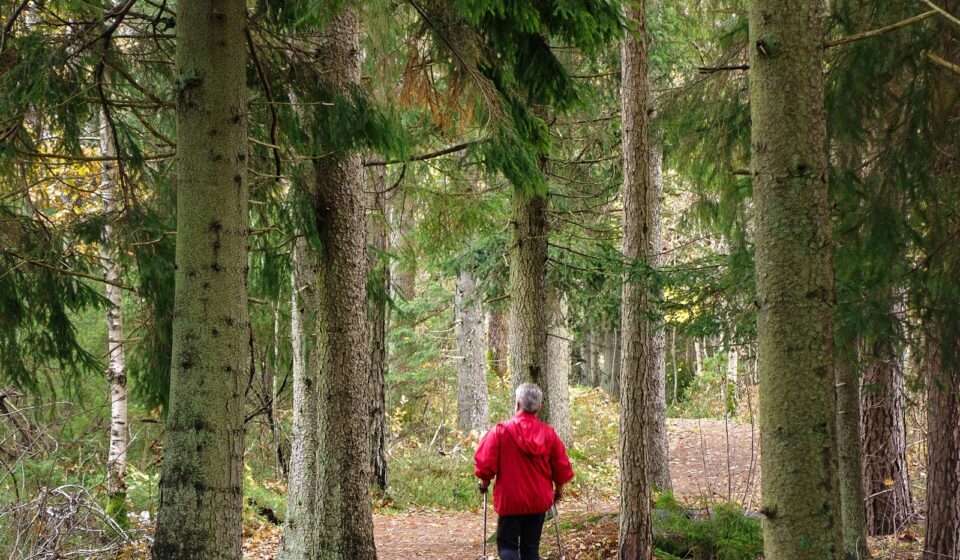
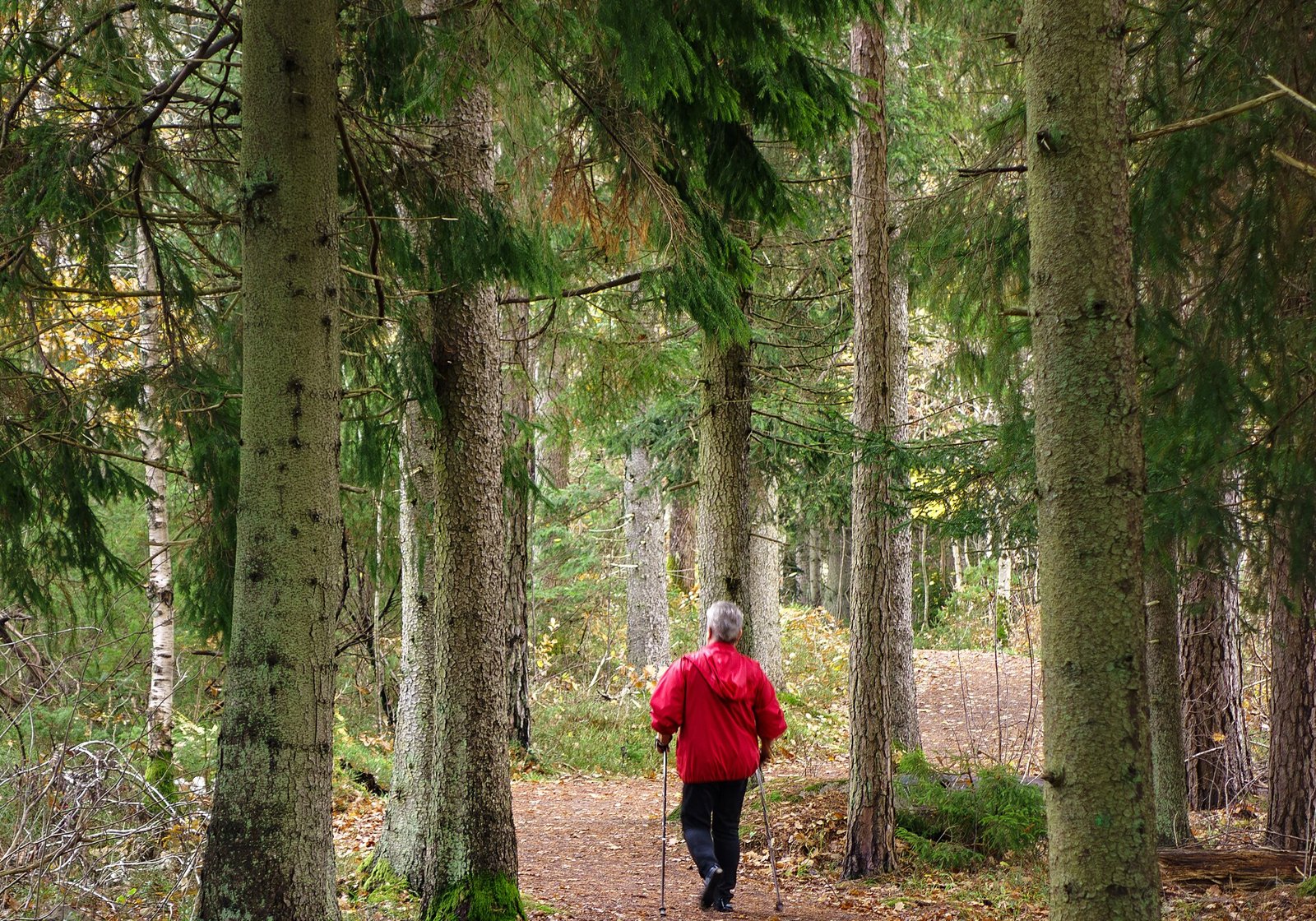
Exercise eases tension and improves sleep. The CDC goal for adults 65 and older is 150 minutes a week of moderate activity, plus strength and balance work. Walking counts. So does chair yoga, which adds slow breathing. Start with 10 minutes a day if you’re new.
5. Slow belly breathing
When you’re anxious, breathing gets fast and shallow. Slow breathing sends a calm signal to your body. Try this:
- Sit up and put one hand on your belly.
- Breathe in through your nose for 4 counts. Feel your belly rise.
- Breathe out slowly through your mouth for 6 counts.
- Repeat for 2 to 5 minutes.
The longer out-breath is the key. This won’t cure an anxiety disorder, but it is a useful tool in the moment. If you feel dizzy, slow down or stop.
6. Better sleep
Poor sleep and anxiety feed each other. A form of CBT made for sleep, called CBT-I, is the first-line treatment for long-term insomnia. Our insomnia guide covers it. Avoid sleep aids with diphenhydramine (the “PM” in many night-time pills). The Beers Criteria also flag these for older adults.
7. Cut back on caffeine and alcohol
Caffeine can cause a racing heart and jitters that feel like anxiety. Try cutting back after noon. Alcohol may calm you at first, but it worsens sleep and can make anxiety worse the next day. It also mixes badly with many medicines.
8. Stay connected
Loneliness raises stress. Regular contact with others is protective. Ideas: a weekly call schedule with family, a walking group, a faith group, volunteering or a class at the senior center. Our arts and hobbies guide has ideas.
9. Limit worry triggers
Constant news and social media can keep your body on alert. Pick one or two set times a day to check news. Some people also use “worry time”: write worries down and look at them only during a 15-minute slot each day.
What about supplements?
Many “calming” supplements are sold. The evidence is mixed or weak for most. Some carry real risks for seniors:
- Kava has been linked to liver damage.
- St. John’s wort interacts with many drugs, including blood thinners and heart medicines.
- Valerian and melatonin can cause morning drowsiness and add to fall risk.
Talk to your doctor or pharmacist before starting any supplement.
When to get professional help
See your doctor or a mental health professional if:
- Worry is making it hard to sleep, eat, leave home or enjoy things
- Drug-free steps haven’t helped after a few weeks
- You also feel hopeless or down most days
If you have thoughts of suicide, call or text 988 (the Suicide & Crisis Lifeline) any time. Call 911 for an emergency.
Medicine can still help. SSRIs and SNRIs are often used for anxiety in older adults (NIMH). They take a few weeks to work. Combining therapy and medicine is common.
What Medicare covers in 2026
- Depression screening: once a year, $0 if your provider accepts assignment. It must be in a primary care setting (Medicare.gov).
- Therapy and counseling: Part B covers individual and group therapy, family counseling, psychiatric evaluation and medication management. You pay 20% of the Medicare-approved amount after the $283 Part B deductible (Medicare.gov).
- Who you can see: psychiatrists, clinical psychologists, clinical social workers, nurse practitioners, physician assistants, clinical nurse specialists, and marriage and family therapists and mental health counselors (Medicare.gov).
- Telehealth: mental health visits by video can be covered, including from home.
Our Medicare mental health coverage guide explains costs in detail. CMS has not posted the 2027 Part B deductible yet. We’ll update this page when it does.
Common questions
What is the best natural treatment for anxiety in older adults?
Cognitive behavioral therapy has the strongest evidence. Mindfulness classes, exercise and better sleep also help.
Does mindfulness really work as well as medicine?
In a 2023 trial, an 8-week mindfulness class was as good as escitalopram for anxiety disorders, with far fewer side effects.
Are benzodiazepines safe for seniors?
They are usually best avoided after 65. The Beers Criteria link them to falls, fractures and memory problems.
Does Medicare pay for therapy for anxiety?
Yes. Part B covers therapy at 20% after the deductible. You can see psychologists, social workers, counselors and marriage and family therapists.
Can anxiety start for the first time in old age?
Yes. New anxiety in later life should be checked by a doctor, because medical problems or medicines can cause it.
Written by Khasim Basha Shaik. I research and compare Medicare plans and health topics for readers. I am not a doctor, therapist or licensed insurance agent. This article summarizes NIMH, Medicare.gov, the AGS Beers Criteria and published trials and is not medical advice. Last reviewed October 21, 2026.
Related guides