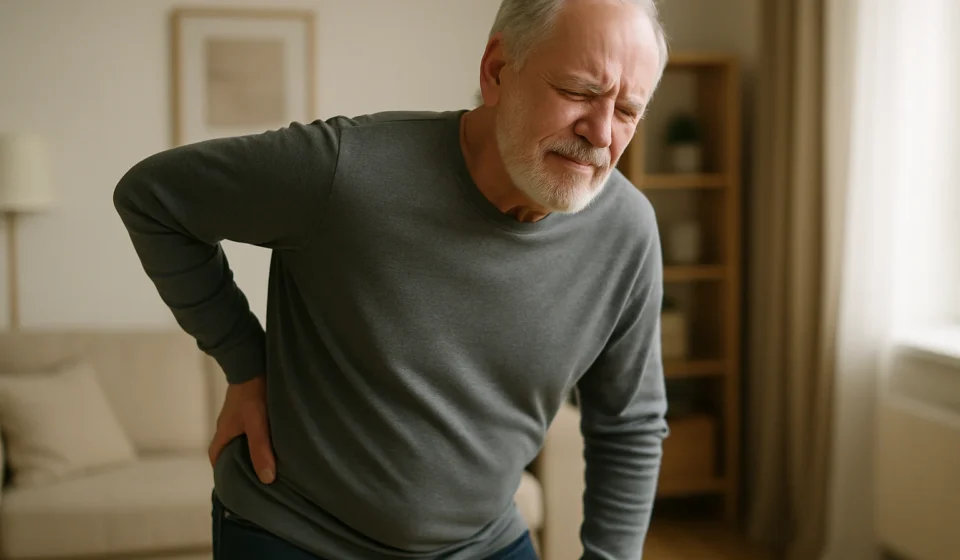

Sciatica in seniors is one of the most common—and most misunderstood—causes of leg pain after 60. The good news up front: roughly 80–90% of sciatica episodes improve within about six weeks with conservative care, and most older adults never need surgery. The key is knowing what is actually pressing on the nerve, which symptoms are red flags, and which “treatments” waste your time and money. This guide explains sciatica the way I wish every doctor had time to.
I am Margaret Collins. After years of helping seniors decode back and leg pain, I have seen how often sciatica gets either over-treated with early scans and injections or dismissed as “just getting old.” Neither serves you. Let us get specific about causes, relief, and when to act fast.
Table of Contents
- What Sciatica Actually Is
- Why It Is Different in Seniors
- Red Flags: When to Get Help Now
- What Relieves Sciatica (and What Doesn’t)
- Movement and Self-Care
- Frequently Asked Questions
What Sciatica Actually Is
Sciatica is not a diagnosis—it is a symptom. It describes pain that radiates from the lower back or buttock down the back of one leg along the path of the sciatic nerve, the thick nerve formed from roots that exit the spine at the L4 through S3 levels. True sciatica is usually felt below the knee and may come with numbness, pins-and-needles, or weakness. Pain confined to the back or buttock without leg radiation is typically mechanical back pain, not sciatica, and that distinction changes the treatment.
The hallmark is that the pain follows a nerve dermatome—a defined strip of skin. An L5 root irritation, for example, shoots down the outer calf to the top of the foot and big toe; an S1 problem travels to the sole and little toe. This pattern is what separates nerve pain from a pulled muscle.
Why It Is Different in Seniors
In younger adults, sciatica is usually a soft herniated disc. In seniors, the disc is often not the main culprit. Age-related changes shift the cause:
| Cause | What happens | Typical clue |
|---|---|---|
| Lumbar spinal stenosis | Narrowing of the spinal canal compresses nerve roots | Leg pain on standing/walking, relieved by sitting or leaning forward (e.g., on a cart) |
| Degenerative disc / osteophytes | Bone spurs and collapsed discs pinch the nerve exit | Gradual, activity-related, often both legs |
| Herniated disc | Disc material presses a single root | Sharper, one-sided, worse with sitting and bending |
| Spondylolisthesis | One vertebra slips forward over another | Pain with extension, sometimes a “catching” feeling |
| Piriformis / gluteal | Buttock muscle irritates the nerve | Deep buttock pain, tender to press, worse sitting |
The most important senior pattern is neurogenic claudication from spinal stenosis: leg pain and heaviness that appear after walking a block or two and ease when you sit or bend forward. It mimics poor circulation, so it is often misdiagnosed. Unlike vascular claudication, the stenosis version improves with flexion (leaning on a shopping cart) rather than simply stopping.
Red Flags: When to Get Help Now
Most sciatica is not an emergency. But a few symptoms demand same-day evaluation because they can signal cauda equina syndrome, infection, fracture, or cancer—all more common with age. Seek urgent care if you have:
- New loss of bladder or bowel control, or numbness in the “saddle” area between the legs
- Rapidly worsening or both-leg weakness, or a foot that drags (foot drop)
- Fever, unexplained weight loss, or a history of cancer with new back pain
- Severe pain after a fall, or in anyone with osteoporosis (possible fracture)
Absent these, major guidelines (including the American College of Physicians) recommend against routine early imaging. MRIs in seniors almost always show disc bulges and arthritis that may have nothing to do with your pain, leading to unnecessary procedures. Imaging is reserved for red flags or pain that fails six weeks of conservative care.
What Relieves Sciatica (and What Doesn’t)
Evidence-based first-line care is conservative and active. Here is what helps, ranked by how well it holds up in studies:
Stay moving
Bed rest beyond a day or two makes sciatica worse. Gentle, frequent walking and position changes keep the nerve gliding and reduce stiffness. The old advice to “rest until it heals” has been overturned by decades of trials.
Physical therapy
A targeted program—often directional (McKenzie) exercises, nerve glides, and core stabilization—is the backbone of recovery. Medicare Part B covers medically necessary physical therapy; see our Medicare physical therapy coverage guide for costs and rules.
Medication, used carefully
Acetaminophen and short courses of NSAIDs can ease pain, but NSAIDs carry kidney, stomach, and blood-pressure risks in older adults and must be cleared with your doctor. Muscle relaxants and gabapentin are frequently prescribed but have weak evidence for sciatica and cause sedation and fall risk in seniors—use them cautiously. Oral steroids and opioids are not recommended for routine sciatica.
Injections and surgery
Epidural steroid injections may give short-term relief for severe nerve pain but do not change long-term outcomes. Surgery (such as microdiscectomy or decompression for stenosis) speeds relief for the minority with persistent, disabling pain or progressive weakness—but by one year, surgical and non-surgical patients often reach similar function. Surgery is a quality-of-life choice, not usually a necessity, unless red flags are present.
Movement and Self-Care
Between PT visits, gentle daily movement matters more than any gadget. Many seniors find relief with low-impact options that decompress the spine and build core support, such as water-based exercise and daily stretching. If stenosis is your cause, forward-leaning activities (stationary cycling, walking with a cart) are usually far more comfortable than back-arching ones. Heat before activity and ice after can take the edge off. Above all, do not let fear of pain freeze you into inactivity—deconditioning is its own enemy. For the bigger picture on managing age-related conditions, see our Senior Health Conditions Guide.
Frequently Asked Questions
How long does sciatica last in older adults?
Most episodes improve substantially within four to six weeks, and 80–90% resolve without surgery. Sciatica from spinal stenosis can be more chronic and recurring, but symptoms are usually manageable with activity modification and exercise.
Should I get an MRI right away?
Usually not. Guidelines advise against early imaging unless you have red-flag symptoms or your pain fails six weeks of conservative care, because scans often reveal age-related changes unrelated to your pain.
Is walking good or bad for sciatica?
Generally good. Gentle, frequent walking helps most people. If walking triggers leg pain that eases when you sit or lean forward, that points to spinal stenosis—mention it to your doctor, and try shorter, more frequent walks.
When is sciatica an emergency?
Go to the ER for new bladder or bowel incontinence, saddle numbness, rapidly worsening or both-leg weakness, or severe pain with fever or after a fall. These can signal cauda equina syndrome or fracture and need immediate care.
Related Articles You May Find Helpful
- Senior Health Conditions Guide 2026
- Does Medicare Cover Physical Therapy in 2026?
- Arthritis Pain Relief for Seniors 2026
- Does Medicare Cover Acupuncture for Back Pain?
- 10 Stretching Exercises for Seniors 2026
Sources
- American College of Physicians — Noninvasive treatment guideline for low back pain
- NIH / NINDS — Sciatica and low back pain information
- NIH / NIAMS — Spinal stenosis overview
This article is educational and not a substitute for professional medical advice. See our Medical Disclaimer and Editorial Guidelines.