Does Medicare Cover Physical Therapy in 2026? Costs, the $2,480 KX Rule, Home PT and How to Avoid Denials

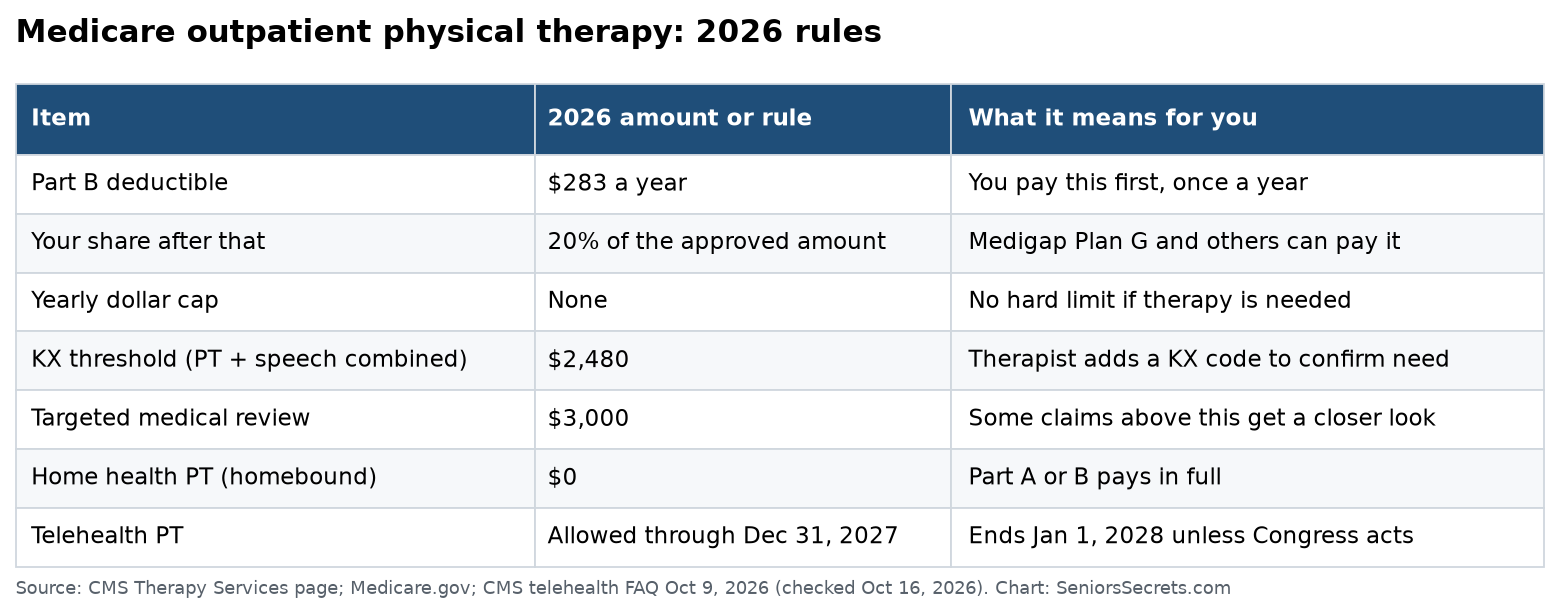
Yes. Medicare Part B covers outpatient physical therapy (PT) when it is medically necessary, and there is no yearly dollar cap. After the 2026 Part B deductible of $283, you pay 20% of the Medicare-approved amount (Medicare.gov physical therapy). You do not need to have had surgery. PT can also be covered to keep you from getting worse.
The one number people mix up is $2,480. That is not a cap. It is the 2026 point where your therapist must add a code (the “KX modifier”) to confirm you still need care (CMS Therapy Services). This guide also folds in the service list and cost table from our older PT guide, so everything is on one page.
I research Medicare rules for readers. I am not a licensed agent or clinician. Figures below were checked on October 16, 2026. The 2027 Part B deductible has not been published yet.
Which part of Medicare pays for PT
Where you get therapy decides which part pays:
- Part B pays for outpatient PT. That means a PT clinic, a hospital outpatient department, your doctor’s office, or a therapist who comes to you in private practice.
- Part A pays for PT while you are an inpatient in a hospital, an inpatient rehab facility, or a skilled nursing facility (SNF) after a qualifying stay.
- Home health pays for PT at home if you are homebound. Covered home health care costs $0 (Medicare.gov costs).
- Medicare Advantage plans must cover the same PT as Original Medicare. Most add copays, networks and prior authorization (the plan approves visits first).
What PT services Medicare covers
When your plan of care calls for it, Medicare pays for the skilled work a licensed physical therapist does. Common covered services include:
- The first evaluation and a written plan of care
- Therapeutic exercise for strength, range of motion and endurance
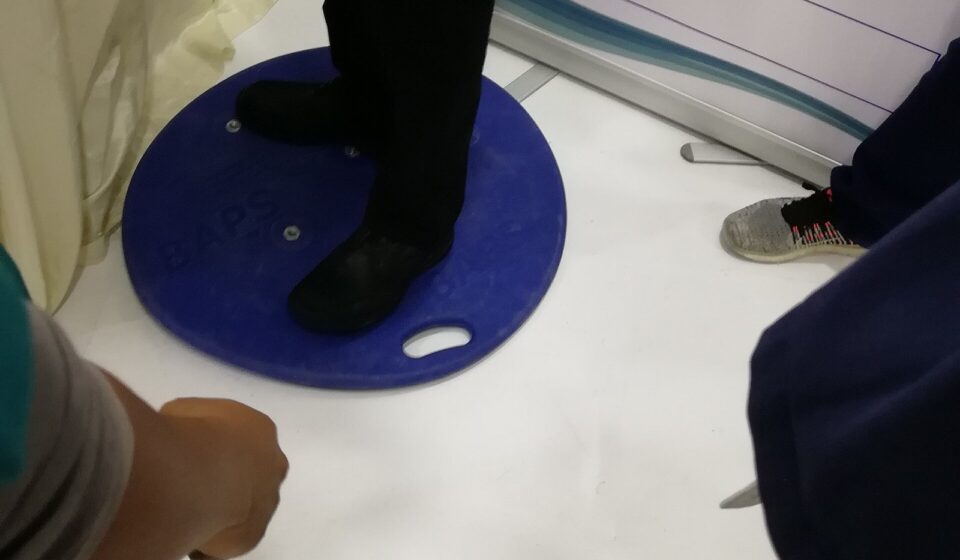
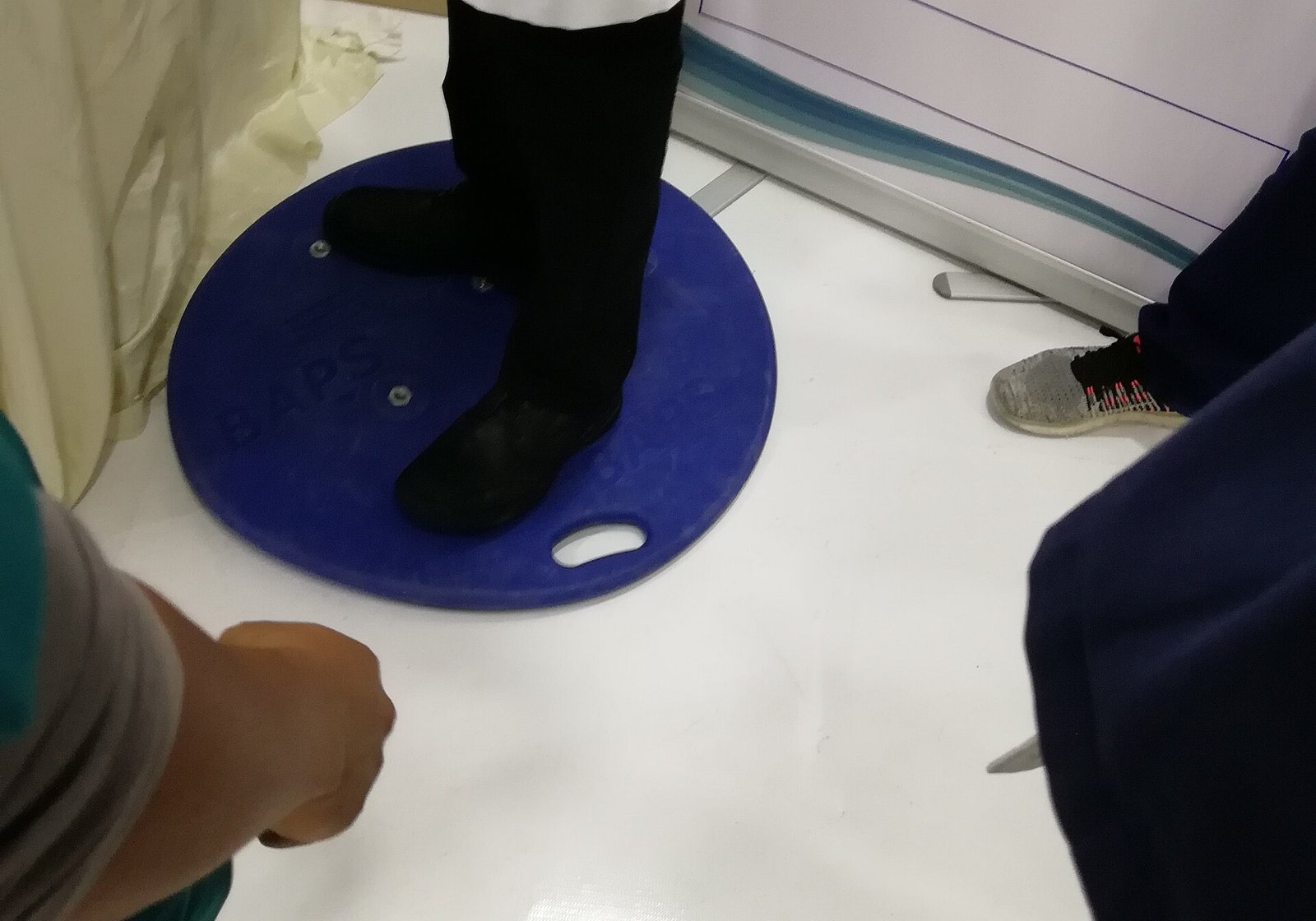
- Balance training and fall prevention
- Gait training (learning to walk safely, with or without a cane or walker)
- Manual therapy, such as joint mobilization
- Rehab after a hip or knee replacement, a fracture, or a stroke
- A home exercise program you can keep doing on your own
What Medicare does not pay for is general fitness. A trainer at a gym, or “PT” that is really just supervised workouts you could do alone, will not qualify.
What you pay in 2026
| Cost item | 2026 amount |
|---|---|
| Part B deductible | $283 a year |
| Your share after the deductible | 20% of the approved amount |
| Home health PT (homebound) | $0 |
| SNF days 1 to 20 after a qualifying stay | $0 a day |
| SNF days 21 to 100 | $217 a day |
Here is a simple example. Say the Medicare-approved amount for a visit is $120. Once your deductible is met, you pay $24 and Medicare pays $96. Twelve visits would cost you about $288. Real amounts vary by code and area, so ask the clinic for its estimate.
Medigap plans such as Plan G pay that 20% coinsurance. If you expect a long rehab, that matters. See our Medigap plan comparison.
Watch for “non-participating” therapists. Most PTs accept Medicare assignment. If yours does not, you may pay up front and wait for Medicare to pay you back.
The $2,480 KX rule, in plain English
Before 2018 there was a hard therapy cap. Congress replaced it with a threshold (CMS Therapy Services). In 2026 it works like this:
- $2,480 for PT and speech therapy combined
- $2,480 for occupational therapy, as a separate amount
- $3,000 is the targeted medical review point. Not every claim above it gets reviewed.
Once your yearly PT and speech costs pass $2,480, your therapist adds the KX code. That code says, “This care is still needed, and my notes prove it.” If the code is missing, the claim is denied. So the real risk is a paperwork gap, not a limit on your care.
If your therapist thinks Medicare may not pay for more visits, they should give you an Advance Beneficiary Notice (ABN) before you get them. Read it. You can still get the care, but you may owe the bill.
Maintenance therapy is covered too
Many people are told, “You have plateaued, so Medicare stops paying.” That is not the rule. Under the Jimmo settlement, Medicare covers skilled therapy to maintain your function or slow a decline, not only to improve it (CMS Jimmo page). The test is whether you need a therapist’s skill to do the program safely.
This matters for Parkinson’s disease, MS, arthritis, and after a stroke. If you hear “no progress, no coverage,” ask the clinic to review the Jimmo rules and to document why skilled care is needed.
Home PT and SNF rehab
You count as homebound when leaving home takes a major effort, such as needing a walker, a wheelchair, special transport, or another person’s help (Medicare.gov home health). You also need a doctor’s order and a Medicare-certified agency. Learn more in our home health care coverage guide.
After a hospital stay, rehab in a SNF may be covered under Part A. The 3-day inpatient rule and the 100-day limit apply. Our skilled nursing coverage guide explains both.
Telehealth PT
Physical therapists can still bill Medicare for telehealth visits, including from your home, through December 31, 2027. Starting January 1, 2028, PTs can no longer bill Medicare telehealth unless Congress extends the rule (CMS telehealth FAQ, Oct 9, 2026). Video visits work well for checking a home exercise program. They do not replace hands-on care after surgery.
How to avoid a PT denial
- Get a plan of care signed. Your doctor, nurse practitioner, or physician assistant must certify that you need therapy. Ask the clinic to confirm the signature is on file.
- Set clear goals. “Walk to the mailbox without a cane” is better than “get stronger.”
- Track your total. Ask the billing office how close you are to $2,480 in the fall.
- Check your Medicare Summary Notice. Make sure each visit was billed once.
- Appeal on time. Most first-level appeals must be filed within 120 days. Our Medicare appeal guide walks through each level.
When PT is not the right fit: If you only want a gym routine, Medicare will not pay. Look at your plan’s fitness benefit instead. If you have a new, sudden symptom such as chest pain or a fall with a head injury, see a doctor first.
Medicare Advantage and PT
Advantage plans often charge a set copay per visit, such as $20 to $50, and many require prior authorization after a set number of visits. Open Enrollment runs October 15 to December 7, 2026. If you expect knee or hip surgery in 2027, check each plan’s PT copay and its rehab network before you switch.
Common questions
Do I need a referral for physical therapy under Medicare?
Most states let you see a PT directly. But Medicare still needs a doctor, NP, or PA to certify your plan of care, so you will need one of them involved.
Is there a limit on PT visits in 2026?
No. There is no visit or dollar cap. Above $2,480 in combined PT and speech costs, the therapist must add the KX code to confirm the care is needed.
Does Medicare pay for PT if I am not improving?
Yes, if you need a therapist’s skills to maintain your function or slow decline. This comes from the Jimmo settlement.
Is physical therapy at home free?
Yes, if you qualify for home health. You must be homebound, have a doctor’s order, and use a Medicare-certified agency. Covered home health services cost $0.
Can I do PT by video?
Yes, through December 31, 2027. After that, therapists lose Medicare telehealth billing unless Congress extends it.
Written by Khasim Basha Shaik. I research and compare Medicare coverage rules for readers. I am not a licensed insurance agent or medical professional. This article summarizes Medicare.gov and CMS materials and is not billing or legal advice. Last reviewed October 16, 2026.