
Yes. Medicare covers a pacemaker when you have a slow heart rate that causes symptoms and will not go away on its own. It covers an implantable cardioverter defibrillator (ICD) for people at high risk of a deadly heart rhythm, such as some people with heart failure. Part A pays if you are admitted to the hospital. Part B pays if the surgery is outpatient. In 2026 you may owe the $1,736 Part A deductible or the $283 Part B deductible plus 20%.
A heart device can feel scary, and the bills can feel even more confusing. This guide explains the rules in plain words. It uses Medicare.gov’s defibrillator page, the national coverage rules for pacemakers (NCD 20.8.3) and ICDs (NCD 20.4), and the CMS 2026 premium and deductible fact sheet, all checked on October 15, 2026.
I research Medicare rules for readers. I am not a doctor or a licensed insurance agent.
Pacemaker vs ICD: what is the difference?
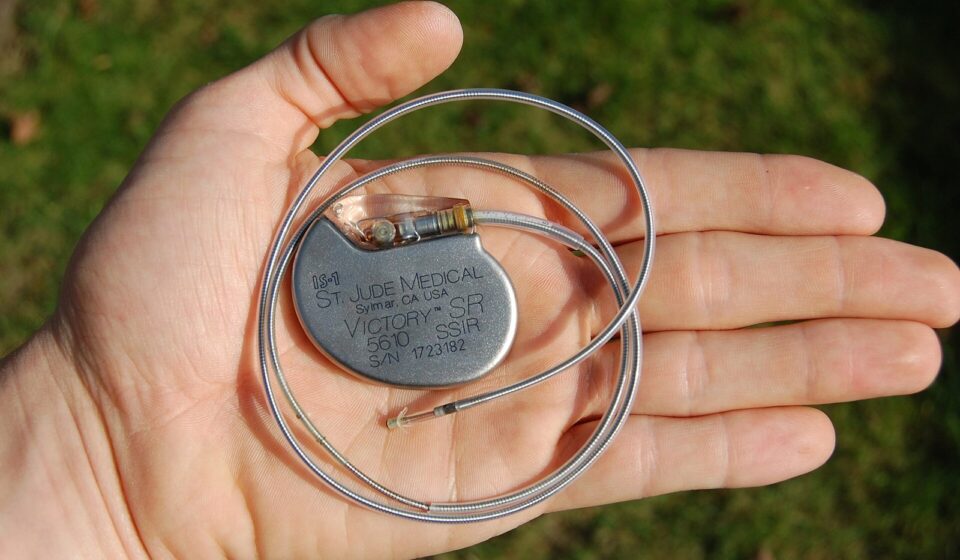
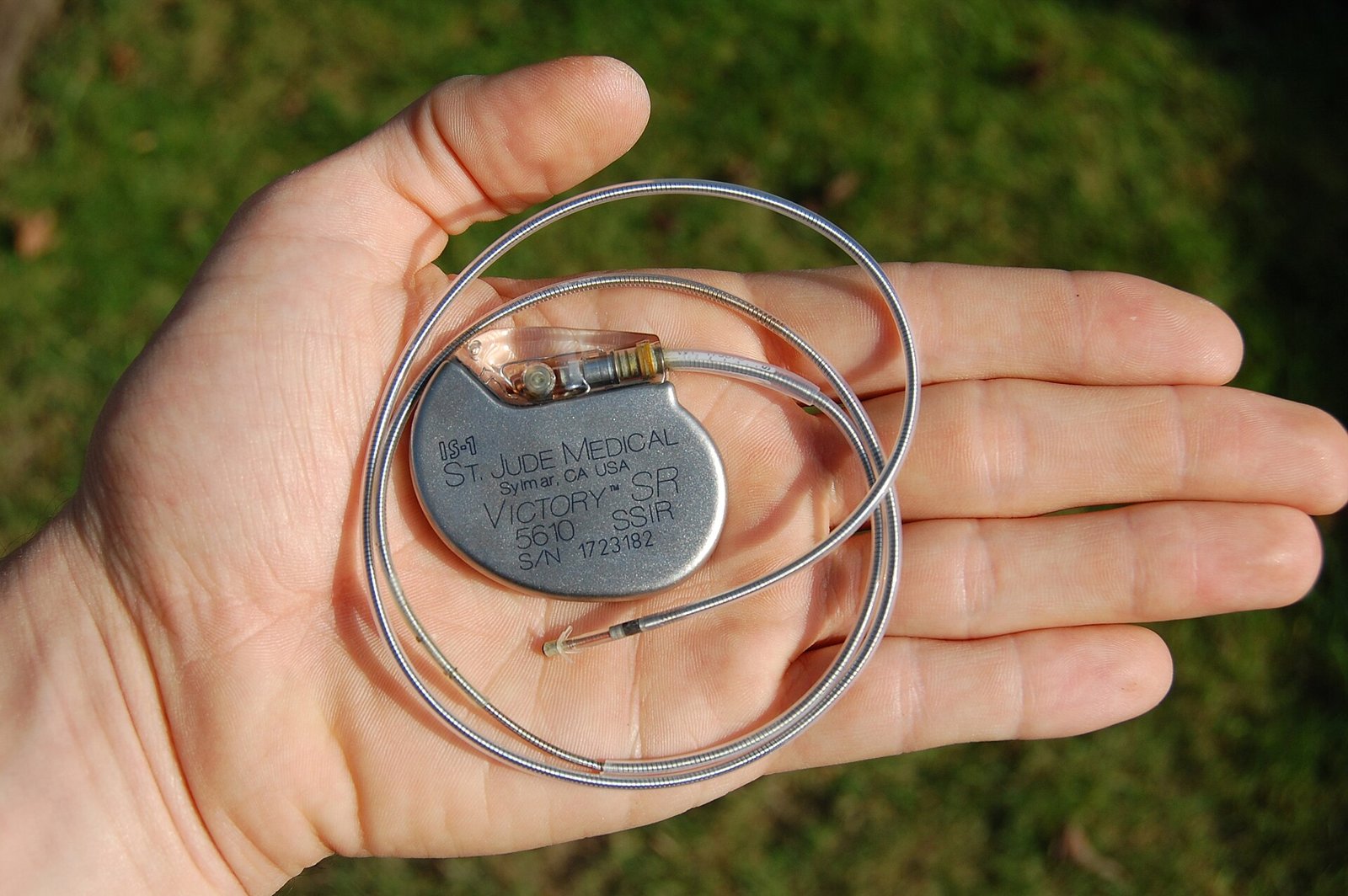
- A pacemaker is a small device under the skin of your chest. It sends gentle signals to keep your heart from beating too slowly.
- An ICD watches for a dangerous fast rhythm. If one starts, it can give a shock to reset the heart. Most ICDs can also pace like a pacemaker.
Both are placed in a short procedure, often with only one night in the hospital or none at all.
When Medicare covers a pacemaker
Under the national rule, Medicare covers a single or dual chamber pacemaker for documented, non-reversible, symptomatic bradycardia (slow heartbeat) caused by:
- Sinus node dysfunction (the heart’s natural pacemaker is not working well), or
- Second or third degree heart block (signals do not pass properly from the top to the bottom of the heart)
“Symptomatic” means the slow rate causes problems such as fainting, dizziness, confusion, seizures or heart failure.
Medicare does not cover a pacemaker in cases like these:
- The slow rate has a reversible cause, such as a medicine, low potassium or low body temperature
- Slow heart rate with no symptoms
- Slow heart rate only during sleep
- Fainting with no known cause
If a medicine is slowing your heart, your doctor will usually try changing it first.
When Medicare covers an ICD
The ICD rule is longer. In short, Medicare covers an ICD for people who:
- Have survived cardiac arrest or had a sustained dangerous fast rhythm that was not from a temporary cause, or
- Have a weak heart pump after a heart attack (ejection fraction 30% or less), or
- Have certain types of cardiomyopathy with heart failure and a low ejection fraction, plus other rules
Medicare.gov says simply that Medicare may cover an ICD if you’ve been diagnosed with heart failure.
The shared decision rule
For many people getting an ICD to prevent a first event, Medicare requires a shared decision-making visit before the first implant. A doctor, nurse practitioner, physician assistant or clinical nurse specialist must go over the pros and cons with you using an evidence-based decision tool. It can be a separate visit.
This is a good thing. Ask about battery changes, the chance of shocks, driving rules and what happens near the end of life. You can ask to have the shock feature turned off later if your goals change.
What you pay in 2026
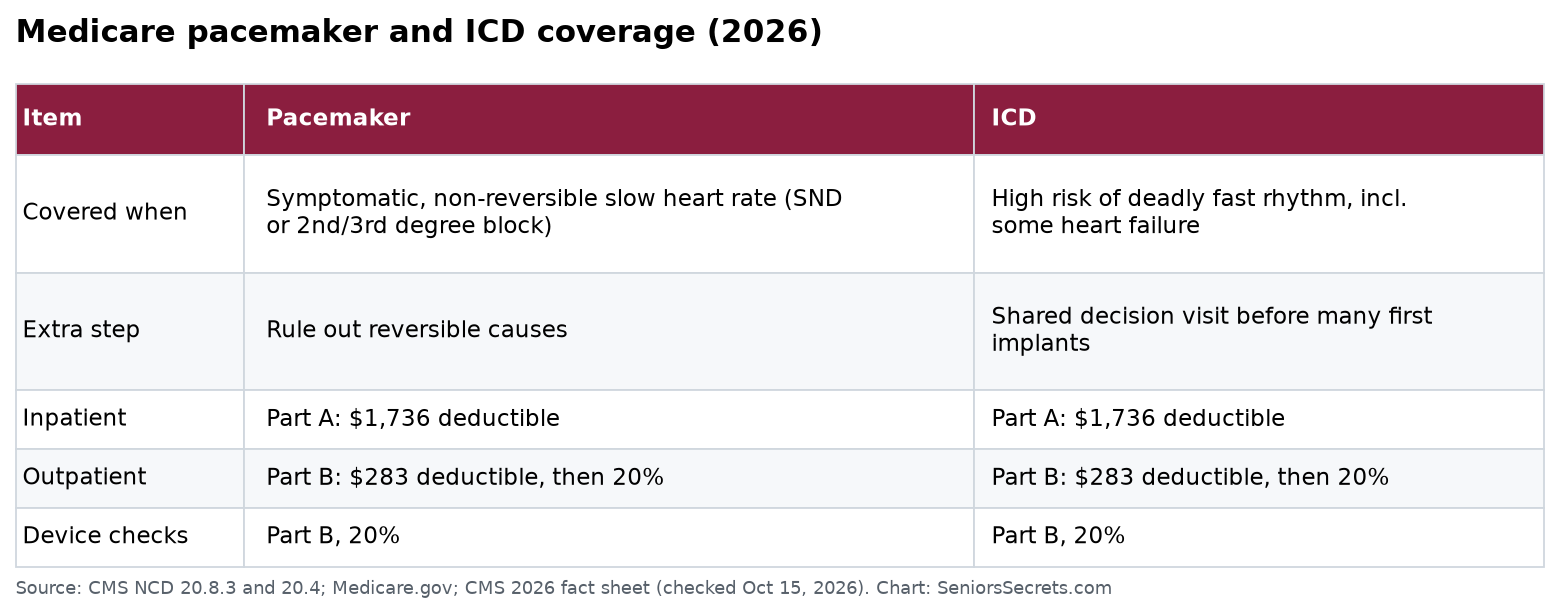
| Setting | Which part pays | Your cost in 2026 |
|---|---|---|
| Admitted as an inpatient | Part A for the hospital, Part B for the doctor | $1,736 Part A deductible per benefit period, then 20% of doctor bills |
| Outpatient surgery | Part B | $283 Part B deductible, then 20% and a hospital copay |
| Device checks after | Part B | 20% after the deductible |
Medicare.gov notes that for outpatient surgery the hospital copayment usually can’t be more than the Part A hospital deductible. The 2026 Part B premium is $202.90 a month for most people. CMS had not yet published 2027 amounts when I checked on October 15, 2026.
Watch your status
Many device implants happen as outpatient care, even if you stay overnight. That changes which part pays and what you owe. Ask the hospital, “Am I an inpatient or an outpatient?” Our guide to observation status explains why this matters.
Medigap and Medicare Advantage
- A Medigap plan can pay much of your deductible and 20%. See our Medigap plan guide.
- A Medicare Advantage plan uses its own copays and usually needs prior authorization. Call the plan before your date. Our Advantage vs Original Medicare guide compares the two.
Battery changes and device checks
A pacemaker or ICD battery lasts years, not forever. When it runs low, you need a short procedure to replace the generator. Medicare looks at that replacement as medically needed when the battery is near its end or the device fails.
You will also have regular device checks, in the clinic or from home by remote monitor. These are billed under Part B, so the 20% applies after your deductible.
Steps before your procedure
- Ask your cardiologist which rule you meet and ask them to write it in your chart.
- For an ICD, make sure the shared decision visit is done and noted.
- Ask the hospital: inpatient or outpatient?
- If you have an Advantage plan, confirm prior authorization is approved.
- Ask for a written cost estimate.
- Plan a ride home and help for a few days. You may have arm limits on the device side.
After you go home
- Carry your device ID card.
- Ask how to handle airport security and magnets.
- Ask when you can drive again. ICD driving rules differ by state.
- Join cardiac rehab if your doctor offers it. See our cardiac rehab coverage guide.
- Learn the warning signs of heart trouble.
If Medicare denies the claim
Read your Medicare Summary Notice. Call your doctor’s office and ask them to check the diagnosis codes and notes. You can file an appeal within 120 days of the notice. Many denials are paperwork errors that get fixed once the chart shows the rule you meet.
Common questions
Does Medicare pay for a pacemaker?
Yes, if you have a slow heart rate with symptoms from sinus node dysfunction or heart block that will not go away on its own.
Is an ICD covered by Medicare?
Yes, for people at high risk of a dangerous fast rhythm, including many with heart failure and a weak heart pump.
How much does a pacemaker cost with Medicare in 2026?
It depends on the setting. Inpatient care starts with the $1,736 Part A deductible. Outpatient care uses the $283 Part B deductible, then 20%.
What is the shared decision visit?
A required talk with a clinician, using a decision tool, before many first-time ICD implants.
Are battery replacements covered?
Yes, when the battery is near the end of its life or the device fails, under the same Part A or Part B rules.
Written by Khasim Basha Shaik. I research Medicare rules for older adults. I am not a doctor or licensed insurance agent. This article summarizes CMS and Medicare.gov guidance and is not medical or legal advice. Last reviewed October 15, 2026.
Related guides