
Medicare Part B covers cardiac rehabilitation in 2026 if you’ve had a qualifying heart problem, such as a heart attack in the last 12 months, bypass surgery, a stent, a valve repair or stable heart failure. Regular cardiac rehab covers up to 36 one-hour sessions (with up to 36 more if approved). Intensive cardiac rehab covers up to 72 sessions over 18 weeks. After the $283 Part B deductible, you pay 20% of the Medicare-approved amount, plus a hospital copay in outpatient settings.
Cardiac rehab is a supervised program of exercise, education and counseling after a heart problem. It is one of the best-proven steps to recover and avoid another heart event. Yet many people who qualify never start. This guide uses Medicare’s cardiac rehabilitation page, the federal rule at 42 CFR 410.49, Medicare’s 2026 costs page and the CMS telehealth FAQ updated in October 2026. I checked all of them on October 16, 2026.
I research Medicare rules for older adults. I am not a doctor or licensed insurance agent. Ask your doctor whether cardiac rehab is right for you.
Who qualifies
Medicare covers cardiac rehab if you’ve had at least one of these:
- A heart attack in the last 12 months
- Coronary artery bypass surgery
- Stable angina (chest pain)
- A heart valve repair or replacement
- A coronary angioplasty or stent
- A heart or heart-lung transplant
- Stable chronic heart failure
The heart failure rule is strict. Under 42 CFR 410.49, you need an ejection fraction of 35% or less and NYHA class II to IV symptoms, despite at least 6 weeks of optimal heart failure treatment. Your cardiologist will know these numbers.
You also need a doctor’s referral. The program runs in a doctor’s office or a hospital outpatient department, including a critical access hospital.
Regular vs intensive cardiac rehab
| Feature | Regular cardiac rehab | Intensive cardiac rehab (ICR) |
|---|---|---|
| Sessions covered | Up to 36 | Up to 72 |
| Time frame | Up to 36 weeks | Up to 18 weeks |
| Sessions per day | Up to 2 (1 hour each) | Up to 6 (1 hour each) |
| Extra sessions | 36 more if your Medicare contractor approves | None beyond 72 |
| What’s included | Exercise, education, counseling | Same, plus more lifestyle coaching |
| Who pays | Part B | Part B |
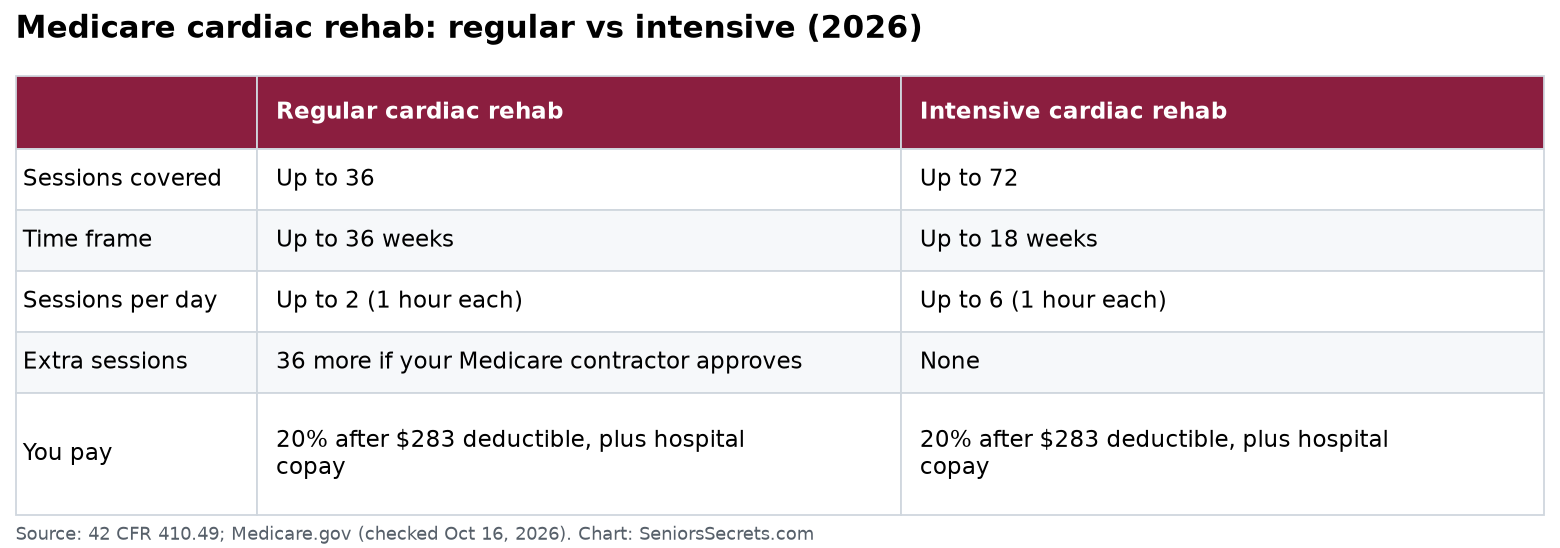
Intensive programs, like the Pritikin, Ornish and Benson-Henry programs, must be approved by Medicare. They focus more on diet, stress and habits. Ask your cardiologist if an ICR program is near you.
What you pay in 2026
Cardiac rehab is a Part B service. In 2026:
- Part B premium: $202.90 a month for most people
- Part B deductible: $283 a year
- After the deductible: 20% of the Medicare-approved amount for each session
In a hospital outpatient setting, you also pay the hospital a copayment for each session.
Here is how it adds up. This is an example, not an actual rate. If Medicare approves $100 per session and you finish 36 sessions, the total is $3,600. If you’ve already met your deductible, your 20% share is $720. That’s why your other coverage matters.
How other coverage helps
- Medigap (Medicare Supplement): most plans pay all or part of the 20%. See our guide to the best Medigap plans for 2026.
- Medicare Advantage: plans must cover cardiac rehab, but copays differ. Some plans charge a set copay per session, and many require prior authorization. Call your plan before you start.
- Medicaid or a Medicare Savings Program: may cover your share if your income is low.
What happens in a session
A typical session lasts about an hour:
- Check-in: blood pressure, heart rate and weight.
- Warm-up: gentle stretching.
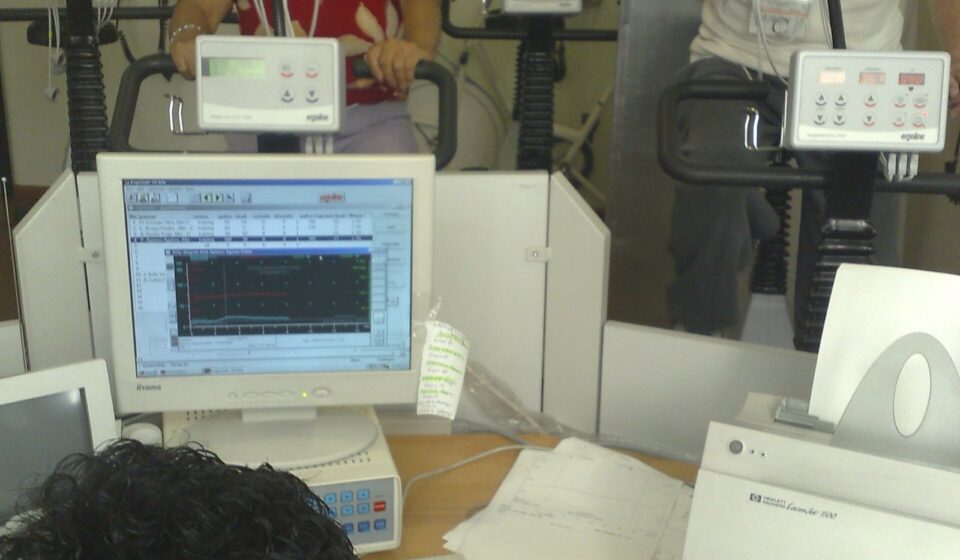
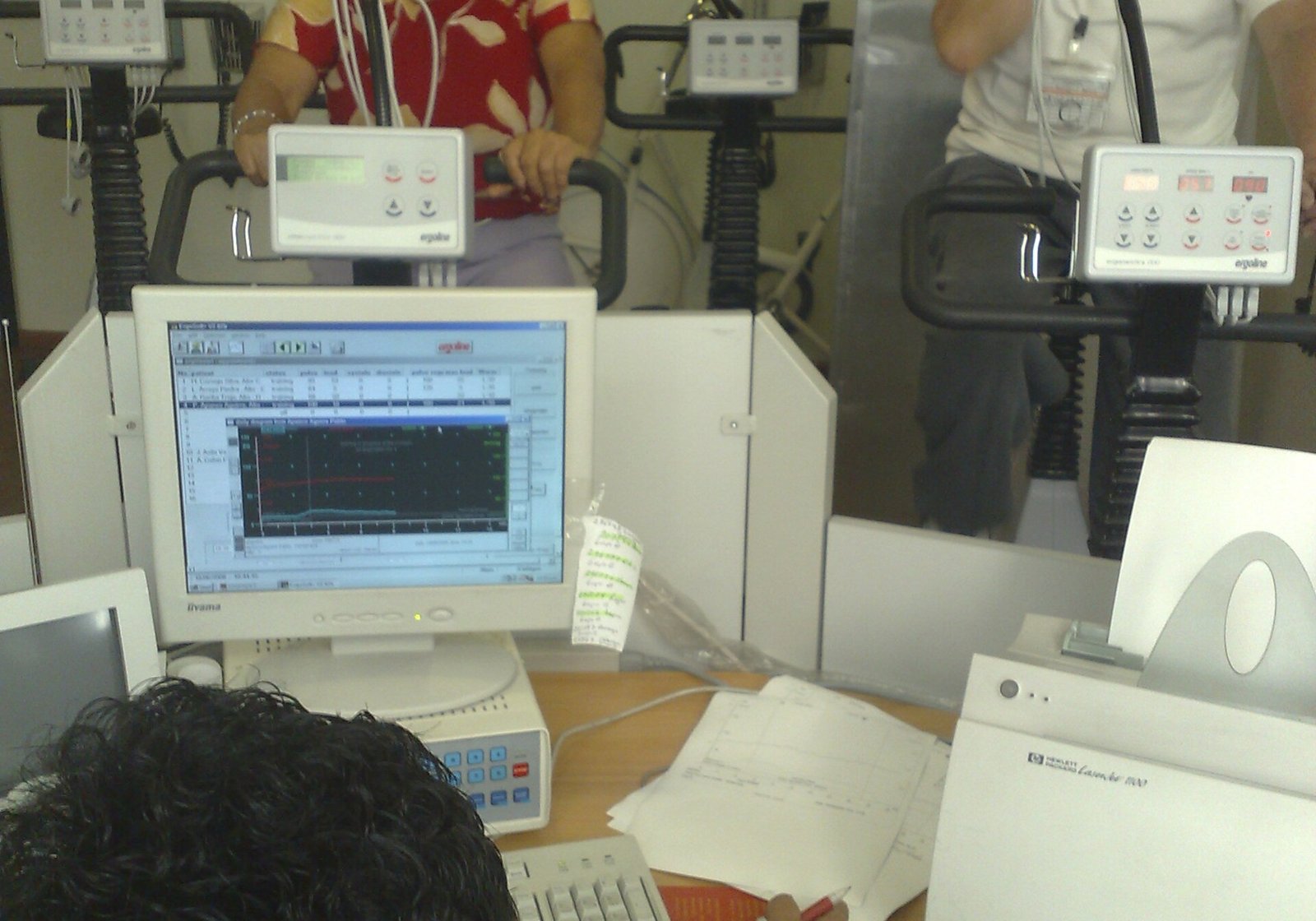
- Exercise: walking on a treadmill, a stationary bike or light weights, while staff watch your heart on a monitor.
- Cool-down.
- Education: heart-healthy eating, medicines, quitting smoking, managing stress.
Most people go 2 or 3 times a week for about 12 weeks. The goal is to build safe habits you keep at home.
Can you do cardiac rehab from home?
For now, often yes. Medicare’s telehealth page lists cardiac rehabilitation services among the telehealth services Medicare covers from anywhere in the U.S., including your home, through December 31, 2027. You pay the same 20% as for an in-person session in most cases.
There is a second change. Starting January 1, 2026, the doctor’s required direct supervision of cardiac rehab and intensive cardiac rehab can be done virtually, with real-time audio and video (not phone only), per the CMS telehealth FAQ.
Not every program offers home sessions, and most people still need some visits in person, especially at the start. Ask your program what it offers and how it bills. Under current law, starting January 1, 2028, you will generally need to be in a medical facility in a rural area for Medicare telehealth, except for behavioral health. For more, see our telehealth guide for seniors.
How to get started
- Ask for a referral before you leave the hospital, or at your first follow-up visit.
- Pick a program near home. Travel time is a common reason people drop out.
- Check costs. Ask the program for the Medicare-approved amount and any hospital copay.
- Call your plan if you have Medicare Advantage, and ask about prior authorization.
- Book sessions 2 or 3 times a week.
Didn’t get a referral? Ask your cardiologist directly. It is your right to ask.
Tips to finish the program
- Bring a friend or family member to the first visit.
- Schedule sessions at the same times each week.
- Track your progress: walking distance, weight, blood pressure.
- Tell staff about any chest pain, dizziness or shortness of breath right away.
After rehab, keep moving. Our guides to heart-healthy exercise for seniors and exercise with heart failure can help.
If Medicare denies coverage
If Medicare or your plan says no, ask why in writing. Common reasons are a missing referral, a condition that isn’t on the list, or missing heart failure numbers. Your doctor can often fix the paperwork. If not, you can appeal. See how to win a Medicare appeal.
Common questions
Does Medicare cover cardiac rehab after a stent?
Yes. A coronary angioplasty or stent is one of the qualifying conditions. You need a doctor’s referral.
How many cardiac rehab sessions does Medicare cover?
Up to 36 one-hour sessions for regular cardiac rehab, with up to 36 more if your Medicare contractor approves. Intensive cardiac rehab covers up to 72 sessions over 18 weeks.
How much does cardiac rehab cost with Medicare?
After the $283 Part B deductible in 2026, you pay 20% of the Medicare-approved amount per session, plus a hospital copay in outpatient settings. Medigap may cover your share.
Does Medicare cover cardiac rehab for heart failure?
Yes, for stable chronic heart failure with an ejection fraction of 35% or less and class II to IV symptoms after at least 6 weeks of treatment.
Can cardiac rehab be done virtually?
Medicare lists cardiac rehab as a telehealth service you can get at home through December 31, 2027. Since January 1, 2026, the supervising doctor can also be present by real-time video. Ask your program what it offers.
Written by Khasim Basha Shaik. I research Medicare rules and senior health topics. I am not a doctor or licensed insurance agent. This article summarizes official Medicare sources and is not medical or insurance advice. Last reviewed October 16, 2026.
Related guides