
Puffy ankles at the end of a hot day are usually harmless. Swelling that is new, one-sided, painful, or climbing the leg is a different story. That kind of edema can be the first visible sign of heart failure, a blood clot, kidney disease, or a medication side effect.
I went through MedlinePlus on edema, Medicare.gov’s lymphedema coverage page, and the clinical patterns doctors use to sort local problems in the leg from systemic ones. Below is the practical version: what edema is, the causes that show up most often after 65, the red flags that mean same-day care, and what Medicare actually pays for.
I’m a researcher, not a doctor. Use this to ask better questions. Don’t use it to diagnose yourself.
The short version
- Edema means fluid trapped in body tissues. In older adults it most often shows up in the ankles and feet.
- Both legs, worse at day’s end usually points to venous insufficiency, medication effects, heart issues, or kidney issues.
- One leg, sudden, warm, or painful raises concern for a deep vein thrombosis (DVT) or infection – same-day evaluation.
- Treatment depends on the cause. Elevation, compression, walking, and cutting salt help many people. Diuretics help some causes and can make others worse.
- Medicare Part B covers gradient compression garments and bandaging when you have a lymphedema diagnosis and an order from your clinician. Stockings for venous insufficiency alone are generally not covered the same way.
What edema is, and why it shows up more after 65
Edema happens when fluid leaks out of small blood vessels faster than the veins and lymph system can clear it. MedlinePlus describes it simply: swelling from fluid in the body’s tissues, usually in the feet, ankles and legs, though it can involve the whole body.
Aging stacks the deck. Vein valves weaken. The calf-muscle “pump” that pushes blood upward gets less use when we sit more. The heart and kidneys handle salt and water less efficiently. Gravity then wins, and fluid pools in the lowest part of the body – ankles and feet when you’re upright, or the lower back if you’re in bed a lot.
Edema itself is a signal, not a diagnosis. The useful first split is local (a problem in one leg) versus systemic (heart, kidneys, liver, medicines), and one leg versus both.
The causes I see most often in seniors
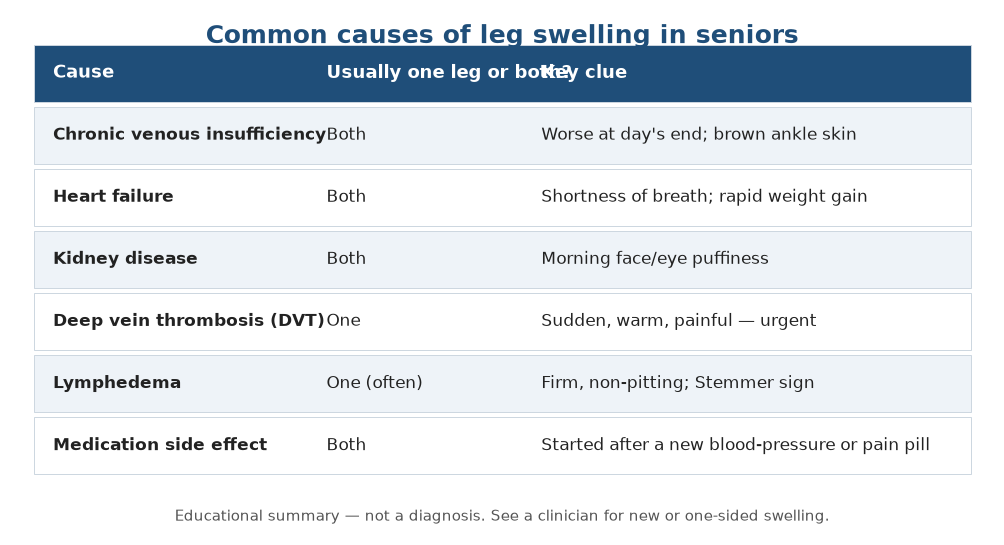
1. Chronic venous insufficiency
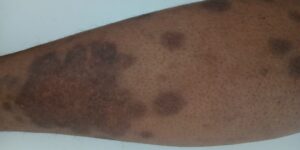
Damaged vein valves let blood pool in the legs. Swelling is usually in both legs, worse late in the day, better after a night with the legs flat. Over time the skin around the ankles can turn brownish, and slow-healing venous ulcers can form.
2. Heart failure
When the heart can’t pump well, pressure backs up into the veins and fluid is forced into the tissues. Heart-failure edema is classically bilateral and pitting, and it often comes with shortness of breath when lying flat, waking at night gasping, rapid weight gain, and fatigue. New bilateral swelling plus breathlessness needs prompt evaluation – see our guide to heart failure warning signs in seniors.
3. Kidney disease
Failing kidneys retain sodium and water and may spill protein into the urine. Swelling can show up around the eyes in the morning as well as in the legs. If your eGFR is already reduced, new swelling deserves a same-week call – more in our kidney disease warning signs guide.
4. Deep vein thrombosis (DVT)
A clot in a deep leg vein often causes sudden, one-sided swelling, sometimes with warmth, redness, and calf pain. This is urgent because the clot can travel to the lungs. Unilateral swelling is the pattern that separates a common venous problem from a dangerous one – read blood clots and DVT warning signs and seek care the same day.
5. Lymphedema
Damage to or removal of lymph nodes (often after cancer treatment) blocks lymph drainage. The swelling is often firm and non-pitting, and it may involve the toes.
6. Inactivity, heat, and salt
Long sitting, long flights, hot weather, and a high-salt diet all push fluid into the ankles. Mild end-of-day puffiness that improves overnight usually fits this group – still worth mentioning at your next visit if it is new or getting worse.
Medications that commonly cause swelling
Drug-induced edema is easy to miss. Review this list with your pharmacist before assuming the worst:
| Medicine class | Common examples | Why swelling happens |
|---|---|---|
| Calcium channel blockers | Amlodipine, nifedipine | Dilate small arteries; raise capillary pressure |
| NSAIDs | Ibuprofen, naproxen | Sodium and water retention |
| Gabapentin / pregabalin | Neurontin, Lyrica | Peripheral edema in a meaningful share of users |
| Thiazolidinediones | Pioglitazone (Actos) | Fluid retention; can worsen heart failure |
| Steroids | Prednisone | Salt and water retention |
Never stop a prescribed medicine on your own. Amlodipine ankle swelling, for example, is often manageable by switching agents – a conversation for your clinician. If you take many medicines, our polypharmacy safety guide is a useful companion.
Pitting vs. non-pitting (the fingertip test)
Press a fingertip firmly into the swollen area for about five seconds.
- Pitting: a dent remains and slowly fills – typical of heart, kidney, venous, and many medication causes.
- Non-pitting: the tissue feels firm and springs back – more consistent with lymphedema or some thyroid-related swelling.
Clinicians grade pitting from 1+ (slight) to 4+ (deep dent lasting more than about 20 seconds). You don’t need to grade yourself; the point is to describe what you see clearly.
Red flags: when swelling is an emergency
Call 911 or go to the emergency room if swelling comes with any of these:
- Sudden swelling in one leg with pain, warmth, or redness (possible DVT)
- Shortness of breath, chest pain, or coughing up blood (possible clot in the lung or acute heart failure)
- Swelling after a new medicine with hives, lip, or tongue swelling (allergic reaction)
- A swollen leg that is hot and tender with fever (possible cellulitis)
- Rapid weight gain of more than 2–3 pounds in a day if you already have heart failure
What actually reduces chronic, non-emergency edema
Treatment follows the cause, but these measures help many seniors with day-to-day swelling:
- Leg elevation. Raise the legs above heart level for about 30 minutes, a few times a day.
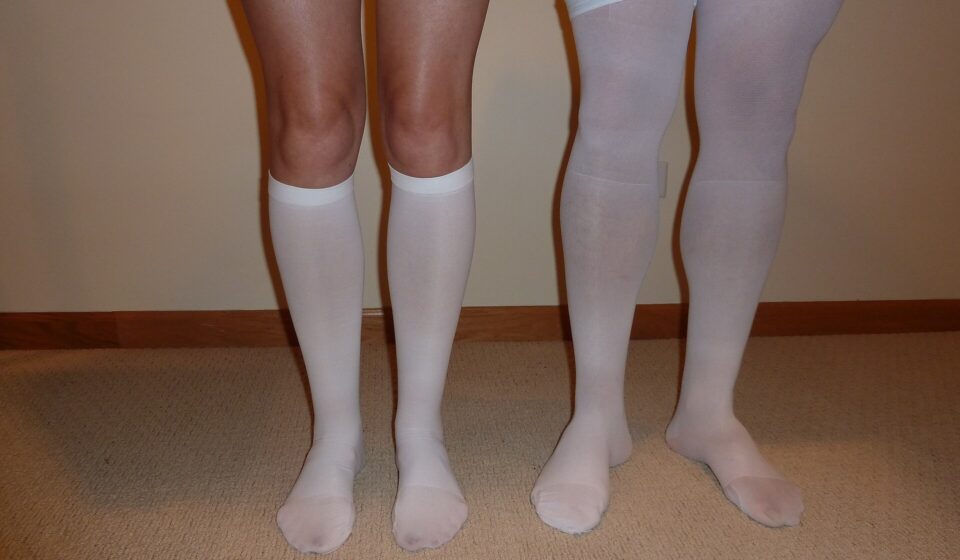
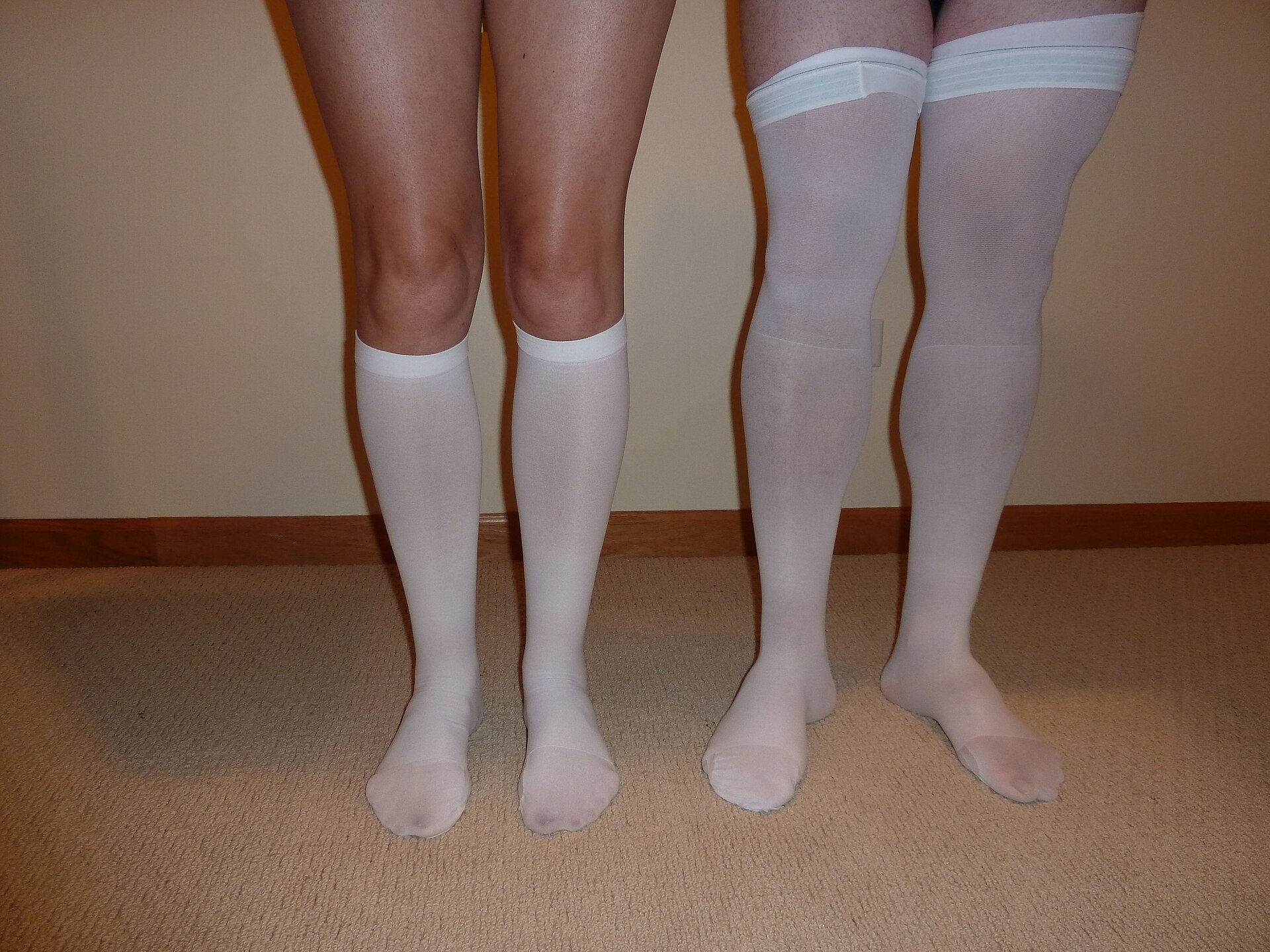
- Graduated compression. Knee-high 20–30 mmHg stockings are first-line for many venous problems. Put them on in the morning before swelling builds. Skip them if you have significant arterial disease until a clinician clears you.
- Calf-muscle pump. Ankle circles, heel raises, and walking every hour on long trips move fluid.
- Sodium. Keeping salt closer to 2,000 mg a day or less reduces fluid retention, especially with heart or kidney disease.
- Diuretics. Useful for some heart and kidney edema; often the wrong tool for pure venous insufficiency or lymphedema.
- Skin care. Moisturize and check daily for cracks. Swollen skin gets infected more easily.
- Hydration. Mild dehydration can make the body hold fluid. Don’t restrict fluids without medical advice, especially if you take water pills. Our dehydration guide for seniors covers the balance.
Does Medicare cover compression for swelling?
This is the coverage detail many people miss.
Since the Lymphedema Treatment Act took effect, Medicare Part B covers lymphedema compression treatment items when you have lymphedema and your clinician orders them. That can include gradient compression garments (standard and custom), adjustable compression wraps, and bandaging supplies. After you meet the Part B deductible, you generally pay 20% of the Medicare-approved amount.
Compression stockings prescribed only for venous insufficiency, without a lymphedema diagnosis, are generally not covered the same way. Office visits, vascular ultrasound to rule out a clot, and treatment of the underlying heart or kidney condition follow ordinary Part A and Part B rules.
As of October 9, 2026, the standard Part B deductible for 2026 is $283 and the standard premium is $202.90 a month. CMS has not published the 2027 Part B amounts yet.

Common questions
Is leg swelling in seniors always serious?
No. Mild, end-of-day swelling in both ankles after standing or hot weather is common. It becomes concerning when it is sudden, one-sided, painful, paired with shortness of breath, or paired with rapid weight gain.
Why is only one ankle swollen and painful?
One-sided swelling with pain, warmth, or redness raises concern for a DVT or cellulitis. Both need same-day medical evaluation.
Can drinking more water reduce edema?
Sometimes. Mild dehydration can make the body hold onto fluid, so adequate water plus less salt often helps more than cutting fluids. Don’t restrict fluids on your own if you take diuretics.
Does Medicare cover compression stockings for ordinary ankle swelling?
Part B covers compression items for diagnosed lymphedema with a clinician’s order. Stockings for venous insufficiency alone are usually not covered under that benefit.
Should I take a water pill for swollen ankles?
Only if your clinician recommends it for your specific cause. Diuretics can help heart- or kidney-related edema and can be the wrong choice for venous insufficiency or lymphedema.
Written by Khasim Basha Shaik. I research senior health topics and compare official guidance for readers. I’m not a doctor or other licensed clinician. This article summarizes public information from MedlinePlus and Medicare.gov and is not medical advice. Last reviewed October 9, 2026.
Related guides