High Blood Pressure After 65: The 2025 Guideline Targets, Medications, Lifestyle Changes and Home Monitoring

High blood pressure is the most common and most fixable risk factor for heart disease, stroke, heart failure, kidney disease and dementia. The 2025 guideline from the American Heart Association, the American College of Cardiology and partner groups sets a treatment goal of under 130/80 mm Hg for all adults, including older adults. It also allows adjustments for people in long-term care, people with limited life expectancy, and people for whom treatment causes problems like dizziness and falls.
Medication is recommended for anyone whose average blood pressure is 140/90 or higher. It’s also recommended at 130/80 or higher for people with heart disease, a past stroke, diabetes, kidney disease or a high 10-year risk score.
I’m a researcher, not a doctor. This summary of the AHA’s “Top Things to Know” about the 2025 guideline is meant to help you talk with your own clinician. Don’t start, stop or change blood pressure medication without your doctor.
What the numbers mean
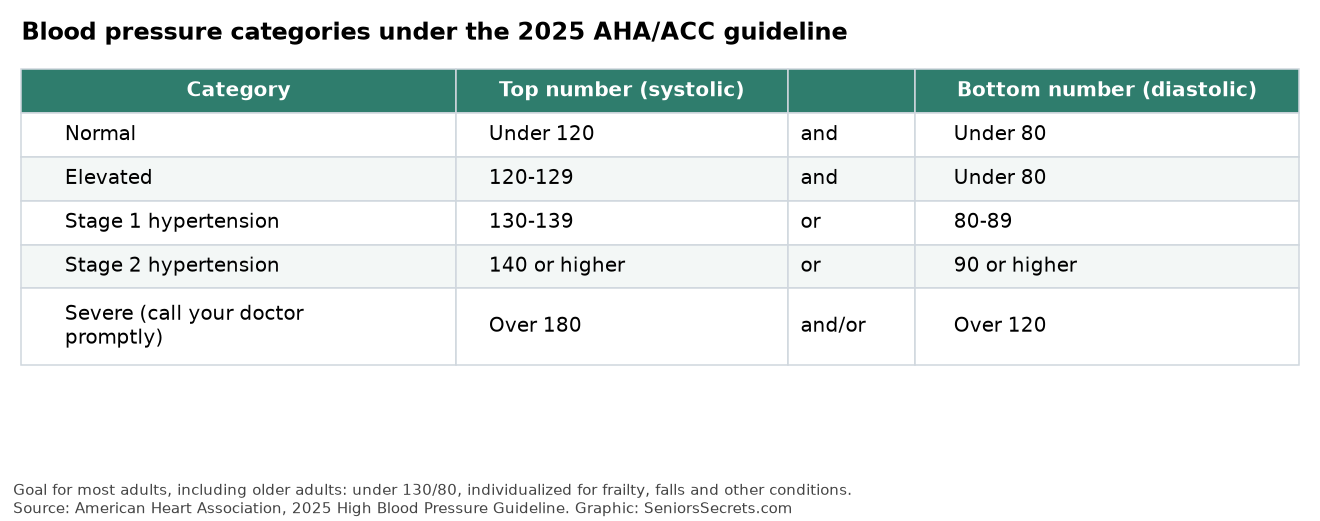
| Category | Systolic (top) | Diastolic (bottom) | |
|---|---|---|---|
| Normal | Under 120 | and | Under 80 |
| Elevated | 120–129 | and | Under 80 |
| Stage 1 hypertension | 130–139 | or | 80–89 |
| Stage 2 hypertension | 140 or higher | or | 90 or higher |
Only one number has to be high to put you in a category. In older adults, the top (systolic) number is usually the problem, because arteries stiffen with age.
A reading over 180/120 is severe. The guideline says it should be treated promptly. If you also have chest pain, shortness of breath, weakness, trouble speaking or vision changes, call 911, because those can signal a stroke or heart attack.
When medication is recommended
The 2025 guideline lays out three paths:
- Average 140/90 or higher (stage 2): start medication along with lifestyle changes. The guideline prefers starting with two medicines of different types combined in one pill, which helps people take them consistently and reach their goal faster.
- Average 130/80 or higher, plus heart disease, a past stroke, diabetes or chronic kidney disease, or a 10-year risk of 7.5% or more: start medication along with lifestyle changes. Risk is calculated with the AHA’s PREVENT calculator.
- Average 130/80 or higher with lower risk: try lifestyle changes for 3 to 6 months. If your pressure is still 130/80 or higher, add medication.
Common first-line medications
Your doctor picks based on your other conditions, kidney function and side effects. The main first-line groups are:
- Thiazide-type diuretics, like chlorthalidone or hydrochlorothiazide
- ACE inhibitors (names ending in “-pril”) or ARBs (ending in “-sartan”)
- Calcium channel blockers, like amlodipine
Beta blockers are used mainly when there’s another reason for them, like heart failure or a past heart attack.
Special concerns after 65
Dizziness and falls. Some older adults have orthostatic hypotension: blood pressure drops when they stand up, causing dizziness or fainting. Tell your doctor if you feel lightheaded when standing. Ask whether your pressure should be checked both sitting and standing. Stand up slowly, especially at night. My guide to balance exercises for fall prevention can help too.
Individualized goals. The guideline’s general goal is under 130/80, but it explicitly allows different targets for people in institutional care or with limited predicted lifespan. For frail adults, the right goal is a conversation, not a formula.
Brain health. Treating high blood pressure is one of the clearest steps for lowering dementia risk. See my guide to dementia prevention.
Medication interactions. Common over-the-counter drugs can raise blood pressure, including NSAID pain relievers like ibuprofen and naproxen, and decongestants like pseudoephedrine. Ask your pharmacist before taking them.
Lifestyle changes that actually lower blood pressure
The guideline strongly recommends lifestyle changes for everyone, whether or not they take medication.
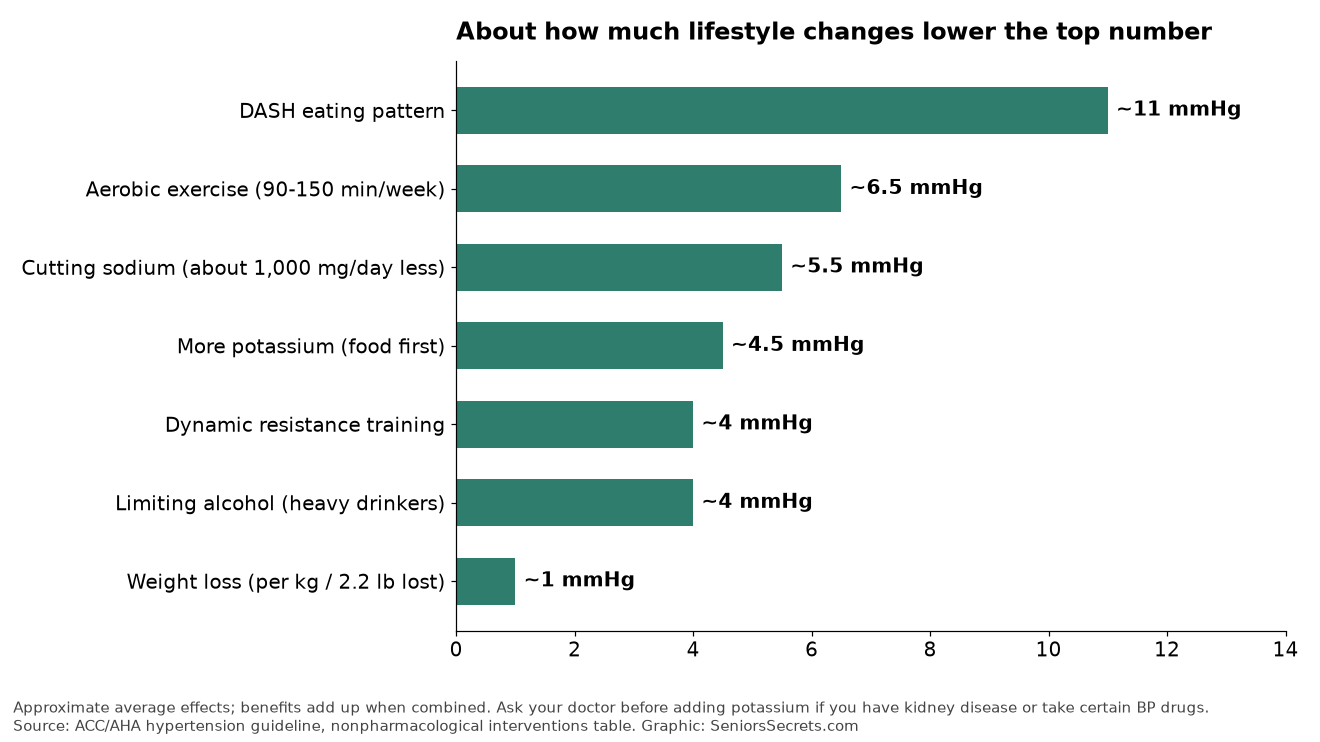
- DASH eating pattern: lots of vegetables, fruit, whole grains, low-fat dairy, beans and nuts, with less red meat and sweets. It’s the single most powerful diet change, lowering systolic pressure by about 11 points on average in people with hypertension. See my DASH diet guide.
- Less sodium: most sodium comes from packaged and restaurant foods, not the salt shaker. Cutting about 1,000 mg a day helps, and the ideal is about 1,500 mg. See my low-sodium diet guide.
- More potassium from food: bananas, potatoes, beans, leafy greens, yogurt. Check with your doctor first if you have kidney disease or take an ACE inhibitor, ARB or potassium-sparing diuretic, since potassium can build up.
- Regular activity: about 90 to 150 minutes a week of brisk walking or similar, plus some resistance training.
- Healthy weight: blood pressure drops roughly 1 point for every kilogram (2.2 pounds) lost.
- Less alcohol: the guideline recommends reducing or eliminating it.
- Stress management and good sleep: untreated sleep apnea can raise blood pressure.
Measuring at home the right way
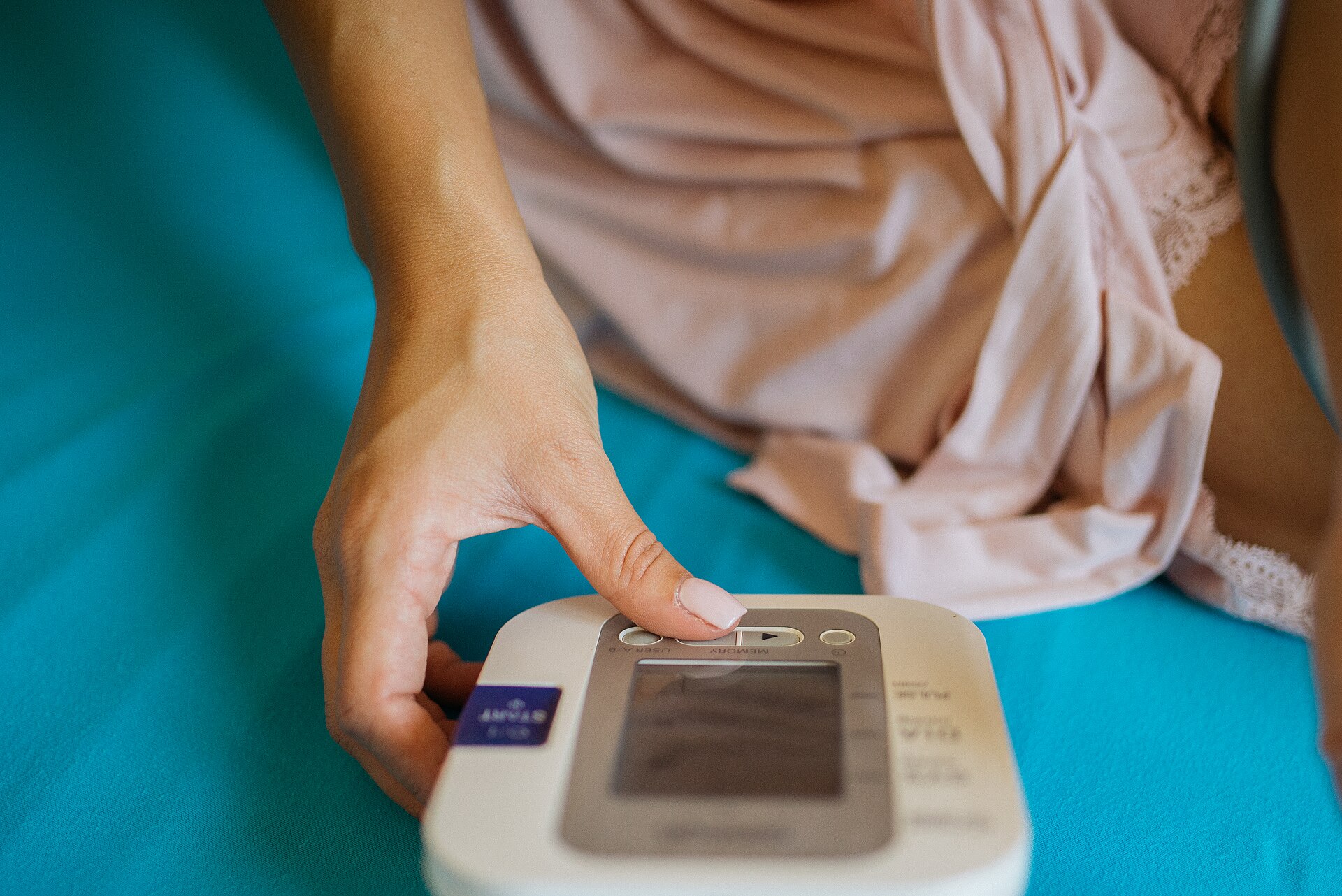
The guideline calls home monitoring an important tool and warns against relying on cuffless devices like smartwatches until they’re proven accurate. Use a validated upper-arm cuff in the right size. My guide to the best blood pressure monitors for seniors covers how to choose one.
For accurate readings:
- Skip caffeine, exercise and smoking for 30 minutes beforehand, and empty your bladder.
- Sit quietly for 5 minutes with your back supported and feet flat on the floor.
- Rest your arm on a table at heart level, with the cuff on bare skin.
- Don’t talk. Take 2 readings a minute apart, morning and evening.
- Log them, or use a monitor that stores readings, and bring the log to appointments.
What Medicare covers
- Blood pressure checks are part of your yearly Annual Wellness Visit, which costs $0 when your provider accepts assignment.
- Doctor visits and lab tests for managing hypertension fall under Part B, with 20% coinsurance after the deductible.
- Medications are covered by Part D. Many first-line blood pressure drugs are inexpensive generics, and Part D out-of-pocket costs are capped at $2,100 in 2026 and $2,400 in 2027.
- 24-hour ambulatory blood pressure monitoring may be covered by Part B in certain cases, like suspected “white coat” hypertension.
- Home blood pressure monitors usually aren’t covered by Original Medicare. Some Medicare Advantage plans include them, or offer remote monitoring programs.
FAQ
What is a normal blood pressure for a 70-year-old?
The 2025 guideline uses the same categories at every adult age. Under 120/80 is normal, and the general treatment goal is under 130/80. Your doctor may set a different goal if you’re frail or have frequent dizziness or falls.
Is 140/90 too high for seniors?
Yes. That’s stage 2 hypertension, and the guideline recommends medication plus lifestyle changes.
Should I take my blood pressure medicine in the morning or at night?
Large studies haven’t shown a clear advantage either way for most people. Take it at a consistent time you’ll remember, and follow your doctor’s advice.
Can I stop my blood pressure medication if my readings are normal?
Not on your own. Normal readings usually mean the medication is working. Talk with your doctor about any changes.
Do smartwatches measure blood pressure accurately?
The 2025 guideline advises against relying on cuffless devices, including smartwatches, until they’re proven accurate. Use a validated upper-arm cuff.
Related guides