Kidney Disease Diet for Seniors: What to Eat With CKD After 70, Stage by Stage, Without Losing Muscle

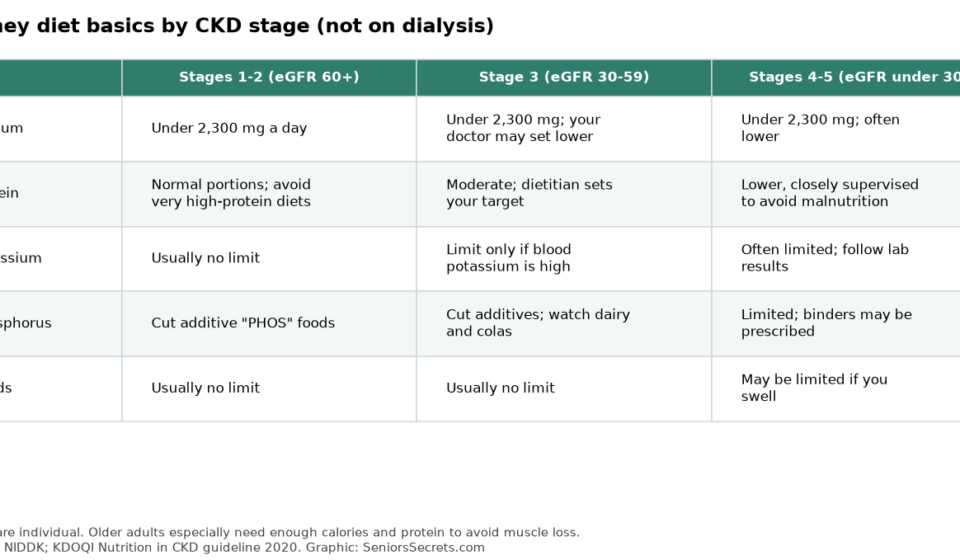
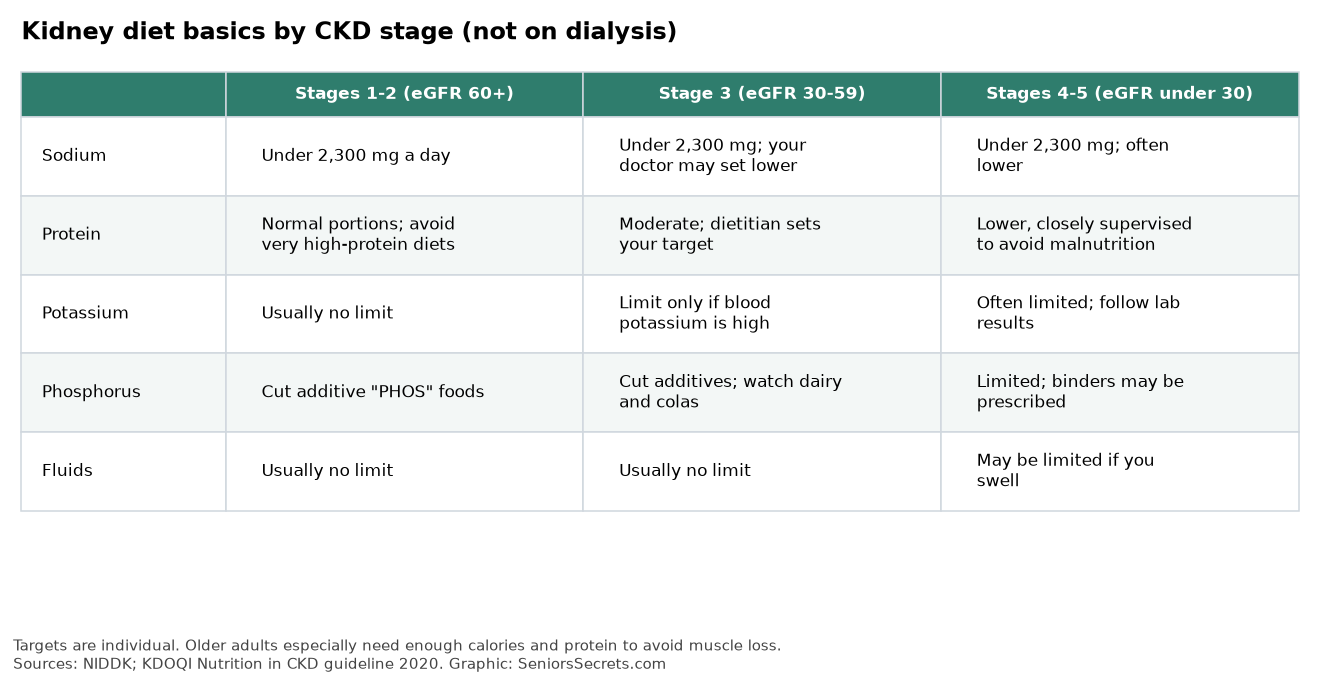
There’s no single kidney diet. What helps depends on how much kidney function you have, your blood tests, and your other conditions. In early chronic kidney disease (CKD), most people need only a few changes, mainly less salt and fewer processed foods. As kidney function falls, protein, potassium, phosphorus and sometimes fluids need closer attention.
For people over 70 there’s an extra balancing act: eating less of some things without eating too little overall. Malnutrition and muscle loss are real risks in older adults with CKD, and the National Institute of Diabetes and Digestive and Kidney Diseases (NIDDK) warns that losing too much weight can make you sicker.
The best first step is free: if you have Medicare and kidney disease, you can get three hours of counseling with a registered dietitian in the first year at no cost (more on that below).
What changes by stage
CKD is staged by your eGFR, a blood-test estimate of how well your kidneys filter. Many older adults have stage 3 CKD (eGFR 30 to 59).
Sodium: the change almost everyone needs
Too much sodium makes your body hold fluid, raising blood pressure and straining both kidneys and heart. The general limit is 2,300 mg a day, and NIDDK notes many people with CKD need to go lower; your doctor can set your number.
Most sodium comes from packaged, restaurant and processed foods, not the saltshaker. The biggest wins:
- Cook more meals from scratch and batch-freeze portions.
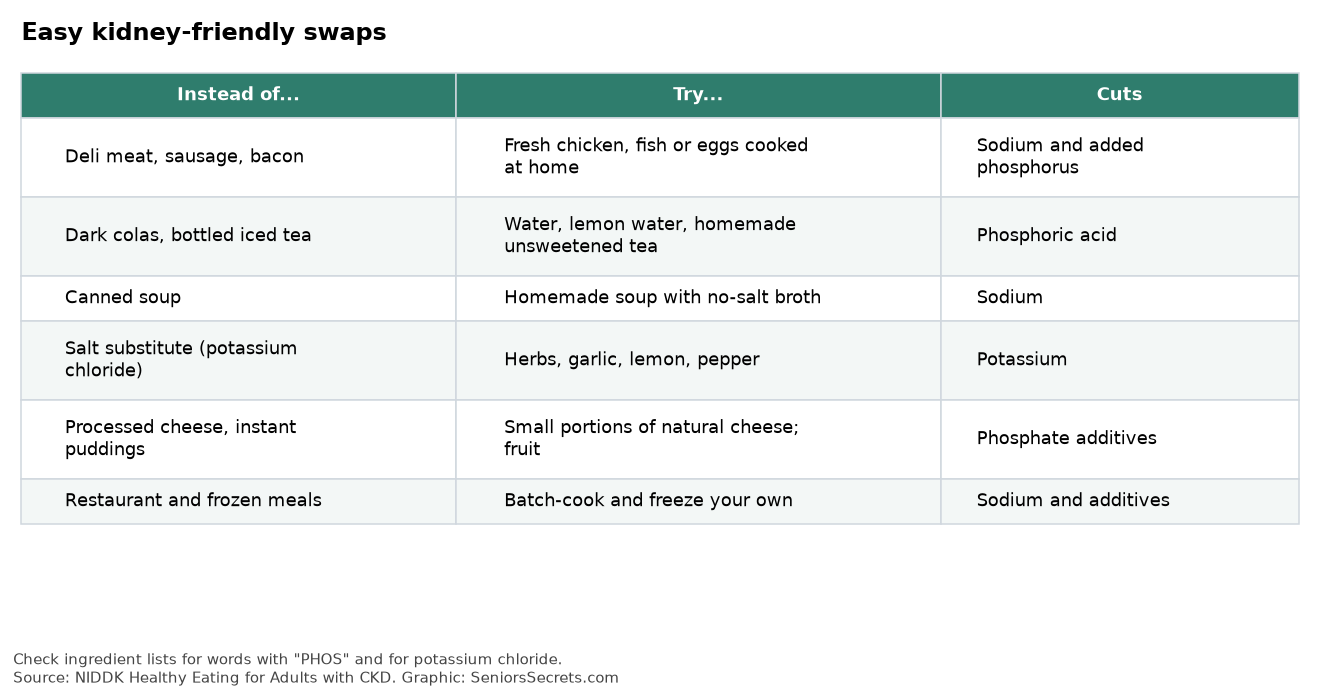
- Choose fresh meat over deli meats, sausage and bacon.
- Pick canned goods labeled “no salt added,” and drain and rinse canned beans and vegetables.
- Read labels: 5% Daily Value or less per serving is low in sodium; 20% or more is high.
- Season with herbs, garlic, lemon and pepper.
My low-sodium diet guide has more ideas and a sample day.
Protein: enough, but not too much
Your kidneys clear the waste left when your body uses protein, so cutting back can ease their workload. But too little protein causes muscle loss and weakness, which in older adults leads to falls and frailty.
The 2020 KDOQI nutrition guideline for kidney specialists recommends a low-protein diet for people with stage 3 to 5 CKD who are not on dialysis and are metabolically stable, under close supervision, and a range of about 0.6 to 0.8 grams per kilogram of body weight for people with CKD and diabetes (Ikizler et al., 2020). Those targets are for patients working with a kidney team, not something to try on your own after 70.
What helps for most people:
- Avoid very high-protein diets and protein powders unless your doctor recommends them.
- Spread protein across meals rather than one large portion of meat at dinner.
- Get more of it from plants: beans, lentils, tofu and nuts. NIDDK notes the body absorbs less phosphorus from plant foods than from meat.
- On dialysis, protein needs go up, because dialysis removes protein from the blood.
If you’re also worried about muscle loss, see my guide to how much protein seniors need and discuss the numbers with your kidney doctor.
Phosphorus: watch the additives
Damaged kidneys struggle to remove phosphorus. High levels weaken bones and damage blood vessels, and can cause itchy skin. NIDDK says phosphorus additives are the main source for many people, and the body absorbs them more easily than the phosphorus found naturally in food.
- Check ingredient lists for words containing “PHOS,” such as phosphoric acid or disodium phosphate.
- Cut dark colas, many bottled iced teas, processed cheese, deli meats and instant puddings.
- Ask at the meat counter which meats don’t have added phosphate.
- In later stages, your doctor may prescribe a phosphate binder to take with meals.
Potassium: limit only if your labs say so
This is where many older kidney diets go wrong. Potassium-rich fruits and vegetables are healthy, and most people in early CKD don’t need to limit them. Limit potassium only if your blood potassium is high, as NIDDK advises.
If it is high:
- Watch portion sizes of high-potassium foods like potatoes, bananas, oranges, tomatoes and dried fruit.
- Avoid salt substitutes that contain potassium chloride.
- Drain the liquid from canned fruits and vegetables.
- Boil potatoes and some other vegetables in plenty of water and discard the water to reduce potassium.
Certain medications, including some blood pressure drugs, also raise potassium, so your doctor may adjust those first. My article on potassium for seniors explains why healthy people need more of it, which is exactly why you shouldn’t cut it unless told to.
Fluids
Most people with early CKD don’t need to limit fluids. In advanced CKD or on dialysis, your doctor may set a daily limit. Call your doctor if you notice new swelling in your face, hands, legs or belly.
A sample kidney-friendly day (stage 3, normal potassium)
This is an example, not a prescription:
- Breakfast: oatmeal made with water or a little milk, berries, and a scrambled egg.
- Lunch: homemade vegetable and lentil soup with no-salt broth, a slice of bread, and an apple.
- Snack: unsalted nuts or plain popcorn.
- Dinner: a palm-sized piece of baked fish or chicken, rice, green beans with olive oil and lemon, and a side salad.
- Drinks: water or unsweetened tea instead of colas.
Ask your dietitian to adjust it for your labs, diabetes or heart failure.
Keep eating enough
Appetite often drops as CKD progresses, and food can taste different. If you’re losing weight without trying, tell your doctor. A dietitian can help you add calories from healthy sources such as olive oil, avocado and unsalted nut butters.

Free dietitian visits with Medicare
Medicare Part B covers medical nutrition therapy for people with kidney disease or diabetes, or who’ve had a kidney transplant in the last 36 months. You need a referral from your doctor, and a registered dietitian provides it. You pay nothing: 3 hours in the first year and 2 hours each year after. If you’re on dialysis, nutrition care is part of your dialysis treatment.
Ask your doctor for the referral at your next visit. It’s one of the most underused benefits in Medicare.
Diet works alongside treatment
Diet is one part of slowing CKD. Blood pressure and blood sugar control and newer medicines matter just as much. See my guide to chronic kidney disease in seniors for treatment options and the warning signs of kidney disease.
FAQ
What foods should seniors with kidney disease avoid?
Mostly processed and packaged foods high in sodium or phosphate additives: deli meats, canned soups, dark colas, processed cheese and fast food. Limit high-potassium foods only if your blood potassium is high.
Should older adults with CKD eat a low-protein diet?
Not on their own. Avoid very high protein, but cutting too far risks muscle loss. Low-protein diets are for people supervised by a kidney team and dietitian.
Are bananas bad for kidney disease?
Only if your potassium level is high. In early CKD with normal potassium, fruits like bananas are fine in normal portions.
Is coffee OK with kidney disease?
For most people, a cup or two of plain coffee is fine. Watch added creamers, which can contain phosphate additives.
Does Medicare pay for a kidney dietitian?
Yes. Part B covers medical nutrition therapy for kidney disease at no cost with a doctor’s referral: 3 hours in the first year and 2 hours a year after that.
This article is for general information. Your kidney diet should be based on your own lab results and set with your doctor or a registered dietitian.