

Probiotics for Seniors 2026: What the Science Really Shows After 65
Probiotics are not a must for most healthy seniors. The best proof is for lowering C. diff risk while on antibiotics, and even that depends on the strain. Here is what NIH, Cochrane and the AGA actually say, and how to choose a product if you try one.

Collagen for Seniors: What the Research Really Shows for Skin, Joints and Bones
Collagen powders promise smoother skin, easier joints and stronger bones. Here is what the trials actually found, why who paid for a study matters, the doses tested, safety concerns, and the food habits that support your body's own collagen.

Calcium for Seniors: How Much You Need, Best Food Sources, and When Supplements Make Sense
Most older adults need 1,000 to 1,200 mg of calcium a day, ideally from food. Here are the best sources, how to take a supplement if you need one, and why more isn't better.

Foods Seniors Should Avoid or Limit: Food Safety Risks and Everyday Choices
As we age, the immune system is less able to fight foodborne germs, and some medicines raise the risk further. Here's which foods are highest risk for seniors, how to handle them safely, and smarter everyday swaps.

High-Fiber Foods for Seniors: How Much You Need and the Best Everyday Sources
Men 51 and older need about 30 grams of fiber a day, and women need about 21 grams. Most adults fall short. Here's a practical list of high-fiber foods that work for older adults, how to add them without stomach trouble, and when to check with a doctor.
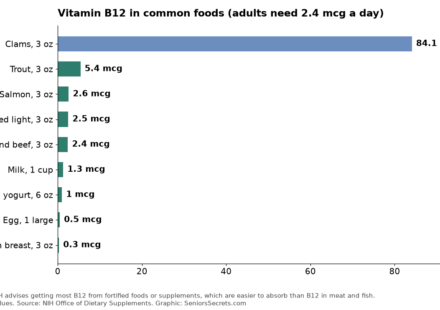
Vitamin B12 Deficiency After 60: Warning Signs, Who’s at Risk, Testing and Treatment
Vitamin B12 deficiency is common after 60, easy to miss and usually easy to treat. Here are the warning signs, the medications and conditions that raise your risk, the tests to ask about, and how pills and shots compare.

Senior Nutrition Guide 2026: What to Eat After 65, Key Vitamins and a Simple Meal Plan
After 65 you need fewer calories but more protein, calcium, vitamin D and B12. Here is what the 2025 to 2030 Dietary Guidelines say, the nutrients to watch, the best eating patterns and a sample day.
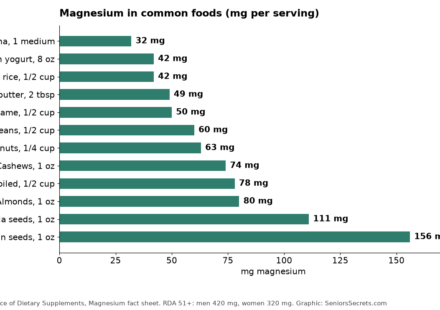
Magnesium for Seniors: How Much You Need, Best Foods, Supplement Forms, and What the Evidence Really Shows
Many older adults fall short on magnesium, and some common medicines make it worse. Here's how much you need, the foods that supply it, how to choose a supplement if you need one, and an honest look at the claims about sleep and leg cramps.

Best Multivitamins for Seniors in 2026: What the Research Says and How to Choose One
Most seniors do not need a pricey multivitamin, but some do. Here is what NIH and recent trials found, the nutrients that matter after 60, and how to read a label before you buy.

Vitamin D for Seniors in 2026: How Much You Need, Signs of Low Levels and Safe Doses
How much vitamin D seniors need in 2026 (600 IU to age 70, 800 IU after), what blood levels mean, the signs of low vitamin D that are real and the ones that are hype, food sources, the 4,000 IU upper limit, drug interactions and what the big trials found.