Can a 4-Week Diet Lower Your Biological Age? What the 2026 University of Sydney Study Really Found

In May 2026, researchers at the University of Sydney reported that adults aged 65 to 75 who changed their diets for just four weeks showed a lower “biological age,” based on a score built from 20 health biomarkers. The strongest result came from a diet lower in fat and higher in carbohydrates, with protein split evenly between animal and plant sources.
You may have seen headlines saying a diet “reverses aging.” That goes further than the researchers did. They called their findings a preliminary indication, not a conclusive result, and said longer trials are needed to know whether the changes last or lower disease risk.
I’m a researcher, not a doctor or dietitian. This article explains the study from the University of Sydney’s announcement of the paper in Aging Cell, plus practical eating tips that fit long-standing guidance. If you have diabetes, kidney disease or another condition, talk with your doctor before changing how you eat.
Biological age vs. birthday age
Your chronological age goes up by one every year. Biological age tries to capture how your body is actually doing. Two 70-year-olds can be very different: one with healthy blood pressure, blood sugar and inflammation markers, the other with several red flags.
Scientists estimate biological age in different ways. Some use DNA methylation “clocks.” This study used a biomarker profile: 20 measures including blood levels of cholesterol, insulin and C-reactive protein (an inflammation marker), combined into a single biological-age score.
What the study did
The trial (summarized on EurekAlert), part of the Nutrition for Healthy Living study at the University of Sydney’s Charles Perkins Centre, enrolled 104 adults aged 65 to 75. None smoked or were vegetarian, and none had serious conditions like type 2 diabetes, cancer, or kidney or liver disease. Their BMIs ranged from 20 to 35.
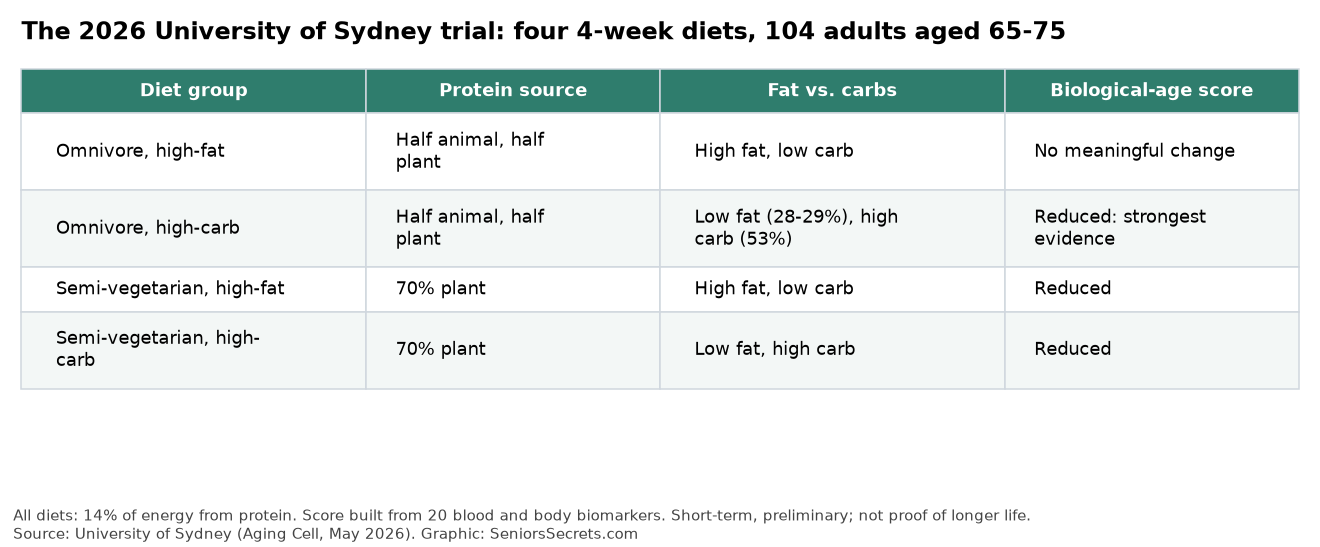
Participants were randomly assigned to one of four diets for four weeks. Every diet got 14% of calories from protein. They differed in two ways:
- Protein source: omnivore (half animal, half plant protein) or semi-vegetarian (70% plant protein)
- Fat vs. carbohydrates: high-fat and low-carb, or low-fat and high-carb
What the researchers found
- The omnivore high-fat diet, the one closest to what participants already ate, showed no meaningful change.
- The other three diets all showed reductions in biological-age score.
- The clearest result was the omnivore high-carbohydrate diet: about 14% protein, 28 to 29% fat and 53% carbohydrates.
In plain terms, people who cut back on fat, or shifted some of their protein from animal to plant sources, saw their biomarker profile move in a younger direction within a month.
What the study doesn’t show
This matters as much as the findings:
- It was short. Four weeks can’t tell us whether the changes last.
- It measured biomarkers, not outcomes. A better score doesn’t automatically mean fewer heart attacks, less dementia or a longer life. As study supervisor Associate Professor Alistair Senior put it, longer-term changes are needed to see whether diet alters the risk of age-related diseases.
- The group was small and fairly healthy. Results may differ for people with diabetes, kidney disease or other conditions, or for other age groups.
- It isn’t “anti-aging.” The lead author, Dr. Caitlin Andrews, said it’s too soon to say specific diet changes will extend your life.
Earlier versions of articles on this topic, including ours, listed specific rules like “eat 30 plants a week” as if they came from this study. They didn’t, so I’ve removed them.
How to eat in line with the findings
The encouraging part is that the diets that helped look a lot like eating patterns already linked to better heart and metabolic health, like the Mediterranean diet and the DASH diet. So these changes are low-risk for most people:
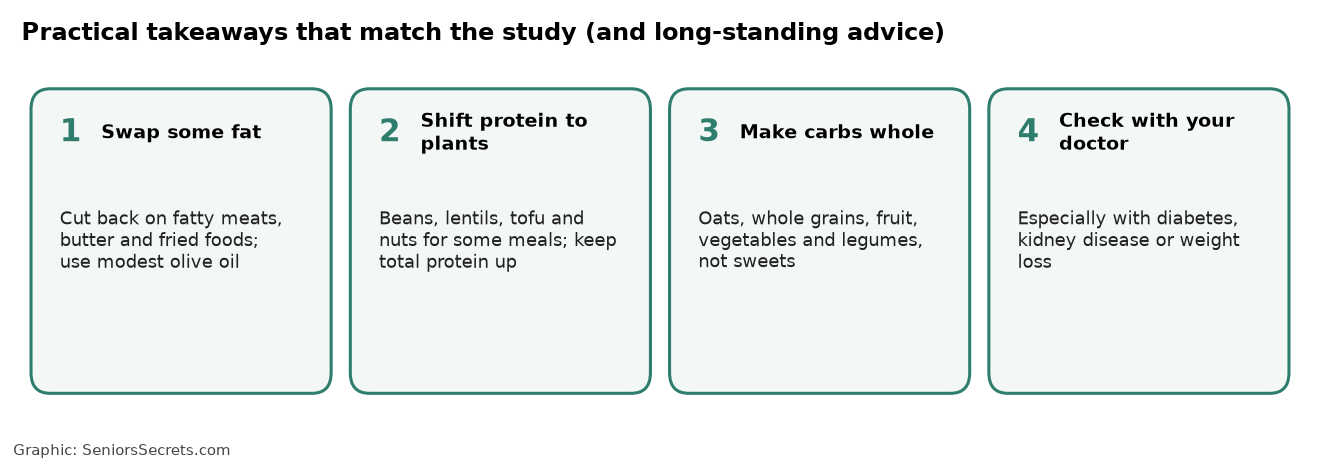
1. Cut back on fat, starting with the least healthy kinds. Eat fewer fatty and processed meats, less butter and fewer fried foods. Use olive oil in modest amounts.
2. Get more of your protein from plants. Beans, lentils, chickpeas, tofu, nuts and seeds can replace meat at some meals. Don’t let total protein drop, though, because older adults need enough to protect muscle. See how much protein seniors need.
3. Make your carbohydrates count. “High-carb” in this study doesn’t mean sweets and white bread. Build carbs around oats, whole grains, fruit, vegetables and legumes, which also add fiber. My list of high-fiber foods is a good place to start.
4. Make changes you can keep. The study lasted four weeks, but any benefit almost certainly depends on sticking with it.
A sample day
This is an illustration, not a prescription:
| Meal | Example |
|---|---|
| Breakfast | Oatmeal with berries and a spoonful of walnuts; low-fat milk or yogurt |
| Lunch | Lentil and vegetable soup; whole-grain bread; an orange |
| Snack | Hummus with carrot and cucumber sticks |
| Dinner | Grilled fish or chicken (palm-sized), brown rice, roasted vegetables with a drizzle of olive oil |
Who should be careful
- Diabetes: more carbohydrates can raise blood sugar. Work with your doctor or a dietitian on the type and amount.
- Kidney disease: protein, potassium and phosphorus may need limits. Plant proteins like beans are high in potassium.
- Unintended weight loss or frailty: cutting fat can cut calories you need. Focus on keeping your weight and muscle up.
- Blood thinners like warfarin: big changes in leafy greens affect vitamin K, so keep your intake consistent.
Medicare covers medical nutrition therapy with a registered dietitian for people with diabetes or kidney disease, or after a kidney transplant, when a doctor refers you.

FAQ
Can diet really reverse biological aging?
This study found a biomarker-based biological-age score improved after four weeks of diet changes. Whether that lasts, or translates into a longer, healthier life, isn’t known yet.
Which diet worked best in the study?
An omnivore diet low in fat and high in carbohydrates (about 14% protein, 28 to 29% fat and 53% carbohydrates) showed the clearest reduction.
Do I have to become vegetarian?
No. The best-supported diet still included animal protein, about half of total protein. The semi-vegetarian diets also helped.
How is biological age measured?
There are several methods. This study combined 20 biomarkers, including cholesterol, insulin and C-reactive protein, into one score.
Is this safe for people with diabetes?
Possibly, with adjustments. People with type 2 diabetes weren’t in the study, so talk with your doctor or a dietitian first.