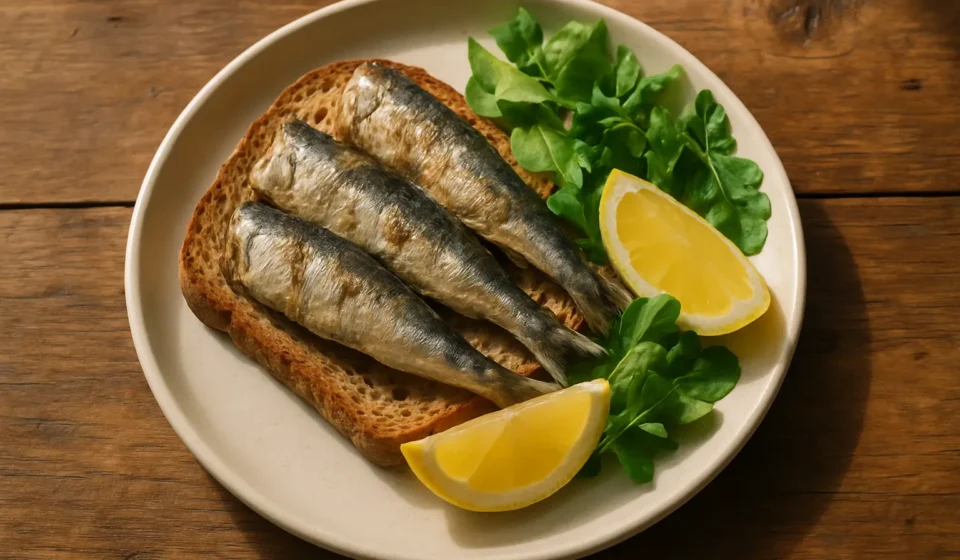

Few foods give you more nutrition for less money than the humble tin in the back of your pantry. Sardines for seniors are, ounce for ounce, one of the most complete foods you can eat after 65 — a rare single source of calcium, vitamin D, and omega-3 fats all at once. As a senior nutrition writer I am often asked which “superfood” is actually worth the hype, and sardines are near the top of my short list precisely because the science is unglamorous and solid. Let me show you what one small can delivers, who benefits most, and the few cautions worth knowing.
Here is the headline: about 100 grams of canned sardines — roughly one standard tin eaten with the soft, edible bones — supplies close to 38% of an adult’s daily calcium and over 30% of the daily vitamin D, plus more than 1,000 mg of the omega-3 fats EPA and DHA. Very few whole foods pull off that combination.
Table of Contents
- Bone Health: Calcium and Vitamin D Together
- Heart and Brain: The Omega-3 Advantage
- Why Whole Sardines Beat a Fish-Oil Pill
- How Much to Eat and How to Enjoy Them
- Cautions: Sodium, Purines and Mercury
- Frequently Asked Questions
Bone Health: Calcium and Vitamin D Together
The reason sardines for seniors are such a smart choice for bones is that the tiny, soft bones are eaten right along with the fish. Those bones are where the calcium lives. Most foods give you calcium or vitamin D; sardines deliver both in the same bite, and vitamin D is the nutrient your body needs in order to absorb calcium in the first place. Sardines also carry phosphorus and magnesium, two more minerals woven into the structure of healthy bone.
This matters because bone loss accelerates with age, especially for women after menopause, raising the risk of osteoporosis and fractures. Pairing a calcium-and-vitamin-D food like sardines with weight-bearing activity is exactly the kind of one-two approach we recommend in our guide to osteoporosis prevention. If you already track your calcium intake, sardines are an easy way to add a meaningful amount without another supplement — see our companion piece on calcium for seniors for daily targets.
| Nutrient in ~100g canned sardines | Approx. share of daily need | Why it matters for seniors |
|---|---|---|
| Calcium (with bones) | ~38% | Builds and maintains bone density |
| Vitamin D | ~30%+ | Lets the body absorb calcium |
| Omega-3 (EPA + DHA) | 1,000+ mg | Heart, brain and anti-inflammatory support |
| Protein | ~23 g | Preserves muscle against age-related loss |
Heart and Brain: The Omega-3 Advantage
A single small can offers more than 1,000 mg of EPA and DHA, the two marine omega-3 fats most studied for cardiovascular health. Research links eating fatty fish one to two times a week with a meaningfully lower risk of heart disease. Omega-3s help by lowering triglycerides, easing inflammation, and supporting the lining of your blood vessels. The same anti-inflammatory action appears to benefit bone, too, by curbing the chronic, low-grade inflammation that can accelerate bone loss with age. And because DHA is a major structural fat in the brain, diets rich in fatty fish are a recurring feature of eating patterns associated with healthier cognitive aging.
Protein deserves a mention as well: at roughly 23 grams per can, sardines help you hit the higher protein targets that protect against muscle loss in later life, a topic we cover in our protein needs guide for seniors.
Why Whole Sardines Beat a Fish-Oil Pill
Fish-oil capsules give you isolated EPA and DHA. Sardines give you those same fats inside a whole-food “matrix” — the calcium, vitamin D, vitamin B12, selenium, protein, and other compounds that arrive together and may work better as a package than any single extracted nutrient. Researchers studying cardiovascular benefits have argued that eating sardines, rather than swallowing fish oil alone, delivers a broader set of nutrients with heart benefits. That does not make supplements useless — if you dislike fish or cannot eat it, a quality omega-3 fish oil supplement is a reasonable backup. But when you can get the nutrient from food, food usually wins.
How Much to Eat and How to Enjoy Them
Two servings of fatty fish a week is the common benchmark, and a can or two of sardines fits neatly into that. You do not need to learn fancy recipes. Mash them onto whole-grain toast with a squeeze of lemon, fold them into a salad, stir them into pasta or tomato sauce, or eat them straight from the tin. Choose varieties packed in water or olive oil rather than heavy sauces, and look for “no salt added” or “low sodium” on the label when you can. Frozen or fresh sardines, grilled, are excellent too. The soft bones are the point — do not pick them out, because that is where most of the calcium is.
Cautions: Sodium, Purines and Mercury
Sardines are a low-mercury fish — far safer for frequent eating than larger predators like tuna or swordfish — which is one reason they suit regular use. Two cautions, though. First, canned sardines can be high in sodium, so if you watch your blood pressure, choose low-sodium options and rinse them. Second, sardines are high in purines, the compounds that break down into uric acid, so if you have gout you may need to limit them; ask your doctor. Finally, the omega-3s in sardines have a mild blood-thinning effect, so mention regular fish intake to your physician if you take an anticoagulant like warfarin — not to avoid sardines, but to keep your overall plan steady.
Frequently Asked Questions
Are canned sardines as healthy as fresh ones?
Yes. Canned sardines retain their omega-3s, protein, and — thanks to the edible bones — their calcium. Canning actually makes the bones soft enough to eat, which is what makes the calcium accessible. Choose water-packed or low-sodium versions to keep salt in check.
How often can seniors safely eat sardines?
For most people, several times a week is fine and lines up with the two-servings-of-fatty-fish guideline. Because sardines are low in mercury, frequent eating is not the concern it would be with larger fish. Watch sodium if you have high blood pressure and purines if you have gout.
Do I really have to eat the bones?
For the calcium benefit, yes. The soft bones in canned sardines are the main reason they are such a strong bone food. They are tender enough to chew and blend right in when mashed. If you remove them, you lose most of the calcium.
Can sardines help with joint or heart inflammation?
The EPA and DHA in sardines are anti-inflammatory and are associated with lower heart-disease risk when fatty fish is eaten regularly. They are one helpful piece of an overall anti-inflammatory, Mediterranean-style eating pattern rather than a stand-alone cure.
Related Articles You May Find Helpful
- Omega-3 Fish Oil for Seniors 2026: Benefits, Dosage & Best Supplements
- Calcium for Seniors 2026: How Much & Best Sources
- Vitamin D for Seniors 2026: Optimal Levels, Dosage & Sources
- Osteoporosis Prevention for Seniors in 2026: 5 Proven Pillars
- Walnuts for Seniors 2026: Brain, Heart & Best Dose
Sources
- National Institutes of Health (PMC) — Eating More Sardines Instead of Fish Oil Supplementation: A Matrix of Nutrients With Cardiovascular Benefits.
- National Institutes of Health / Office of Dietary Supplements — Calcium and Vitamin D fact sheets.
- U.S. Food and Drug Administration — Advice About Eating Fish (mercury levels by species).
This article is for general education and is not medical or dietary advice. Talk with your doctor or a registered dietitian about your needs, especially if you have gout, kidney disease, or take a blood thinner. See our medical disclaimer.