

Most people find out what Medicare doesn’t cover the expensive way: a dentist’s bill, a hearing aid quote, or a call from a nursing home’s business office. Original Medicare (Parts A and B) is good insurance for doctors and hospitals. It was never designed to cover everything an older adult needs.
If you’re reviewing coverage for 2027, Open Enrollment runs October 15 to December 7, 2026. That’s your yearly chance to pick a plan that fills the gaps you actually care about.
I’m a researcher who reads Medicare.gov and plan documents so readers don’t have to. I’m not a licensed insurance agent or a medical professional. For advice on your own situation, your free State Health Insurance Assistance Program (SHIP) counselor is the best place to start. Facts below were checked on Medicare.gov on October 5, 2026.

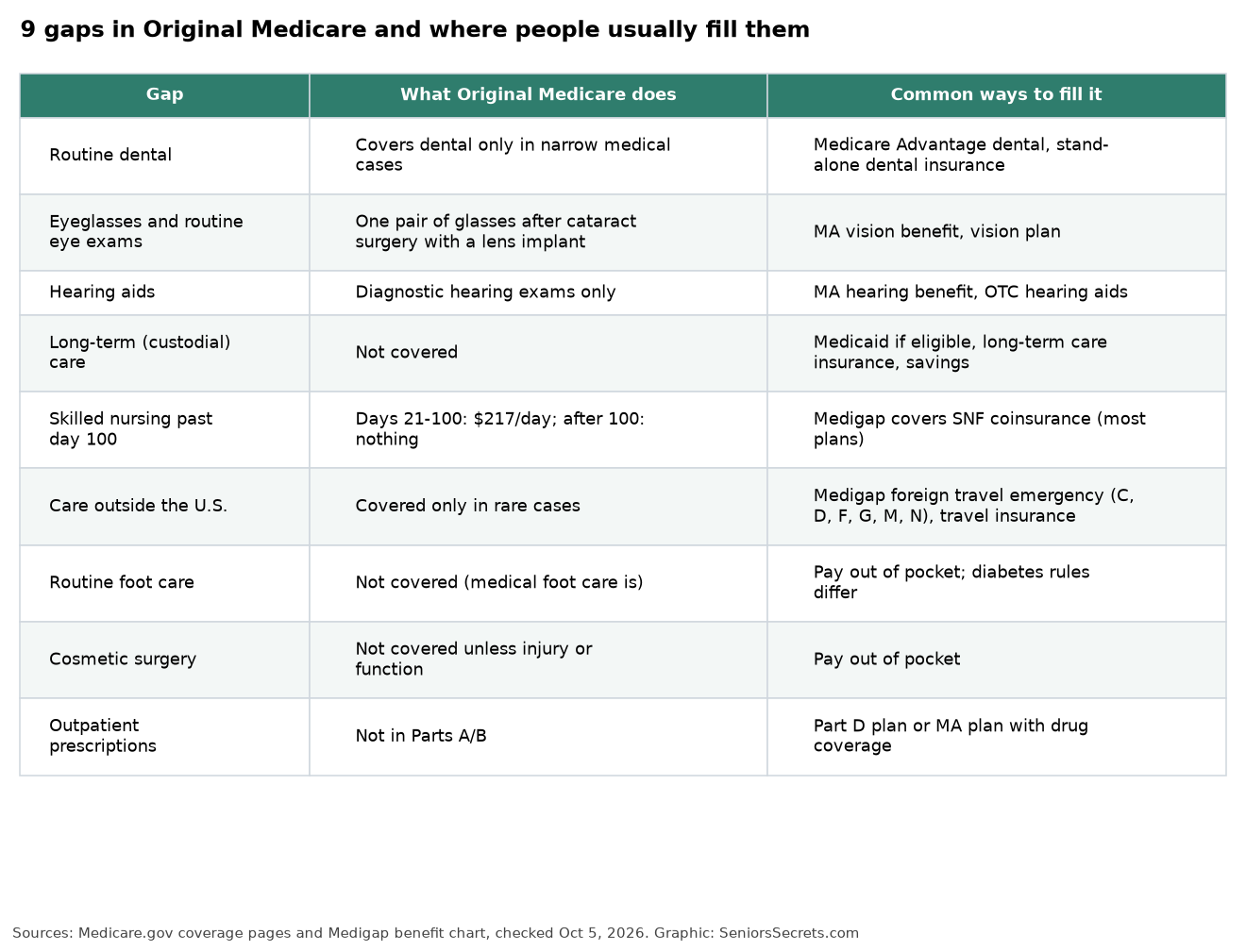
The 9 gaps at a glance
| Gap | What Original Medicare does | Common ways people fill it |
|---|---|---|
| Routine dental | Covers dental care only in narrow medical cases | Medicare Advantage dental, stand-alone dental insurance |
| Eyeglasses and routine eye exams | One pair of glasses after cataract surgery with a lens implant | Medicare Advantage vision, vision plan |
| Hearing aids | Diagnostic hearing exams only | Medicare Advantage hearing benefit, over-the-counter hearing aids |
| Long-term (custodial) care | Not covered | Medicaid if eligible, long-term care insurance, savings |
| Skilled nursing after day 100 | Days 21 to 100 cost $217 a day; after day 100, nothing | Most Medigap plans cover the daily coinsurance |
| Care outside the U.S. | Covered only in rare cases | Medigap foreign travel emergency coverage, travel insurance |
| Routine foot care | Not covered (medical foot care is) | Pay out of pocket; diabetes rules differ |
| Cosmetic surgery | Not covered unless after injury or to improve function | Pay out of pocket |
| Most outpatient prescriptions | Part B covers only some drugs | Part D plan or a Medicare Advantage plan with drug coverage |
1. Routine dental care
Medicare’s own wording is blunt: in most cases it doesn’t cover cleanings, fillings, extractions, dentures or implants. It may pay for dental work tied to a covered medical treatment, such as an oral exam before a heart valve replacement or an organ transplant, or for some dental services during a hospital stay.
Most Medicare Advantage plans include some dental coverage, but the annual dollar limit matters more than the word “dental” in the brochure. Our guide to whether Medicare covers dental compares the usual options.
2. Eyeglasses and routine eye exams
Part B doesn’t usually cover eyeglasses or contact lenses. The exception: one pair of glasses with standard frames (or one set of contacts) after each cataract surgery that implants an intraocular lens. You pay 20% after the Part B deductible, plus anything extra for upgraded frames. Routine eye exams for glasses aren’t covered either, though some exams tied to diabetes or glaucoma risk are. See our Medicare vision coverage guide.
3. Hearing aids
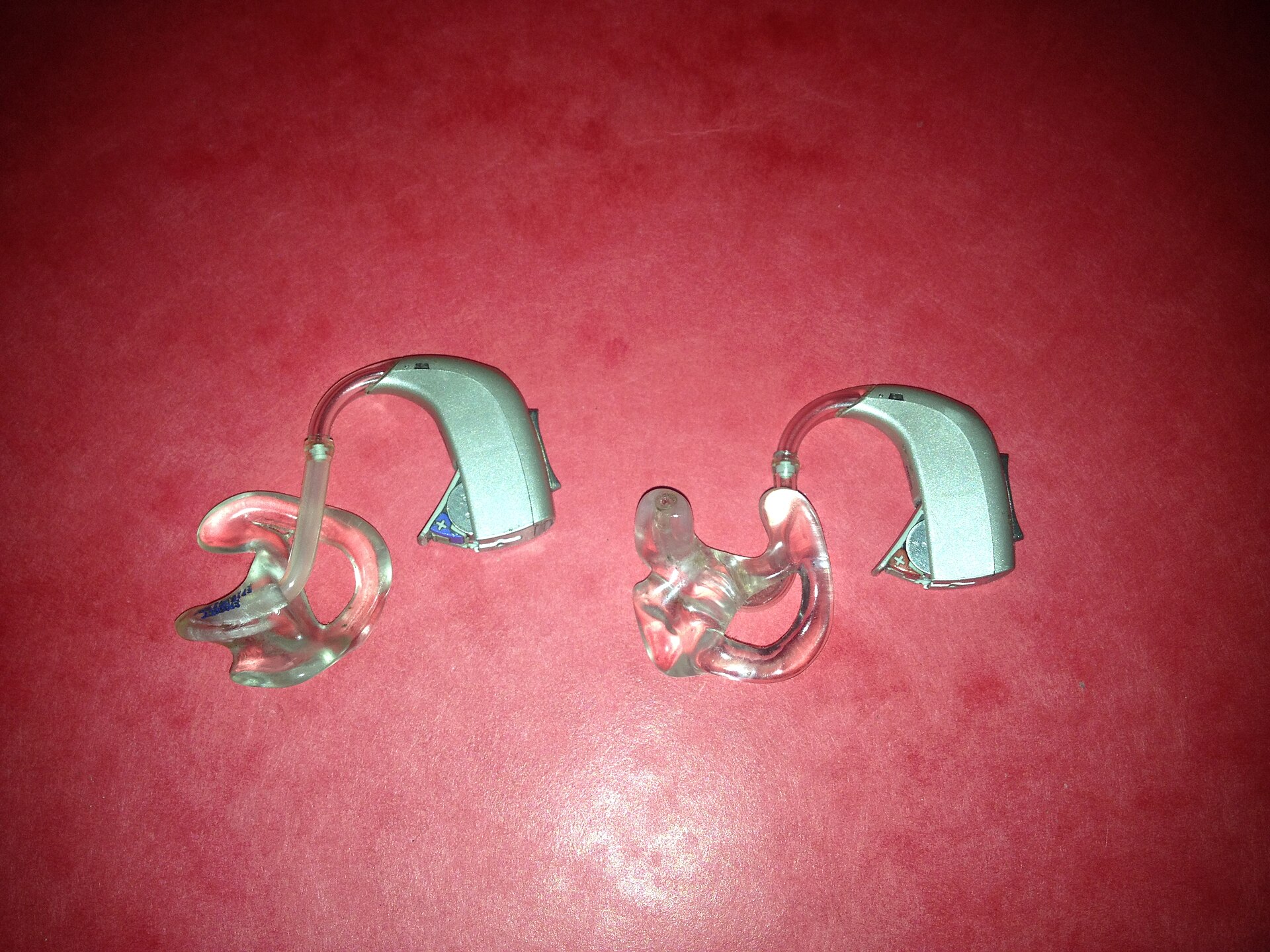
Medicare doesn’t cover hearing aids or exams to fit them. Part B does cover diagnostic hearing and balance exams, and you can see an audiologist once every 12 months without a doctor’s order for hearing problems that aren’t sudden or acute.
Two things have changed the math in recent years. Many Medicare Advantage plans now include a hearing benefit, and over-the-counter hearing aids for adults with perceived mild to moderate hearing loss are sold without a prescription. Our hearing aid coverage guide explains both.
4. Long-term care
This is the biggest gap, and the one people most often misunderstand. Medicare doesn’t cover long-term care, meaning help with bathing, dressing, eating and other daily activities, if that’s the only care you need. Medigap doesn’t cover it either. That includes most nursing home stays and most assisted living.
Medicaid does cover nursing home care for people who meet its income and asset rules, and many states run home and community-based programs. Long-term care insurance and personal savings are the other main options. Our long-term care planning guide walks through them.
5. Skilled nursing after day 20, and after day 100
Medicare does cover short skilled nursing facility stays after a qualifying hospital stay of at least three days as an inpatient. Time “under observation” doesn’t count toward those three days, which catches a lot of families off guard.
In 2026, you pay:
- Days 1 to 20: $0
- Days 21 to 100: $217 a day
- Day 101 and beyond: all costs
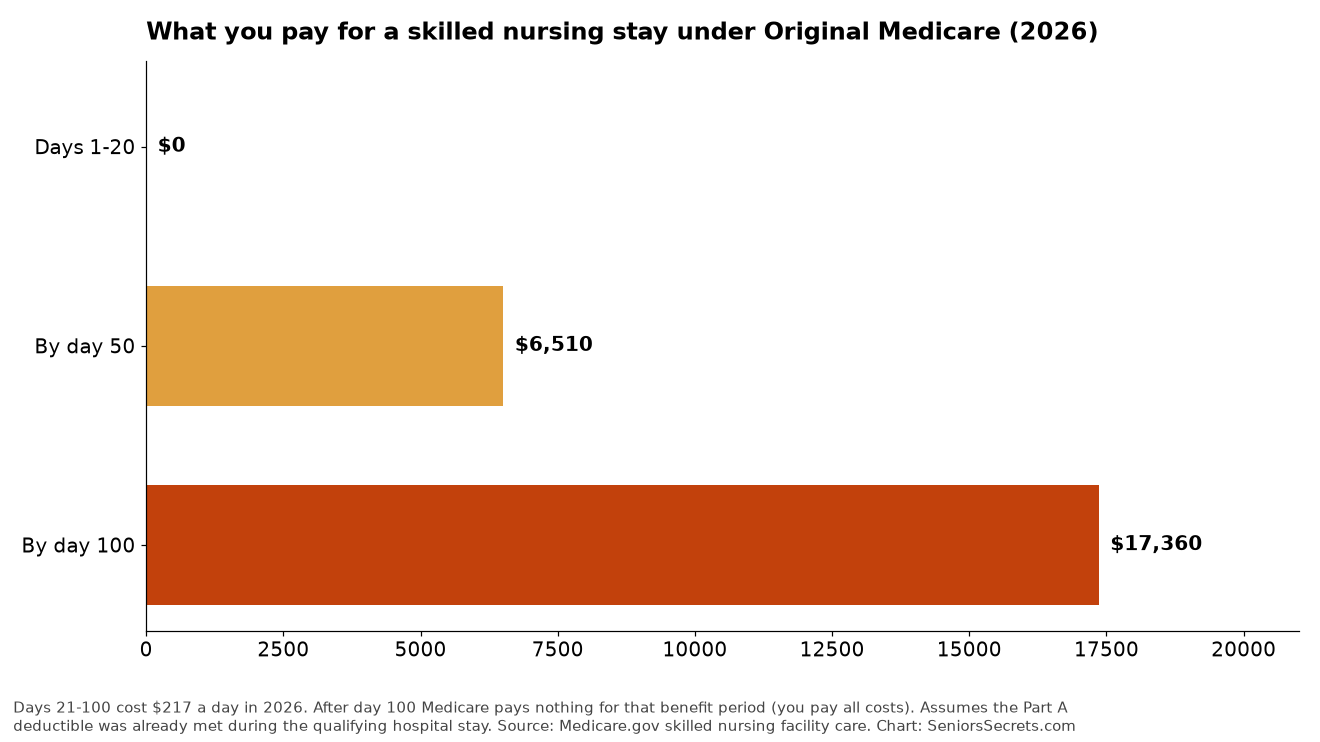
That daily coinsurance is where Medigap earns its keep. According to Medicare’s Medigap benefits chart, Plans C, D, F, G, M and N cover it in full, Plan K covers 50% and Plan L covers 75%. Plans A and B don’t cover it. Details are in our skilled nursing coverage guide. The 2027 daily amount hasn’t been announced yet.
6. Care outside the United States
Original Medicare covers care outside the U.S. only in rare situations. If you travel, look at Medigap’s foreign travel emergency benefit (Plans C, D, F, G, M and N pay 80% of emergency care abroad, up to plan limits) or a travel medical policy. Our Medicare coverage abroad guide covers the details.
7. Routine foot care
Medicare doesn’t cover routine foot care like trimming nails or removing calluses. It does cover medically necessary care for foot injuries and conditions, and people with diabetes-related nerve damage may qualify for foot exams and treatment.
8. Cosmetic surgery
Not covered, unless it’s needed because of an accidental injury or to improve the function of a malformed body part. Breast reconstruction after a mastectomy for breast cancer is covered.
9. Most prescriptions you fill at a pharmacy
Part B covers some drugs, mostly ones you get in a doctor’s office or clinic, like certain injections and infusions. For everyday prescriptions you need Part D, either as a standalone plan or inside a Medicare Advantage plan. In 2027, the Part D out-of-pocket cap is $2,400.
One more: acupuncture beyond back pain
Medicare covers acupuncture only for chronic low back pain: up to 12 visits in 90 days, plus 8 more if you’re improving, with a maximum of 20 a year. Acupuncture for anything else is on you.
How to decide which gaps to fill
Not every gap is worth insuring. Here’s how I’d sort them:
- Insure the catastrophic ones. Long hospital and skilled nursing stays are where costs get out of hand. A Medigap plan, or a Medicare Advantage plan with a sensible out-of-pocket limit, protects you there.
- Plan and save for long-term care. It’s the one gap no Medicare product fills. Look into Medicaid rules in your state and long-term care insurance early, since premiums are generally higher the older you are when you buy.
- Compare the routine extras with real numbers. A Medicare Advantage plan with a $1,500 dental limit may be worth more to you than a stand-alone dental policy, or it may not. Compare the dollar limits, not the checkmarks.
- Check before you travel. If you spend time abroad, foreign travel coverage should be part of your plan choice.
During Open Enrollment, run your doctors and prescriptions through Medicare’s Plan Finder at Medicare.gov, and book a free SHIP appointment before December 7.
FAQ
What is the biggest thing Medicare doesn’t cover?
Long-term custodial care, like help with bathing and dressing in a nursing home or at home. Neither Original Medicare nor Medigap covers it. Medicaid covers it for people who qualify.
Does Medicare cover dental, vision and hearing?
Original Medicare generally doesn’t cover routine dental care, eyeglasses or hearing aids. Many Medicare Advantage plans include these as extra benefits, with yearly limits.
Does Medigap fill all of Medicare’s gaps?
No. Medigap helps pay your share of Medicare-covered costs, like deductibles and coinsurance. It doesn’t add dental, vision, hearing aids or long-term care.
How much does a nursing home stay cost under Medicare?
For a covered skilled nursing stay in 2026, days 1 to 20 cost nothing, days 21 to 100 cost $217 a day, and you pay everything after day 100. Long-term custodial care isn’t covered at all.
Does Medicare cover me when I travel abroad?
Only in rare cases. Several Medigap plans include foreign travel emergency coverage, and some Medicare Advantage plans offer it as a supplemental benefit.
Facts checked against Medicare.gov on October 5, 2026. Dollar amounts are for 2026; 2027 Part A and Part B amounts haven’t been announced yet, and this page will be updated when CMS publishes them. This article is for education, not personal insurance or medical advice.