Does Medicare Cover Cochlear Implants and Hearing Aids? What Part B Pays in 2026 and Who Qualifies

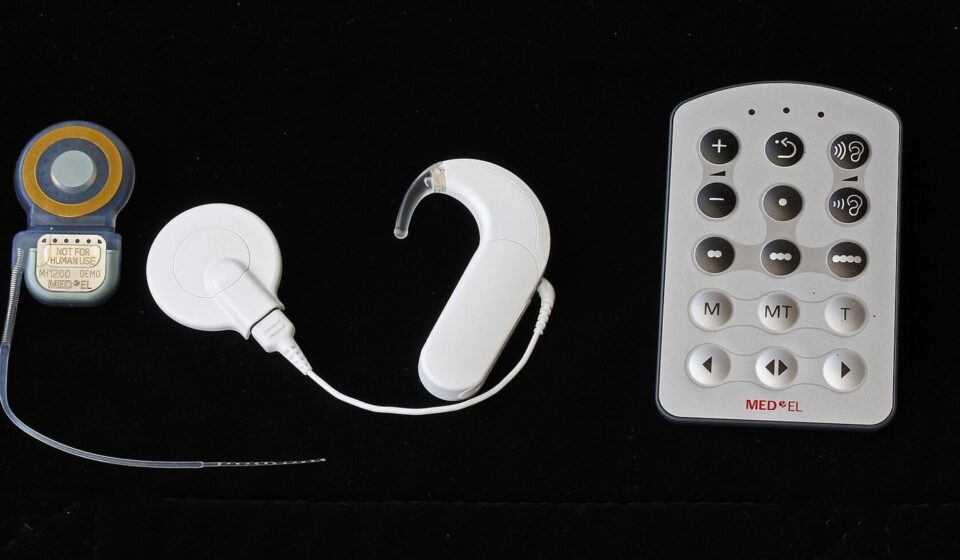
Yes, Medicare covers cochlear implants when you meet the national coverage criteria. Medicare treats the implant as a prosthetic device under Part B, so after the Part B deductible ($283 in 2026) you generally pay 20% of the Medicare-approved amount, plus any hospital outpatient copayment. Original Medicare does not cover regular hearing aids or the exams for fitting them (Medicare.gov hearing aids).
So the big question isn’t “does Medicare pay?” but “do you meet the criteria?” Since September 26, 2022, the bar has been lower than many people think.
Who qualifies for a Medicare-covered cochlear implant
CMS’s National Coverage Determination for cochlear implantation covers adults with bilateral (both ears), moderate-to-profound sensorineural hearing loss who get limited benefit from hearing aids. “Limited benefit” means scoring 60% or less on recorded tests of open-set sentence recognition in your best-aided condition, meaning while wearing well-fitted hearing aids (CMS NCD 50.3).
You must meet all of these:
- A diagnosis of bilateral moderate-to-profound sensorineural hearing loss with limited benefit from appropriate hearing aids
- The cognitive ability to use sound cues and a willingness to go through an extended program of rehabilitation
- No middle ear infection, a cochlea that’s structurally suited to an implant, and no lesions in the auditory nerve or the hearing areas of the brain
- No medical reasons you can’t have surgery
- The device is used according to its FDA-approved labeling
The old rule set the sentence-test cutoff at 40%. Moving it to 60% in 2022 opened coverage to many more people who struggle in conversation even with good hearing aids. If an audiologist told you years ago you “didn’t qualify,” it may be worth being re-tested.
Medicare can also cover implants for people who don’t meet these criteria when it’s part of certain FDA-approved clinical trials.
What you’d pay under Original Medicare
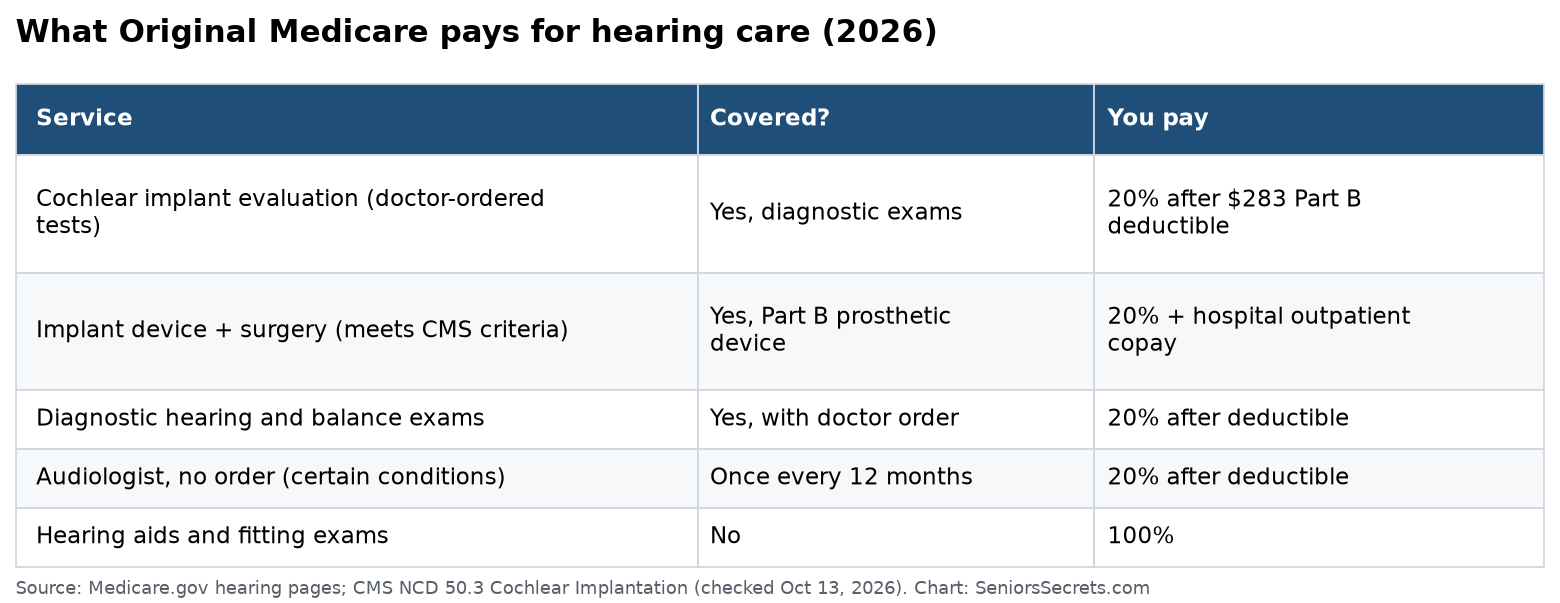
| Service | Original Medicare | What you pay |
|---|---|---|
| Cochlear implant evaluation (hearing tests ordered by your doctor) | Covered as diagnostic hearing exams | 20% after the Part B deductible |
| Implant device and surgery (if you meet the criteria) | Covered under Part B as a prosthetic device | 20% after the deductible, plus a hospital outpatient copayment |
| Diagnostic hearing and balance exams | Covered when your doctor orders them | 20% after the deductible |
| Audiologist visit without a doctor’s order | Once every 12 months for certain conditions | 20% after the deductible |
| Hearing aids and fitting exams | Not covered | You pay 100% |
Medicare.gov says you can see an audiologist once every 12 months without an order for non-acute hearing loss (the slow, years-long kind) and for diagnostic services related to hearing loss treated with surgically implanted hearing devices (Medicare.gov hearing and balance exams).
The 20% can add up because the implant system is expensive. A Medigap policy covers most or all of that coinsurance. Plans that also cover the Part B deductible aren’t sold to people new to Medicare since 2020. My Medigap comparison explains what each plan pays. If you have a Medicare Advantage plan, it must cover the implant when you meet the criteria, but your costs follow the plan’s copays and you’ll likely need prior authorization and an in-network surgeon.
Ask before surgery: “What will my share be for the evaluation, the device, the surgery, and the first year of programming visits?” The hospital and surgeon’s office can give you an estimate based on your coverage.
The usual path to an implant
- Tell your primary care doctor your hearing aids aren’t enough, and ask for a referral to an ENT (otolaryngologist) and an audiologist at a cochlear implant center.
- Hearing evaluation. Audiometry plus aided sentence-recognition testing, the test that decides the 60% threshold.
- Medical and imaging review. The ENT checks your ears and overall health. A CT or MRI shows whether the cochlea is suitable.
- Surgery. Usually done as an outpatient or with a short stay.
- Activation and programming. The external processor is switched on a few weeks after surgery, then adjusted at several follow-up visits.
- Rehabilitation. Learning to understand speech through an implant takes practice. Medicare’s criteria require you to be willing to do it.
Hearing aids: your realistic options
Original Medicare won’t pay for them. Here’s where people actually get help:
- Medicare Advantage plans. KFF found that 98% of individual Medicare Advantage plans offered some hearing benefit in 2026 (exams and/or aids), but the scope varies a lot. Some plans offer a set dollar allowance and others only discounts (KFF 2026 Spotlight). Open Enrollment (October 15 to December 7) is when to compare. Check the actual dollar amount and the network, not just “hearing aids covered.”
- Over-the-counter hearing aids. Since October 17, 2022, the FDA has allowed OTC hearing aids for adults 18 and older with perceived mild to moderate hearing loss, sold without a prescription or exam (FDA). They aren’t meant for severe or profound loss. If you’re struggling even with aids, that’s a sign to get tested for an implant instead. I compare options in my affordable hearing aids guide.
- Medicaid. Many state Medicaid programs cover hearing aids for adults. If you have both Medicare and Medicaid, ask your state Medicaid office or your D-SNP.
- Veterans. The VA provides hearing aids to many enrolled veterans.
Why it’s worth acting
Hearing loss is common: about one in three people ages 65 to 74 has it, and nearly half of those over 75 have difficulty hearing (NIDCD). Untreated, it makes conversations, phone calls and doctor visits harder, and it can be isolating. Hearing loss is also one of the risk factors in my dementia prevention guide, though treating it isn’t a guaranteed way to prevent dementia.
Common questions
Does Medicare cover cochlear implants?
Yes. Part B covers them as prosthetic devices if you meet CMS’s criteria, including bilateral moderate-to-profound sensorineural hearing loss and 60% or less on aided sentence-recognition tests.
How much does a cochlear implant cost with Medicare?
With Original Medicare you generally pay 20% of the Medicare-approved amount after the Part B deductible ($283 in 2026), plus any hospital outpatient copayment. Medigap can cover most of that.
Does Medicare cover hearing aids in 2026?
Original Medicare doesn’t cover hearing aids or fitting exams. Many Medicare Advantage plans include a hearing benefit, and OTC hearing aids are an option for mild to moderate loss.
Do I need a doctor’s order to see an audiologist?
Medicare lets you see an audiologist once every 12 months without an order for non-acute hearing loss and for services related to implanted hearing devices. Other visits need an order.
Am I too old for a cochlear implant?
Medicare’s criteria don’t set an upper age limit. What matters is your hearing test results, your overall health for surgery, and your willingness to do the rehabilitation.
Written by Khasim Basha Shaik. I research and compare Medicare coverage rules for readers. I’m not a licensed insurance agent, audiologist or medical professional. This article summarizes Medicare.gov and CMS materials and isn’t medical or legal advice. Last reviewed October 13, 2026.