Potassium for Seniors: How Much You Need, Best Foods and When Too Much Is Dangerous
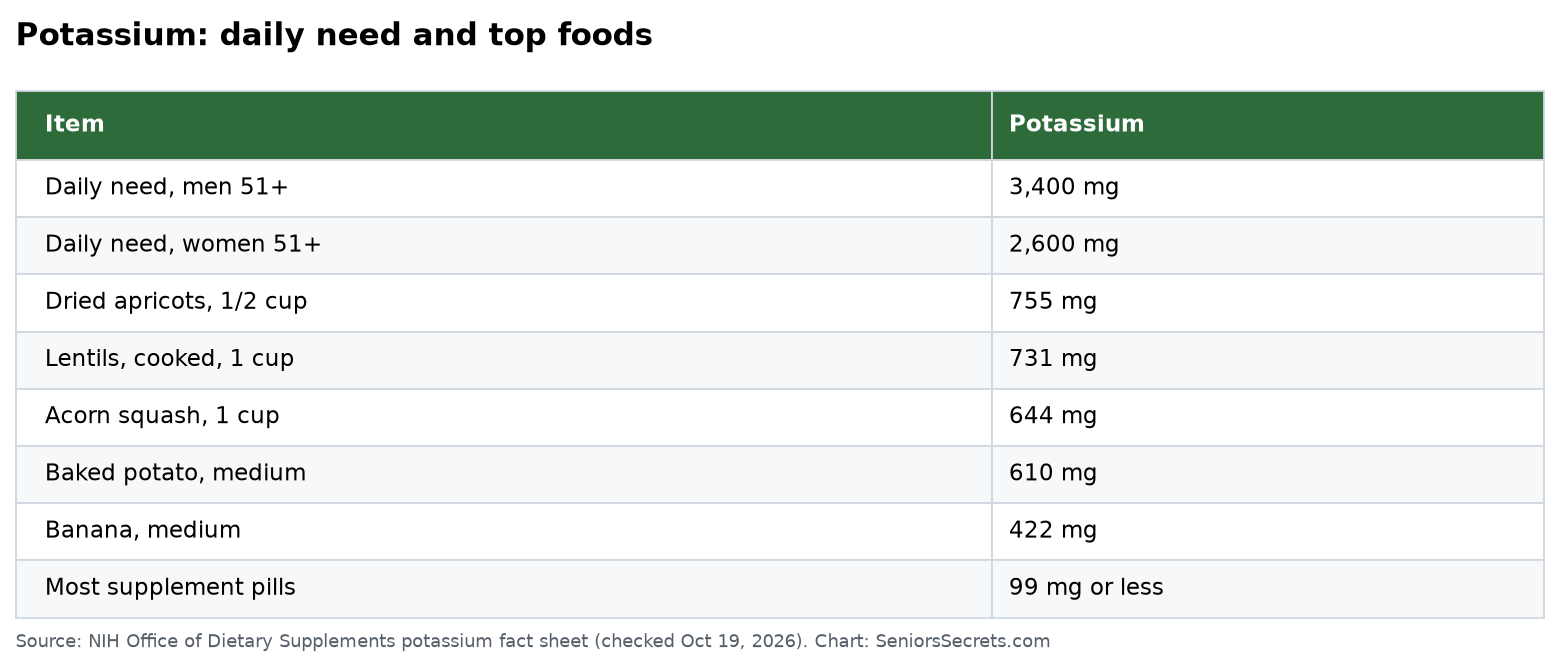
Men over 50 need about 3,400 mg of potassium a day, and women need about 2,600 mg. On average, men get 3,016 mg and women 2,320 mg, so many people fall a little short (NIH Office of Dietary Supplements).
Potassium helps your heart, muscles and nerves work, and it helps balance the effects of salt on blood pressure. But for some older adults, especially those with kidney disease or on certain blood pressure pills, too much potassium can be dangerous. This guide covers both sides.
Why potassium matters after 60
Your body uses potassium to:
- Keep your heartbeat steady
- Help muscles contract, including your heart
- Send nerve signals
- Balance fluids and help offset sodium (salt)
Your kidneys keep your blood level in a narrow range. That’s why kidney health and potassium go together.
Potassium and blood pressure
This is the biggest reason to get enough. The NIH notes:
- The DASH eating plan, which is rich in potassium, lowered blood pressure by about 5.5 points (top number) and 3.0 points (bottom number) in a key trial.
- In a review of 11 studies, eating 1,640 mg more potassium a day was linked to a 21% lower risk of stroke.
- The FDA allows foods high in potassium and low in sodium to say they may reduce the risk of high blood pressure and stroke.
The DASH plan from the National Heart, Lung, and Blood Institute focuses on foods rich in potassium, calcium, magnesium and fiber, and lower in sodium (NHLBI). It calls for 4 to 5 servings of vegetables and 4 to 5 servings of fruit a day. Our guide to high blood pressure after 65 covers targets and treatment.
Best food sources
Food is the safest way to get potassium. These numbers come from the NIH fact sheet:
| Food | Serving | Potassium |
|---|---|---|
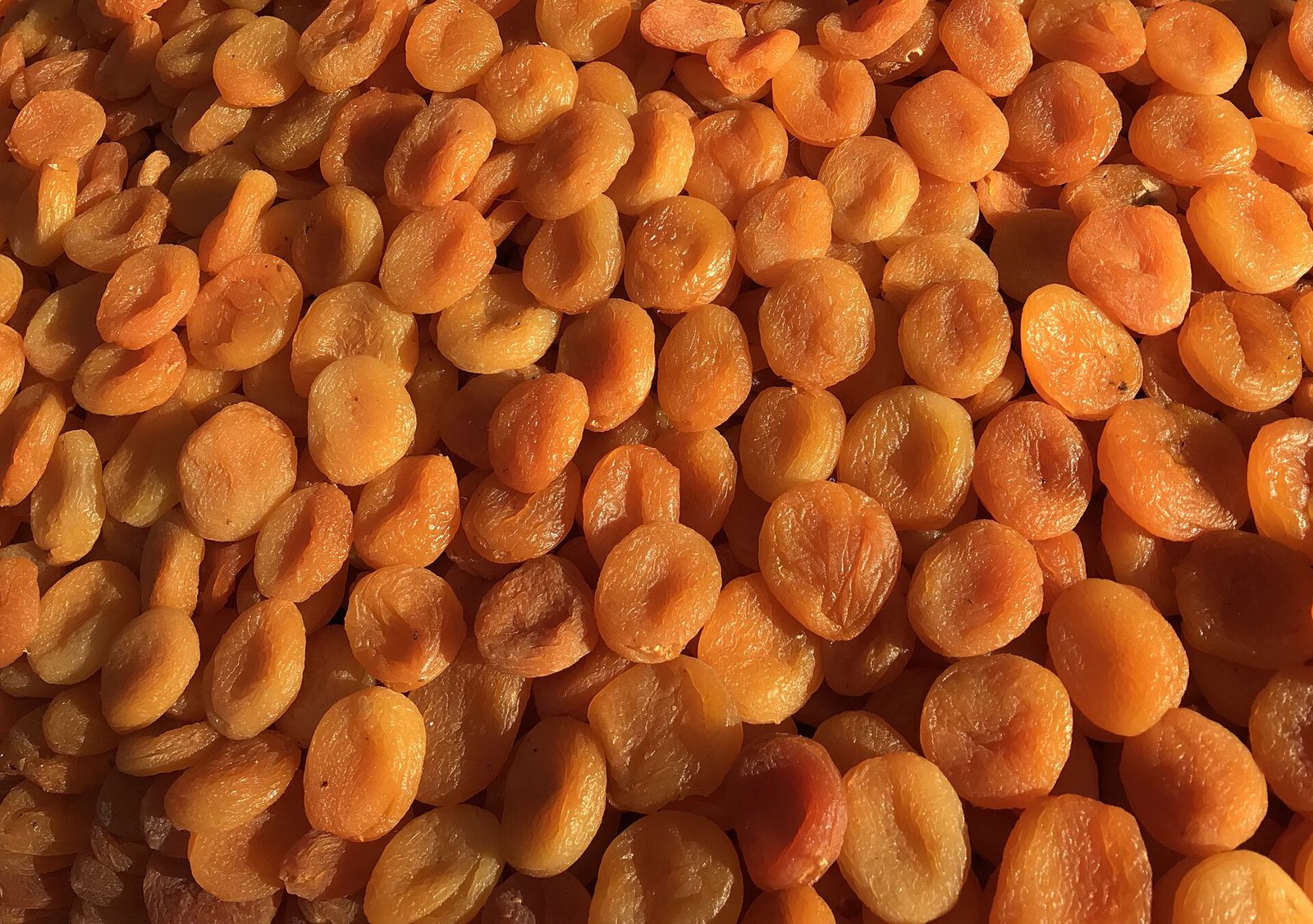
| Dried apricots | 1/2 cup | 755 mg |
| Lentils, cooked | 1 cup | 731 mg |
| Acorn squash, cooked | 1 cup | 644 mg |
| Prunes | 1/2 cup | 635 mg |
| Raisins | 1/2 cup | 618 mg |
| Potato, baked with skin | 1 medium | 610 mg |
| Kidney beans, canned | 1 cup | 607 mg |
| Orange juice | 1 cup | 496 mg |
| Banana | 1 medium | 422 mg |
| Milk, 1% | 1 cup | 366 mg |
| Spinach, raw | 2 cups | 334 mg |
| Salmon | 3 ounces | 326 mg |
A banana isn’t the top source. A baked potato, a cup of lentils or a handful of dried apricots gives you more.
Why supplements are usually tiny
Most over-the-counter potassium pills have 99 mg or less. That’s only about 3% of a man’s daily need. The FDA has long been concerned about higher-dose pills because of reports of damage to the small bowel. Higher doses come by prescription, when your doctor checks your blood level.
So if your doctor says you need more potassium, food or a prescription is the usual route.
Signs of low potassium
Low potassium is called hypokalemia. A small drop often causes no symptoms. When it does, MedlinePlus lists (MedlinePlus):
- Constipation
- Feeling skipped heartbeats or palpitations
- Tiredness
- Muscle weakness or spasms
- Tingling or numbness
A large drop can cause abnormal heart rhythms, which can make you feel lightheaded or faint.
Common causes in older adults:
- Water pills (diuretics) like furosemide (a loop diuretic) and hydrochlorothiazide (a thiazide)
- Vomiting or diarrhea
- Low magnesium. Low magnesium can make it hard to correct low potassium. Our magnesium guide explains why.
Night leg cramps have many possible causes besides potassium. See our guide to leg cramps in seniors.
Signs of high potassium
High potassium is called hyperkalemia. It’s the bigger danger for many older adults. It often causes no symptoms until it’s serious. When symptoms do occur, they may include (MedlinePlus):
- Chest pain
- Trouble breathing
- Nausea or vomiting
- Palpitations
- A slow, weak or irregular pulse
- Sudden collapse if the heartbeat slows or stops
Call 911 for chest pain, trouble breathing or fainting.
Who needs to watch for too much potassium
The NIH says these groups can develop high potassium, even at intakes below the daily target:
- People with chronic kidney disease. Weaker kidneys can’t remove extra potassium well. Our kidney disease diet guide covers what to eat.
- People taking ACE inhibitors like benazepril or lisinopril
- People taking ARBs like losartan
- People taking potassium-sparing diuretics like spironolactone or amiloride
If you take any of these, ask your doctor how often to check your potassium. MedlinePlus advises regular blood tests if you have kidney disease, take heart or blood pressure medicines or use salt substitutes.
The salt substitute trap
Many salt substitutes swap sodium for potassium chloride. One teaspoon can have 440 to 2,800 mg of potassium, per the NIH.
For a healthy person, that can be a good trade. For someone with kidney disease or on the drugs above, it can push potassium too high. Read the label and ask your doctor before you use one.
How your doctor checks potassium
A simple blood test measures potassium. MedlinePlus lists a normal range of 3.5 to 5.1 mmol/L. Labs may use slightly different ranges. Your doctor may also check your kidney function at the same visit.
A simple plan
- Eat 4 to 5 servings of fruit and 4 to 5 of vegetables a day, as DASH suggests.
- Add beans, lentils or potatoes a few times a week.
- Don’t take potassium pills unless your doctor prescribes them.
- Check before using salt substitutes, especially with kidney disease or blood pressure drugs.
- Know your numbers. Ask what your last potassium result was.
Common questions
How much potassium does a senior need each day?
The NIH sets an adequate intake of 3,400 mg a day for men over 50 and 2,600 mg for women over 50.
What foods are highest in potassium?
Dried apricots, lentils, acorn squash, prunes, raisins, baked potatoes and kidney beans are among the highest. Each has more than a banana.
What are the signs of low potassium in older adults?
Constipation, tiredness, muscle weakness or spasms, tingling and a feeling of skipped heartbeats. Water pills, vomiting and diarrhea are common causes.
Can blood pressure pills raise potassium?
Yes. ACE inhibitors, ARBs and potassium-sparing diuretics like spironolactone can raise potassium, especially with kidney disease. Ask your doctor about regular blood tests.
Are salt substitutes safe for seniors?
They’re safe for many people, but most contain potassium chloride, with 440 to 2,800 mg per teaspoon. People with kidney disease or on certain blood pressure drugs should ask a doctor first.
Written by Khasim Basha Shaik. I research and compare health and Medicare topics for readers. I am not a licensed doctor, dietitian or other medical professional. This article summarizes NIH Office of Dietary Supplements, NHLBI and MedlinePlus materials and is not medical advice. Last reviewed October 19, 2026.