Does Medicare Cover Walkers and Wheelchairs in 2026? DME Rules, Scooters, Costs and How to Avoid a Denial
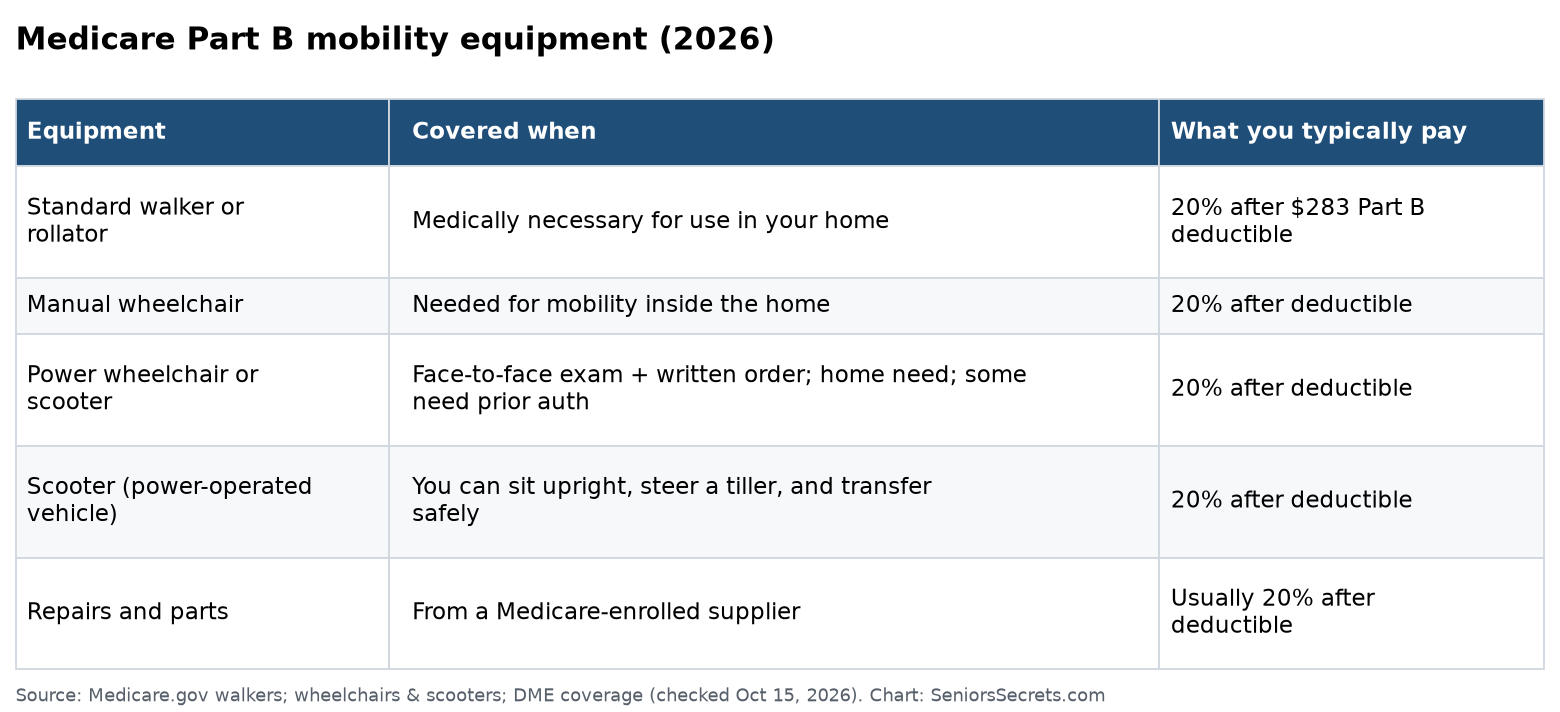
Yes. Medicare Part B covers medically necessary walkers (including many rollators), manual wheelchairs, power wheelchairs and scooters as durable medical equipment (DME) when your provider orders them for use in your home (Medicare.gov walkers; wheelchairs & scooters). After the 2026 Part B deductible of $283, you generally pay 20% of the Medicare-approved amount if the supplier accepts assignment. Medigap plans often cover that 20%.
The equipment must be needed for mobility inside your home, not only for shopping trips or outdoor errands. That home-use rule is where many scooter denials start. This rewrite also folds in the mobility-scooter detail from our older wheelchair guide so one page covers walkers, chairs and scooters together.
I research Medicare coverage for readers. I am not a licensed agent or clinician. Rules below summarize Medicare.gov and CMS DME policy as of October 15, 2026. The 2027 Part B deductible is $292 (CMS 2027 fact sheet).
What counts as DME
Medicare says DME is equipment that is durable, used for a medical reason, useful mainly to someone who is sick or injured, used in the home, and expected to last at least three years (Medicare.gov DME). Walkers, canes, crutches, wheelchairs and scooters sit on that list.
Walkers and rollators
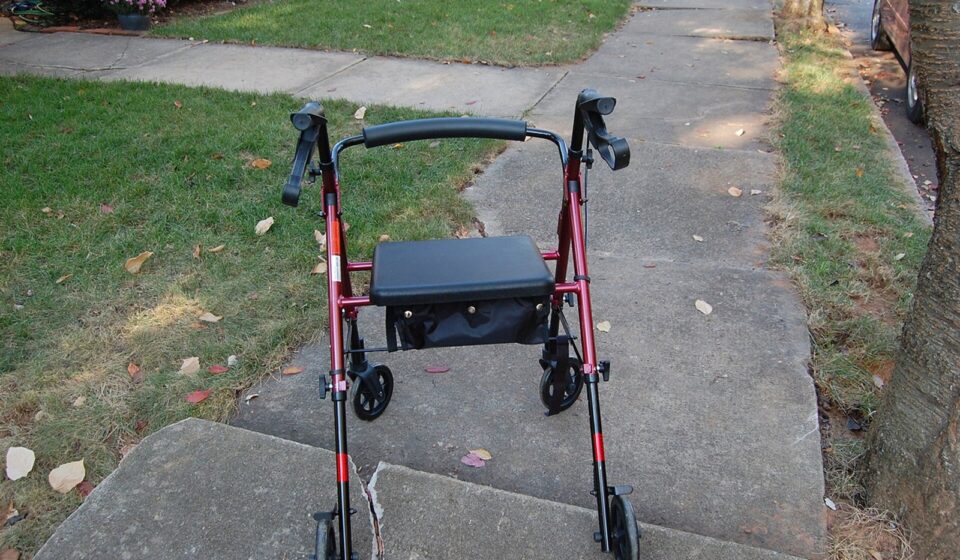
Part B covers walkers, including rollators, when they are medically necessary and prescribed for home use. You may rent or buy depending on how Medicare classifies that item. Ask the supplier which payment category applies before you sign. Repairs and replacement parts for a walker you already own can come from any Medicare-approved supplier.
Standard walkers are often easier to document than power devices. Your record should show why you need the walker to move safely in the home (for example, fall risk, weakness, or balance limits that a cane cannot fix).

Manual wheelchairs
Manual wheelchairs are covered when you need one for mobility in the home and meet medical-necessity rules. The supplier must be Medicare-enrolled. If they accept assignment, your share is the deductible (if not already met) plus 20% of the approved amount.
Power wheelchairs and scooters
Power wheelchairs and power-operated vehicles (scooters) have stricter rules:
- Face-to-face examination with a treating provider
- Written prescription (order) before Medicare pays
- Medical necessity for use in the home
- For certain power wheelchairs, prior authorization (your supplier usually files this)
Scooters are a poor fit if you cannot sit upright, operate tiller steering, or transfer on and off safely. In those cases, a power wheelchair with different controls may be the device Medicare expects. If you can manage all daily activities inside the home with a walker but only want a scooter for the grocery store, expect a denial. Home need is the core test.
Prior authorization, in plain English
For listed power wheelchair types, the supplier sends clinical paperwork to Medicare before delivery. You usually do not file the form yourself. A denial can mean Medicare does not see a home medical need, or the file is incomplete. The supplier can resubmit with more detail. Ask for a copy of what was sent.
What you pay in 2026
- Part B deductible: $283 once per year (Medicare.gov costs)
- Coinsurance: usually 20% of the approved amount when the supplier accepts assignment
- Non-assigned supplier: you can be billed more; for rentals, confirm assignment for every rental month or you may pay full price up front
Medigap Plan G and similar plans typically pick up the Part B coinsurance after the deductible. See my Medigap Plan G vs Plan N guide.
Medicare Advantage must cover at least what Original Medicare covers, but you may need in-network suppliers, prior auth, or different cost sharing. Open Enrollment runs October 15 to December 7 for 2027 coverage. If you need a new chair next year, compare networks now using the 2027 Open Enrollment guide.
How to avoid the usual denials
- Start with your doctor, not a TV ad. Infomercial scooters sold by non-enrolled suppliers are almost always 100% out of pocket.
- Document home barriers. Stairs, bathroom access, and distance to the bedroom matter in the clinical note.
- Use a Medicare-enrolled supplier who accepts assignment. Search Medicare.gov’s supplier directory.
- Do not upgrade on your own. Fancy seat cushions or scooter baskets are often non-covered add-ons.
- Keep repair receipts. Parts for an owned walker can be paid when billed correctly.
For related home equipment, see Medicare lift chair coverage (Medicare pays the seat-lift motor, not the recliner furniture) and what Medicare doesn’t cover.
Rentals, capped rentals and repairs
Medicare pays for different DME in different ways. Some items are rented for a set number of months and then considered purchased; others stay rental. Your supplier should explain which category applies to your walker or wheelchair before delivery. For repairs on equipment you already own, any Medicare-enrolled supplier can usually bill covered parts when the repair is reasonable and necessary.
If you move to a new state, ask whether your power wheelchair needs a new supplier relationship. Keep the original order and face-to-face note; replacing a lost device without documentation is much harder.
Common questions
Does Medicare pay for a rollator?
Yes, when a rollator is medically necessary for home use and billed as covered DME by an enrolled supplier. Same 20% coinsurance rules after the deductible.
Will Medicare buy me a scooter for shopping only?
Usually no. The primary need must be mobility in your home. Outdoor-only use is a classic denial reason.
Do I need prior authorization for every wheelchair?
No. Prior auth applies to certain power wheelchair types. Manual chairs and walkers follow standard DME billing. Your supplier should tell you if prior auth applies.
Can I get a wheelchair from any store?
Medicare only pays enrolled DME suppliers. Big-box or online purchases outside that system are typically your bill alone.
What if my claim is denied?
Ask for the denial reason, fix documentation with your clinician, and appeal on time. Your Medicare Summary Notice shows appeal rights.
Written by Khasim Basha Shaik. I research and compare Medicare coverage rules for readers. I am not a licensed insurance agent or medical professional. This article summarizes Medicare.gov and CMS DME materials and is not billing or legal advice. Last reviewed October 15, 2026.
Related guides