
Feeling tired now and then is normal at any age. Feeling tired most days for several weeks, even after rest, isn’t something to write off as “just getting older.” The National Institute on Aging says fatigue can be the first sign that something is wrong in your body, and that if you’ve had low energy for several weeks with no relief, you should call your doctor (NIA: Fatigue in Older Adults).
The good news is that many of the usual causes are treatable once someone looks for them: anemia, an underactive thyroid, poor sleep (including sleep apnea), side effects from medicines, and depression are near the top of the list.
Get help right away (call 911) if tiredness comes with chest pain or pressure, new shortness of breath, fainting, sudden weakness or numbness on one side, confusion, or trouble speaking. Those can be signs of a heart attack or stroke.
The causes doctors check first
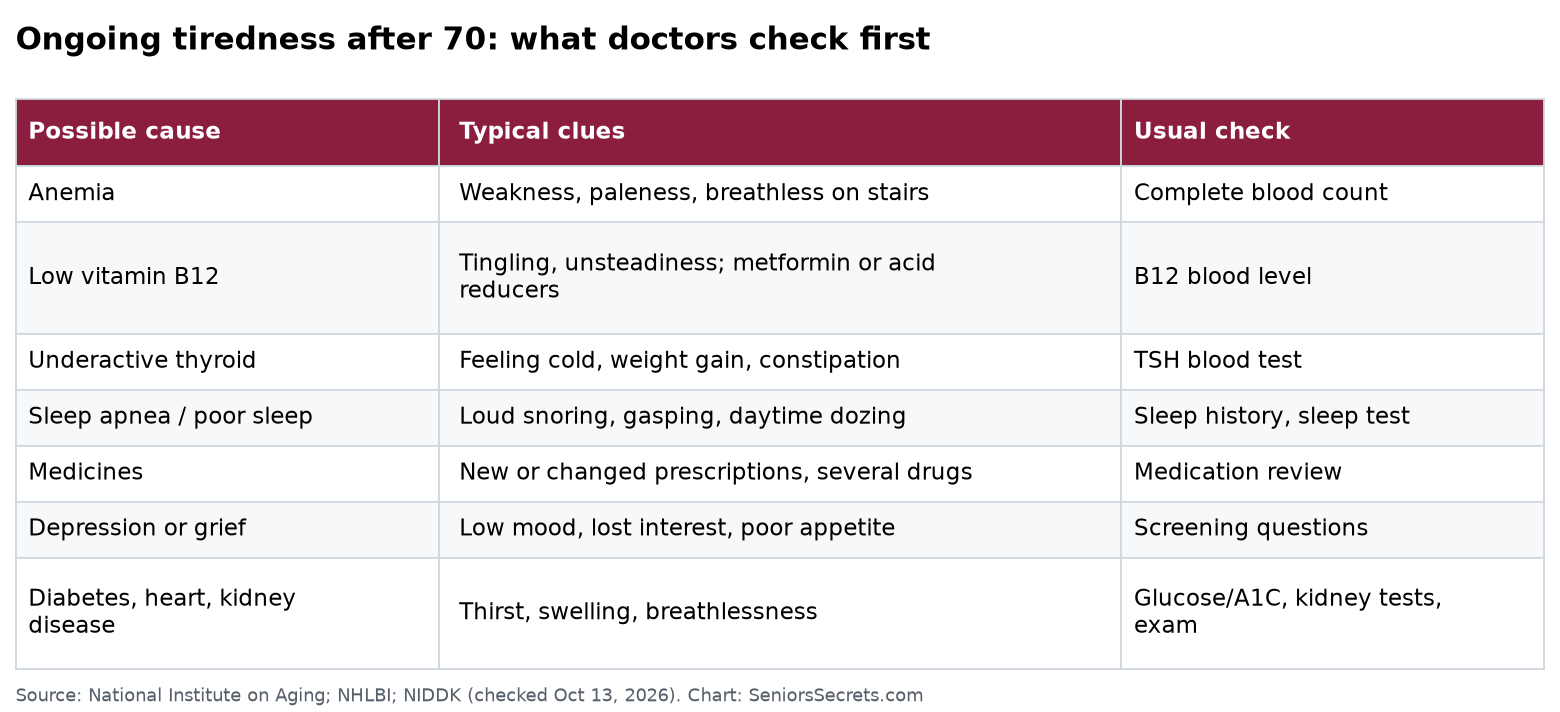
| Possible cause | Clues that point to it | How it’s usually checked |
|---|---|---|
| Anemia | Weakness, paleness, shortness of breath on stairs, dizziness | Complete blood count (CBC), iron studies |
| Low vitamin B12 | Numbness or tingling, unsteadiness, memory changes; long-term metformin or acid reducers | B12 blood level |
| Underactive thyroid | Feeling cold, weight gain, constipation, dry skin, slowed thinking | TSH blood test |
| Poor sleep or sleep apnea | Loud snoring, gasping at night, morning headaches, dozing off in the day | Sleep history; home or lab sleep test |
| Medication side effects | Started or changed a medicine recently; taking several | A full medication review |
| Depression, grief or anxiety | Loss of interest, low mood, poor sleep, appetite changes | Short screening questionnaire, conversation |
| Diabetes, heart, kidney, lung or liver disease | Thirst, swelling, breathlessness, other symptoms | Blood glucose or A1C, kidney tests, exam |
| Infection | Fever, cough, burning urination, new confusion | Exam, urine or other tests |
The NIA lists chronic diseases (diabetes, heart, kidney, liver, thyroid disease and COPD), anemia, sleep apnea and other sleep disorders, untreated pain, infections, recent stroke, Parkinson’s disease, cancer and its treatment, and certain medicines among the medical causes of fatigue.
Anemia
When you don’t have enough healthy red blood cells, your body gets less oxygen. The National Heart, Lung, and Blood Institute lists weakness and fatigue among the general symptoms, along with paleness, shortness of breath and dizziness. Mild anemia can cause no symptoms at all (NHLBI anemia symptoms). In older adults, anemia can come from low iron (sometimes from slow bleeding in the gut), low B12 or folate, kidney disease, or chronic inflammation, so the cause matters as much as the number. My anemia guide goes into the types and treatments.
Low vitamin B12
Absorbing B12 from food gets harder for some people as they age, and long-term use of metformin or stomach-acid reducers can lower levels too. Low B12 can cause anemia and nerve symptoms. It’s a simple blood test, and it’s very treatable. Here’s who’s most at risk for B12 deficiency.
An underactive thyroid
The National Institute of Diabetes and Digestive and Kidney Diseases lists fatigue among the common symptoms of hypothyroidism and says it’s more common in women and in people over 60. It also warns that fatigue and weight gain are common and don’t necessarily mean you have a thyroid problem. A TSH blood test sorts it out (NIDDK hypothyroidism).
Sleep problems, including sleep apnea
Sleep changes with age, but being tired all day isn’t one of the normal changes. If you snore loudly, someone has noticed you stop breathing at night, or you fall asleep easily during the day, ask about sleep apnea. It’s common, often missed, and treatable. My sleep apnea guide covers the warning signs and testing. If the problem is falling or staying asleep, CBT-I usually works better long term than sleeping pills.
Medicines
The NIA names antidepressants, antihistamines, and medicines for nausea and pain as examples that can add to fatigue. Blood pressure drugs, sleep aids, muscle relaxants and some bladder medicines can do it too. Don’t stop a prescription on your own. Bring every bottle, including over-the-counter sleep aids and allergy pills, to your doctor or pharmacist and ask, “Could any of these be making me tired?”
Mood, grief and stress
The NIA notes that anxiety, depression, grief and money worries can all drain your energy, and that losing a sense of control over your life can, too. Depression in older adults often shows up as tiredness, poor sleep or aches rather than sadness. It’s treatable with talk therapy, medication or both.
What to ask your doctor for
Expect questions about your sleep, activity, appetite and mood, plus an exam. The NIA says your doctor will likely order lab tests. Common first tests include a complete blood count, TSH, vitamin B12, blood glucose or A1C, and kidney and liver function. Ask your doctor which make sense for you.
Two money tips if you have Medicare:
- Diagnostic tests your doctor orders because you have symptoms are generally covered under Part B, with your deductible and coinsurance.
- Your free yearly Wellness visit includes a medication review and a written prevention plan, but working up a new symptom like fatigue may be billed as a separate visit.
Keep a fatigue diary for a week or two before the appointment. The NIA suggests it to spot patterns. Note when you feel worst, how you slept, naps, caffeine, alcohol, and any new medicines. It turns “I’m always tired” into something a doctor can work with.
Habits that genuinely help
These work best alongside, not instead of, a check-up. From the NIA’s recommendations:
- Move most days. Regular exercise can boost energy, sleep and mood. Start small: a 10-minute walk after a meal counts.
- Keep naps short and early. Naps over 30 minutes late in the day can leave you groggy and make it harder to sleep at night.
- Keep the same bedtime and wake time, even on weekends.
- Limit caffeine, especially in the afternoon and evening, and go easy on alcohol, which disrupts sleep and interacts with many medicines.
- Eat regular meals with enough protein. Skipping meals and low appetite are common reasons energy crashes in the afternoon.
- Stay connected. Volunteering, clubs and time with friends help, especially after retirement or a loss.
- Stop smoking. It’s linked to heart and lung diseases that cause fatigue.
What I wouldn’t do
- Don’t self-treat with energy drinks or high-dose supplements. Unless a blood test shows a deficiency, extra vitamins rarely fix fatigue, and some interact with prescriptions.
- Don’t add over-the-counter sleep aids without asking. Many contain diphenhydramine, which can cause next-day grogginess and confusion in older adults.
- Don’t accept “you’re just old” if the tiredness is new or getting worse. Ask what else could be going on.
Common questions
Is it normal to be tired all the time at 70?
No. Some changes in sleep and stamina come with age, but constant tiredness that lasts several weeks is worth a doctor’s visit. It often has a treatable cause.
What blood tests check for fatigue in older adults?
Common first tests include a complete blood count, thyroid (TSH), vitamin B12, blood glucose or A1C, and kidney and liver function. Your doctor chooses based on your symptoms.
Can medications make seniors tired?
Yes. Antihistamines, antidepressants, pain and nausea medicines, sleep aids and some blood pressure drugs can cause tiredness. Ask your doctor or pharmacist before changing anything.
When is tiredness an emergency?
Call 911 if fatigue comes with chest pain, new shortness of breath, fainting, sudden one-sided weakness, confusion or trouble speaking.
Does napping help or hurt?
A short nap early in the afternoon can help. The NIA advises avoiding naps longer than 30 minutes late in the day because they can disrupt nighttime sleep.
Written by Khasim Basha Shaik. I research health topics for older adults using NIH and other official sources. I’m not a doctor or medical professional, and this article isn’t medical advice. Talk with your own clinician about symptoms. Last reviewed October 13, 2026.
Related guides