Kefir for Seniors in 2026: Gut, Bone and Heart Benefits, Sugar Traps and How to Start
Kefir is a good, low-cost food for most older adults. One cup of plain low-fat kefir has about 104 calories, 9 grams of protein and over 300 mg of calcium, plus live cultures. Research shows it can help people who have trouble digesting lactose. Claims that it lowers blood pressure or builds bone are not proven yet.
Kefir is drinkable, gentle on many stomachs and easy to find. The new Dietary Guidelines even name it as one of the fermented foods that support a healthy gut. But flavored kefir can carry as much sugar as a soda, and live cultures are not right for everyone. This guide uses USDA FoodData Central, the Dietary Guidelines for Americans 2025 to 2030 released in January 2026, NIH’s probiotics fact sheet, and published trials, checked on October 15, 2026.
I research nutrition evidence for readers. I am not a doctor or dietitian.
What is kefir?
Kefir is milk fermented with “kefir grains,” a mix of bacteria and yeasts. The result is thinner than yogurt, tart and a little fizzy. Fermentation breaks down much of the milk sugar (lactose). Store kefir is usually cow’s milk. Water kefir and coconut kefir also exist but have little protein or calcium.
What one cup gives you
| Per 1 cup (about 243 g) | Plain low-fat kefir | Strawberry low-fat kefir |
|---|---|---|
| Calories | About 104 | About 151 |
| Protein | About 9 g | About 8 g |
| Calcium | About 316 mg | About 289 mg |
| Total sugars | About 11 g (mostly milk sugar) | About 22 g |
| Sodium | About 97 mg | About 90 mg |
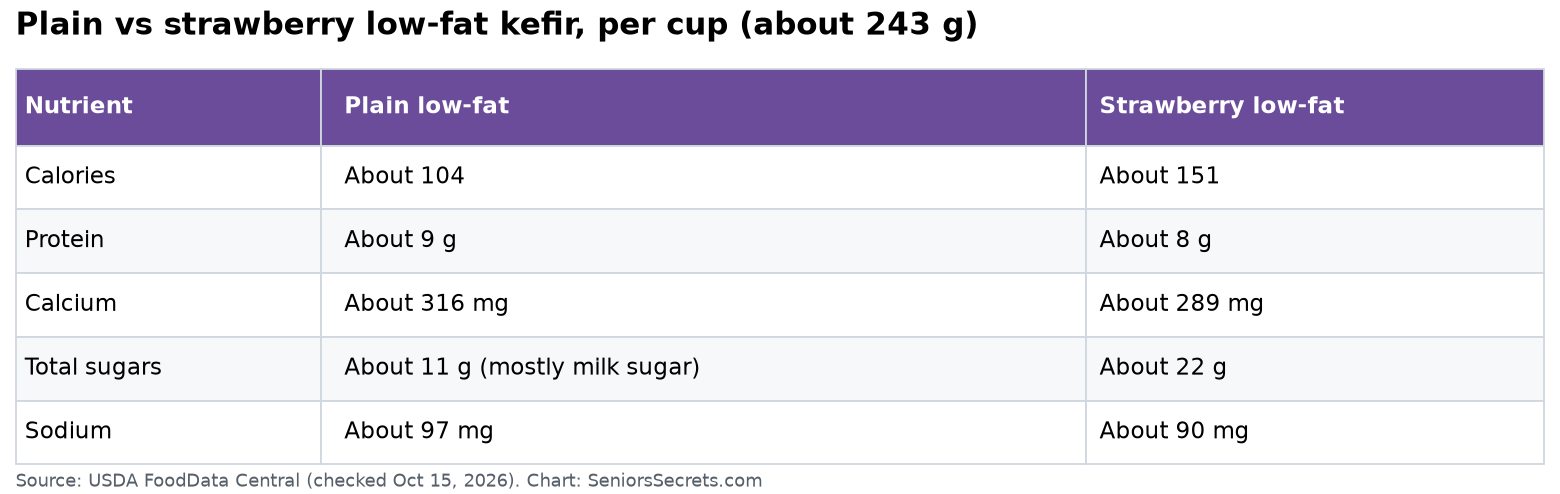
Numbers come from USDA FoodData Central entries for Lifeway low-fat kefir, scaled to one cup. Brands vary, so check your label.
For a senior aiming for 1,200 mg of calcium and plenty of protein a day, one cup covers about a quarter of the calcium and a good share of a meal’s protein.
What the research shows
Lactose: the strongest evidence
In a small 2003 study in the Journal of the American Dietetic Association, adults who had trouble digesting lactose had less gas and better lactose digestion after kefir than after milk. If milk upsets your stomach, kefir may be a way back to dairy.
Bones: early and small
A 2015 trial in PLoS One gave 40 people with osteoporosis kefir-fermented milk (with added calcium) or plain calcium for six months. The kefir group had a small gain in hip bone density. It was a short, small study. Kefir can support bone health through calcium and protein, but it does not replace osteoporosis treatment.
Blood pressure and inflammation: not proven
A 2025 review of 7 trials with 385 adults found kefir did not lower blood pressure in a meaningful way. It also did not lower CRP, a marker of inflammation, overall, though trials lasting 8 weeks or more showed a small drop.
Gut health
The 2025 to 2030 Dietary Guidelines say fermented foods like kefir, sauerkraut, kimchi and miso, along with high-fiber foods, support a healthy gut. Our gut health guide for seniors covers the bigger picture.
Sugar trap: read the label
Flavored kefir often has about twice the sugar of plain. The new guidelines advise that one meal should contain no more than 10 grams of added sugars. A cup of flavored kefir can use most or all of that alone.
Better options:
- Buy plain, unsweetened kefir.
- Add fresh or frozen berries, a little cinnamon, or blend with banana.
- If you like it sweeter, mix half plain and half flavored for a week, then cut back.

Who should be careful
- Weak immune system. NIH warns that people with serious illness or weakened immune systems, such as during chemotherapy or after a transplant, may be at risk of infections from live microbes. Ask your care team first.
- Raw-milk or homemade kefir. Use pasteurized milk. Raw milk can carry harmful germs.
- Kidney disease. Kefir has potassium and phosphorus. Ask your kidney doctor how much fits your diet.
- Milk allergy. Kefir is still milk. It is not safe for a true milk allergy.
- Certain medicines. Calcium can block some antibiotics, thyroid pills and osteoporosis drugs. Take them a couple of hours apart.
Some people notice gas or bloating at first. Starting small usually helps.
How to start
- Week 1: a quarter cup a day with breakfast.
- Week 2: half a cup.
- Week 3 and on: up to one cup a day.
Easy ways to use it:
- Pour over oatmeal or cereal instead of milk.
- Blend into a smoothie with spinach and berries.
- Use as a base for salad dressing with herbs and lemon.
- Mix into overnight oats.
Kefir keeps a week or two after opening in the fridge. Shake before pouring.
Lactose-free and plant options
Some stores sell lactose-free kefir, which adds an enzyme to break down the rest of the milk sugar. It keeps the protein and calcium. Plant kefirs made from coconut, oat or almond are different. Many have little protein, and calcium depends on whether the maker adds it. If you choose one, look for at least 6 grams of protein and 20% of the Daily Value for calcium per cup, with little or no added sugar.
A large bottle of plain kefir usually costs less per cup than single-serve flavored bottles. Compare the unit price on the shelf tag.
Kefir vs yogurt vs probiotic pills
- Kefir: drinkable, often more types of microbes than yogurt, good protein and calcium.
- Greek yogurt: more protein per cup and thicker. Great for older adults who need protein.
- Probiotic pills: specific strains for specific uses, with mixed evidence. See our probiotics guide.
For most people, food first is the simple choice. Pair kefir with protein-rich meals from our daily protein guide.
Common questions
Is kefir good for seniors?
For most, yes. It is a good source of protein and calcium, and many people with lactose trouble tolerate it. Choose plain and pasteurized.
How much kefir should a senior drink a day?
Start with a quarter cup and work up to about one cup a day.
Does kefir lower blood pressure?
A 2025 review of 7 trials found no meaningful drop in blood pressure.
Is kefir better than yogurt?
Not better, just different. Kefir is drinkable and often has more microbe types. Greek yogurt has more protein.
Who should not drink kefir?
People with a weakened immune system, a milk allergy or advanced kidney disease should ask their doctor first.
Written by Khasim Basha Shaik. I research nutrition evidence for older adults. I am not a doctor or registered dietitian. This article summarizes USDA, NIH and published research and is not medical advice. Last reviewed October 15, 2026.