COVID Vaccine for Seniors 2026-27: Why Adults 65+ Get Two Doses This Season and What Medicare Pays

If you’re 65 or older, the CDC now advises two doses of the 2026-27 COVID-19 vaccine this season. Get the first dose now, and the second about 6 months later (CDC). The American Academy of Family Physicians (AAFP) gives the same advice (AAFP).
Medicare Part B covers COVID-19 vaccines at no cost to you when your provider accepts assignment. Here’s what changed, the timing, and the small print.
Why this matters now
Fall is the start of respiratory virus season. COVID-19 is still a real risk for older adults:
- From October 1, 2025, to July 18, 2026, COVID-19 caused an estimated 130,000 to 240,000 hospitalizations and 14,000 to 41,000 deaths in the US.
- Last season’s updated vaccines cut the risk of COVID hospitalization by 53% in adults 65 and older, a study cited by the AAFP found.
- Yet as of January 2026, only 30.8% of adults 65 and older had gotten the updated vaccine.
The CDC says older adults are among the people most likely to get very sick, especially those 75 and older, with risk rising with age (CDC).
The two-dose schedule for 65+
These CDC rules are for adults 65 and older who are not immunocompromised.
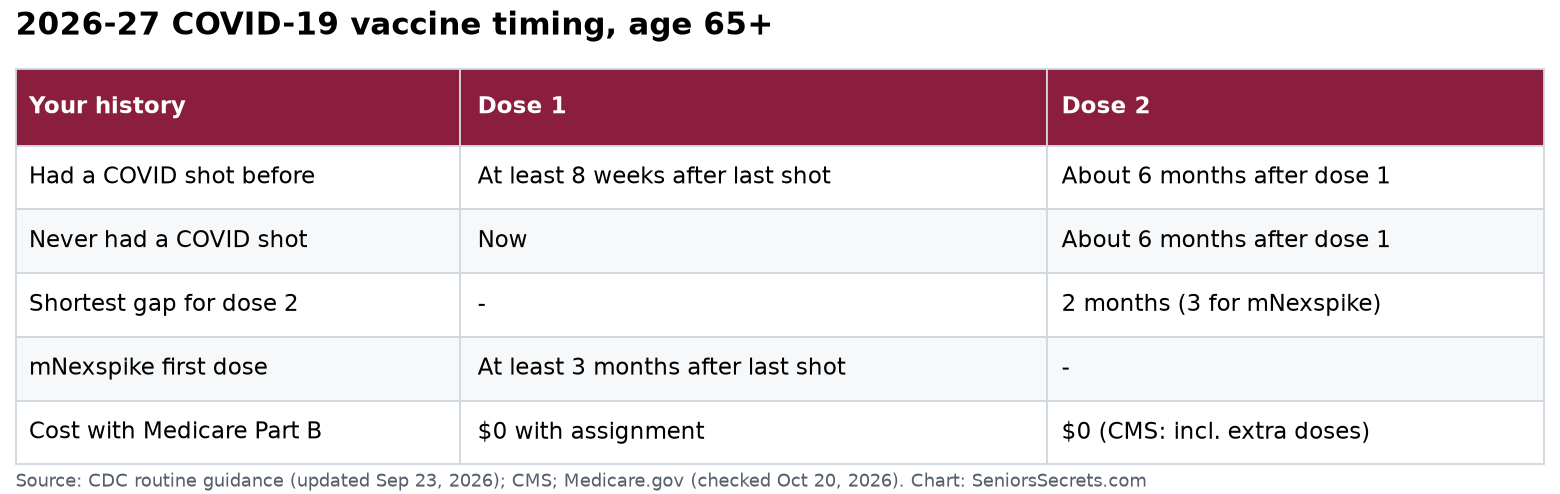
If you’ve had a COVID shot before:
- Dose 1: at least 8 weeks after your last COVID shot. If you get Moderna’s mNexspike, wait at least 3 months.
- Dose 2: about 6 months after dose 1. The shortest allowed gap is 2 months, or 3 months for mNexspike.
If you’ve never had a COVID shot:
- Dose 1: now.
- Dose 2: about 6 months later, with the same minimum gaps.
Example: you get dose 1 in late October 2026. Plan dose 2 for late April 2027. Put it on your calendar today.
If you have a weakened immune system, such as from cancer treatment, an organ transplant or certain drugs, the CDC has a separate schedule. Ask your doctor which one fits you.
The four vaccines
The FDA has approved four COVID-19 vaccines for everyone 65 and older:
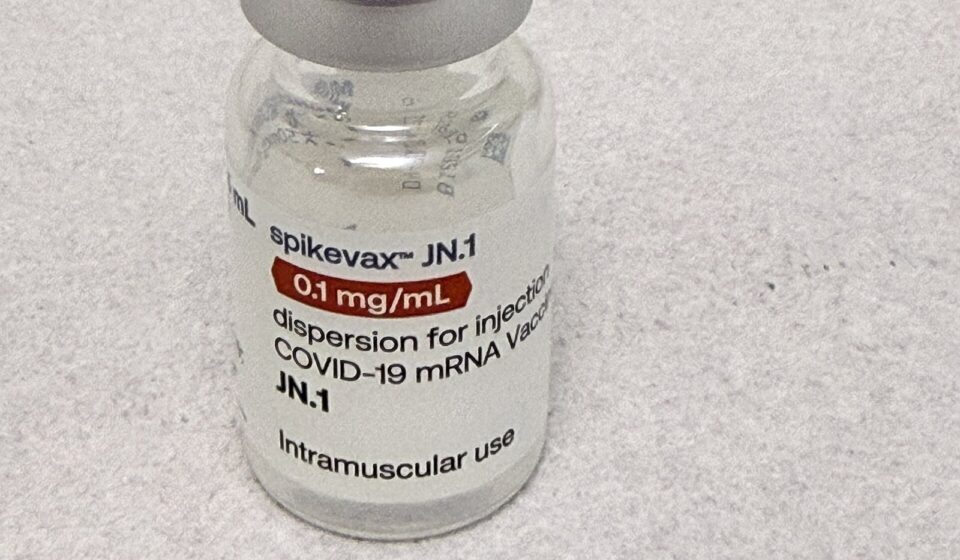
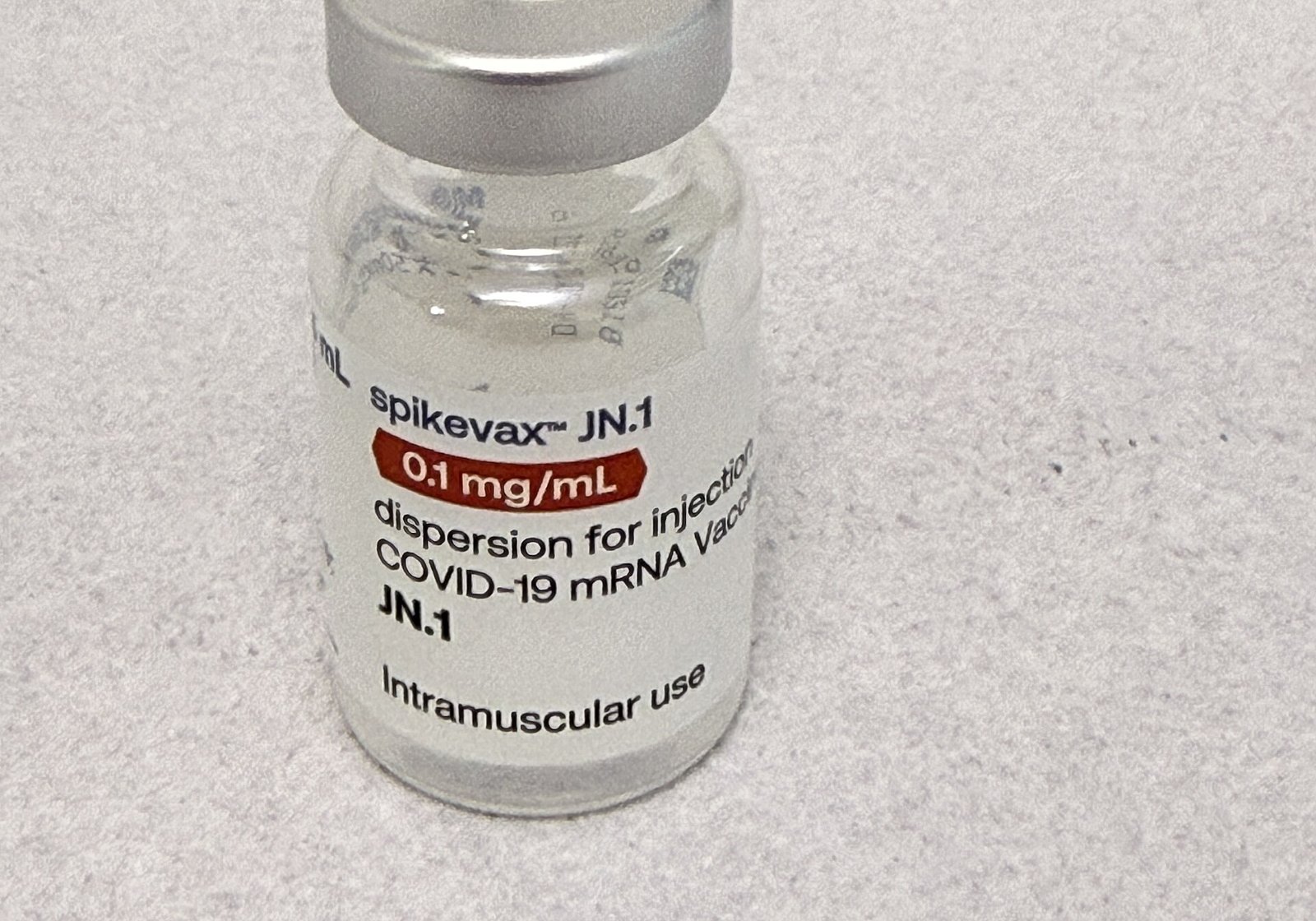
- Spikevax (Moderna), an mRNA vaccine
- mNexspike (Moderna), an mRNA vaccine with a smaller dose
- Comirnaty (Pfizer-BioNTech), an mRNA vaccine
- Nuvaxovid (Novavax), a protein-based vaccine that isn’t mRNA, for people who prefer that type
The CDC and AAFP don’t say one is better for seniors. Use what your pharmacy has.
The gotcha: the second dose is “off-label”
The FDA approved a single dose for adults 65 and older. So the CDC’s page says plainly that giving a second dose to this age group is off-label use. Off-label means a doctor or pharmacist uses an approved product in a way the label doesn’t list. It’s common and legal. Here, it’s what the CDC schedule and the AAFP recommend.
What this means for you:
- Some pharmacies may ask questions or check their own rules before giving dose 2.
- Bring your vaccine card or a printout of your records so they can see the date of dose 1.
- Ask about cost before dose 2. CMS tells providers that patients pay nothing for COVID-19 vaccines, including additional doses (CMS). Still, a quick question at the counter avoids surprises.
What Medicare pays
Original Medicare:
- Part B covers FDA-approved and authorized COVID-19 vaccines. You pay nothing if your provider accepts assignment (Medicare.gov).
- No doctor’s order is needed, CMS says.
- At-home shots. If you have trouble leaving home, some providers can come to you. Medicare pays them an extra amount (about $40 in 2026) for an in-home COVID shot, and you still pay nothing for the vaccine.
One honest note: as of today, Medicare.gov’s coverage page still names the 2025-26 formula. CMS hasn’t updated that line yet. The coverage rule, “FDA-approved and FDA-authorized” vaccines, covers the new 2026-27 shots too. We’ll update this page when Medicare.gov changes its wording.
Medicare Advantage: Medicare.gov says to bring your red, white and blue Medicare card so the provider can bill Medicare. Bring your plan card too.
Getting it with your flu and RSV shots
You can get more than one vaccine at the same visit. The AAFP encourages clinicians to offer shots together. This fall, many seniors need:
- A flu shot. Adults 65 and older should get a high-dose, adjuvanted, recombinant or mRNA flu vaccine if available. See our flu shot guide for seniors.
- An RSV vaccine if you’re 75 or older, or 50 to 74 with certain health problems, and you’ve never had one. See our RSV vaccine guide.
- A pneumonia vaccine if you haven’t had one. See our pneumonia vaccine guide.
- Shingrix, if you haven’t finished both doses. See our shingles vaccine guide.
Sore arms and feeling tired for a day are common. If you had a strong reaction before, ask about spacing shots out.
If you get COVID anyway
Call your doctor or pharmacy right away, even if symptoms are mild. Treatment works only if you start early (CDC):
- Paxlovid pills: must start within 5 days of your first symptoms
- Molnupiravir (Lagevrio) pills: within 5 days
- Remdesivir (Veklury): IV infusions for 3 days, within 7 days
You don’t need a positive test to start treatment if you’re at high risk. The CDC says Paxlovid is more likely than other COVID pills to interact with other medicines, so your pharmacist needs your full drug list. Most people can still take it.
Costs. COVID pills are filled at the pharmacy, so check your Part D plan’s coverage. Part D out-of-pocket drug costs are capped at $2,100 in 2026. The CDC also notes that patient assistance programs, such as PAXCESS for Paxlovid, can lower costs for certain people on Medicare. If cost is a problem, see our Extra Help guide.
Your fall checklist
- Get dose 1 of the 2026-27 COVID vaccine now.
- Put dose 2 on your calendar about 6 months out.
- Ask about flu, RSV, pneumonia and shingles shots at the same visit.
- Keep a home COVID test kit and your drug list handy.
- If you get sick, call within a day or two of symptoms.
Our free preventive screenings guide lists other $0 services Medicare covers.
Common questions
How many COVID shots do seniors need in 2026-27?
The CDC advises two doses for adults 65 and older who aren’t immunocompromised, about 6 months apart.
How long after my last COVID shot can I get the new one?
At least 8 weeks for most vaccines, or at least 3 months for Moderna’s mNexspike.
Does Medicare pay for the COVID vaccine?
Yes. Part B covers it at no cost if your provider accepts assignment. CMS says this includes additional doses, and no doctor’s order is needed.
Why is the second dose called off-label?
The FDA approved one dose for adults 65 and older. The CDC and AAFP advise a second dose, which is an off-label use of an approved vaccine.
Can I get my COVID and flu shots together?
Yes. You can get them at the same visit, along with RSV and other vaccines you need.
Written by Khasim Basha Shaik. I research and compare Medicare plans and health topics for readers. I am not a doctor, pharmacist or licensed insurance agent. This article summarizes CDC, AAFP, CMS and Medicare.gov guidance and is not medical advice. Last reviewed October 20, 2026.
Related guides
Skin Cancer in Seniors: Warning Signs, the ABCDEs, Prevention and What Medicare Covers
Pneumonia Vaccine for Seniors: Which Shot You Need After 50, and What Medicare Pays