Pickleball for Seniors: Health Benefits, How to Start Safely, Gear and Injury Prevention

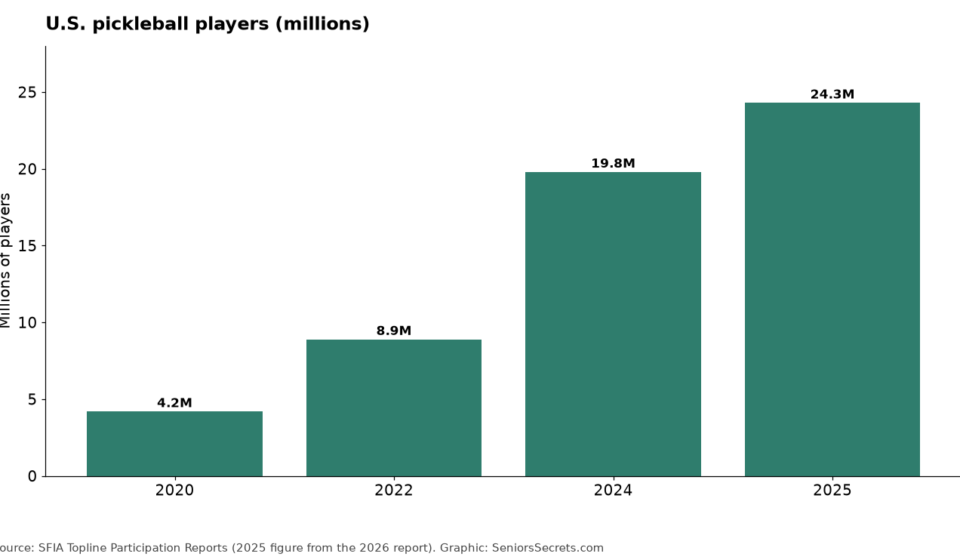
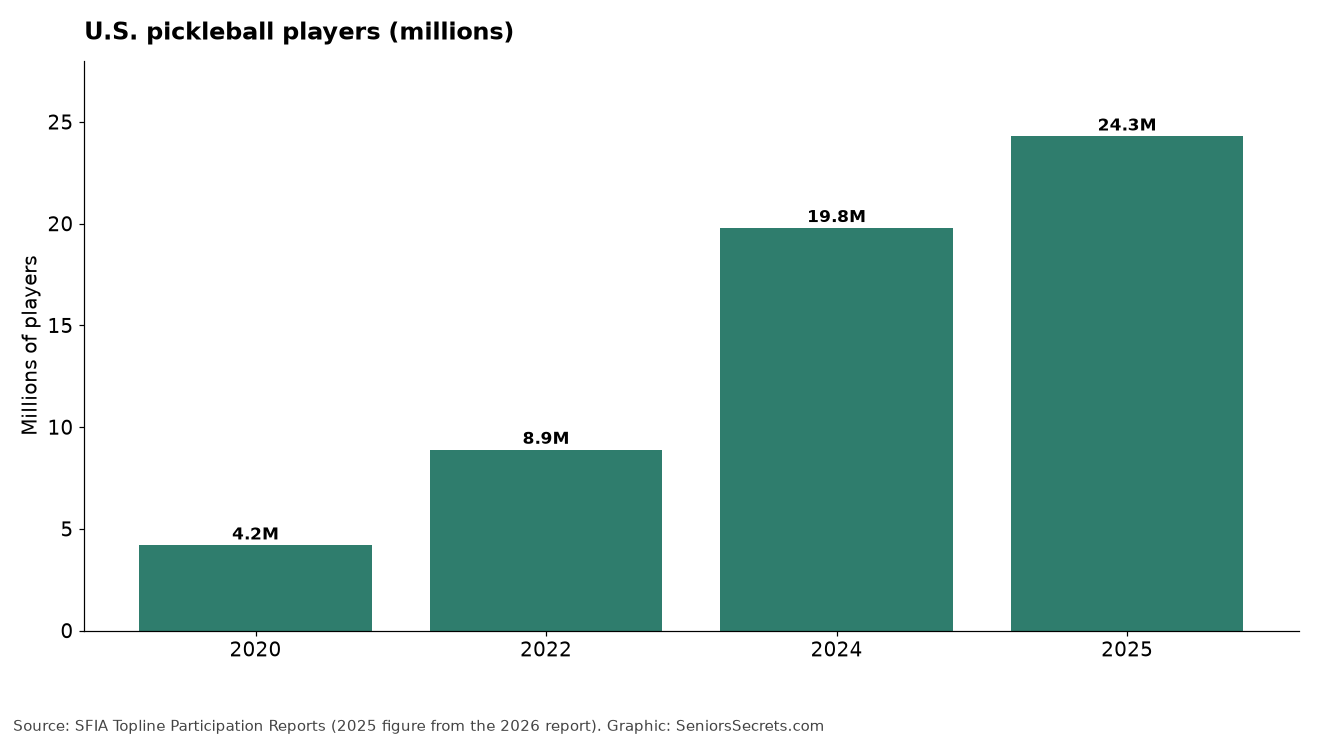
Walk past a community center or park on a weekday morning and you’ll probably hear it: the hollow pock of a plastic ball and a lot of laughter. According to the Sports & Fitness Industry Association’s 2026 Topline Participation Report, pickleball was the fastest-growing sport in the U.S. for the fifth year in a row, with 24.3 million players in 2025, up from 4.2 million in 2020.
For older adults, the appeal is easy to see. The court is small, the serve is underhand, and doubles keeps the running manageable. A beginner can have fun in the first session. Below is what pickleball can and can’t do for your health, how to get started safely, and how to avoid the injuries that catch new players out.
I’m a researcher, not a doctor or coach. If you have heart disease, a joint replacement, osteoporosis or balance problems, talk to your doctor before you take up a new sport.
What pickleball is
It’s a paddle sport that borrows from tennis, badminton and table tennis. You play on a badminton-sized court (about a quarter the size of a tennis court) with a solid paddle and a light, perforated plastic ball. The serve is underhand, and there’s a 7-foot “kitchen” zone by the net where you can’t volley. That keeps rallies slower and less smash-heavy than tennis. Most older players play doubles.
What the research shows
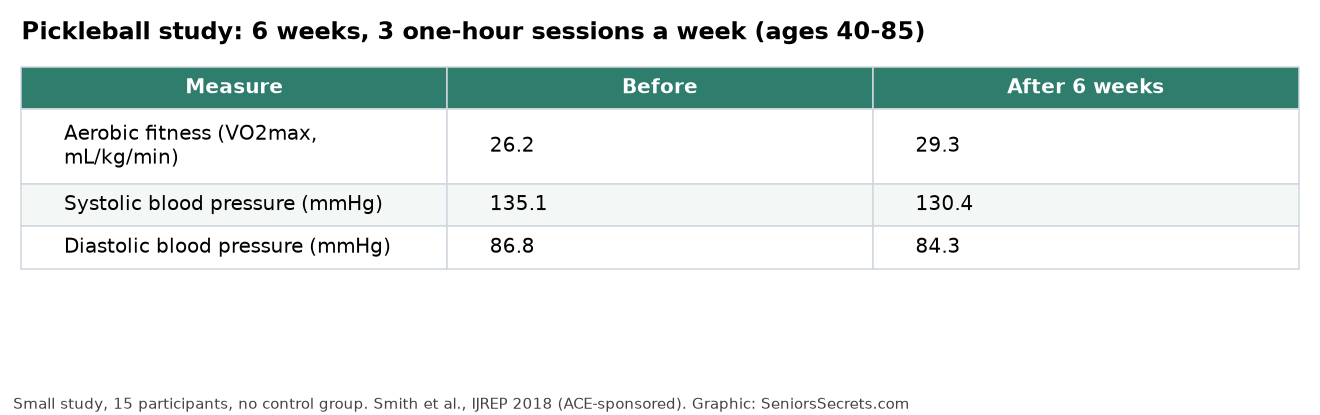
The most cited study is small but useful. Researchers at Western State Colorado University, sponsored by the American Council on Exercise, had 15 adults aged 40 to 85 play pickleball for an hour, three times a week, for six weeks (Smith et al., 2018). On average:
- aerobic fitness (VO2max) rose from 26.2 to 29.3 mL/kg/min
- systolic blood pressure fell from 135.1 to 130.4 mmHg
- cholesterol improved
- players’ heart rates during games were in the moderate-intensity range
It had no control group and only 15 people, so treat the numbers as encouraging rather than proof. The broader point is solid, though. Federal Physical Activity Guidelines recommend that older adults get 150 minutes of moderate activity a week plus balance and strength work. A few games of doubles each week can cover a large share of that.
Other likely benefits:
- Balance and agility. Quick side steps and changes of direction train the reactions that help you catch yourself. Pickleball isn’t a substitute for targeted balance exercises, though, especially if you’ve fallen before.
- Social connection. Doubles, rotating partners and open-play sessions make it easy to meet people. Loneliness is a real health risk in later life.
- Mental engagement. Tracking the ball, planning shots and talking with your partner keeps your mind busy. That’s a plus, though there’s no direct evidence that pickleball prevents dementia.
- Easier on joints than tennis, thanks to the smaller court and lighter ball. Many people with mild arthritis or joint replacements play, with their surgeon’s OK.
How to start safely
- Check with your doctor, especially if you have heart disease, chest pain with exertion, uncontrolled blood pressure, a recent joint replacement, osteoporosis or a fall history.
- Take a beginner clinic. Community centers, YMCAs and clubs run low-cost intro sessions. USA Pickleball’s Places2Play finder lists courts near you.
- Start with doubles, for 30 to 45 minutes. Build up to longer sessions over several weeks.
- Warm up for 5 to 10 minutes. Walk, do arm circles and leg swings, and step side to side. Afterward, stretch your calves, hips and shoulders. See my stretching routine.
- Build fitness off the court. Leg and core strength protect your knees and back. Two strength sessions a week help. See strength training for sarcopenia.
- Hydrate, and use sun protection outdoors. Avoid midday heat in summer.
Gear: what to buy
- Court shoes, not running shoes. This matters most. Running shoes are built for forward motion and can let your ankle roll on side-to-side moves. Look for tennis or court shoes with lateral support and a flatter sole.
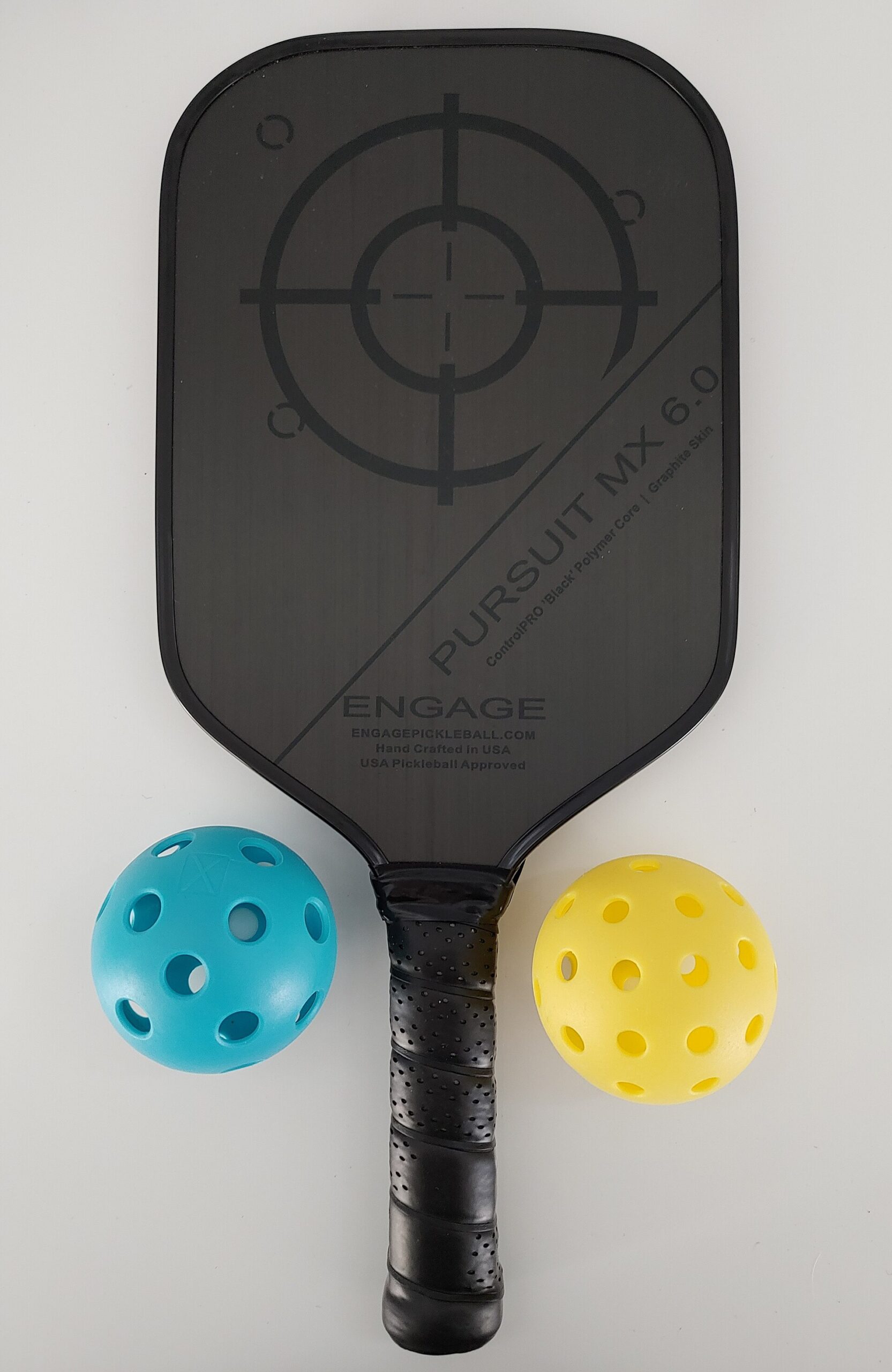
- A paddle: a mid-weight paddle (roughly 7.3 to 8.4 ounces) with a larger grip suits most beginners. Lighter paddles are easier on the elbow but less stable. You don’t need an expensive one to start, and many clinics lend paddles.
- Balls: outdoor balls are harder with smaller holes. Indoor balls are softer with larger holes. Ask what your venue uses.
- Extras: protective eyewear (a ball to the eye is a real risk at the net), a hat, sunscreen and water.
The injuries to watch for
Pickleball injuries among older adults have risen along with the sport’s popularity. The most common:
- Falls and wrist fractures, often from backpedaling for a lob. Never run backward. Turn and shuffle sideways, or let the ball go. If you have osteoporosis, this rule matters even more.
- Ankle sprains: wear court shoes, and warm up.
- Calf strains and Achilles injuries from sudden pushes off. Warm up, and build up gradually.
- “Pickleball elbow” (tennis elbow): use a lighter paddle and a correctly sized grip, and work on technique.
- Shoulder strain: see my shoulder exercises for rotator cuff strengthening.
- Eye injuries: wear eyewear.
Stop playing and get help if you have chest pain or pressure, unusual shortness of breath, dizziness or palpitations. Call 911 for chest pain.
Playing for little or nothing
- Medicare Advantage fitness benefits like SilverSneakers, Silver&Fit or Renew Active can include gyms and community centers with pickleball. See my SilverSneakers guide.
- Senior centers and parks departments often run free or low-cost open play.
- Original Medicare doesn’t pay for sports, but Part B covers medically necessary physical therapy if you’re injured.
FAQ
Is pickleball good exercise for seniors?
Yes, for most. Doubles play reaches moderate intensity, counts toward the 150 minutes a week, and is social enough that people keep at it.
Is pickleball safe after a knee or hip replacement?
Many people play after joint replacement. Ask your surgeon when it’s safe to start, and avoid lunging and backpedaling early on.
What shoes should I wear?
Court shoes with lateral support, not running shoes. This is one of the simplest ways to prevent ankle sprains and falls.
How do I find a game?
Use USA Pickleball’s Places2Play finder, or call your local senior center, YMCA or parks department about beginner clinics and open play.
Can pickleball replace other exercise?
It covers a lot, but add strength training twice a week and some balance work. Pickleball alone won’t fully protect against muscle loss or falls.
Related guides