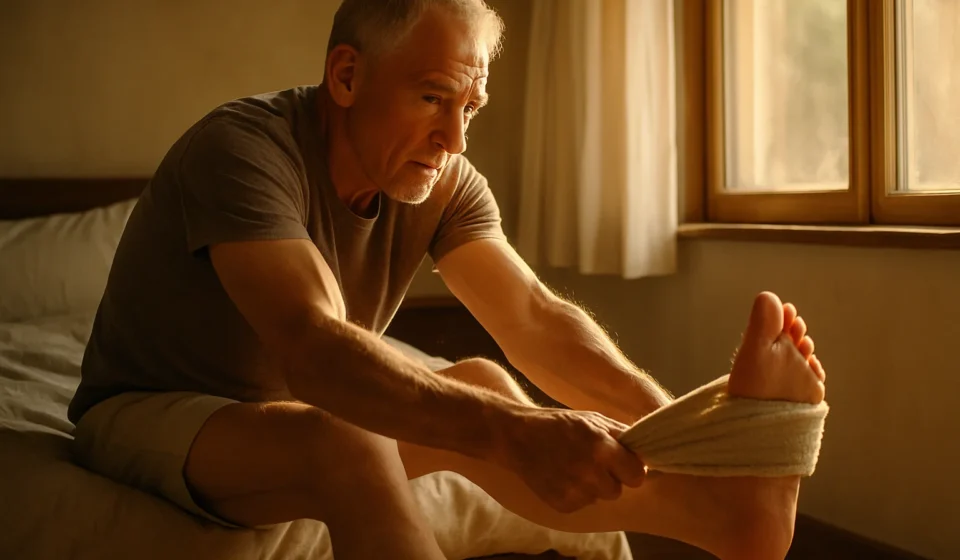

That stabbing pain in your heel when you take your first steps in the morning has a name, and a fix. Plantar fasciitis in seniors is the most common cause of heel pain after 60, and while it can sideline your walks and rob you of independence, the large majority of cases resolve with simple, consistent home care — no surgery required. The trick is doing the right things in the right order. Let me show you exactly what works and what Medicare will help pay for.
I am Margaret Collins. Foot pain is easy to ignore until it changes how you move — and in seniors, a changed gait raises the risk of falls. So treating heel pain early is not vanity; it is fall prevention and freedom.
Table of Contents
- What plantar fasciitis is and why seniors get it
- The telltale symptoms
- The 4 best stretches and exercises
- Treatment ladder: from footwear to procedures
- What Medicare covers
- Footwear and daily-life adjustments
- Frequently asked questions
What Plantar Fasciitis Is and Why Seniors Get It
The plantar fascia is a thick band of tissue running along the bottom of your foot from heel to toes, supporting your arch like a bowstring. Plantar fasciitis in seniors is irritation and microscopic tearing where that band attaches to the heel bone. Aging raises the risk for specific reasons: the fascia loses elasticity, the protective fat pad under the heel thins, calf muscles and Achilles tendons tighten, and conditions like obesity, diabetes, and flat feet add strain. Standing on hard floors in unsupportive shoes does the rest.
The Telltale Symptoms
The signature symptom is sharp, stabbing heel pain with your first steps in the morning or after sitting a while, which eases as you move and then returns after long standing. The pain is usually worst at the inner part of the heel. If your heel pain is accompanied by numbness, tingling, or burning, that points more toward a nerve issue and deserves evaluation — see our note on neuropathy below.
The 4 Best Stretches and Exercises
Stretching is the single most evidence-supported home treatment. Do these gently, never to the point of pain, and give them several weeks — most people improve within 6 to 12 weeks of consistent practice.
1. Seated towel stretch (do it before you stand up)
Before your feet hit the floor in the morning, loop a towel around the ball of your foot and gently pull your toes toward you, holding 30 seconds, three times. This pre-stretches the fascia and is the most effective way to blunt that brutal first-step pain.
2. Calf (wall) stretch
Stand facing a wall, one foot back with the knee straight and heel down. Lean forward until you feel a stretch in your calf, hold 30 seconds, switch sides. Tight calves are a major driver of plantar fasciitis.
3. Frozen bottle roll
Roll the arch of your foot over a frozen water bottle for 5 to 10 minutes. This combines a gentle massage with cold therapy to calm inflammation.
4. Toe and towel curls
While seated, use your toes to scrunch a towel toward you, or pick up marbles. This strengthens the small foot muscles that support the arch and take load off the fascia.
Treatment Ladder: From Footwear to Procedures
| Step | Treatment | Notes |
|---|---|---|
| 1 | Supportive shoes + arch support; avoid barefoot on hard floors | First and most important change |
| 2 | Daily stretching (above) + ice after activity | Resolves most cases in 6–12 weeks |
| 3 | Over-the-counter orthotic inserts and heel cushions | Cheap, effective for thinning fat pad |
| 4 | Night splints to keep the fascia stretched overnight | Helpful for stubborn morning pain |
| 5 | Physical therapy; short course of NSAIDs if appropriate | Confirm NSAID safety with your doctor |
| 6 | Corticosteroid injection, shockwave therapy, or custom orthotics | For cases lasting beyond a few months |
Most patients experience significant relief within 6 to 12 weeks of conservative care. Surgery is rarely needed and is reserved for severe cases that fail a year of treatment. A caution for seniors: be careful with NSAIDs like ibuprofen, which can affect the kidneys, stomach, and blood pressure — always clear them with your doctor or pharmacist first.
What Medicare Covers
Medicare coverage for foot care is conditional, so this is where many seniors get tripped up:
- Diagnostic visits with a podiatrist or doctor for heel pain — covered under Part B (you pay the 20% coinsurance after the deductible).
- Physical therapy and medically necessary shockwave or injections — generally covered under Part B when ordered for a diagnosed condition.
- Custom orthotics — Original Medicare usually does not cover orthotics for plantar fasciitis alone. They are typically covered only when tied to another qualifying condition such as diabetes with foot complications. Therapeutic shoes are covered for diabetics under the Therapeutic Shoe benefit.
- Over-the-counter inserts — not covered, but inexpensive and effective for most people.
If you have a Medicare Advantage plan, check your specific benefits — some include extra podiatry or OTC allowances that can offset insert costs.
Footwear and Daily-Life Adjustments
What you put on your feet, and how you move through the day, often determines whether plantar fasciitis fades in weeks or lingers for months. A few practical changes make an outsized difference.
Choose shoes with real arch support
Look for a firm heel counter (the back of the shoe should not collapse when squeezed), good arch support, and a slightly cushioned heel. Replace worn-out shoes, and keep a supportive pair by the bed so your very first steps are never barefoot on a hard floor — that morning barefoot walk is what re-injures the fascia day after day.
Reduce standing strain
If you stand to cook or garden, use a cushioned anti-fatigue mat and take sitting breaks. Spreading activity through the day rather than one long session keeps the fascia from being overloaded.
When heel pain is not plantar fasciitis
Not all heel pain is plantar fasciitis. A thinning heel fat pad causes deep, bruise-like pain in the center of the heel rather than the inner edge. A stress fracture causes pain that worsens steadily with activity and is tender to press on the bone. Tarsal tunnel syndrome and peripheral neuropathy cause burning, tingling, or numbness rather than the sharp mechanical pain of fasciitis. If your pain does not fit the classic morning-stab pattern, ask your doctor to look further before assuming it is fasciitis.
Frequently Asked Questions
How long does plantar fasciitis take to heal in seniors?
With consistent stretching, supportive shoes, and ice, most seniors see meaningful relief within 6 to 12 weeks. Stubborn cases can take several months, but fewer than 1 in 20 ever need surgery.
What is the fastest way to relieve morning heel pain?
The seated towel stretch before you stand, supportive footwear from the moment your feet touch the floor (no barefoot walking on hard surfaces), and a night splint for persistent cases give the quickest morning relief.
Does Medicare pay for orthotics for plantar fasciitis?
Usually not for plantar fasciitis by itself. Original Medicare covers custom orthotics mainly when linked to another condition like diabetes-related foot disease. Diagnostic visits and physical therapy are covered under Part B.
When should I see a doctor about heel pain?
See a doctor if pain lasts more than a few weeks despite home care, if you have numbness, tingling, or burning (which suggests a nerve problem), or if the heel is swollen, hot, or you cannot bear weight.
Related Articles You May Find Helpful
- Senior Health Conditions Guide 2026
- Balance Exercises for Seniors Over 70: Prevent Falls
- Best Shoes for Neuropathy Seniors 2026: Medicare Buying Guide
- Diabetic Neuropathy Treatment 2026: 8 Options That Work
- Best Exercises for Seniors Over 75: Doctor-Approved Moves
Sources
- American Academy of Orthopaedic Surgeons — Plantar fasciitis and heel pain
- NIH / MedlinePlus — Plantar fasciitis treatment and home care
- Medicare.gov — Podiatry services, therapeutic shoes, and orthotics coverage
This article is educational and not medical advice. Confirm any new exercise or medication with your doctor; see our Medical Disclaimer and Editorial Guidelines.