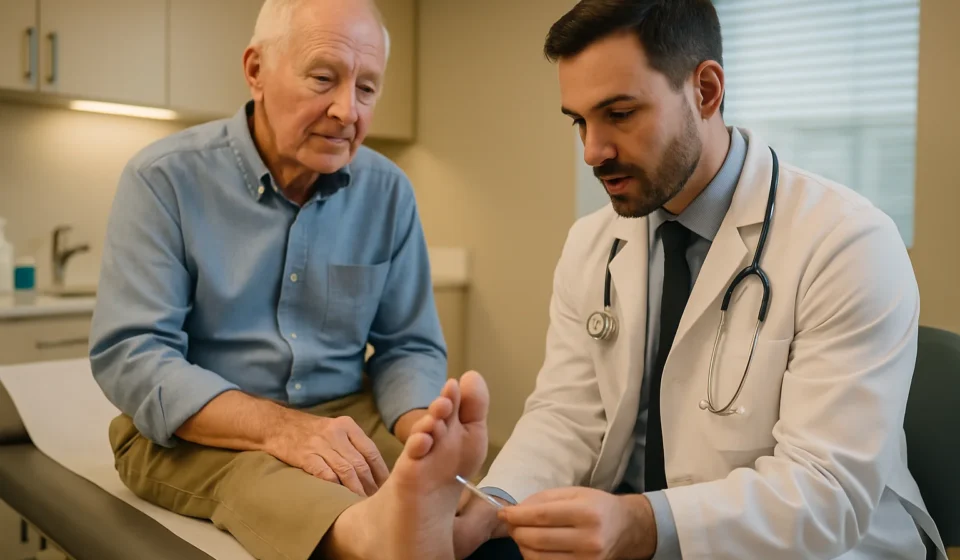

Diabetic neuropathy treatment in 2026 has reached an inflection point. Between 2020 and 2024, the FDA approved eight new treatments for painful diabetic peripheral neuropathy—seven of them medical devices, only one a pharmaceutical. If your nerve pain has not improved on pregabalin or duloxetine alone, there are now clinically validated alternatives your care team may not have offered yet. This guide reviews every major option, including the evidence behind each one, realistic expectations, and how Medicare covers them in 2026.
Table of Contents
- What Is Diabetic Neuropathy and Why Does It Get Worse With Age?
- First-Line Medications: Duloxetine and Pregabalin
- Alpha-Lipoic Acid: The Evidence Is Stronger Than You Think
- Spinal Cord Stimulation: 90% Response Rate in Clinical Trials
- Qutenza (Capsaicin 8% Patch): One Treatment Every 3 Months
- TENS Units and Other Device Therapies
- B Vitamins and Benfotiamine: The Underused Neuroprotective Agents
- Glycemic Control: The One Intervention That Changes the Trajectory
- Medicare Coverage for Diabetic Neuropathy Treatments in 2026
- Frequently Asked Questions
What Is Diabetic Neuropathy and Why Does It Get Worse With Age?
Diabetic peripheral neuropathy (DPN) affects approximately 50% of people with type 2 diabetes over their lifetime, and the prevalence rises sharply after age 65. The underlying mechanism involves sustained hyperglycemia activating the polyol pathway, triggering oxidative stress and accumulation of advanced glycation end-products (AGEs) that damage myelin sheaths and the microvasculature supplying peripheral nerves.
In older adults, several age-related factors compound this damage: reduced antioxidant capacity, impaired nerve regeneration (axonal regrowth slows after age 60), coexisting vitamin B12 deficiency (often worsened by metformin, which depletes B12 in up to 30% of long-term users), and comorbid conditions like chronic kidney disease and peripheral artery disease that further compromise nerve blood supply.
The clinical presentation most seniors describe is the classic “stocking-glove” distribution: burning pain, electric shocks, numbness, or tingling starting in the feet and climbing upward. Loss of protective sensation is the most dangerous consequence—it causes undetected foot ulcers that account for 85% of diabetes-related lower-limb amputations.
First-Line Medications: Duloxetine and Pregabalin
The American Diabetes Association (ADA) 2026 Standards of Care list duloxetine (Cymbalta, 60–120 mg/day) and pregabalin (Lyrica, 150–600 mg/day) as the two first-line pharmacological treatments for painful DPN. Duloxetine achieves a ≥50% pain reduction (the clinical threshold for “responder” status) in approximately 48–51% of patients in pooled analyses; pregabalin achieves similar rates in the 50–70% responder range for higher doses.
However, both carry meaningful tolerability challenges in seniors. Duloxetine can cause hyponatremia (low sodium), elevate blood pressure, and interact with anticoagulants. Pregabalin produces dose-dependent sedation and dizziness—raising fall risk—in a population already at high risk for falls. The Beers Criteria (2023 update) cautions against high-dose pregabalin in adults 65+, recommending the lowest effective dose with careful titration.
Tricyclic antidepressants (amitriptyline, nortriptyline) remain on some older protocols but are explicitly listed on the Beers Criteria as “avoid in older adults” due to anticholinergic burden, orthostatic hypotension, and QT prolongation. If a prescriber offers amitriptyline for neuropathy pain, request a discussion about the alternatives below.
Alpha-Lipoic Acid: The Evidence Is Stronger Than You Think
Alpha-lipoic acid (ALA) is the most rigorously studied nutritional supplement for diabetic neuropathy. It is a potent antioxidant that regenerates glutathione, neutralizes reactive oxygen species in peripheral nerve tissue, and improves endoneural blood flow. The SYDNEY 2 trial (600 mg ALA orally for 5 weeks, n=181) demonstrated a statistically significant 4.9-point reduction on the Total Symptom Score versus 2.9 with placebo—a 51% treatment response versus 37% placebo. The ALADIN III trial using 600 mg/day IV ALA for 3 weeks showed significant improvement in neuropathy symptoms and neurological deficits.
The standard evidence-supported oral dose is 600 mg/day of R-lipoic acid (the biologically active form). Unlike pregabalin or duloxetine, ALA has an excellent safety profile in seniors, with no significant Beers Criteria concerns, though patients on thyroid medication should be aware of potential interference with levothyroxine absorption if taken simultaneously. It is available over-the-counter for approximately $0.50–$1.00/day and is not covered by Medicare Part D, but it requires no prescription.
Spinal Cord Stimulation: 90% Response Rate in Clinical Trials
Spinal cord stimulation (SCS) has emerged as the most effective intervention for refractory painful DPN—cases where medications have failed to provide adequate relief. In the SENZA-PDN trial (n=216), high-frequency SCS at 10 kHz achieved a ≥50% pain reduction in 79% of participants at 6 months and 90% at 24 months. For comparison, the best oral medications achieve 50% response rates in roughly half of patients.
SCS involves implanting a small device near the spinal cord that delivers electrical impulses to interrupt pain signals before they reach the brain. The procedure is reversible—the device can be removed—and Medicare expanded national coverage for painful DPN in 2023, making it accessible to millions of beneficiaries who previously could not access it. A trial period with external leads is conducted first; patients proceed to permanent implant only if they achieve meaningful pain relief during the trial.
Candidacy requires a formal evaluation including psychological screening and documentation of failed conservative treatment. It is not appropriate for everyone, particularly seniors with severe cognitive impairment, active infection, or significant coagulopathy. Ask your neurologist or pain management specialist whether SCS evaluation is appropriate if two or more first-line medications have been tried without adequate response.
Qutenza (Capsaicin 8% Patch): One Treatment Every 3 Months
Qutenza is an FDA-approved 8% capsaicin patch applied by a clinician to the painful areas for 30 minutes. It works by depleting substance P from nociceptive nerve terminals, effectively desensitizing the pain-transmitting fibers. In the STEP trial and its extensions, Qutenza achieved a mean 30% reduction in pain scores sustained over 12 weeks after a single application. Most patients receive treatments every 3 months.
The major advantage for seniors is that Qutenza has minimal systemic absorption—essentially no cardiovascular, renal, or sedation effects—making it suitable for older adults on complex medication regimens who cannot tolerate additional systemic drugs. The application itself causes a burning sensation (paradoxically, from the same compound causing the pain) that resolves within hours. Medicare Part B covers Qutenza when administered in a clinical setting for eligible diagnoses.
TENS Units and Other Device Therapies
Transcutaneous electrical nerve stimulation (TENS) devices deliver low-voltage electrical current through the skin, activating the gate control mechanism described by Melzack and Wall—essentially blocking pain signals by activating large-diameter sensory fibers. A 2024 Cochrane review of TENS for neuropathic pain found moderate-quality evidence of significant short-term pain reduction in peripheral neuropathy patients, with response rates comparable to pregabalin at lower doses.
The TENS unit approved specifically for DPN—the Quell device and similar FDA-cleared wearables—can be worn on the calf or foot and used at home. Medicare Part B covers TENS units under the Durable Medical Equipment (DME) benefit when prescribed by a physician for appropriate indications, after the $283 deductible, with 20% coinsurance.
B Vitamins and Benfotiamine: The Underused Neuroprotective Agents
Vitamin B12 deficiency is both a cause and an accelerator of peripheral neuropathy, and it is strikingly common in seniors with diabetes. Metformin—the most widely prescribed diabetes medication—blocks ileal B12 absorption through a calcium-dependent mechanism, reducing serum B12 by 22–29% in long-term users (Diabetes Care, 2010). Proton pump inhibitors (omeprazole, pantoprazole), taken by roughly 40% of seniors 65+, further impair B12 absorption.
Testing serum methylmalonic acid (MMA) is more sensitive than serum B12 alone for detecting functional B12 deficiency—MMA rises when B12 is truly insufficient at the cellular level, even when serum B12 appears borderline-normal. All seniors with DPN on metformin or PPIs should have MMA levels checked annually.
Benfotiamine—a fat-soluble thiamine (B1) derivative with 3.6-fold greater bioavailability than water-soluble thiamine—directly inhibits the AGE formation pathway in peripheral nerves. The BENDIP trial (600 mg/day for 6 weeks) showed significant improvement in neuropathy symptom scores versus placebo. Combined B vitamin preparations (B1 as benfotiamine + B6 pyridoxine + B12 methylcobalamin) are used across European DPN treatment guidelines and increasingly recommended by US endocrinologists.
| Treatment | Evidence Level | Pain Reduction | Medicare Coverage | Senior Safety |
|---|---|---|---|---|
| Duloxetine 60–120mg/day | ADA Level A | ~50% responder rate | Part D ($2,100 OOP cap) | Caution: hyponatremia, falls |
| Pregabalin 150–600mg/day | ADA Level A | ~50–70% responder rate | Part D ($2,100 OOP cap) | Caution: sedation, dizziness, Beers Criteria |
| Alpha-Lipoic Acid 600mg/day | Strong RCT evidence | 51% vs 37% placebo | OTC — not covered | Excellent — no major interactions |
| Spinal Cord Stimulation (SCS) | RCT Level A | 79–90% responder rate | Part B (after 2023 expansion) | Requires specialist evaluation |
| Qutenza (Capsaicin 8%) | FDA-approved RCT | ~30% pain reduction | Part B (clinic-administered) | Excellent — minimal systemic absorption |
| TENS Unit | Moderate evidence | Moderate short-term relief | Part B DME (after $283 deductible) | Good — avoid over pacemakers |
| Benfotiamine 600mg/day | BENDIP RCT | Significant vs placebo | OTC — not covered | Excellent |
Glycemic Control: The One Intervention That Changes the Trajectory
No treatment above addresses the underlying cause of DPN. Only tight glycemic control—maintaining HbA1c below 7.0% in appropriate candidates—has been shown to slow the progression of nerve damage and, in some cases, allow partial recovery of nerve fiber density. The DCCT/EDIC trial, which followed participants for over 20 years, showed that intensive glycemic control early in the disease course reduced DPN incidence by 60% and reduced progression by 57% versus conventional control.
In seniors, however, HbA1c targets require individualization. The American Geriatrics Society recommends HbA1c targets of 7.5–8.0% for older adults with multiple chronic conditions or limited life expectancy, because hypoglycemia in seniors carries its own serious risks—including falls, cognitive impairment, and cardiac arrhythmias. GLP-1 receptor agonists (semaglutide, tirzepatide) now offer the advantage of powerful HbA1c lowering with low hypoglycemia risk, making them increasingly valuable in older adults with DPN who need better glucose control without aggressive insulin regimens.
Medicare Coverage for Diabetic Neuropathy Treatments in 2026
Medicare covers more DPN treatments than most seniors realize. Under Part B, the Annual Wellness Visit (AWV) includes a brief neuropathy-focused neurological exam. Electromyography (EMG) and nerve conduction studies, which confirm the diagnosis and characterize severity, are covered under Part B at 80% after the $283 deductible. Therapeutic Shoes and Inserts under the Medicare Therapeutic Shoe Bill (TSB) cover one pair of extra-depth shoes and up to three pairs of custom inserts per year for seniors with documented DPN who meet criteria—with Part B paying 80%.
Under Part D, duloxetine and pregabalin are covered on most formularies, with the $2,100 out-of-pocket cap now in effect for 2026 providing significant financial protection for seniors on high-cost branded formulations. Spinal cord stimulation is covered under Part B for refractory cases when all clinical criteria are met. Ask your provider to document “painful diabetic neuropathy refractory to two first-line agents” in the medical record—this exact phrasing strengthens prior authorization for SCS and Qutenza.
Frequently Asked Questions
Can diabetic neuropathy be reversed?
Complete reversal is uncommon once established, but partial recovery—including measurable improvement in nerve fiber density and symptom scores—is possible with aggressive glycemic control early in the disease course. The DCCT/EDIC trial demonstrated neurological improvement in participants who maintained tight glucose control over two decades. The key window is the first 5–10 years after DPN onset; after significant nerve fiber loss occurs, restoration is limited.
What is the fastest-acting treatment for diabetic neuropathy pain?
Intravenous alpha-lipoic acid (600 mg IV over 30 minutes daily for 3 weeks) produces the most rapid symptom response and is used in European hospital settings. In outpatient settings, spinal cord stimulation trials typically produce pain relief within days of lead placement. Qutenza patches begin reducing pain within 1–2 weeks of application. Oral medications typically require 4–6 weeks of consistent use to assess full effect.
Does Medicare cover shoes for diabetic neuropathy?
Yes. Under the Medicare Therapeutic Shoe Bill, Part B covers one pair of extra-depth therapeutic shoes and three pairs of custom inserts annually for Medicare beneficiaries with diabetes who also have documented peripheral neuropathy with evidence of callus formation, history of pre-ulcerative callus, history of foot ulceration, foot deformity, previous amputation, or poor circulation. Your podiatrist or physician must certify the medical necessity and prescribe the shoes through a qualified shoe fitter.
Is alpha-lipoic acid safe with metformin and other diabetes medications?
ALA is generally safe alongside metformin, with no significant pharmacokinetic interaction documented. However, ALA has mild insulin-sensitizing properties and can modestly enhance glucose uptake—so seniors on insulin or sulfonylureas (glipizide, glimepiride) should monitor blood glucose more closely when starting ALA and report any hypoglycemic episodes to their prescriber. ALA should be taken separately from thyroid medications (levothyroxine) as it can impair absorption if taken simultaneously.
When should I see a neurologist versus my primary care doctor for neuropathy?
If two first-line medications have failed to control pain, if you have rapidly progressing symptoms, if the pattern is asymmetric (one side worse than the other), or if you are experiencing motor weakness alongside sensory symptoms, a neurologist referral is warranted. Neurologists can perform advanced diagnostic testing (skin punch biopsy for intraepidermal nerve fiber density, quantitative sensory testing) and are most qualified to evaluate candidacy for spinal cord stimulation or other interventional approaches.
Related Articles You May Find Helpful
- Best Vitamins for Neuropathy 2026: 6 Clinically Proven Options for Nerve Pain
- Best Foods for Neuropathy in Seniors 2026: What to Eat to Reduce Nerve Pain
- Peripheral Neuropathy Treatment for Seniors 2026: Latest Advances
- Can Seniors Reverse Type 2 Diabetes? 2026 Science Says Yes
- Senior Health Conditions 2026: Expert Guide to Prevention & Treatment
Sources: American Diabetes Association Standards of Care 2026; SYDNEY 2 Trial (Ziegler et al., Diabetes Care 2006); SENZA-PDN Trial (Petersen et al., NEJM Evidence 2024); BENDIP Trial (Haupt et al., Experimental & Clinical Endocrinology 2005); Medicare Coverage Policy for Spinal Cord Stimulation (CMS 2023); FDA Medical Device Approvals Database 2020–2024.