How to Protect Your Feet Every Day With Neuropathy: A Daily Routine, Warning Signs and What Medicare Covers

With peripheral neuropathy, the most dangerous foot problem is the one you can’t feel. A blister from a new shoe, a cut from stepping on something, or a burn from bath water that’s too hot can go unnoticed for days. In people with diabetes or poor circulation, those small wounds can become infected ulcers. In the worst cases, they lead to amputation.
The NIDDK says you can lower your chances of diabetes-related foot problems by taking care of your feet every day and managing your blood sugar. This guide turns that advice into a routine you can actually follow.
I’m a researcher, not a podiatrist or doctor. This routine is based on NIDDK guidance. Ask your doctor or podiatrist to tailor it to your feet, especially if you already have wounds, deformities or poor circulation.
Why neuropathy makes feet vulnerable
Neuropathy damages the nerves that carry pain, temperature and pressure signals. You can lose your “early warning system.” Diabetes can also reduce blood flow to the feet, so injuries heal more slowly and get infected more easily. Dry, cracked skin and changes in foot shape add pressure points where sores can form.
That’s why the rule is simple: act on what you see, not what you feel.
The daily routine (about 5 minutes)
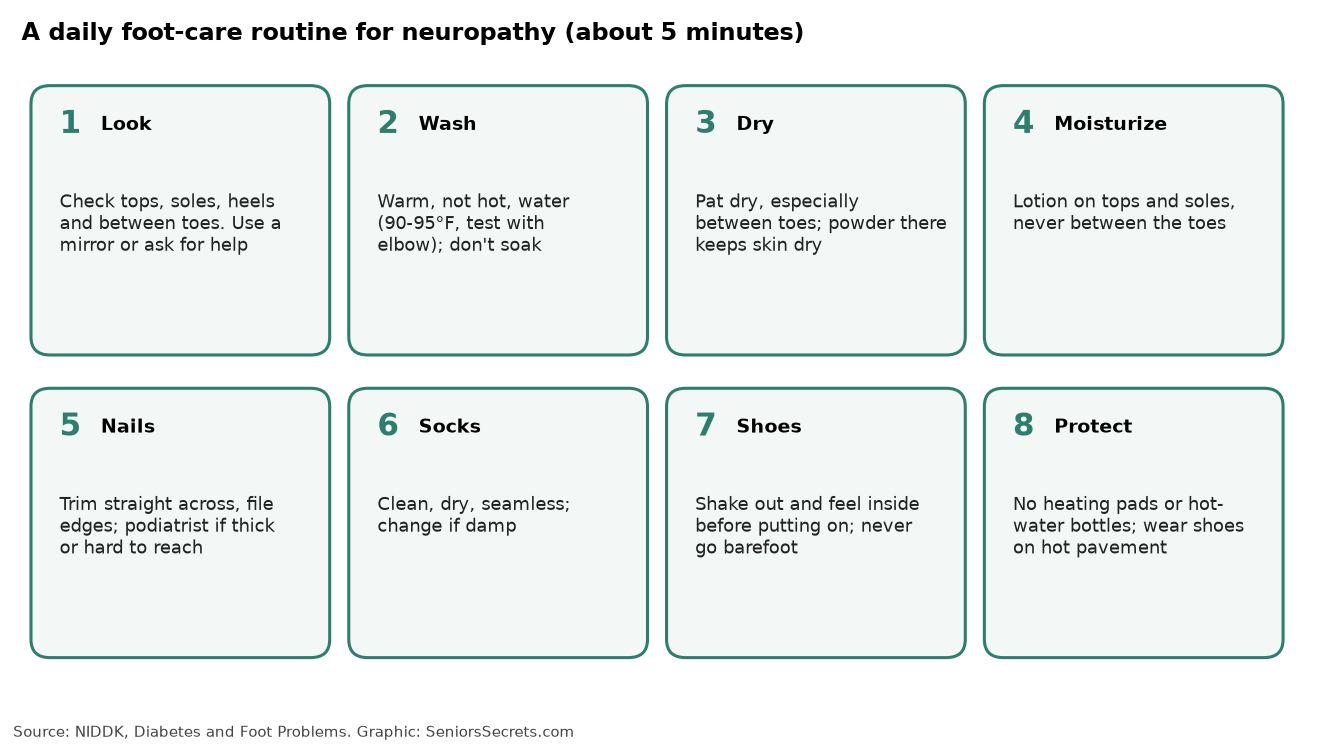
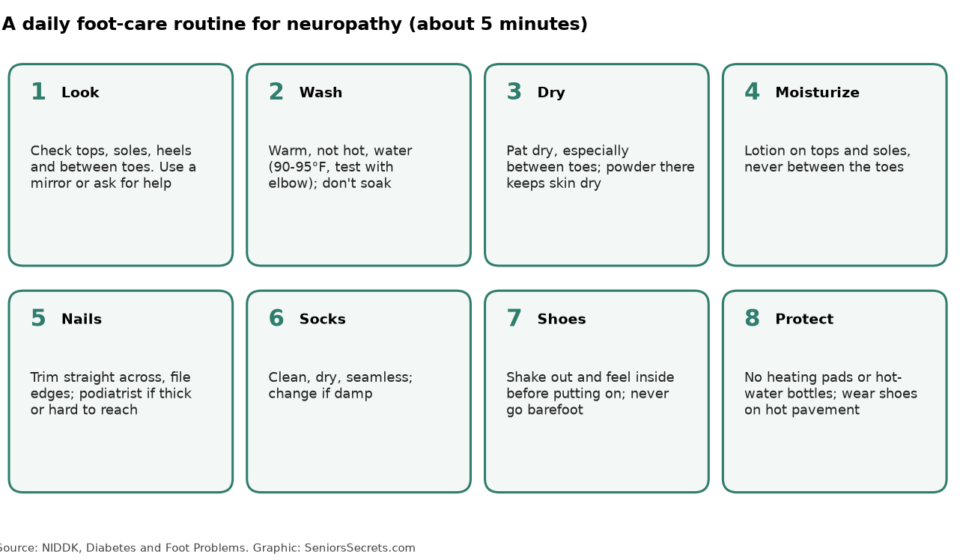
1. Look at your feet every day. Check the tops, soles, heels and between your toes for cuts, blisters, redness, swelling, calluses or nail problems. Use a mirror, or ask a family member, if you can’t see the bottoms of your feet. Evening works well, after a day in shoes.
2. Wash every day, in warm, not hot, water. The NIDDK suggests testing the water with a thermometer (90 to 95°F is safe) or your elbow, since your feet may not sense heat. Don’t soak your feet, because soaking dries out the skin.
3. Dry carefully, especially between your toes. Moisture between the toes invites fungus and skin breakdown. The NIDDK suggests a little talcum powder or cornstarch between the toes.
4. Moisturize the tops and bottoms, but not between your toes. This keeps skin from cracking.
5. Care for your nails. Trim them straight across, and file sharp edges. If your nails are thick, curved or hard to reach, or your vision isn’t great, have a podiatrist trim them.
6. Wear clean, dry socks. Choose seamless or diabetic socks that aren’t tight at the top. Change them if they get damp.
7. Check your shoes before you put them on. Shake them out, and feel inside for pebbles, rough seams or torn linings.
8. Never go barefoot. The NIDDK says not to walk barefoot or in just socks, even indoors. Wear shoes or protective slippers at all times.
Smoothing corns and calluses
Don’t cut corns or calluses yourself, and don’t use over-the-counter corn removers or liquid wart removers. They can burn skin you can’t feel. The NIDDK says to gently use a pumice stone on wet skin. For anything more, see a podiatrist.
Shoes and socks that protect
- Fit: shop late in the day, when feet are largest. Have both feet measured, since size can change with age. Leave a thumb’s width of space at the toe.
- Shape: look for a wide, deep toe box, a firm heel and a cushioned, non-slip sole. Avoid pointed toes, high heels, flip-flops and open-toed shoes.
- Break in new shoes slowly: wear them an hour or two at a time, and check your feet afterward.
- Rotate pairs, so each pair dries out between wearings.
My guide to the best shoes for neuropathy covers specific features to look for.
Protect your feet from heat and cold
- Don’t use heating pads, hot-water bottles or electric blankets on your feet. Burns are a real risk when you can’t feel heat.
- Keep your feet away from space heaters and fireplaces.
- Wear shoes on hot pavement, sand and pool decks.
- In cold weather, wear warm socks and insulated shoes, and check for frostbite after time outdoors.
Keep blood flowing to your feet
The NIDDK suggests putting your feet up when sitting, wiggling your toes and moving your ankles several times a day, and not crossing your legs for long periods. Regular walking helps circulation too. My guide to exercises for neuropathy includes safe options. Not smoking is one of the best things you can do for circulation.
If you have leg pain when walking or cold, pale feet, ask your doctor about peripheral artery disease, which often comes with diabetes and slows healing.
Warning signs: when to call
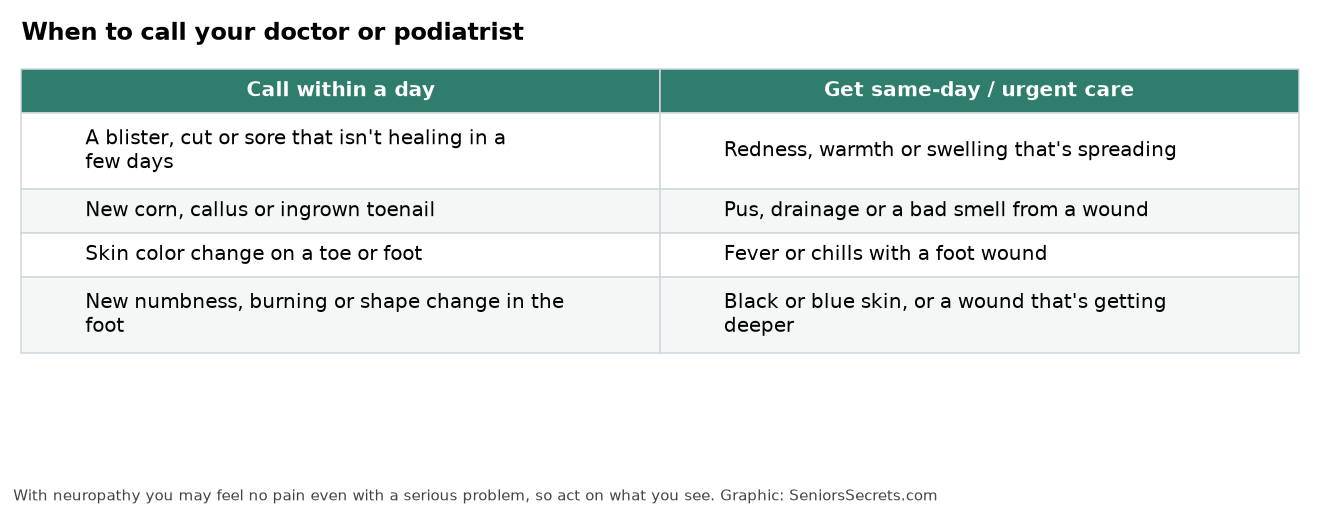
Call your doctor or podiatrist within a day for a blister, cut or sore that isn’t healing within a few days, a new corn, callus or ingrown toenail, a change in skin color, or a change in the shape of your foot.
Get same-day or urgent care for redness, warmth or swelling that’s spreading, pus or a bad smell, fever or chills with a foot wound, or skin that turns black or blue.
Until you’re seen, keep weight off the injured foot, clean minor cuts gently with soap and water, and cover them with a clean, dry bandage.
What Medicare covers
- Foot exams: Part B covers a foot exam every 6 months for people with diabetic peripheral neuropathy and loss of protective sensation, if they haven’t seen a foot specialist for another reason in between.
- Treatment: Part B covers medically necessary treatment of foot injuries, infections and ulcers.
- Therapeutic shoes: for people with diabetes who qualify, Part B covers one pair of custom shoes or inserts, or one pair of extra-depth shoes, plus 2 or 3 extra pairs of inserts, each calendar year. Your doctor must certify the need, and you must get them from a Medicare-enrolled supplier.
- Routine foot care, like trimming nails or removing corns, generally isn’t covered. Medicare makes exceptions for certain conditions, including diabetes with neuropathy or poor circulation.
You’ll usually pay 20% after the Part B deductible. For details, see my guide to Medicare podiatry coverage.

FAQ
How often should I check my feet if I have neuropathy?
Every day. Look at the tops, soles, heels and between your toes. Use a mirror, or ask someone to help.
Can I soak my feet if I have neuropathy?
The NIDDK advises against soaking, because it dries the skin. Wash daily in warm (90 to 95°F) water, and dry thoroughly.
Is it OK to walk barefoot at home?
No. The NIDDK recommends wearing shoes and socks at all times, even indoors.
Does Medicare pay for diabetic shoes?
Yes, for people with diabetes who meet Medicare’s conditions. Each year, Part B covers one pair of custom or extra-depth shoes plus extra inserts, with a doctor’s certification.
Should I see a podiatrist?
If you have neuropathy, especially with diabetes, regular podiatry checks are wise. Medicare covers a foot exam every 6 months if you have diabetic neuropathy with loss of protective sensation.