
If you’re one of the 20 million Americans living with peripheral neuropathy, you may have been told to “take it easy” — but emerging research is telling a very different story. Exercise for neuropathy seniors is no longer just encouraged; it’s being called one of the most powerful non-drug interventions available for reducing nerve pain, improving balance, and slowing neuropathy progression. In 2026, a growing body of clinical evidence confirms that the right movement program can meaningfully improve your quality of life — even if you’ve had neuropathy for years.
Why Exercise Works for Neuropathy: What the Research Shows
The science behind exercise and neuropathy relief has strengthened considerably in recent years. Key research findings:
- Nerve fiber regeneration: A landmark study from the University of Utah found that aerobic exercise stimulated the regrowth of small nerve fibers in patients with diabetic peripheral neuropathy — actually reversing some degree of nerve damage, not just managing symptoms.
- Pain reduction: A 2023 meta-analysis published in the Journal of Pain Research found that exercise programs reduced neuropathic pain scores by an average of 30–40% in older adults with peripheral neuropathy.
- Balance improvement: Neuropathy is a leading cause of falls in seniors (affecting up to 60% of those over 70). Targeted balance training has been shown to reduce fall risk by 20–35% in people with neuropathy.
- Blood sugar control: For seniors with diabetic neuropathy — the most common type — exercise improves insulin sensitivity and blood glucose control, directly addressing one of neuropathy’s root causes.
- Reduced inflammation: Exercise reduces systemic inflammation (including the neuroinflammation that contributes to nerve pain) by lowering inflammatory cytokines and increasing anti-inflammatory molecules.
6 Best Exercises for Neuropathy Seniors in 2026
1. Walking — The Most Accessible Neuropathy Exercise
For seniors with neuropathy, walking remains the gold-standard starting point. Research consistently shows that walking 30 minutes 5 days per week improves nerve function, reduces pain, and enhances quality of life in people with diabetic and non-diabetic neuropathy alike.
How to do it safely with neuropathy: Wear well-fitted shoes with good cushioning (see our guide to best neuropathy shoes). Walk on level surfaces. Check your feet before and after each walk. Start with 10–15 minutes if you’re just beginning, and build up gradually. If numbness causes instability, consider a rollator walker for added safety.
2. Water Aerobics and Pool Walking
Aquatic exercise is particularly valuable for seniors with significant neuropathic pain or balance problems. The water’s buoyancy reduces joint stress and fall risk while the resistance builds strength and the hydrostatic pressure can temporarily reduce neuropathic pain sensations.
Studies show that 12 weeks of aquatic exercise improves balance scores by up to 25% in seniors with peripheral neuropathy — superior to land-based exercise for many patients with severe symptoms. Many senior centers and YMCAs offer warm-water arthritis/neuropathy exercise classes that are ideal for this purpose.
3. Stationary Cycling
Stationary cycling provides cardiovascular benefit and lower-limb muscle activation without the balance demands of walking. A 2022 clinical trial found that 16 weeks of stationary cycling (30 min, 3x/week) significantly reduced neuropathic pain scores and improved skin nerve fiber density in patients with diabetic neuropathy.
Recumbent bikes are especially recommended for seniors, as they provide back support and reduce the risk of falls. Start at low resistance with a comfortable cadence and progress gradually.
4. Tai Chi — Exercises for Neuropathy Seniors 2026 Best-in-Class for Balance
Tai chi is arguably the single most comprehensively studied mind-body exercise for neuropathy in older adults. Research from Massachusetts General Hospital found that tai chi reduced neuropathic pain, improved balance, and enhanced lower extremity nerve conduction in seniors with peripheral neuropathy — comparing favorably to standard physical therapy.
Key benefits for neuropathy: the slow, deliberate movements retrain proprioception (your body’s sense of position), which is often damaged by neuropathy. The meditative focus reduces anxiety about pain. And multiple trials show tai chi cuts fall rates in seniors with neuropathy by 20–47%. Community tai chi classes specifically for older adults are available through Silver Sneakers and many senior centers.
5. Resistance Training (Light Weights or Resistance Bands)
Building lower-leg and foot strength is critical for neuropathy management. Stronger muscles compensate for the proprioceptive deficits caused by nerve damage and reduce functional disability. A 12-week resistance training program has been shown to improve physical function scores by 25–30% in seniors with diabetic neuropathy.
Key exercises for neuropathy with resistance bands:
- Seated ankle dorsiflexion: Wrap a resistance band around the top of your foot, pull toes toward shin, hold 3 seconds, release. 3 sets of 15. Strengthens the anterior leg muscles most affected by neuropathy.
- Standing calf raises: Hold a chair for balance, rise onto toes slowly, lower slowly. 3 sets of 12–15. Improves push-off strength and circulation to feet.
- Seated leg press with resistance band: Loop band around both feet, extend legs against resistance. Strengthens entire lower chain.
6. Balance and Proprioception Exercises
Since neuropathy directly impairs the sensory nerves that tell your brain where your feet are in space, targeted proprioception training is uniquely valuable. These exercises stimulate alternate sensory pathways to compensate for damaged nerves.
- Single-leg standing: Hold a sturdy chair, stand on one foot for 10–30 seconds, alternate. Progress to eyes closed when comfortable. Directly trains balance compensation.
- Heel-to-toe walking (tandem gait): Walk in a straight line placing each heel directly in front of the opposite toe. 20 steps, repeat 3 times. Dramatically challenges balance in a controlled way.
- Balance board or wobble board: Under supervision or with a sturdy support nearby, standing on an unstable surface recruits deeper proprioceptive pathways. Start with 30 seconds and progress slowly.
Safety Guidelines for Exercising With Neuropathy
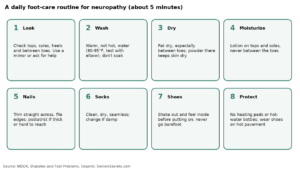
- Always check your feet before and after exercise for blisters, cuts, or pressure sores — reduced sensation means injuries can go unnoticed. Report any foot wounds to your doctor promptly.
- Exercise in well-lit spaces to compensate for reduced proprioception with enhanced visual feedback.
- Never exercise barefoot if you have significant foot numbness — always wear properly fitted footwear.
- Use support when needed. Chairs, walls, or walking aids are not signs of weakness — they’re safety tools that prevent dangerous falls.
- Consult your doctor before starting a new exercise program, especially if you have cardiovascular disease, severe balance impairment, or active foot ulcers.
Start slow, be consistent, and track your progress. Most seniors with neuropathy see meaningful improvement in pain levels, balance, and daily function within 8–12 weeks of a regular exercise program. The key is making movement a daily habit — not a monthly effort.
Sources: NIH: Exercise and Diabetic Neuropathy | CDC: Physical Activity and Diabetes Management | AARP: Exercise for Neuropathy Relief
Related Articles You May Find Helpful
- Peripheral Neuropathy Relief: Latest Treatments for Seniors in 2026
- Best Shoes for Neuropathy Seniors 2026: Medicare Buying Guide
- Best Foods for Neuropathy Seniors 2026: Eat to Ease Nerve Pain
- Fall Prevention for Seniors 2026: 10 Proven Strategies That Work
- Sarcopenia Warning: Why Every Senior Needs Strength Training in 2026