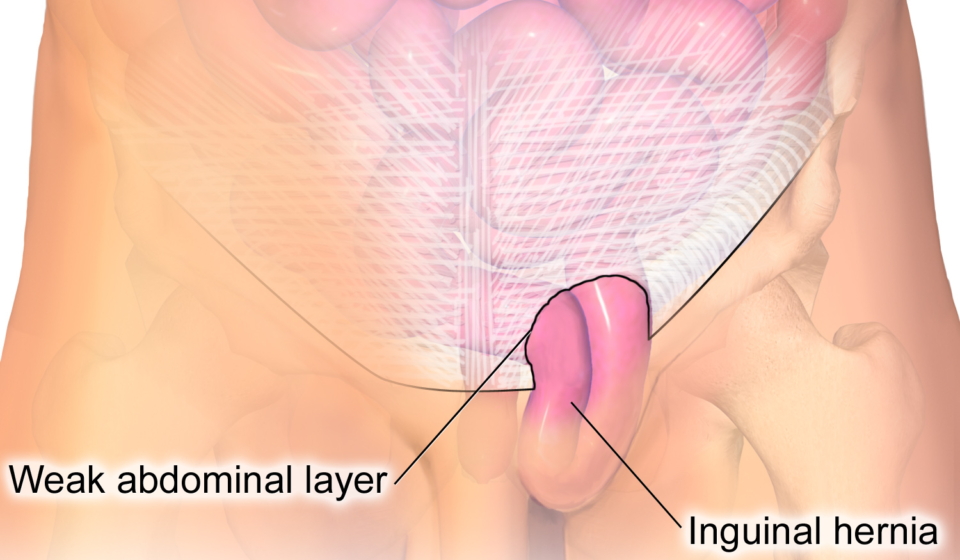

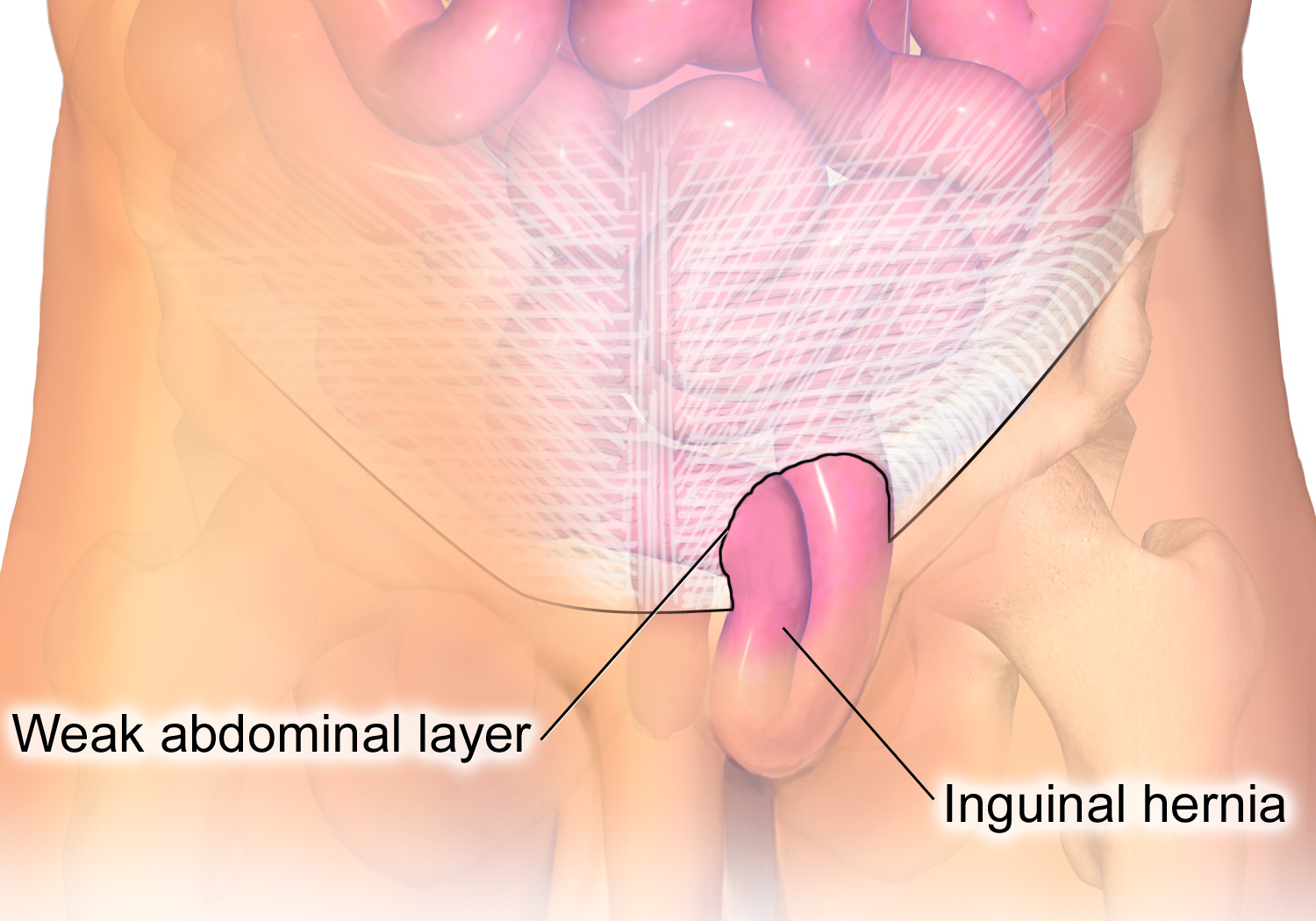
A hernia is a bulge where part of the abdomen pushes through a weak spot in the muscle wall, most often in the groin. Groin (inguinal) hernias are common: about 27% of men and 3% of women develop one at some point, and among adults they’re most common at ages 75 to 80 (NIDDK).
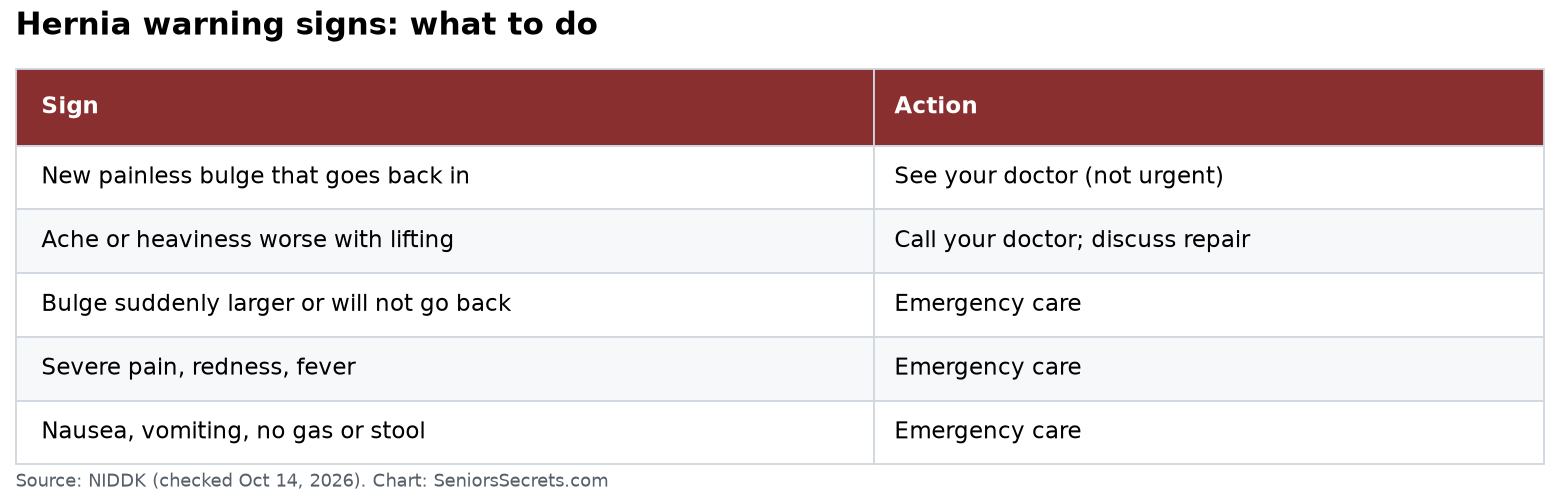
Most hernias aren’t emergencies. But a hernia that suddenly gets bigger, won’t go back in, or becomes very painful can be strangulated, which cuts off blood flow and needs care right away.
Types of hernia in older adults
- Inguinal (groin): the most common type, far more common in men.
- Femoral: lower in the groin, more common in women, and more likely to get stuck.
- Umbilical: at the belly button.
- Incisional: through an old surgical scar.
- Hiatal: part of the stomach slides up into the chest. It usually causes heartburn rather than a bulge. See my GERD guide.
Symptoms
According to NIDDK, symptoms of an inguinal hernia may include:
- A bulge in the groin or scrotum
- Discomfort, pain, heaviness or burning in the groin
- Symptoms that get worse when you strain, lift, cough or stand for a long time, and better when you lie down
Some hernias cause no symptoms and are found during a checkup.
Emergency warning signs
Get medical help right away if you have a hernia and notice (NIDDK):
- A bulge that is suddenly larger or no longer goes back in
- Sudden or severe pain, redness or tenderness over the bulge
- Fever
- Nausea, vomiting, bloating or not passing gas or stool
Why hernias are more common with age
Muscles and connective tissue weaken over time. Chronic coughing (from COPD or smoking), straining from constipation, an enlarged prostate that causes straining to urinate, heavy lifting and past abdominal surgery all add pressure. NIDDK also lists men who have had a prostatectomy and people with a lower BMI among those more likely to get inguinal hernias. Treating constipation helps; my constipation guide covers that.
Watchful waiting or surgery?
Hernias don’t heal on their own, but not every hernia needs an operation right away.
- Watchful waiting can be reasonable for a small inguinal hernia that causes few or no symptoms, especially in men. You check in with your doctor and learn the warning signs.
- Surgery is usually recommended if the hernia is painful, getting bigger, limiting daily life, or is a femoral hernia, which is more likely to get stuck.
- Emergency surgery is needed for a strangulated hernia. Emergency repairs carry higher risks than planned ones, which is one reason some older adults choose planned repair while they’re healthy.
Repair is done with open surgery or laparoscopic (keyhole) surgery, usually with mesh. Many people go home the same day. Ask your surgeon about anesthesia options, your other health conditions, how long to avoid lifting, and what to expect for pain.
A hernia belt or truss may ease discomfort for some people, but it doesn’t fix the hernia. Ask your doctor before using one.
Medicare and hernia repair
Medicare Part B covers medically necessary outpatient hernia surgery; Part A covers it if you’re admitted to the hospital. In 2026, Part B has a $283 deductible, then you usually pay 20%. Medigap or a Medicare Advantage plan changes what you owe. Ask whether your surgery is inpatient or outpatient, since that affects your costs.
Words you will hear, in plain terms
- Reducible: the bulge goes back in when you lie down or press gently.
- Incarcerated: the bulge is stuck and won’t go back in.
- Strangulated: stuck, and blood can’t reach the trapped tissue. This is an emergency.
- Mesh: a soft medical screen sewn in to strengthen the weak spot.
- Laparoscopic: surgery through small cuts using a camera.
Open vs laparoscopic repair
| Open repair | Laparoscopic repair | |
|---|---|---|
| Cut | One cut over the hernia, a few inches long | 3 small cuts |
| Anesthesia | Often local or spinal with sedation | Usually general |
| Good for | People who should avoid general anesthesia | Hernias on both sides, or a hernia that came back |
| Recovery | Usually back to light activity in days | Often a little less pain early on |
For many older adults with heart or lung problems, open repair under local anesthesia is a good choice because it avoids general anesthesia. Ask your surgeon which type they suggest for you and why.
Watchful waiting: what it really means
Watchful waiting is not “doing nothing.” It means:
- You see your doctor regularly, often every 6 to 12 months.
- You learn the emergency signs and act fast if they appear.
- You avoid straining. Treat constipation and coughs.
- You plan a repair if symptoms grow.
Research on men with small, painless groin hernias found that watching them was safe for many people. But many men who wait end up having surgery later because pain grows over time. If you are healthy now, planning surgery may be easier than waiting until you are older and have more health problems.
Getting ready for surgery
- Review your medicines. Your surgeon may ask you to stop blood thinners or some supplements before surgery. Never stop a blood thinner on your own.
- Arrange a ride. You can’t drive yourself home.
- Plan help at home for 3 to 7 days, especially for lifting and errands.
- Prepare for constipation. Pain medicines can cause it. Ask about a stool softener.
- Ask about lifting limits. Many surgeons say no heavy lifting for a few weeks. Get a number, like “nothing over 10 pounds for 2 weeks”.
Recovery: what is normal and what is not
Normal: soreness, bruising, mild swelling, and tiredness for a few days. Walking short distances helps.
Call your surgeon for: fever, redness or pus at the cut, pain that gets worse instead of better, trouble passing urine, or a new bulge.
Can a hernia be prevented?
Not always. But you can lower the strain on your belly wall:
- Treat long-term coughs and quit smoking.
- Prevent constipation with fiber and fluids.
- Lift with your legs and keep loads close to your body.
- If you have trouble urinating because of an enlarged prostate, get it treated.
Common questions
Is a hernia dangerous for seniors?
Most aren’t, but a hernia can become stuck or strangulated, which is an emergency. Learn the warning signs and see your doctor about any new bulge.
Can a hernia go away on its own?
No. A hernia won’t heal without surgery, but small, painless hernias can sometimes be watched.
Is hernia surgery safe at 80?
Many people in their 80s have planned hernia repair. The risk depends on your overall health, so talk through the benefits and risks with your surgeon.
What does a strangulated hernia feel like?
Usually sudden, severe pain at a bulge that won’t go back in, sometimes with redness, fever, nausea or vomiting. Get emergency care.
How long is recovery after hernia surgery for a senior?
Many people return to light activity within a few days and normal activity in a few weeks. Your surgeon will give lifting limits based on your repair.
Do I need general anesthesia for hernia repair?
Not always. Open groin hernia repair can often be done with local or spinal anesthesia plus sedation. Ask your surgeon.
Written by Khasim Basha Shaik. I research senior health topics and summarize official sources for readers. I’m not a doctor or other licensed health professional. This isn’t medical advice; talk with your doctor about your situation. Last reviewed October 14, 2026.
Related guides