Cataract Surgery and Medicare in 2026: Warning Signs, What It Costs, Lens Choices and Recovery

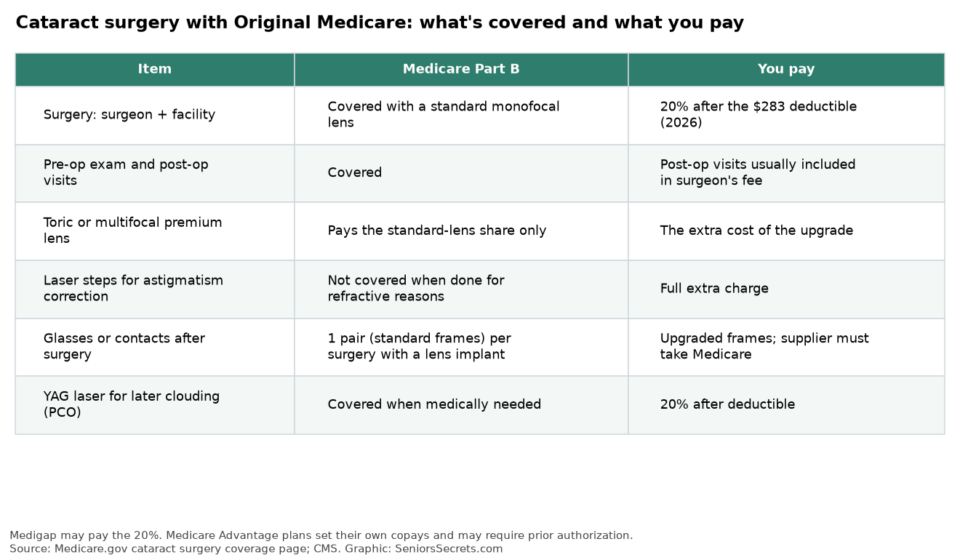
Medicare Part B covers cataract surgery when your cataract affects your daily life. It pays for removing the cloudy lens and implanting a standard (monofocal) artificial lens, plus one pair of glasses or contacts afterward. With Original Medicare, you pay 20% of the Medicare-approved amount after the Part B deductible, which is $283 in 2026. Upgrades like toric or multifocal lenses cost extra, and Medicare won’t pay the difference.
Cataracts are about as common as an age-related condition gets. According to the National Eye Institute, more than half of Americans 80 and older either have cataracts or have had surgery to remove them.
I’m a researcher, not an eye doctor. Your ophthalmologist decides whether and when surgery is right for you. Coverage details here come from Medicare.gov’s cataract surgery page, and medical information comes from the National Eye Institute.
Warning signs of cataracts
Cataracts usually develop slowly, so many people don’t notice them at first. Common signs include:
- Cloudy, blurry or hazy vision, like looking through a foggy window
- Colors that look faded or yellowed
- Glare from headlights, lamps or sunlight, often with halos around lights
- Trouble seeing at night, especially when driving
- Needing brighter light to read
- Frequent changes to your glasses prescription
- Double vision in one eye
These symptoms overlap with other eye conditions, like glaucoma and macular degeneration, so any vision change deserves a proper eye exam.
What raises your risk
Age is the biggest factor. Others include diabetes, smoking, heavy drinking, years of sun exposure without eye protection, long-term steroid use, prior eye injury or surgery, and family history.
You can’t stop aging, but the NEI suggests wearing sunglasses that block UV light and a wide-brimmed hat outdoors, not smoking, and managing diabetes. These may help slow cataracts down.
When is it time for surgery?
There’s no single “bad enough” number. The NEI says your doctor may suggest surgery when cataracts start getting in the way of everyday activities, like reading, driving or watching TV. Early on, brighter lighting, anti-glare sunglasses and an updated prescription can help.
For Medicare, the key is medical necessity: your eye doctor documents that the cataract impairs your vision and function. Some signs it may be time:
- You’ve stopped driving at night, or you feel unsafe driving at all
- You’re struggling with reading, hobbies or recognizing faces
- New glasses no longer help much
- Glare is making daily life harder
- Your vision is contributing to falls
Waiting too long can make surgery harder, and poor vision raises fall risk. My guide to balance exercises for fall prevention explains why vision matters for balance.
What Medicare covers, and what you pay
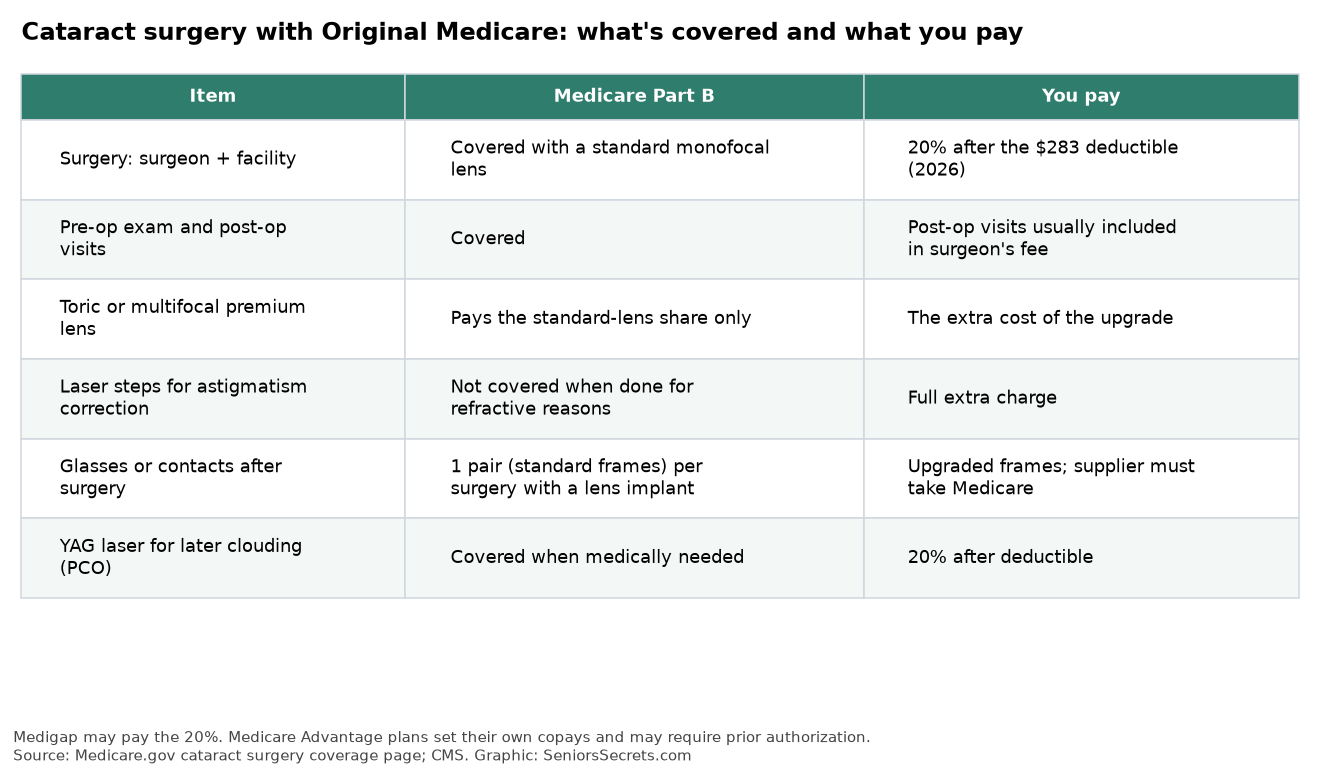
Original Medicare (Part B) covers:
- The surgery itself, whether at a hospital outpatient department or ambulatory surgical center
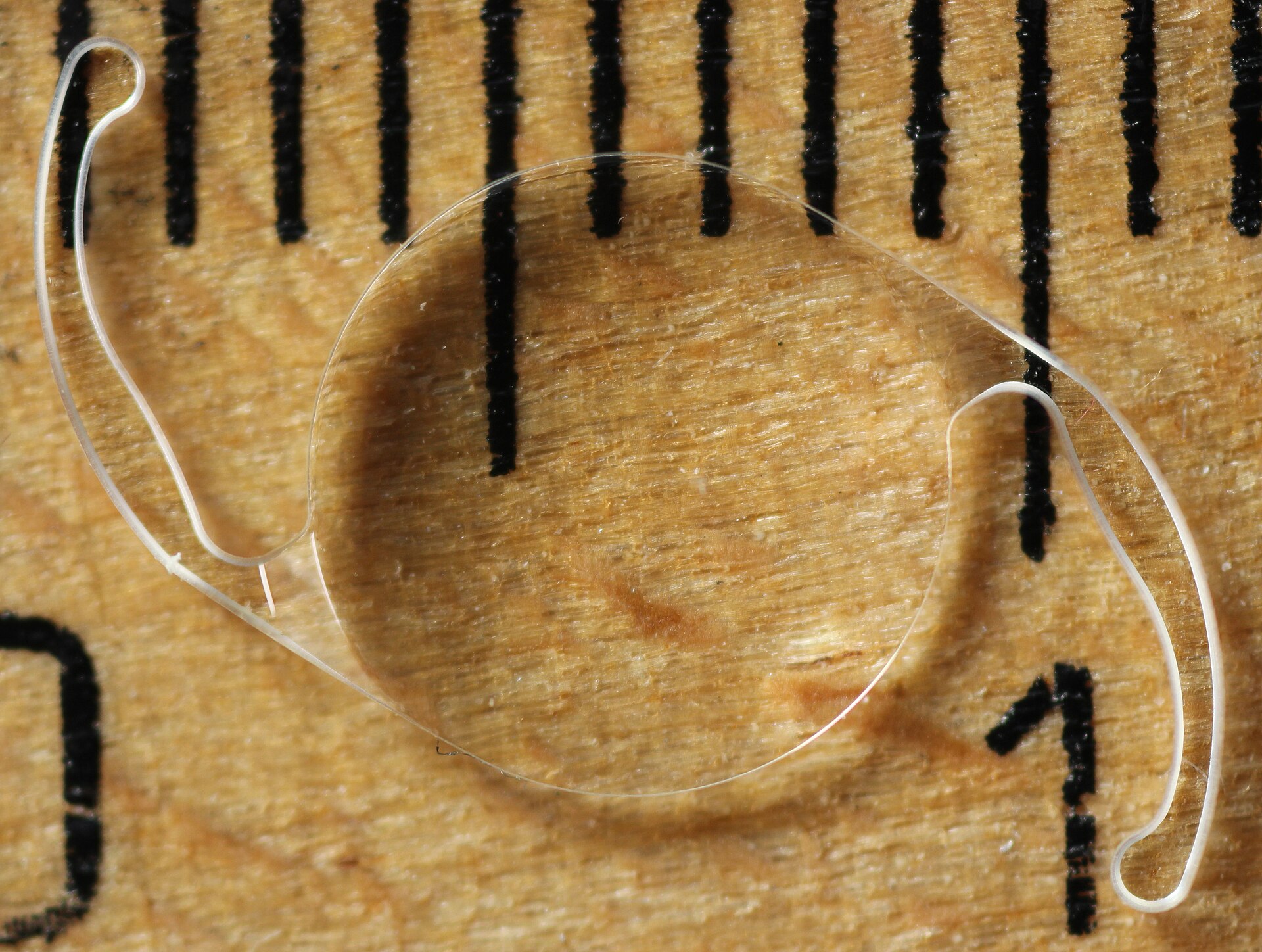
- A standard intraocular lens (IOL)
- Pre-surgery exams and measurements
- One pair of eyeglasses with standard frames, or one set of contact lenses, after each surgery that implants a lens
You pay 20% of the Medicare-approved amount, both to the surgeon and to the facility, after the Part B deductible. Surgery on each eye is billed separately, so plan for two sets of 20% coinsurance if you need both eyes done.
Ambulatory surgical centers usually cost Medicare and you less than hospital outpatient departments. Medicare’s Procedure Price Lookup shows national average costs for each setting.
With a Medigap plan, your 20% coinsurance is usually covered. Most plans, including Plan G, cover it after you meet the Part B deductible.
With Medicare Advantage, you’ll pay your plan’s copays, and many plans require prior authorization and in-network surgeons. Call your plan before you schedule.
Glasses after surgery: buy them from a supplier enrolled in Medicare. Fancier frames or lens add-ons cost extra. Routine eye exams and glasses otherwise aren’t covered. See my guide to Medicare vision coverage.
Standard vs. premium lenses
Your surgeon will discuss lens options before surgery. This is the biggest cost decision you’ll make.
| Lens type | What it does | Medicare covers |
|---|---|---|
| Standard monofocal | Clear vision at one distance, usually far | Yes |
| Toric | Corrects astigmatism | Standard-lens portion only; you pay the difference |
| Multifocal or extended depth of focus | Clear vision at several distances, less need for reading glasses | Standard-lens portion only; you pay the difference |
With a standard lens, most people still need reading glasses, and some need glasses for distance too. Premium lenses can reduce that need, but they can add hundreds to thousands of dollars per eye, and they can cause glare or halos for some people.
Laser-assisted surgery (femtosecond laser) is another add-on. Medicare covers the cataract surgery itself either way. When the laser is used to correct astigmatism, the extra laser charge is generally yours.
Before you agree to any upgrade, ask for a written estimate of your out-of-pocket cost and what you’d gain over a standard lens.
What happens during surgery
Most cataract surgery today uses phacoemulsification:
- Numbing eye drops, plus mild sedation in most cases. You’re awake but relaxed.
- The surgeon makes a tiny incision and uses ultrasound to break up the cloudy lens, then removes it.
- A folded artificial lens is inserted and unfolds into place. Stitches usually aren’t needed.
The procedure itself typically takes 15 to 30 minutes, and you go home the same day. You’ll need someone to drive you. If both eyes need surgery, doctors usually operate on one eye first and do the second after the first has healed.
Recovery: what to expect
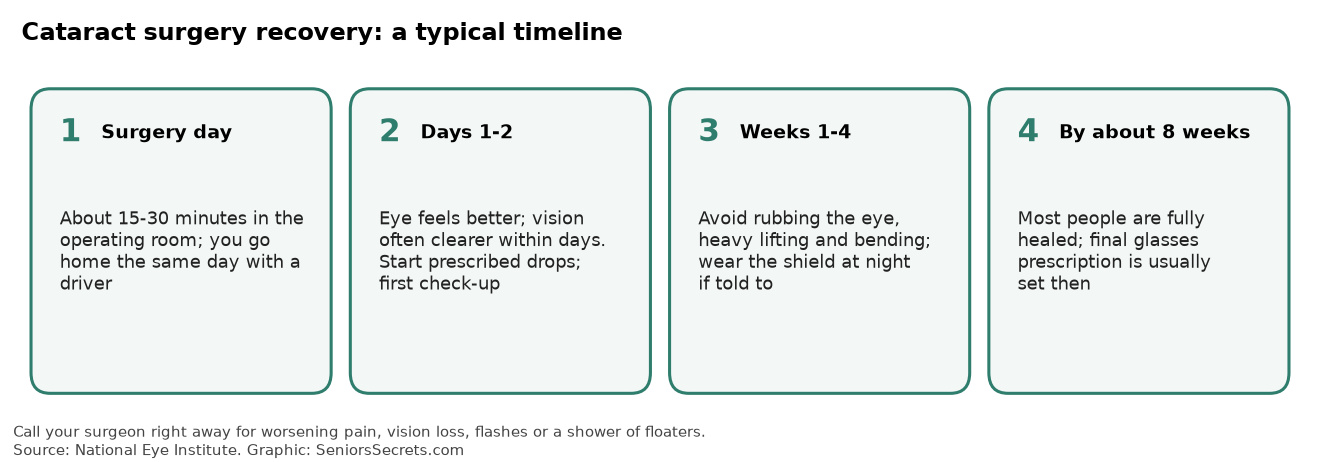
According to the NEI:
- Your eye may feel itchy, sensitive or uncomfortable at first, but should feel better after 1 or 2 days.
- You’ll use eye drops and may wear an eye shield, especially while sleeping.
- For a few weeks, avoid touching or rubbing your eye, bending over and heavy lifting.
- Most people are completely healed by 8 weeks.
- About 9 out of 10 people see better after surgery.
Call your eye doctor right away if you notice vision loss, pain that medicine doesn’t relieve, very red eyes, or flashes of light and many new floaters. Those can signal a complication like infection or retinal detachment.
Secondary cataract (PCO)
Months or years later, the thin capsule holding your new lens can turn cloudy. This is called posterior capsule opacification. It isn’t the cataract coming back, and a quick, painless YAG laser treatment in the office usually fixes it. Medicare covers it when it’s medically necessary, with the usual 20% coinsurance.
Questions to ask before surgery
- Is my cataract affecting my vision enough to justify surgery now?
- Which lens do you recommend for me, and what will I pay out of pocket?
- Will the surgery be at a surgical center or a hospital? What are the costs at each?
- Do I need to stop any medications, like blood thinners, beforehand?
- When will you do the second eye, if I need it?
FAQ
Does Medicare cover cataract surgery on both eyes?
Yes, when each surgery is medically necessary. They’re done separately, and you pay 20% coinsurance for each.
Will I still need glasses after cataract surgery?
Probably, for at least some tasks. With a standard lens, most people need reading glasses. Medicare covers one pair after each surgery with a lens implant.
Does Medicare cover laser cataract surgery?
Medicare covers the cataract surgery itself. Laser steps used to correct astigmatism, and premium lens upgrades, are generally out-of-pocket.
Can cataracts come back?
No, but the lens capsule can cloud over later (PCO). A quick laser treatment fixes it, and Medicare covers it when needed.
How much does cataract surgery cost with Medicare?
With Original Medicare, 20% of the Medicare-approved amount after the $283 Part B deductible in 2026, per eye. Medigap usually covers the 20%. Premium lenses and refractive laser add-ons are extra.