Shingles Vaccine and Medicare in 2026: How to Get Shingrix for $0, the 2-Dose Schedule and What to Expect

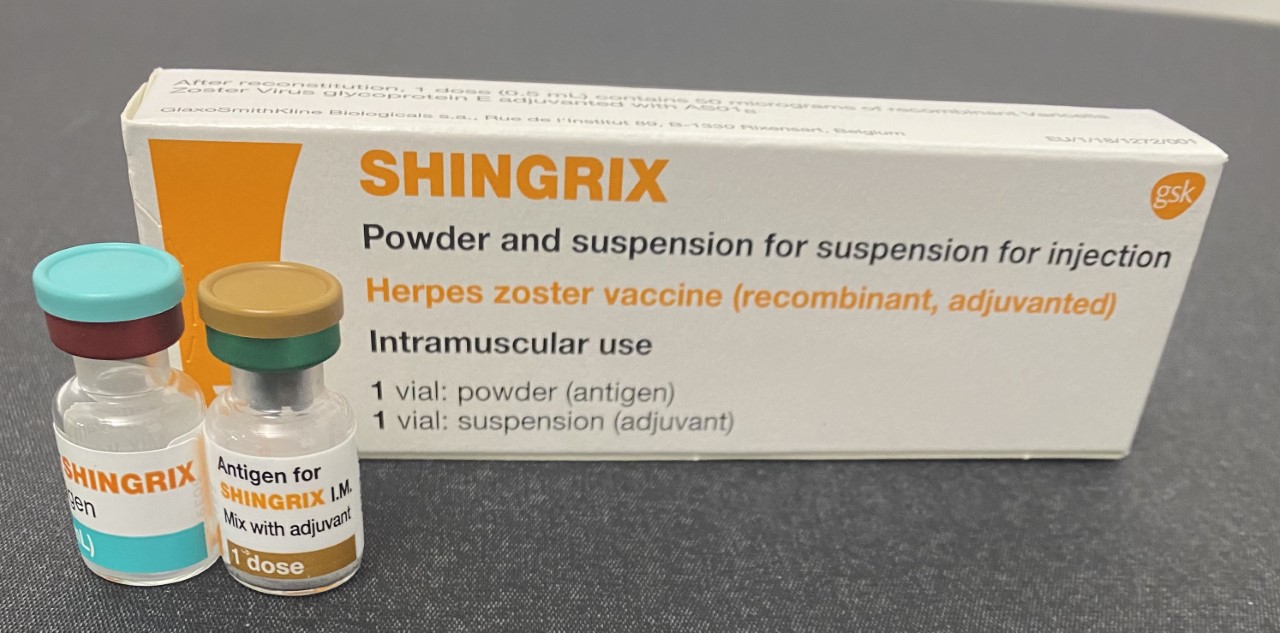
If you have Medicare Part D, or a Medicare Advantage plan with drug coverage, the shingles vaccine Shingrix costs you $0. Since 2023, Medicare drug plans can’t charge a deductible or copay for vaccines recommended by the CDC’s vaccine advisory committee, and Shingrix is one of them. The catch: shingles shots fall under Part D, not Part B, so where you get the shot matters.
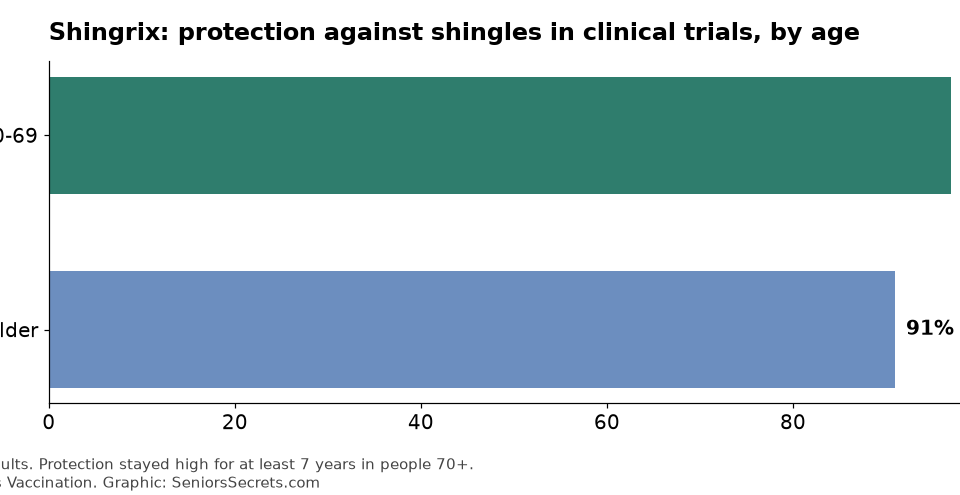
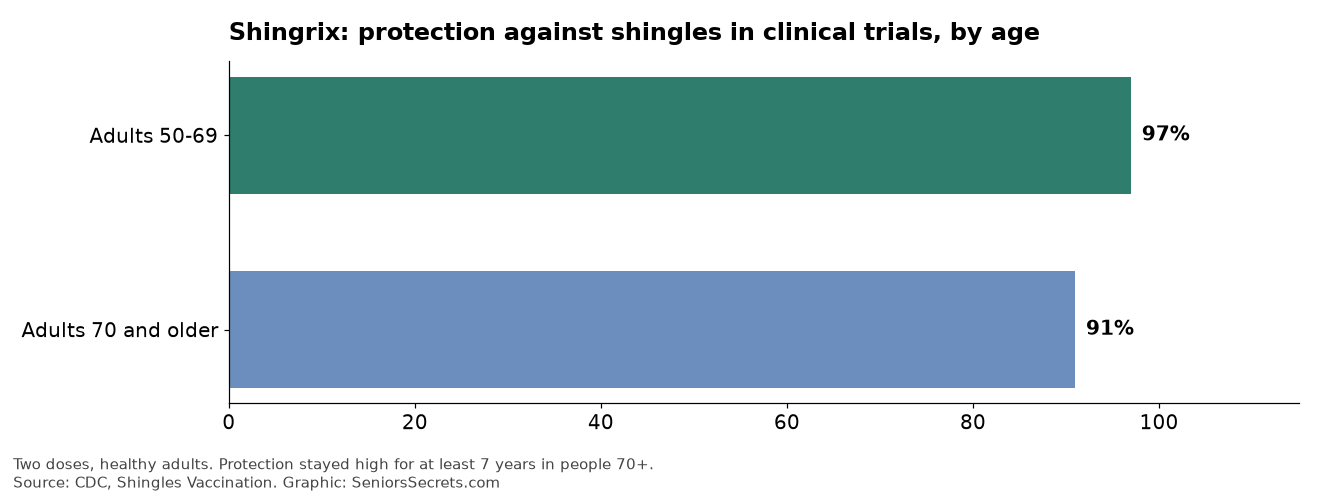
The CDC recommends Shingrix for all adults 50 and older, in two doses given 2 to 6 months apart. In clinical trials, it was 97% effective at preventing shingles in people 50 to 69 and 91% effective in people 70 and older.
I’m a researcher, not a doctor or pharmacist. This article explains coverage and the CDC’s recommendations so you can have an informed conversation with your doctor or pharmacist about whether Shingrix is right for you. Medical facts here come from the CDC’s shingles vaccination page, and coverage rules come from Medicare.gov’s shingles shot page.
Why shingles is a bigger deal after 60
Shingles is caused by the same virus as chickenpox. If you had chickenpox as a child, and almost everyone born before 1980 did, the virus stays dormant in your nerves. It can reactivate decades later, especially as your immune system weakens with age.
- About 1 in 3 people in the U.S. will get shingles in their lifetime, according to the CDC.
- The risk and severity climb with age.
- The most feared complication is postherpetic neuralgia (PHN): nerve pain that lingers for months or years after the rash heals. It’s more common and more stubborn in older adults.
- Shingles near the eye can threaten vision.
How well Shingrix works
Shingrix is a non-live (recombinant) vaccine. According to the CDC:
- In healthy adults 50 and older, two doses were more than 90% effective at preventing shingles and PHN.
- Effectiveness was 97% in people 50 to 69 and 91% in people 70 and older in clinical trials.
- In people 70 and older, protection stayed high for at least 7 years.
That’s a big improvement over Zostavax, the older live vaccine, which was discontinued in the U.S. in 2020. If you had Zostavax years ago, the CDC recommends getting Shingrix too.
What about shingles vaccines and dementia?
You may have seen headlines about this. A 2025 study in Nature used a natural experiment in Wales, where eligibility for the old live shingles vaccine depended on an exact birth date. People who became eligible had about 20% fewer new dementia diagnoses over seven years than people born just a week too early. Other research has linked Shingrix to longer dementia-free time.
These findings are intriguing, but they’re observational and mostly about the older vaccine. Nobody should get Shingrix expecting it to prevent dementia. Preventing shingles and its nerve pain is reason enough. For proven ways to lower dementia risk, see my guide to dementia prevention and risk factors.
Who should get Shingrix
The CDC recommends two doses for:
- All adults 50 and older, including people who’ve had shingles, people who’ve had Zostavax, and people who aren’t sure whether they had chickenpox
- Adults 19 and older with weakened immune systems from disease or treatment. For them, the second dose can come 1 to 2 months after the first.
Already had shingles? You should still get vaccinated, because shingles can come back. Wait until the rash is gone and you feel better. There’s no required waiting period beyond that, but ask your doctor about timing.
Who should wait or skip it? People who’ve had a severe allergic reaction to a Shingrix ingredient or a previous dose shouldn’t get it. People who currently have shingles should wait until it clears. If you’re moderately or severely ill, wait until you recover. Talk with your doctor if you’ve had Guillain-Barré syndrome: the FDA added a warning about a small increased risk in the 42 days after vaccination.
The 2-dose schedule
- Dose 1: any time after 50.
- Dose 2: 2 to 6 months later.
Missed the 6-month window? Don’t restart the series. The CDC says to get the second dose as soon as you can. Two doses are needed for full, long-lasting protection, so don’t skip the second.
Shingrix can be given at the same visit as other adult vaccines, like flu, COVID-19, pneumococcal and RSV shots. My guides to the flu vaccine, pneumonia vaccine and RSV vaccine cover those.
How Medicare covers the shingles vaccine
| Your coverage | Shingrix cost |
|---|---|
| Original Medicare with a Part D plan | $0 |
| Medicare Advantage with drug coverage | $0 |
| Original Medicare without Part D | Not covered; you pay full price |
| Medicaid (full benefits) | Covered; check your state’s rules |
Original Medicare Part B covers flu, COVID-19, pneumococcal and hepatitis B shots. It does not cover the shingles vaccine. That’s the source of most surprise bills.
How to avoid a bill
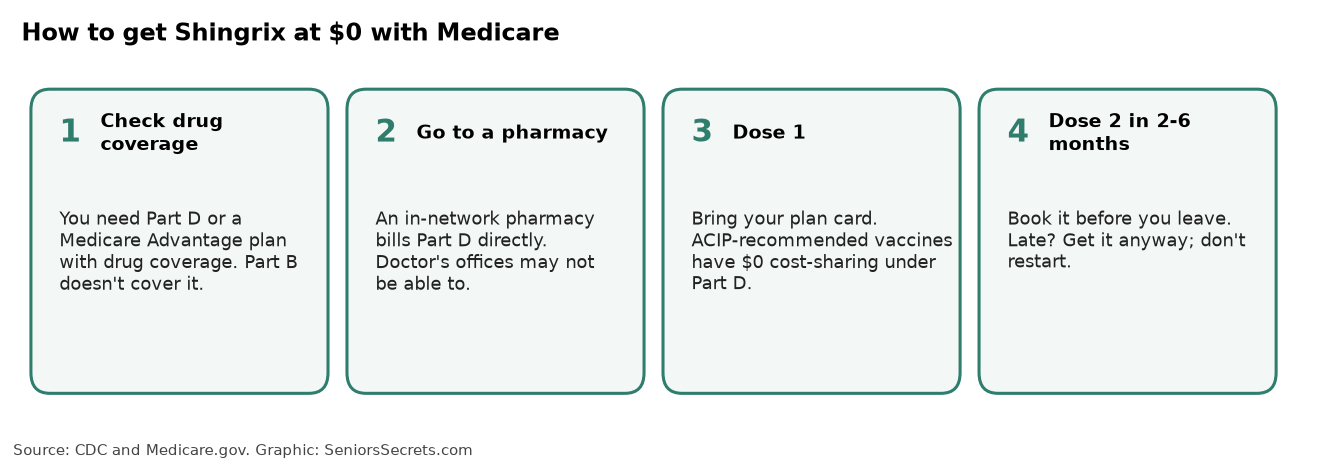
- Get it at a pharmacy in your plan’s network. Pharmacies bill Part D directly, so this is the simplest route.
- If your doctor’s office gives it, ask beforehand how they’ll bill. Some offices can bill Part D through special systems, but others may bill you and leave you to seek reimbursement from your plan.
- Bring your drug plan card, not just your red-white-and-blue Medicare card.
- If you’re charged, ask the pharmacy to rerun the claim under Part D. Then call your plan. If it isn’t resolved, you can file an appeal. My guide to appealing a Medicare denial walks through the steps.
No Part D?
Without drug coverage, Shingrix can cost a few hundred dollars for both doses at retail prices. Your options:
- Check whether you can join a Part D plan during Open Enrollment, October 15 to December 7. Coverage starts January 1.
- Ask about GSK’s patient assistance program, which helps some low-income adults get vaccines.
- Check with your state or local health department, which may run low-cost vaccine programs.
Side effects: what to plan for
Shingrix side effects are common and can be uncomfortable. They usually last 2 to 3 days. According to the CDC, they can include:
- Sore arm, with redness or swelling where you got the shot
- Tiredness, muscle aches and headache
- Shivering, fever or upset stomach
The CDC notes that about 1 in 6 people have side effects strong enough to keep them from normal activities for a couple of days. Practical tips:
- Schedule your shot when you can take it easy the next day or two.
- Ask your doctor whether a pain reliever is OK for you afterward.
- Expect the second dose may feel similar, and get it anyway.
Get emergency help for signs of a severe allergic reaction, like swelling of the face or throat, trouble breathing or a fast heartbeat.
FAQ
Is the shingles vaccine free with Medicare in 2026?
Yes, if you have Part D or a Medicare Advantage plan with drug coverage. ACIP-recommended vaccines have $0 cost-sharing under Part D. Part B doesn’t cover it.
Should I get Shingrix if I already had shingles?
Yes. Shingles can recur. Wait until the rash has healed and you feel well, then talk with your doctor about timing.
What if I’m late for my second dose?
Get it as soon as you can. You don’t need to restart the series.
Do I need Shingrix if I had Zostavax?
Yes. The CDC recommends Shingrix for people who had the older Zostavax vaccine.
Can I get the shingles shot with my flu shot?
Yes. The CDC says Shingrix can be given at the same visit as other adult vaccines. Some people prefer to space them out because both can cause a sore arm.
Related guides

Does Medicare Cover Mammograms? Screening, Diagnostic, and What You’ll Pay
Pneumonia Vaccine for Seniors: Which Shot You Need After 50, and What Medicare Pays