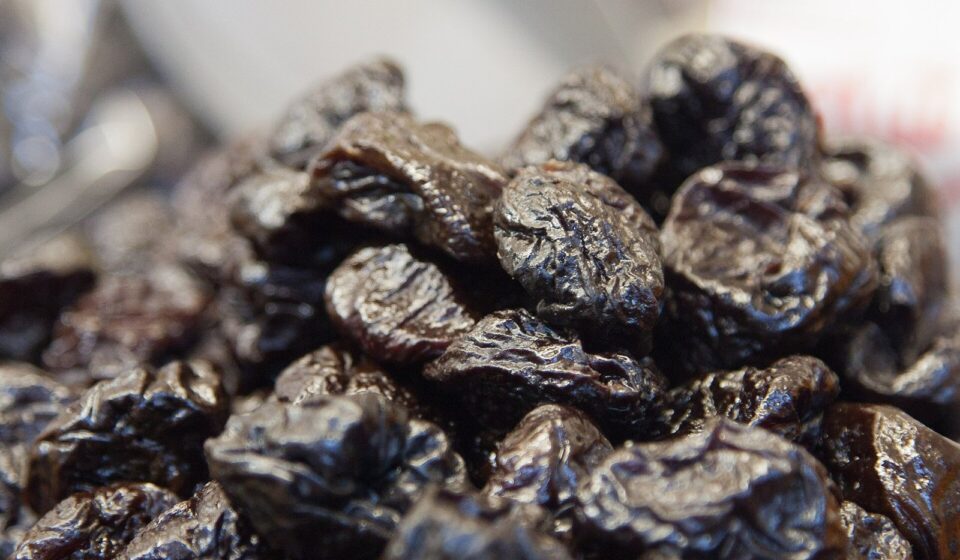

Eating about 5 to 6 prunes a day (50 grams) may help protect your bones and keep you regular. In a 12-month trial of 235 women past menopause, those who ate 50 grams of prunes a day kept their hip bone density much better than women who ate none (De Souza et al., American Journal of Clinical Nutrition, 2022). In another trial, prunes worked as well as or better than psyllium (Metamucil’s fiber) for constipation (Attaluri et al.). Prunes are cheap and easy, but start slowly to avoid gas.
Prunes are dried plums. They have a reputation as an “old person’s food.” It turns out older adults may be on to something. This guide covers what the research shows, how many to eat and who should take care.
The bone evidence
Bone loss speeds up after menopause and continues with age in both women and men. Weak bones lead to fractures, especially of the hip, wrist and spine.
The Prune Study (Penn State):
- Who: 235 women past menopause
- What: 50 grams of prunes a day (5 to 6), 100 grams a day (10 to 12) or no prunes
- How long: 12 months
- Result: the no-prune group lost about 1.1% of total hip bone density. The 50-gram group lost much less.
- Bonus: 50 grams worked about as well as 100 grams, and far more women could stick with it
Researchers think prunes help through polyphenols (plant compounds that calm inflammation), vitamin K, potassium and boron. These may slow the breakdown of bone.
Important: prunes are not a replacement for osteoporosis medicine. If you have osteoporosis, keep taking what your doctor prescribed. Prunes can be part of a bone-healthy diet.
Constipation: prunes vs psyllium
Constipation is common after 65. Less movement, less fluid and medicines like opioids, iron and some blood pressure pills all play a role.
In a trial comparing prunes with psyllium, people who ate about 50 grams of prunes twice a day had more bowel movements and better stool texture than people taking psyllium. Prunes worked as well or better and were well liked.
Why prunes work:
- Fiber adds bulk and softness
- Sorbitol, a natural sugar alcohol, draws water into the gut
- Polyphenols may support healthy gut bacteria
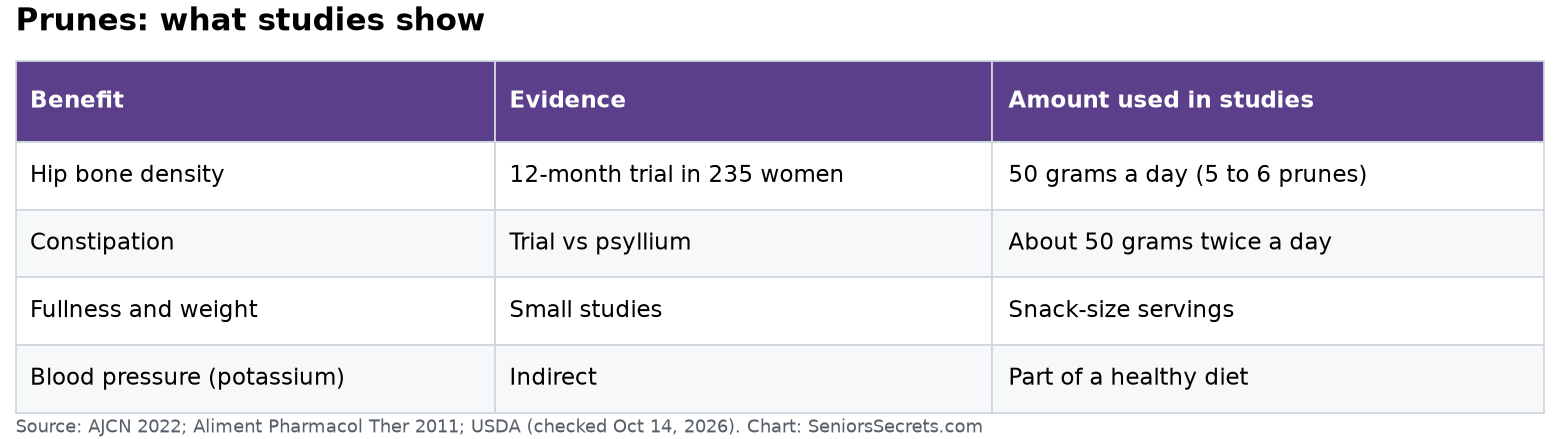
| Benefit | Evidence | Amount used in studies |
|---|---|---|
| Hip bone density | 12-month trial in 235 women | 50 grams a day (5 to 6 prunes) |
| Constipation | Trial vs psyllium | About 50 grams twice a day |
| Fullness and weight | Small studies | Snack-size servings |
| Blood pressure (potassium) | Indirect | Part of a healthy diet |
Nutrition in 5 to 6 prunes (about 50 grams)
| Nutrient | About how much |
|---|---|
| Calories | 120 |
| Fiber | 3.5 grams |
| Potassium | 365 mg |
| Vitamin K | 30 mcg |
| Natural sugar | 19 grams |
Prunes have a fairly low glycemic index for a dried fruit, so they raise blood sugar more slowly than many sweets. Still, count them as fruit if you have diabetes.
How many prunes should you eat?
- For bones: about 5 to 6 a day (50 grams), every day
- For constipation: start with 2 to 3 a day and build up
- Prune juice: 4 to 8 ounces can help constipation, but it has less fiber and more sugar per serving
Start low. Too many prunes too fast can cause gas, bloating, cramps or loose stools. Add one prune every few days until you reach your goal. Drink extra water.
Easy ways to eat them
- Chop into oatmeal or yogurt
- Eat with a handful of walnuts or almonds as a snack
- Add to stews or tagines with chicken or lamb
- Blend into a smoothie
- Stew them with a cinnamon stick for a warm dessert
Who should be careful
- People with diabetes: count prunes as fruit and watch your portion. Check your blood sugar.
- People on potassium-raising medicines or with kidney disease: prunes are high in potassium. Ask your doctor.
- People on warfarin: prunes contain vitamin K. Keep the amount steady from day to day so your INR stays stable.
- People with irritable bowel syndrome: sorbitol can trigger symptoms. Try a small amount first.
- People with swallowing problems: chop prunes finely or choose soft, stewed prunes.
Other habits that protect bones
Prunes help most as part of a bone-healthy routine:
- Calcium: 1,200 mg a day for women over 50 and men over 70, mostly from food
- Vitamin D: 800 IU a day for adults over 70
- Strength and balance exercise two or more days a week
- Don’t smoke and limit alcohol
- Prevent falls at home
Medicare covers a bone density test (DEXA scan) every 24 months if you meet the conditions, such as being a woman with estrogen deficiency at risk of osteoporosis. You usually pay nothing if your provider accepts assignment.
A sample week with prunes
| Day | How to eat 5 to 6 prunes |
|---|---|
| Monday | Chopped into oatmeal at breakfast |
| Tuesday | With a handful of almonds as a snack |
| Wednesday | Stirred into plain Greek yogurt |
| Thursday | Stewed with cinnamon after dinner |
| Friday | Blended into a milk and banana smoothie |
| Weekend | Added to a chicken stew or tagine |
Keep a bag in your kitchen and a few in your bag. The bone study needed people to eat them every day for a year, so make it easy.
When constipation needs a doctor
Prunes help ordinary constipation. See your doctor if you have:
- Blood in your stool or black stools
- Constipation that is new and lasts more than 2 weeks
- Weight loss without trying
- Severe belly pain or vomiting
These can be signs of other problems that need tests.
Common questions
How many prunes a day for bone health?
The Prune Study used 50 grams a day, about 5 to 6 prunes, for 12 months.
Do prunes really help constipation?
Yes. A trial found prunes worked as well as or better than psyllium.
Is prune juice as good as prunes?
Prune juice can help constipation, but whole prunes have more fiber. The bone study used whole prunes.
Can people with diabetes eat prunes?
Usually yes, in small portions. Count them as fruit and check your blood sugar.
Can prunes cause diarrhea?
Too many can. Start with 2 to 3 a day and build up slowly.
Are prunes good for men’s bones too?
The big trial was in women. Smaller studies in men are encouraging, and prunes are a healthy food either way.
Written by Khasim Basha Shaik. I research senior health for readers and summarize official sources and published studies. I’m not a doctor, dietitian or licensed health professional. Talk with your doctor before changing your diet if you have a health condition. Last reviewed October 14, 2026.
Related guides