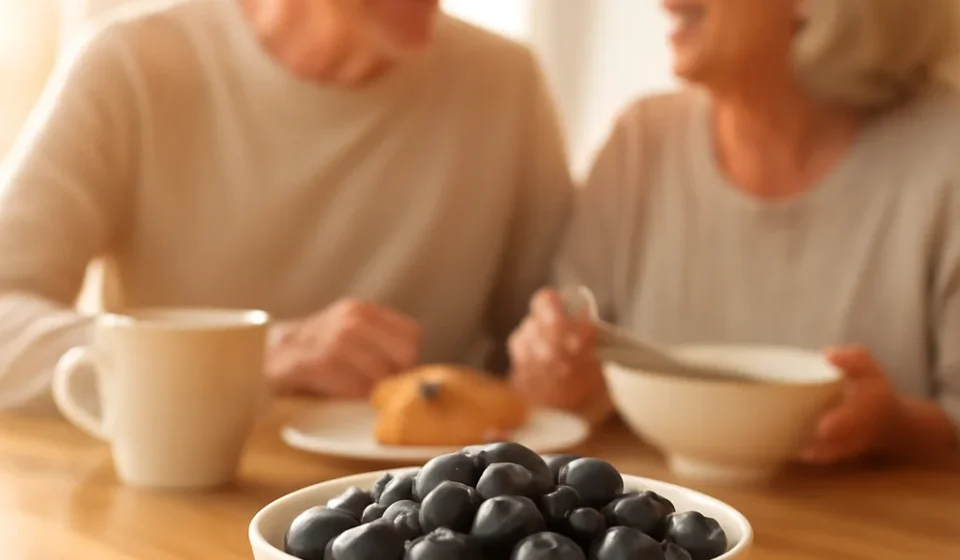

Few foods have been studied for healthy aging as intensely as the humble berry, and blueberries for seniors sit near the top of the evidence pile. The deep blue color comes from anthocyanins, plant pigments that cross into the brain and blood-vessel walls where the action of aging happens. Research over the past two decades links regular blueberry intake to sharper memory and healthier circulation — though, as you will see, the benefit is strongest for those who already have some cognitive slowing. This guide separates the genuine science from the hype and tells you exactly how much to eat.
Table of Contents
- Why blueberries matter for aging bodies
- Blueberries and the senior brain
- Heart, blood pressure, and blood sugar
- How many blueberries should seniors eat?
- Easy ways to add them in
- Frequently asked questions
Why Blueberries Matter for Aging Bodies
Aging is driven in large part by two processes: oxidative stress (molecular “rust” from unstable free radicals) and low-grade chronic inflammation. Anthocyanins, the pigments that make blueberries blue, are among the most potent dietary antioxidants and have measurable anti-inflammatory effects. Crucially, they appear to improve the function of the endothelium — the thin lining of your blood vessels — which governs blood flow to both the heart and the brain. That single mechanism helps explain why one food keeps showing up in studies on memory, blood pressure, and vascular health alike.
Blueberries and the Senior Brain
The cognitive research is genuinely promising but also nuanced — and an honest health writer should say so. In one frequently cited randomized trial, adults aged 50 to 65 with subjective cognitive decline who ate the equivalent of half a cup of blueberries daily for 12 weeks showed measurable gains in executive function. A six-month trial of wild blueberries reported improved speed of processing in people with mild cognitive decline. Reviews of healthy older adults suggest possible benefits for delayed memory and executive function.
However, a meta-analysis published in November 2025 pooling nine randomized trials in older adults with mild cognitive impairment found the effects of at least 12 weeks of blueberry supplementation to be inconsistent across studies, and a separate review found anthocyanin effects to be domain-specific rather than across-the-board. The fair conclusion: blueberries are not a memory pill, but the strongest, most consistent benefit shows up in people who already have mild cognitive impairment or metabolic risk factors such as insulin resistance — precisely many older adults.
Heart, Blood Pressure, and Blood Sugar
Beyond the brain, the vascular evidence is robust. Wild blueberry (poly)phenols have been shown in double-blind trials to improve endothelial function and cognitive performance in healthy older adults. Regular berry intake is associated with modest reductions in blood pressure and improvements in markers of blood-sugar control. None of this replaces medication, but it complements a heart-healthy pattern of eating beautifully.
| Benefit area | What the research suggests | How strong |
|---|---|---|
| Memory & executive function | Helps most in those with mild cognitive decline | Moderate, mixed |
| Blood-vessel (endothelial) function | Improved flow-mediated dilation in older adults | Strong |
| Blood pressure | Modest reductions with regular intake | Moderate |
| Blood sugar / insulin sensitivity | Favorable trends, especially with metabolic risk | Moderate |
How Many Blueberries Should Seniors Eat?
Most positive trials used the equivalent of about half a cup to one cup of fresh blueberries a day (roughly 75 to 150 grams), or one to two tablespoons of freeze-dried blueberry powder. That is a realistic, affordable amount. Frozen blueberries are just as nutritious as fresh — sometimes more, because they are frozen at peak ripeness — and are far cheaper out of season. Wild (smaller) blueberries pack more anthocyanins per cup than cultivated ones.
A practical caution: if you take warfarin or manage diabetes, blueberries are still fine, but keep your intake steady rather than wildly variable, and count the natural sugars within your overall plan. Whole berries, with their fiber, affect blood sugar far more gently than juice. Skip the sugary “blueberry” muffins and cereals that contain little real fruit.
How Blueberries Compare to Other Berries
Blueberries get the headlines, but they are part of a family of deeply colored fruits that all deliver anthocyanins, and variety matters more than chasing a single “superfood.” Blackberries and black raspberries are even richer in some anthocyanins; strawberries add vitamin C and the compound fisetin; tart cherries bring anti-inflammatory benefits that some seniors find ease joint discomfort and improve sleep. What sets blueberries apart for everyday use is the combination of a gentle flavor, year-round availability in the freezer aisle, an affordable price, and the simple fact that they have been studied more than almost any other fruit in older adults. The smartest approach is not to eat only blueberries but to rotate several colorful berries through the week. If fresh berries are out of reach, frozen mixed berries deliver the same pigments at a fraction of the cost, and a daily serving alongside vegetables, whole grains, nuts, and fish is the pattern that consistently tracks with healthier aging.
Easy Ways to Add Them In
- Stir a handful into oatmeal, yogurt, or cottage cheese at breakfast.
- Blend frozen berries into a smoothie with milk or kefir.
- Scatter over a salad with walnuts for a brain-friendly combination.
- Keep a bowl washed and visible — convenience drives consistency.
- Mix into whole-grain pancakes or spoon over a small portion of dark chocolate for a treat.
Consistency beats intensity here. A modest half-cup eaten most days for several months is far more likely to help than a giant bowl once in a while, because the vascular and cognitive benefits build gradually as the compounds do their work on your blood vessels. Pick the format you will actually keep up — frozen in a morning smoothie is the easiest habit for most seniors to sustain.
Frequently Asked Questions
Are frozen blueberries as healthy as fresh?
Yes. Frozen blueberries retain their anthocyanins and other nutrients because they are frozen soon after picking. They are budget-friendly, available year-round, and ideal for smoothies and oatmeal.
Will blueberries prevent dementia?
No single food prevents dementia. Blueberries are one helpful piece of a brain-protective lifestyle that also includes a Mediterranean or MIND-style diet, exercise, good sleep, and managing blood pressure. The strongest cognitive evidence is in people who already have mild decline.
Can diabetics eat blueberries?
Generally yes. Whole blueberries have fiber and a relatively low glycemic impact, and research suggests they may support blood-sugar control. Eat them as whole fruit rather than juice, and fit the portion into your meal plan.
Do I need expensive blueberry supplements?
For most people, no. Whole berries deliver fiber and a full spectrum of compounds. Standardized powders were used in some studies for consistency, but a daily half-cup of real blueberries is an excellent, less costly choice.
Related Articles You May Find Helpful
- Senior Nutrition Guide 2026
- MIND Diet for Seniors 2026: Eat Your Way to a Sharper Brain
- Anti-Inflammatory Diet for Seniors: 10 Foods That Fight Disease
- Walnuts for Seniors 2026: Brain, Heart & Best Dose
- Dementia Prevention 2026: 14 Risk Factors You Can Reduce
Sources
- American Journal of Clinical Nutrition — Wild blueberry (poly)phenols improve vascular function and cognitive performance in healthy older adults: a double-blind RCT
- PubMed (2023) — Dietary blueberry improves cognition among older adults in a randomized, double-blind, placebo-controlled trial
- Systematic review & meta-analysis (November 2025) — Blueberry supplementation and cognition in older adults with mild cognitive impairment
This article is for educational purposes only and is not medical or dietary advice. Talk with your clinician or dietitian about your needs. See our Medical Disclaimer.