
If you feel dizzy, lightheaded, or unsteady in the seconds after standing up, do not write it off as “just getting older.” Orthostatic hypotension in seniors — a blood pressure drop of at least 20 points systolic or 10 points diastolic within three minutes of standing — affects roughly one in five adults over 65, and it is one of the most overlooked, most fixable causes of falls. It has also been linked in long-term studies to higher risks of dementia, cardiovascular disease, and stroke. As a senior health educator, I consider the lying-to-standing blood pressure check one of the highest-value two-minute tests in geriatric medicine. Here is what causes it, why it matters, and the step-by-step plan clinicians actually use to treat it.
Table of Contents
- What Counts as Orthostatic Hypotension
- The Big Causes — Medications First
- Why It Is More Than Dizziness
- How to Test for It (At the Doctor and at Home)
- The Treatment Ladder That Works
- Frequently Asked Questions
What Counts as Orthostatic Hypotension
When you stand, gravity pulls roughly half a liter of blood into your legs and belly. A healthy autonomic nervous system reacts within seconds — squeezing veins, nudging the heart rate up — so brain blood flow barely changes. With age, that reflex slows: baroreceptors stiffen, hearts respond less to adrenaline signals, and blood vessels comply less. Orthostatic hypotension in seniors is diagnosed when systolic pressure falls ≥20 mmHg (or diastolic ≥10 mmHg) within three minutes of standing. A related and underdiagnosed cousin, postprandial hypotension, is a pressure drop 30–60 minutes after meals, when blood pools in the gut — classic in seniors who feel faint after a big lunch.
The Big Causes — Medications First
In older adults, the most common reversible causes are sitting in the medicine cabinet. Diuretics, alpha-blockers for prostate symptoms (tamsulosin is a frequent offender), some antidepressants, nitrates, and over-aggressive blood pressure regimens all blunt the standing reflex or shrink blood volume. Roughly 10% of adults treated for hypertension have measurable orthostatic drops — which is why treatment guidelines emphasize checking standing pressures, not just seated ones, in seniors (our guide to the current blood pressure guidelines for seniors covers this balance).
Beyond medications, the checklist clinicians run: dehydration (thirst signals weaken with age), vitamin B12 deficiency (a prominent reversible cause that also mimics dementia), anemia, prolonged bed rest, alcohol, and autonomic nerve damage from diabetes or Parkinson’s disease. New, persistent orthostatic symptoms deserve a full medication review before any new prescription is added.
Why It Is More Than Dizziness
The immediate danger is obvious: a pressure drop at the moment you rise from bed at 2 a.m. is a recipe for a fall and a hip fracture. Falls-clinic audits now treat lying-and-standing blood pressure as a core assessment for exactly that reason. But cohort studies following older adults for years have also associated orthostatic hypotension with higher rates of dementia, heart failure, stroke, and death — likely reflecting repeated dips in brain perfusion plus underlying vascular and autonomic disease. That does not mean every dizzy spell predicts decline; it means the finding deserves a diagnosis, not a shrug.
How to Test for It (At the Doctor and at Home)
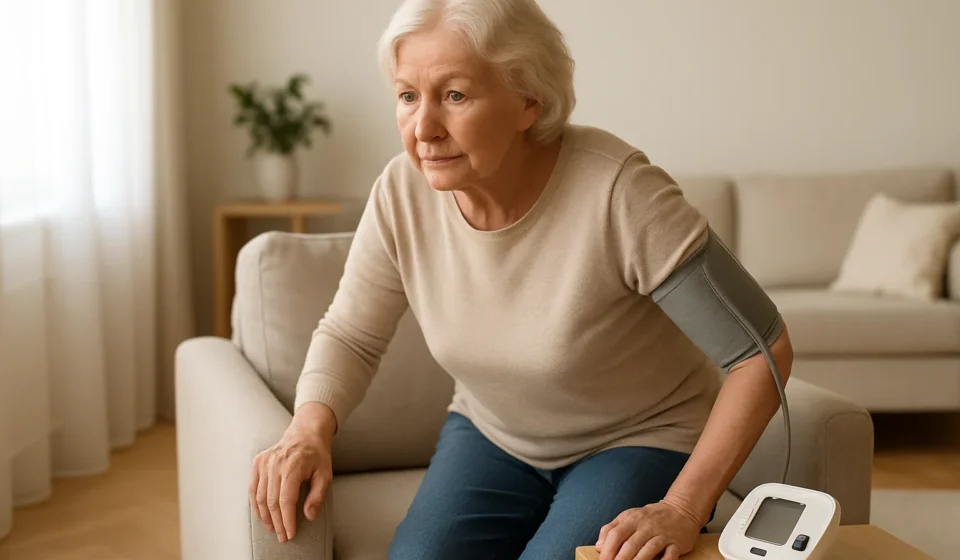
The protocol is simple: rest lying down five minutes, measure blood pressure; stand, measure again at one minute and three minutes. A ≥20/10 mmHg drop is positive — with or without symptoms, because up to a third of affected seniors feel nothing. You can do this at home with a validated home blood pressure monitor: have someone nearby the first time, and bring the numbers to your appointment. If your dizziness is spinning rather than fading-to-gray, that points to the inner ear instead — see our vertigo guide for that branch of the tree.
The Treatment Ladder That Works
| Step | Intervention | Key Detail |
|---|---|---|
| 1 | Medication review | Ask specifically about diuretics, alpha-blockers, nitrates, antidepressants; never stop on your own |
| 2 | Hydration | 1.5–2 liters daily unless fluid-restricted; a 16-oz glass of water 15–30 min before rising can raise standing BP within minutes |
| 3 | Rise in stages | Sit on the bed edge 30–60 seconds; pump ankles 10 times before standing |
| 4 | Counter-maneuvers | Cross legs and squeeze, clench buttocks, rise onto toes when symptoms start — these physically push blood upward |
| 5 | Compression | Waist-high compression garments or abdominal binders outperform knee-high socks (the pooling is largely abdominal) |
| 6 | Meal strategy | Smaller, lower-carbohydrate meals and limiting alcohol for postprandial drops; stay seated 30–60 min after eating |
| 7 | Head-up sleeping | Raising the head of the bed 4–6 inches reduces overnight fluid shifts and morning symptoms |
| 8 | Medications | If conservative steps fail: midodrine or fludrocortisone (specialist-guided), weighing supine hypertension risk |
Most seniors improve substantially on steps 1–4 alone. Pair the plan with the strength and balance work in our fall prevention guide — leg muscle is literally part of your blood pressure system, since calf contractions pump venous blood back toward the heart.
Frequently Asked Questions
What is orthostatic hypotension in seniors?
A drop in blood pressure of at least 20 mmHg systolic or 10 mmHg diastolic within three minutes of standing. It affects roughly 20% of adults over 65 and is a major, treatable fall risk.
Can orthostatic hypotension be cured?
Often, yes — when the cause is a medication, dehydration, or B12 deficiency, correcting it can resolve symptoms. When autonomic nerve disease underlies it, symptoms are managed rather than cured, usually very effectively.
Why do I get dizzy after eating?
That pattern suggests postprandial hypotension — blood pooling in the digestive tract after meals. Smaller, lower-carb meals, water before eating, and staying seated for 30–60 minutes afterward are first-line fixes.
Should I stop my blood pressure pills if I feel dizzy standing?
No — never stop on your own. Untreated hypertension is dangerous too. Bring standing and seated readings to your doctor; often a dose adjustment or timing change solves it while keeping you protected.
When is dizziness on standing an emergency?
If it comes with chest pain, fainting with injury, new confusion, slurred speech, or black/tarry stools (possible bleeding), seek emergency care immediately.
Related Articles You May Find Helpful
- Senior Health Conditions Guide 2026
- Fall Prevention for Seniors: 10 Proven Strategies
- High Blood Pressure in Seniors: New Treatment Guidelines
- Vertigo in Seniors: Causes, Treatment & Fall Prevention
- Vitamin B12 Deficiency in Seniors: 10 Warning Signs
Sources
- NIH StatPearls — Orthostatic Hypotension
- National Institute on Aging — Falls and Falls Prevention
- Cleveland Clinic — Orthostatic Hypotension
This article is for educational purposes only and is not medical advice. See our medical disclaimer.