Intermittent Fasting for Seniors 2026: Is It Safe After 65, and What Does the Research Show?
Gentle intermittent fasting can be safe and helpful for some healthy older adults, but strict fasts are risky after 65. A 2026 review of 31 studies in people over 60, published in Nutrients, found that moderate plans like eating within an 8-hour window (16:8) helped people lose weight, often without losing lean muscle, and improved blood pressure and metabolic markers. Extreme fasts backfired (summary via Science X). People on insulin, blood pressure pills or with a history of falls should talk to a doctor first.
Intermittent fasting is everywhere in the news. Most studies, though, were done in younger adults. Older bodies are different: muscle is harder to keep, medicines interact with meals, and low blood sugar or dizziness can cause falls. This guide covers what the research shows, who should skip it and a safe way to try it.
What intermittent fasting is
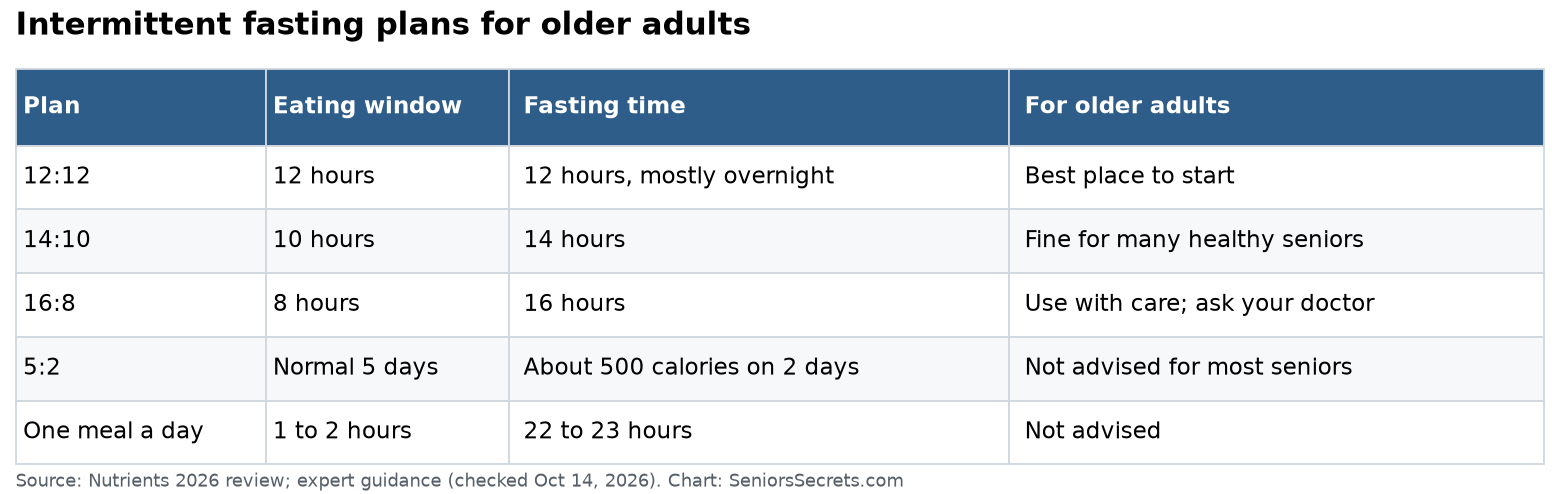
Intermittent fasting is a pattern of when you eat, not a list of foods. You eat during a set window and do not eat (except water and plain drinks) the rest of the time.
| Plan | Eating window | Fasting time | For older adults |
|---|---|---|---|
| 12:12 | 12 hours | 12 hours, mostly overnight | Best place to start |
| 14:10 | 10 hours | 14 hours | Fine for many healthy seniors |
| 16:8 | 8 hours | 16 hours | Use with care; ask your doctor |
| 5:2 | Normal 5 days | About 500 calories on 2 days | Not advised for most seniors |
| One meal a day | 1 to 2 hours | 22 to 23 hours | Not advised |
A 12:12 plan is simple: finish dinner by 7 p.m. and eat breakfast at 7 a.m. Most of the fast happens while you sleep.
What the research shows
Weight and heart health. The 2026 Nutrients review (31 studies) found 16:8 time-restricted eating and religious fasting patterns had the strongest evidence for weight loss in older adults, with acceptable short-term safety. Many studies also saw better blood pressure and blood sugar markers.
Muscle. The moderate plans often helped people lose weight without losing lean muscle. Extreme plans did not. Losing muscle after 65 raises the risk of falls and frailty, so this matters.
Inflammation and immunity. A 2026 review in Frontiers in Nutrition looked at how fasting may affect aging immune systems and chronic inflammation. It found promising lab and early human signs, but called for more trials in older people (PMC).
Memory. Some small studies link a longer overnight fast with better thinking. The evidence is early.
The honest bottom line: most studies are short, small and in healthy people. We do not know the long-term effects of fasting in people over 75 or with several health conditions. Harvard Health has long warned that evidence in older adults is limited (Harvard Health).
Who should not fast without a doctor’s OK
- People who take insulin or sulfonylureas (like glipizide). Skipping meals can cause dangerous low blood sugar.
- People on blood pressure pills or diuretics, who may get dizzy.
- Anyone who has fallen in the past year or feels unsteady.
- People who are underweight, losing weight without trying or have a poor appetite.
- People with kidney disease, heart failure or a history of eating disorders.
- People who take medicines that must be taken with food, like some arthritis or diabetes drugs.
- People with memory problems who may forget to eat.
A safe way to start
- Talk to your doctor, especially about medicines and timing.
- Start with 12:12 for two weeks.
- Eat enough protein in your window. Aim for 25 to 30 grams at each meal.
- Drink water during the fast. Black coffee and plain tea are usually fine.
- Keep strength training two days a week to protect muscle.
- Move to 14:10 only if 12:12 feels easy and your doctor agrees.
- Stop if you feel dizzy, weak, shaky or confused.
Watch your weight. If you are losing weight you did not mean to lose, stop and talk to your doctor.
What to eat in your eating window
Fasting does not make up for poor food choices. Fill your meals with:
- Protein: eggs, fish, chicken, beans, Greek yogurt, tofu
- Fiber: vegetables, fruit, whole grains, nuts
- Calcium and vitamin D: dairy or fortified foods
- Healthy fats: olive oil, nuts, avocado
A study that paired fasting with a Mediterranean-style diet found better results than either alone. The two make a good team.
A sample 12:12 day
| Time | What to do |
|---|---|
| 7:00 a.m. | Breakfast: 2 eggs, whole-grain toast, berries |
| 10:00 a.m. | Water or tea |
| 12:30 p.m. | Lunch: bean soup, salad with olive oil, yogurt |
| 3:30 p.m. | Snack: an apple with peanut butter |
| 6:30 p.m. | Dinner: baked fish, vegetables, brown rice |
| 7:00 p.m. | Kitchen closes until 7:00 a.m. |
Take medicines as your doctor directed, even during the fasting hours, unless told otherwise.
Signs fasting is not right for you
- Dizziness when you stand
- Shaky, sweaty or confused spells
- Trouble sleeping because of hunger
- Constipation or headaches that do not go away
- Feeling weaker during daily tasks
- Losing more than 1 to 2 pounds a week
A gentler option: an earlier dinner
If full fasting does not appeal, try a simple rule: no food in the 3 hours before bed. This gives you a longer overnight fast, may help sleep and reflux, and has very little risk.
Does Medicare help?
Medicare Part B covers medical nutrition therapy with a registered dietitian for people with diabetes or kidney disease, and obesity counseling with your primary care provider if your BMI is 30 or higher. A dietitian can help you decide whether fasting fits your health.
Common questions
Is intermittent fasting safe for people over 65?
Gentle plans like 12:12 are safe for many healthy older adults. Stricter plans need a doctor’s OK, especially if you take medicines for diabetes or blood pressure.
What is the best fasting schedule for seniors?
Start with 12:12. Some healthy people move to 14:10 or 16:8 with their doctor’s approval.
Can intermittent fasting cause muscle loss in seniors?
Extreme fasts can. The 2026 review found moderate plans often kept lean muscle, especially with enough protein.
Can I take my pills while fasting?
Ask your doctor or pharmacist. Some medicines must be taken with food.
Does intermittent fasting help memory?
Early studies hint at benefits from a longer overnight fast, but the evidence is not strong yet.
Can people with diabetes fast?
Only with their doctor’s guidance. Insulin and some pills can cause low blood sugar if you skip meals.
Written by Khasim Basha Shaik. I research senior health for readers and summarize official sources and published studies. I’m not a doctor, dietitian or licensed health professional. Talk with your doctor before changing how you eat. Last reviewed October 14, 2026.