Vitamin A for Seniors: How Much You Need, the Best Foods, and Why Too Much Is the Bigger Risk

Most older adults in the US get enough vitamin A from food, and true deficiency is rare here. After 60, the bigger risk is usually too much, not too little. The daily target is 900 mcg RAE for men and 700 mcg RAE for women, and the safe upper limit for preformed vitamin A (retinol, from supplements, liver and fortified foods) is 3,000 mcg a day.
Two cautions matter most for seniors. High retinol intake has been linked to more hip fractures in older women, and beta-carotene supplements raised lung cancer risk in smokers and former smokers in large trials. A sweet potato or a handful of carrots is a safer way to get vitamin A than a high-dose pill.
How much vitamin A do you need?
The National Institutes of Health’s Office of Dietary Supplements (ODS) sets these amounts for adults, including those over 50 (ODS vitamin A fact sheet):
| Daily amount | |
|---|---|
| Men, recommended | 900 mcg RAE |
| Women, recommended | 700 mcg RAE |
| Upper limit (preformed vitamin A only) | 3,000 mcg RAE (10,000 IU) |
RAE stands for retinol activity equivalents. Labels may still list IU. For preformed vitamin A, 900 mcg RAE equals 3,000 IU. The upper limit applies to retinol from animal foods and supplements, not to beta-carotene from fruits and vegetables.
The best food sources
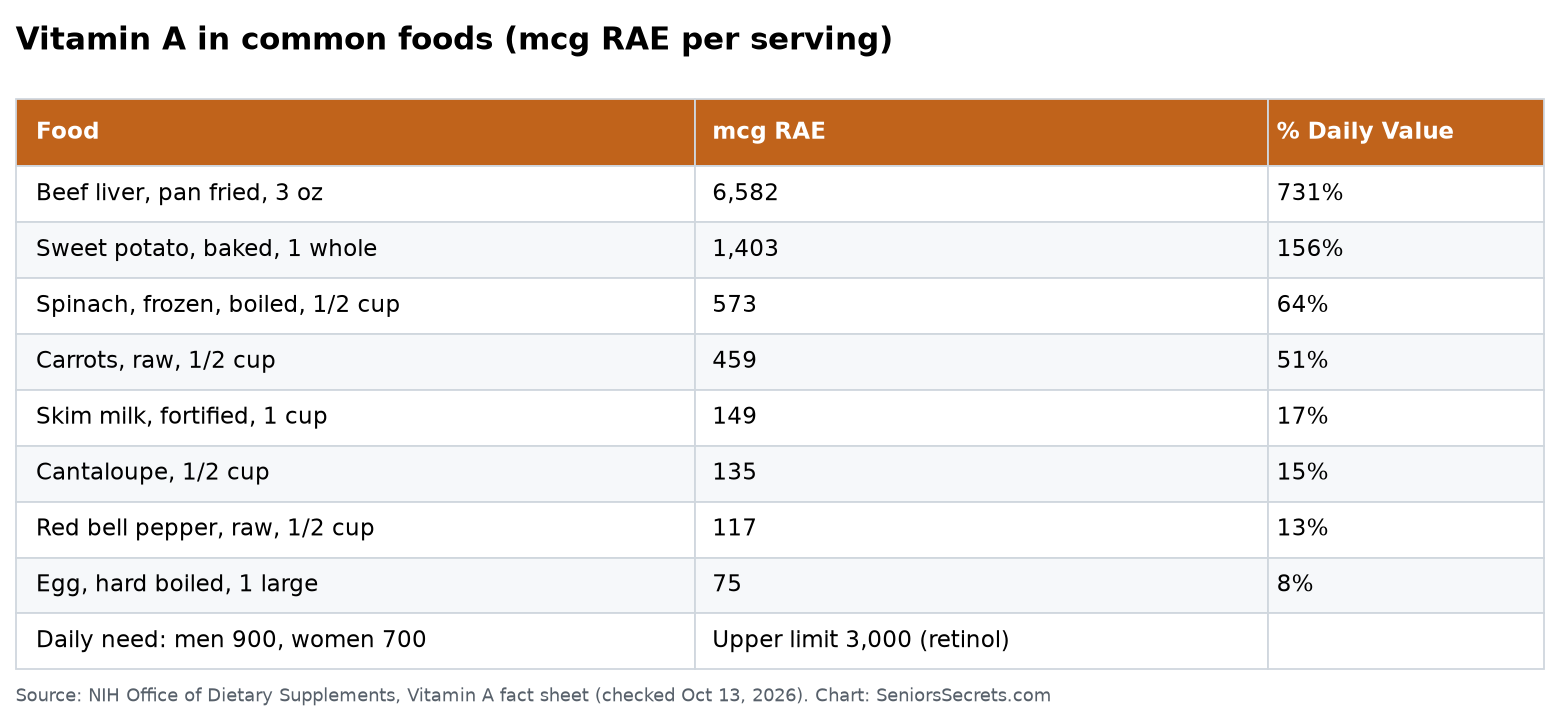
| Food | Vitamin A (mcg RAE) | % Daily Value |
|---|---|---|
| Beef liver, pan fried, 3 oz | 6,582 | 731% |
| Sweet potato, baked in skin, 1 whole | 1,403 | 156% |
| Spinach, frozen, boiled, ½ cup | 573 | 64% |
| Carrots, raw, ½ cup | 459 | 51% |
| Skim milk, fortified, 1 cup | 149 | 17% |
| Cantaloupe, ½ cup | 135 | 15% |
| Red bell pepper, raw, ½ cup | 117 | 13% |
| Egg, hard boiled, 1 large | 75 | 8% |
Orange and dark green vegetables give you beta-carotene, which your body converts to vitamin A as needed. That’s why food sources are hard to overdo. Liver is the exception: one serving is more than twice the upper limit for retinol, so I’d treat it as an occasional food, not a weekly habit.
Vitamin A is fat soluble. Eating vegetables with a little olive oil or another fat helps absorption.
Why too much is the bigger risk after 60
Bones
In the Nurses’ Health Study, which followed 72,337 postmenopausal women for 18 years, women with the highest retinol intake (2,000 mcg a day or more) had an 89% higher risk of hip fracture than those with the lowest intake. Beta-carotene wasn’t linked to fractures (Feskanich et al., JAMA 2002). It’s an observational study, but it’s a good reason to add up retinol from all your supplements if you have osteoporosis or a history of fractures.
Lung cancer and beta-carotene supplements
Two large trials in smokers and asbestos workers found beta-carotene supplements increased lung cancer. In the AREDS2 eye study of people aged 50 to 85, there were 23 lung cancers in the beta-carotene group vs. 11 without it, and 31 of the 34 people affected were former smokers. That’s why the current AREDS2 eye vitamin uses lutein and zeaxanthin instead (ODS). If you’ve ever smoked and take an eye supplement for macular degeneration, check that it’s the beta-carotene-free AREDS2 formula.
Toxicity symptoms
Very high doses can cause headache, blurred vision, nausea, dizziness, aching muscles and coordination problems. Regular high intake over time can cause dry skin, painful muscles and joints, fatigue, depression and abnormal liver tests.
Do seniors need a vitamin A supplement?
Usually not. Fewer than 1% of Americans have low blood retinol, according to national survey data cited by ODS. A standard multivitamin usually covers you, and some contain a lot. Products with 3,000 mcg RAE (333% of the DV) are common, so read the label.
People who may need more, under a doctor’s care:
- Crohn’s disease, ulcerative colitis or celiac disease, which can reduce absorption
- Pancreatic insufficiency or other fat-absorption problems
- Weight-loss surgery
Medicines that interact
- Orlistat (Alli, Xenical) lowers absorption of vitamin A and other fat-soluble vitamins. The makers recommend taking a multivitamin that includes vitamin A and beta-carotene.
- Retinoid drugs like acitretin (Soriatane) for psoriasis and bexarotene (Targretin) can add to vitamin A toxicity if you also take supplements.
Pros and cons of vitamin A supplements for older adults
| Pros | Cons |
|---|---|
| Helpful if you have a diagnosed deficiency or malabsorption | Rarely needed for healthy seniors with a varied diet |
| Part of some eye formulas (as beta-carotene in the original AREDS) | High retinol linked to hip fractures in older women |
| Inexpensive | Beta-carotene pills raised lung cancer risk in smokers |
| Easy to double up across multivitamins and single supplements |
If you’re reviewing other vitamins too, my guides on vitamin D and vitamin E cover their own doses and limits.
Common questions
How much vitamin A should a senior take daily?
Men need 900 mcg RAE and women 700 mcg RAE a day. Most get this from food. Don’t exceed 3,000 mcg RAE of preformed vitamin A from supplements and animal foods combined.
What are the best food sources of vitamin A for seniors?
Sweet potatoes, carrots, spinach, cantaloupe, red peppers, fortified milk and eggs. One baked sweet potato has 1,403 mcg RAE, more than a full day’s needs.
Can too much vitamin A hurt older adults?
Yes. High retinol intake has been linked to hip fractures in older women, and very high doses can cause headaches, dizziness, blurred vision and abnormal liver tests.
Is beta-carotene safe for seniors?
Beta-carotene from food is safe. Beta-carotene supplements increased lung cancer risk in smokers and former smokers in large trials, so most people should avoid them.
Does vitamin A help with macular degeneration?
The current AREDS2 formula for intermediate or advanced macular degeneration uses lutein and zeaxanthin instead of beta-carotene. Extra vitamin A by itself isn’t a treatment.
Written by Khasim Basha Shaik. I research nutrition topics for older adults using NIH Office of Dietary Supplements guidance and peer-reviewed studies. I’m not a doctor or dietitian, and this isn’t medical advice. Last reviewed October 13, 2026.