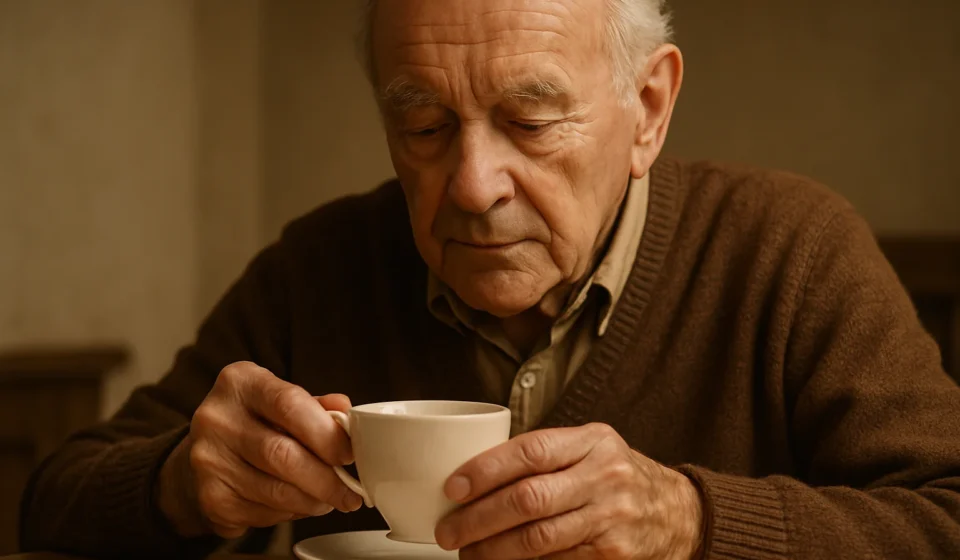

If your hands shake when you reach for a coffee cup, sign a check, or bring a spoon to your mouth, you are not imagining it — and it is probably not Parkinson’s disease. Essential tremor in seniors is the most common movement disorder in older adults, affecting an estimated 4.6% to 6.3% of people over 65. It is often dismissed as “just getting older,” yet it is a distinct neurological condition with real, effective treatments. Understanding what it is, how it differs from Parkinson’s, and which therapies work can restore both function and confidence.
Table of Contents
- What Essential Tremor Is
- Essential Tremor vs. Parkinson’s Disease
- Causes and Triggers
- How It Is Diagnosed
- 2026 Treatment Options
- Living Well With Tremor
- Frequently Asked Questions
What Essential Tremor Is
Essential tremor is a rhythmic, involuntary shaking, most often of the hands and forearms, that appears when the muscles are working — holding a posture or performing an action — rather than at rest. It is classically described as a bilateral, roughly symmetric postural and kinetic tremor of the upper limbs that has been present for at least five years with no other cause. It commonly also affects the head (a “yes-yes” or “no-no” nod) and the voice, giving speech a quivering quality. The shaking typically worsens with stress, caffeine, fatigue, and certain medications, and may ease briefly with a small amount of alcohol — a classic, telling feature.
While essential tremor is not life-threatening, it is far from trivial. It can make eating, drinking, dressing, writing, and using a phone genuinely difficult, and the social embarrassment can lead seniors to withdraw from meals out and activities they love. Roughly half of people with essential tremor have a family history, and while it can begin at any age, both its frequency and severity climb with each decade after 60.
Essential Tremor vs. Parkinson’s Disease
This is the single most important distinction, because the two conditions are frequently confused yet are managed very differently. The defining difference is when the tremor appears.
| Feature | Essential Tremor | Parkinson’s Disease |
|---|---|---|
| When tremor occurs | With action (reaching, holding) | At rest; eases with movement |
| Typical body parts | Hands, head, voice | Hand (“pill-rolling”), often one side first |
| Other symptoms | Usually tremor alone | Slowness, stiffness, shuffling gait |
| Family history | Often strong | Less commonly inherited |
| Response to alcohol | Often improves briefly | No change |
In short, essential tremor shows up when you use your hands; a Parkinson’s tremor is most visible when the hand is resting in your lap. If you notice slowness, rigidity, or a shuffling walk alongside shaking, ask your doctor specifically about Parkinson’s — our guide to Parkinson’s early warning signs explains the red flags in detail.
Causes and Triggers
The root cause is thought to lie in abnormal electrical activity in the cerebellum and its connecting circuits, the brain’s coordination center. Genetics play a large role: roughly half of cases run in families, and having an affected parent meaningfully raises your risk. It is not caused by anything you did, and it does not mean you are developing dementia.
Even when the underlying tremor is genetic, several everyday factors make it visibly worse: caffeine, stress and anxiety, lack of sleep, low blood sugar, and stimulant medications including some asthma inhalers and decongestants. Before assuming a tremor is “essential,” doctors also rule out reversible mimics such as an overactive thyroid, certain drug side effects, and excess vitamin intake — for instance, high-dose vitamin B6 can itself cause nerve symptoms, as we cover in our guide to vitamin B6 safety for seniors.
How It Is Diagnosed
There is no single blood test or scan that confirms essential tremor. Diagnosis is clinical: a physician observes the tremor during specific tasks (holding the arms outstretched, drawing a spiral, pouring water), takes a careful history including family history and alcohol response, and rules out other causes with blood work (thyroid function, glucose) and a medication review. A neurologist may order imaging only to exclude Parkinson’s or other conditions when the picture is unclear. Bring a short video of the tremor at its worst to your appointment — it can be more useful than the few minutes in the exam room.
2026 Treatment Options
The good news is that essential tremor responds to treatment in most people. Therapy is layered, starting with the gentlest effective option.
First-line medications
Two drugs carry the strongest evidence. Propranolol, a beta-blocker, improves tremor in roughly 50% to 60% of patients, with the greatest benefit for hand tremor; older adults often start low (around 10 mg twice daily) because it can lower blood pressure and heart rate. Primidone, an anti-seizure medication, helps about 60% of patients and is frequently better tolerated long-term in seniors; doctors begin at a very low bedtime dose (12.5–25 mg) to limit early nausea and drowsiness. The two can be combined when one alone is not enough.
Procedures for severe tremor
When medication fails or causes intolerable side effects, advanced options exist. Botulinum toxin injections can help head and voice tremor. Deep brain stimulation (DBS), a surgically implanted device targeting the thalamus, can dramatically reduce disabling hand tremor. MRI-guided focused ultrasound is an incisionless option that creates a precise lesion to calm tremor on one side, increasingly used in older adults who are not surgical candidates. Medicare covers medically necessary evaluation and these procedures when criteria are met.
Living Well With Tremor
Beyond medicine, practical strategies make daily life easier: weighted utensils and pens, wide-based or spill-resistant cups, voice-to-text on phones, and occupational therapy to adapt tasks. Reducing caffeine, prioritizing sleep, and managing stress with gentle practices such as tai chi can lessen day-to-day shaking. Because tremor can also affect steadiness on your feet, staying physically active supports overall coordination — see our fall prevention strategies and the broader senior health conditions guide.
Frequently Asked Questions
Is essential tremor a sign of Parkinson’s or dementia?
No. Essential tremor is a separate condition. It does not turn into Parkinson’s and it is not a sign of dementia, though a doctor should confirm the diagnosis to rule out other causes.
Why does a little alcohol stop my tremor?
A brief improvement after a small amount of alcohol is a classic feature of essential tremor. It is not a treatment, however — regular use carries its own risks and the tremor often rebounds.
Will my essential tremor keep getting worse?
It can slowly progress over years, but treatment usually keeps it well controlled. Many people maintain good hand function for decades with the right medication or procedure.
Does Medicare cover essential tremor treatment?
Yes. Medicare covers medically necessary doctor visits, medications (through Part D), and advanced procedures such as deep brain stimulation or focused ultrasound when clinical criteria are met.
Related Articles You May Find Helpful
- Senior Health Conditions Guide 2026
- Parkinson’s Disease: 10 Early Warning Signs
- Parkinson’s Disease: Symptoms, Stages & Treatments
- Fall Prevention for Seniors 2026
- Tai Chi for Seniors 2026: Better Balance
Sources
- National Institute of Neurological Disorders and Stroke (NINDS) — Essential tremor
- American Academy of Neurology — Practice guideline on tremor management
- NIH / PMC — Guidelines for management of essential tremor
This article is for educational purposes only and is not a substitute for professional medical advice. Discuss any tremor and treatment options with your physician. See our medical disclaimer.