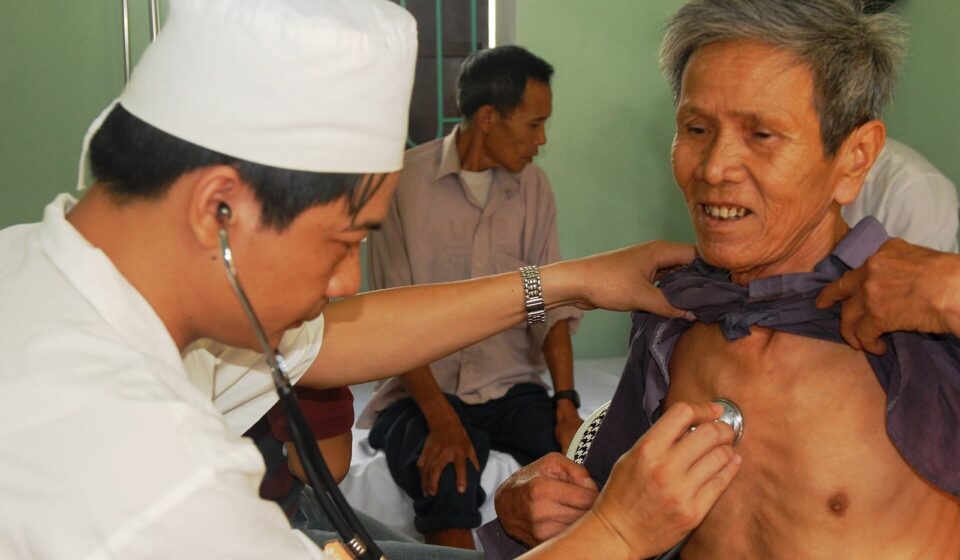

Hyperthyroidism (an overactive thyroid) often looks different in older adults. Instead of feeling jittery and hot, an older person may become tired, withdrawn, low in mood and lose weight with a poor appetite. The National Institute of Diabetes and Digestive and Kidney Diseases says it is sometimes mistaken for depression or dementia in older adults (NIDDK). The biggest danger is the heart: it can trigger atrial fibrillation (A-fib), which raises stroke risk. A simple TSH blood test finds it.
This guide explains the signs to watch for, why the heart and bones are at risk, the common causes after 60 and the treatment choices.
What hyperthyroidism is
The thyroid is a small, butterfly-shaped gland in the front of your neck. It makes hormones that set your body’s speed. In hyperthyroidism, it makes too much. Your heart, gut, muscles and brain all speed up.
Your brain’s pituitary gland notices the extra hormone and lowers TSH (thyroid-stimulating hormone). So a low TSH is the main blood test clue. Doctors then check free T4 and sometimes T3.
Why the signs are different after 60
| Feature | Younger adults | Often in older adults |
|---|---|---|
| Mood and energy | Nervous, restless | Tired, flat, depressed, withdrawn |
| Weight | Loss with big appetite | Loss with poor appetite |
| Heart | Fast pulse, pounding | Irregular beat (A-fib), heart failure, chest discomfort |
| Visible signs | Shaky hands, sweating, eye changes | Few, or only a hand tremor |
| Muscles | Mild weakness | Clear weakness, falls |
| Thinking | Racing thoughts | Confusion, slow thinking |
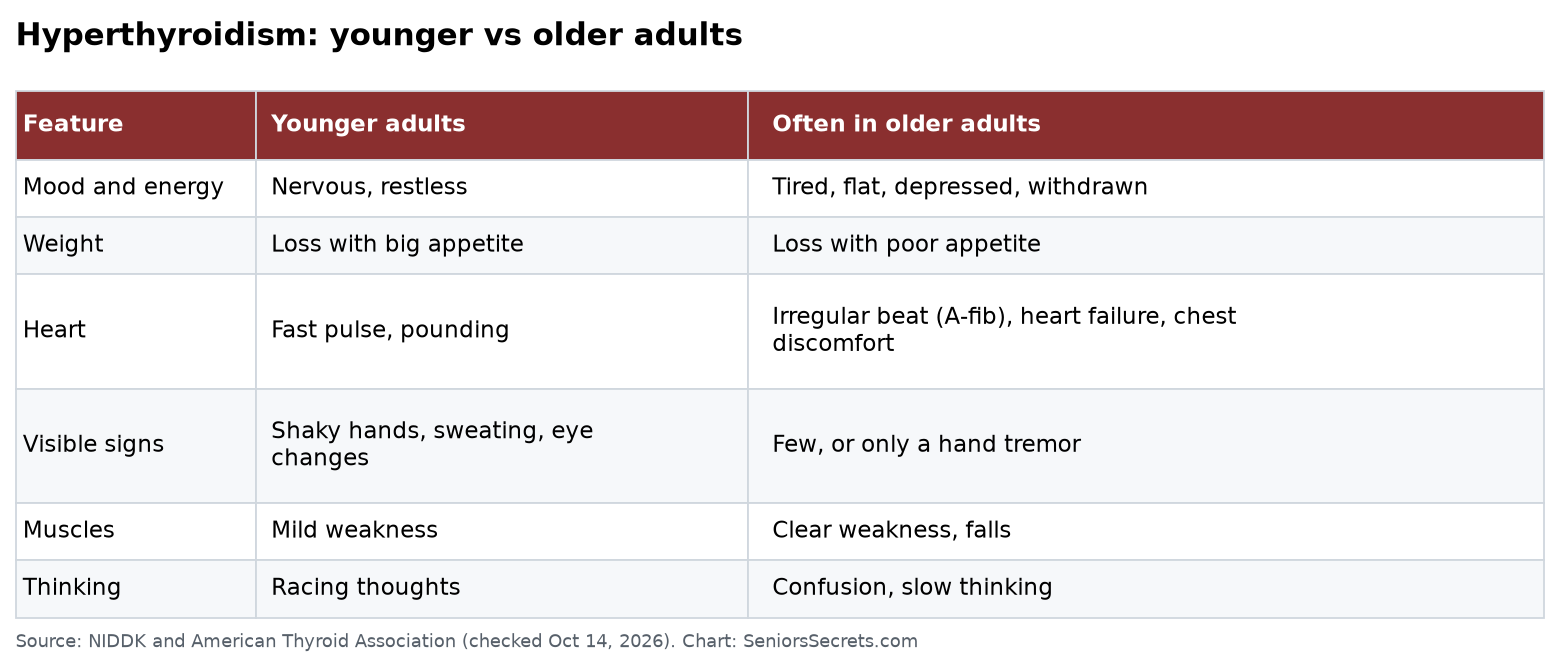
Doctors call the quiet version apathetic thyrotoxicosis. Because it looks like “just getting older,” it is often missed.
Ask for a TSH test if an older adult has:
- A new irregular heartbeat
- Weight loss without trying
- New depression or withdrawal
- New muscle weakness or falls
- Worsening heart failure or chest pain
The A-fib connection
Too much thyroid hormone irritates the heart’s electrical system. A well-known study in the New England Journal of Medicine (Sawin and colleagues, 1994) found that older adults with a low TSH were about three times more likely to develop A-fib over 10 years, even when their thyroid hormone levels were only slightly high.
A-fib matters because blood can pool in the heart and form clots. Those clots can cause a stroke. A-fib can also weaken the heart over time.
The good news: treating the thyroid often brings the heart back to a normal rhythm. Beta-blockers like propranolol or metoprolol can slow a racing pulse within hours while other treatment starts. Your doctor will also decide whether you need a blood thinner.
Bones and falls
Extra thyroid hormone speeds up bone loss. Over time, this raises the risk of osteoporosis and fractures, especially in women after menopause. Muscle weakness adds to fall risk.
If you have had hyperthyroidism, ask whether you need a bone density (DEXA) scan. Medicare Part B covers one every 24 months for people at risk.
Common causes in older adults
According to the American Thyroid Association, causes in older adults differ from those in younger people:
- Toxic multinodular goiter. An enlarged thyroid with several lumps that make extra hormone. This is more common in older adults.
- Toxic nodule. One overactive lump.
- Graves’ disease. An immune problem. This is the most common cause in younger people.
- Too much thyroid medicine. If you take levothyroxine for an underactive thyroid, a dose that is too high can cause the same effects. This is common and easy to fix.
- Medicines. Amiodarone, a heart rhythm drug, contains a lot of iodine and can trigger thyroid problems. Iodine dye used in some CT scans can too.
- Thyroiditis. Inflammation that leaks hormone for a while, then often settles.
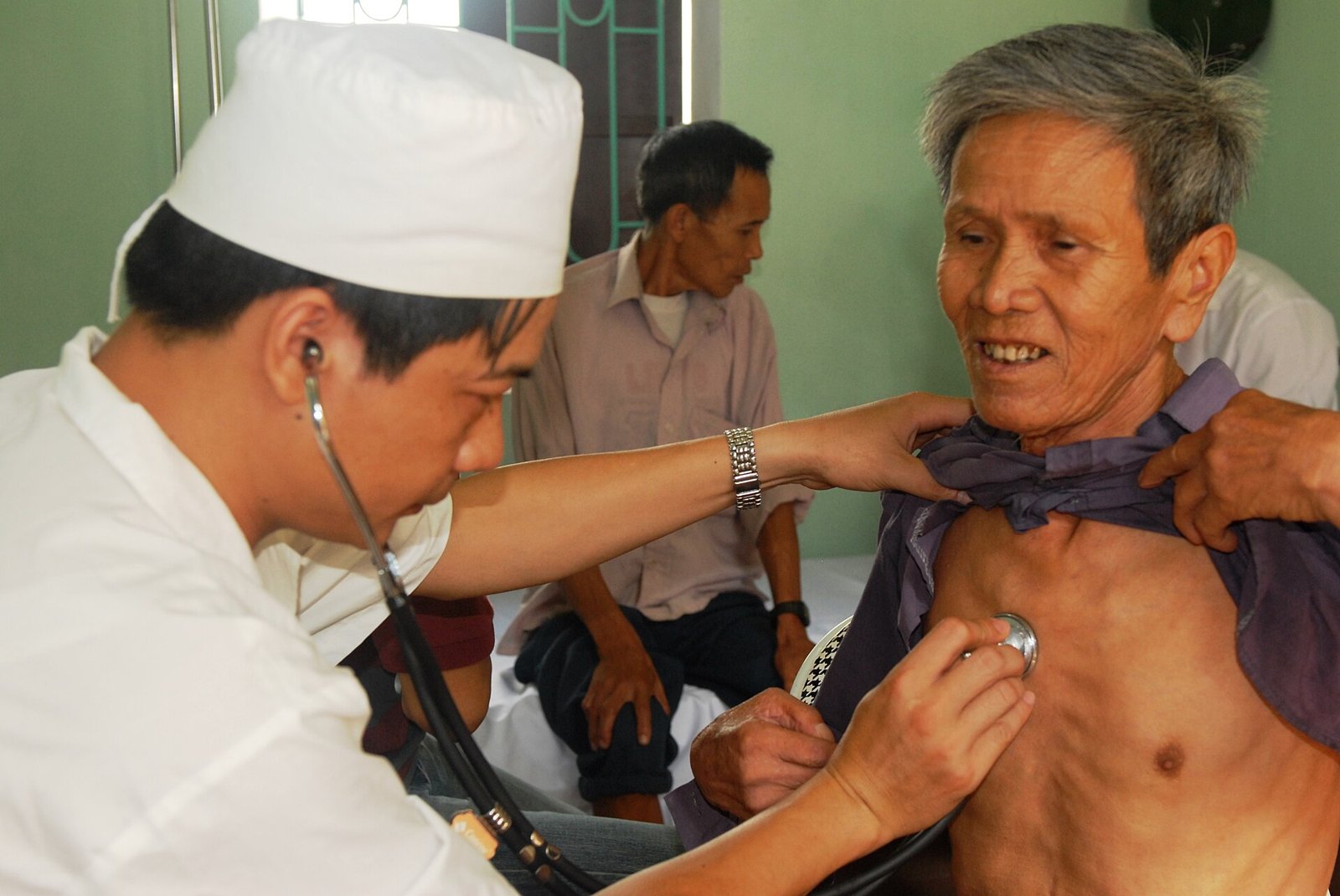
How it is diagnosed
- Blood tests: TSH, then free T4 and T3.
- Antibody tests to check for Graves’ disease.
- Thyroid uptake scan: a small dose of radioactive iodine shows how active the gland is and whether lumps are “hot.”
- Ultrasound of the neck if there are lumps.
- ECG to check heart rhythm.
Subclinical hyperthyroidism means TSH is low but T4 and T3 are normal. Many older adults have this. Doctors often treat it when TSH is very low (under 0.1) or when there is A-fib, bone loss or heart disease.
Treatment choices
| Treatment | How it works | Things to know for older adults |
|---|---|---|
| Beta-blockers | Slow the heart and ease tremor | Quick relief; does not fix the thyroid |
| Methimazole (pills) | Lowers hormone production | Needs blood tests; rare liver or blood side effects |
| Radioactive iodine | Shrinks the overactive tissue | Common choice after 60; often leads to an underactive thyroid needing daily pills |
| Surgery | Removes part or all of the gland | Used for large goiters pressing on the throat |
| Adjusting levothyroxine | Lowers the dose | Fixes over-treatment |
The right choice depends on the cause, your heart health and your wishes. Ask your doctor about the trade-offs. See NIDDK’s treatment page for more detail.
What Medicare covers
Medicare Part B covers doctor visits, thyroid blood tests your doctor orders, scans and radioactive iodine treatment when medically needed. In 2026, you pay the $283 Part B deductible and usually 20% coinsurance. Part D covers pills like methimazole and beta-blockers, with a $2,100 out-of-pocket cap for the year.
Living well after treatment
- Get TSH checked as your doctor advises, often every 6 to 12 weeks at first.
- If you take levothyroxine after treatment, take it at the same time each day on an empty stomach.
- Keep up strength training and calcium and vitamin D for bones.
- Report a racing or irregular heartbeat right away.
Common questions
What are the first signs of hyperthyroidism in seniors?
Often tiredness, weight loss, low mood, weakness or a new irregular heartbeat, rather than nervousness or sweating.
Can hyperthyroidism cause A-fib in older adults?
Yes. A low TSH raises the risk of atrial fibrillation, which raises stroke risk.
Can too much thyroid medicine cause hyperthyroidism?
Yes. A levothyroxine dose that is too high is a common cause in older adults. A blood test shows it.
What is the best treatment for hyperthyroidism after 65?
It depends on the cause. Radioactive iodine and methimazole are common. Beta-blockers help symptoms quickly.
Does Medicare cover thyroid tests?
Yes. Part B covers thyroid blood tests your doctor orders as medically needed.
Can hyperthyroidism be mistaken for dementia?
Yes. NIDDK notes it is sometimes mistaken for depression or dementia in older adults.
Written by Khasim Basha Shaik. I research senior health for readers and summarize official sources. I’m not a doctor or licensed health professional. Talk with your doctor about any symptoms or treatment. Last reviewed October 14, 2026.
Related guides