Flu Shot for Seniors 2026-27: Which Vaccine to Ask for After 65, When to Get It and What Medicare Pays

If you’re 65 or older, ask for one of three flu shots this season: Fluzone High-Dose, Flublok or Fluad. The CDC and its vaccine advisers recommend these over a regular flu shot for older adults, and they don’t rank one above the others. If your pharmacy or doctor has none of them, get a standard flu shot that day rather than waiting.
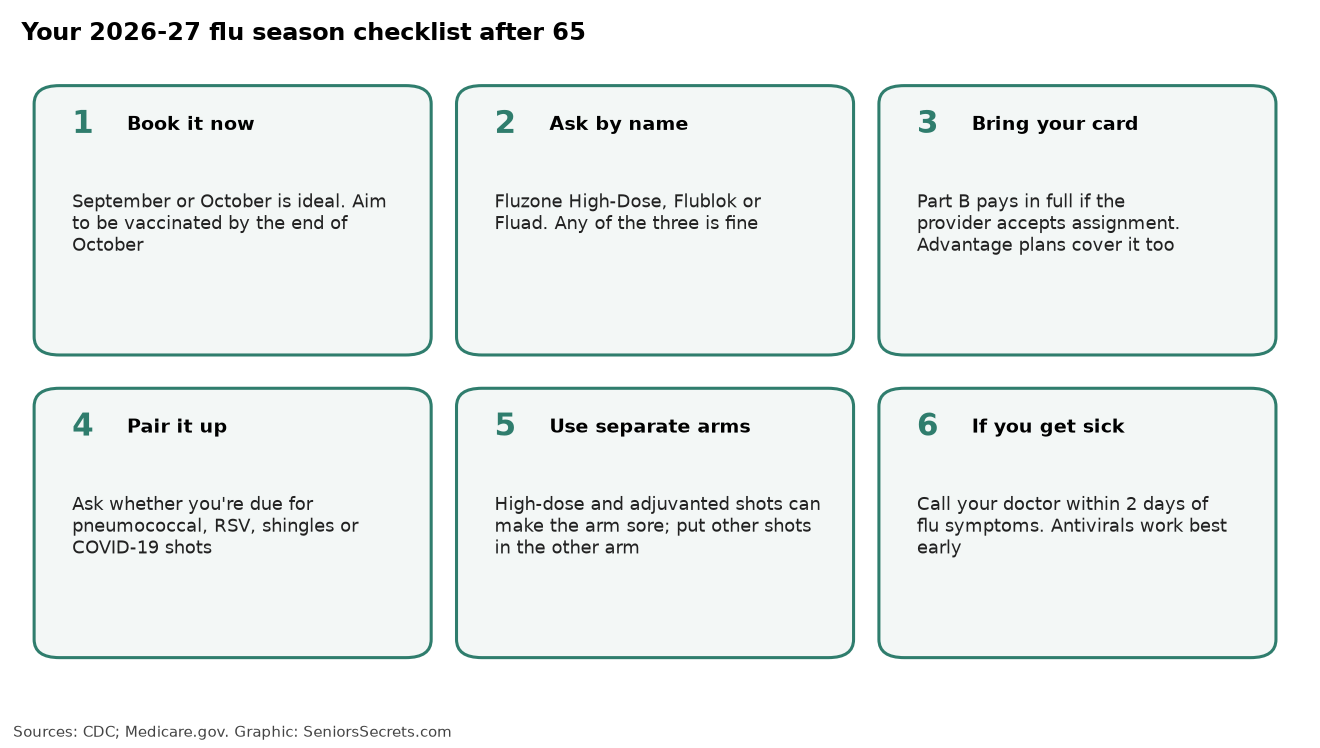
Get it in September or October, ideally by the end of October. Medicare Part B pays the full cost if the provider accepts Medicare.
That’s the short version. Below I explain why older adults need a stronger shot, how the three options differ, what’s new for 2026-27, and what to do if you catch the flu anyway.
Why the flu hits harder after 65
The immune system responds more slowly with age, so older adults both get sicker from flu and build less protection from a standard vaccine. According to the CDC’s page on flu and people 65 and older, people in this age group account for an estimated 70% to 85% of seasonal flu deaths and 50% to 70% of flu hospitalizations in recent years.
The danger isn’t only the flu itself. Flu can trigger pneumonia, worsen heart failure and COPD, push blood sugar out of control in diabetes, and leave older adults weaker for weeks after the infection clears.
The three flu shots preferred after 65
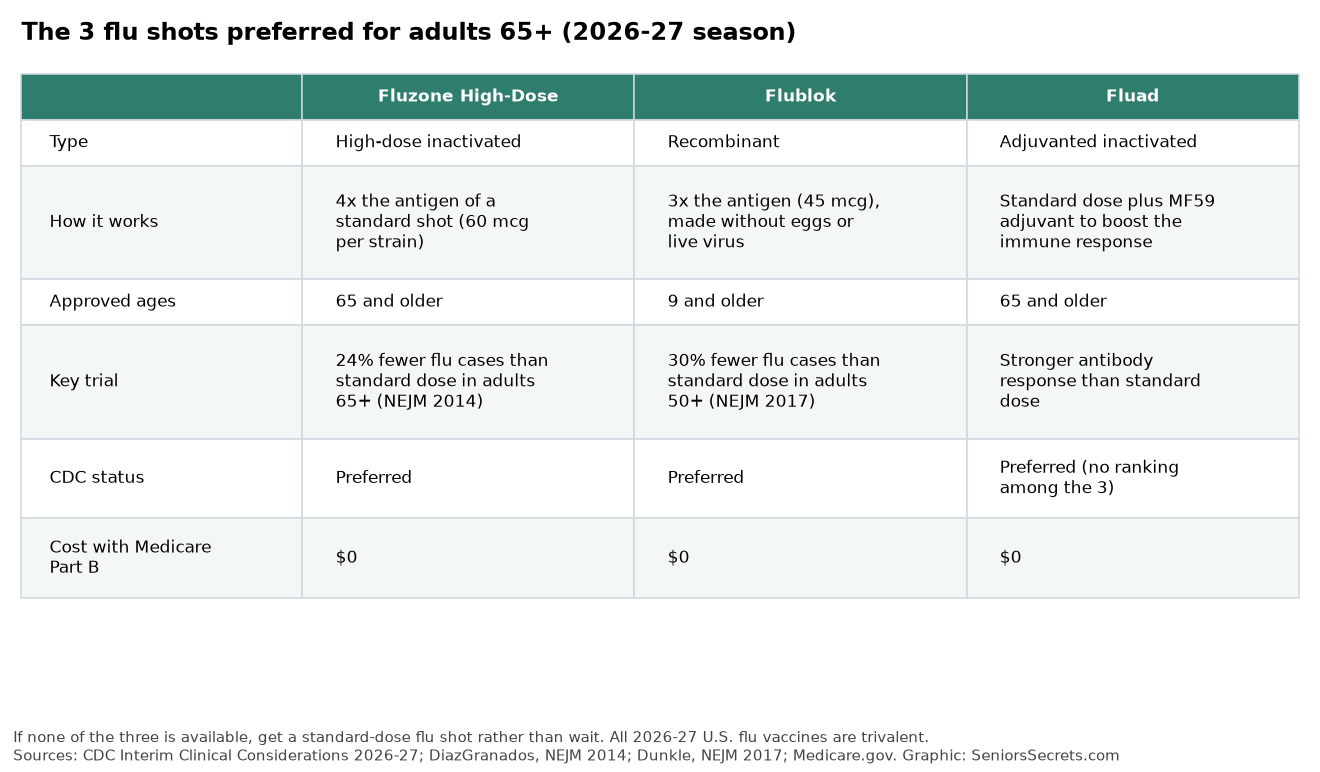
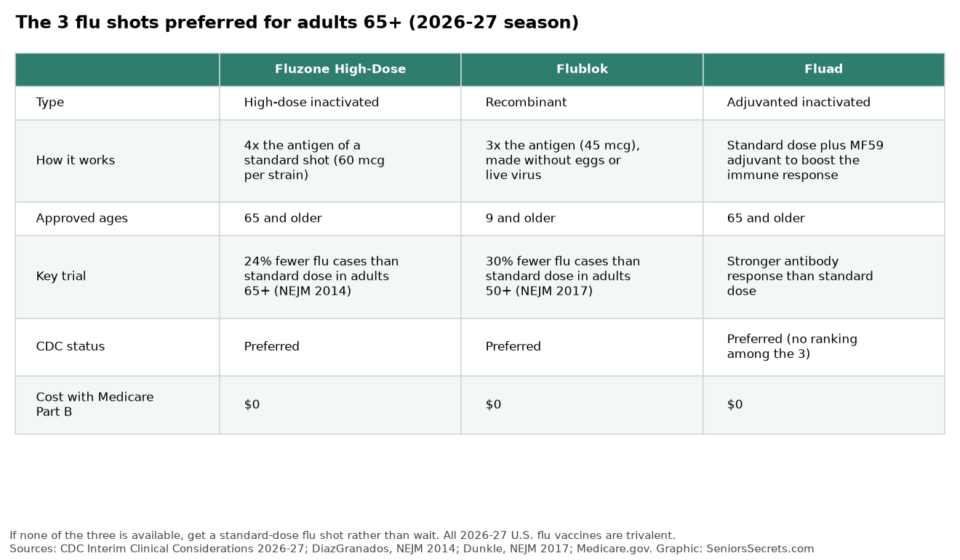
Fluzone High-Dose contains four times the antigen of a standard shot. In a large trial of more than 31,000 adults 65 and older, it prevented about 24% more flu cases than a standard-dose vaccine (DiazGranados, NEJM 2014).
Flublok is a recombinant vaccine made without eggs or flu virus, with three times the standard antigen. In a trial of adults 50 and older, people who got Flublok had about 30% fewer confirmed flu cases than those who got a standard vaccine (Dunkle, NEJM 2017).
Fluad uses a standard dose plus an adjuvant called MF59, an ingredient that makes the immune system respond more strongly. It’s approved only for people 65 and older.
Head-to-head comparisons between the three haven’t shown a clear winner, which is why the CDC treats them as equal choices. Pick whichever your pharmacy or doctor has in stock.
What’s new for the 2026-27 season
- All three strains were updated. In March 2026 the FDA selected new strains for every component of this season’s vaccine, including protection against the H3N2 “subclade K” virus that spread widely last winter, according to the CDC’s 2026-27 season page.
- All flu vaccines are trivalent. They protect against three strains: two influenza A and one influenza B. You may see older articles mention “quadrivalent” shots; those are no longer made for the U.S.
- Recommendations are unchanged. The CDC says the recommendations from the July 2025 immunization schedule remain in effect this season, including the preference for these three vaccines for people 65 and older.
- Supply looks adequate. Manufacturers expect to make up to 135 million doses, and 99% of them will be thimerosal-free.
When to get your flu shot
The CDC’s clinical guidance for this season says most people should be vaccinated in September or October. Adults 65 and older should generally avoid July and August, because protection fades over the months and the flu season often peaks between December and February.
If you miss October, it’s still worth getting the shot in November, December or later. Flu can circulate into spring. You need only one dose per season, and a second “booster” dose isn’t recommended.
It takes about two weeks after the shot for protection to build, so if you’re traveling for the holidays, plan accordingly.
What Medicare pays
Medicare Part B covers one flu shot each flu season, and you pay nothing if your doctor or pharmacy accepts assignment, meaning they accept Medicare’s approved amount as full payment. The Part B deductible doesn’t apply. Most chain and grocery-store pharmacies bill Medicare directly.
If you have a Medicare Advantage plan, the flu shot is also covered with no cost sharing, typically at an in-network pharmacy or doctor. Bring your plan card, not just your red-white-and-blue Medicare card.
For other preventive care that’s free with Medicare, see my list of free Medicare preventive screenings.
Side effects to expect
The stronger shots tend to cause more temporary arm soreness, redness and swelling than a standard flu shot. Some people feel tired, achy or slightly feverish for a day or two. These are signs the immune system is responding, not the flu. None of these vaccines contain live virus, so they can’t give you the flu.
The CDC suggests giving high-dose and adjuvanted flu shots in a different arm from other vaccines given the same day, to limit soreness in one spot.
Who should wait or talk to a doctor first
- A severe allergic reaction (such as anaphylaxis) to a previous flu shot or to any ingredient. Your doctor may suggest a different type of flu vaccine, given under supervision.
- Guillain-Barré syndrome within six weeks of a past flu shot. This is a precaution, not an automatic no. For many older adults, the risks of flu are greater.
- A moderate or severe illness, with or without fever. Wait until you feel better.
Egg allergy is no longer a reason to skip. The CDC says people with an egg allergy of any severity can get any flu vaccine appropriate for their age, with no extra precautions. Flublok is egg-free if you’d still prefer that.
Other shots to ask about at the same visit
Flu shots can be given at the same visit as other vaccines. While you’re there, ask if you’re due for:
- Pneumococcal vaccine. The CDC recommends it for adults 50 and older, and pneumonia is the most dangerous flu complication. See my pneumonia vaccine guide.
- RSV vaccine. A one-time shot for adults 75 and older and for younger older adults at higher risk. See my RSV vaccine guide.
- Shingles vaccine. Two doses of Shingrix, covered under Part D. See my Shingrix guide.
- COVID-19 vaccine. Ask your doctor or pharmacist about this season’s guidance for your age and health.

If you get the flu anyway
No flu vaccine is perfect, but vaccinated people who catch flu are less likely to end up in the hospital. If you develop flu symptoms such as sudden fever, body aches, cough or exhaustion, call your doctor right away. The CDC recommends prompt antiviral treatment for people 65 and older, and medicines like oseltamivir (Tamiflu) work best when started within two days of the first symptoms.
Go to the emergency room for trouble breathing, chest pain or pressure, new confusion, inability to keep fluids down, or symptoms that improve and then come back worse.
Everyday habits help too: wash your hands often, avoid people who are sick, and encourage family members and caregivers to get vaccinated. For more on staying healthy through winter, see how to boost immunity after 65.
FAQ
Which flu shot is best for seniors?
The CDC doesn’t pick one. Fluzone High-Dose, Flublok and Fluad are all preferred for people 65 and older. Get whichever is available.
Is the high-dose flu shot free with Medicare?
Yes. Medicare Part B covers one flu shot per season, including high-dose, recombinant and adjuvanted versions, at no cost if the provider accepts assignment.
When should seniors get the flu shot for 2026-27?
September or October, ideally by the end of October. Avoid July and August unless you won’t be able to get one later.
Can I get the flu shot and COVID or RSV vaccine at the same time?
Yes. The CDC says flu shots can be given with other vaccines at the same visit, in separate injection sites.
What if my pharmacy only has the regular flu shot?
Get it. A standard flu shot is much better than none, and waiting risks going unprotected when flu season starts.
This article is for general information and isn’t a substitute for advice from your doctor or pharmacist.
Related guides

Does Medicare Cover Mammograms? Screening, Diagnostic, and What You’ll Pay

Pneumonia Vaccine for Seniors: Which Shot You Need After 50, and What Medicare Pays