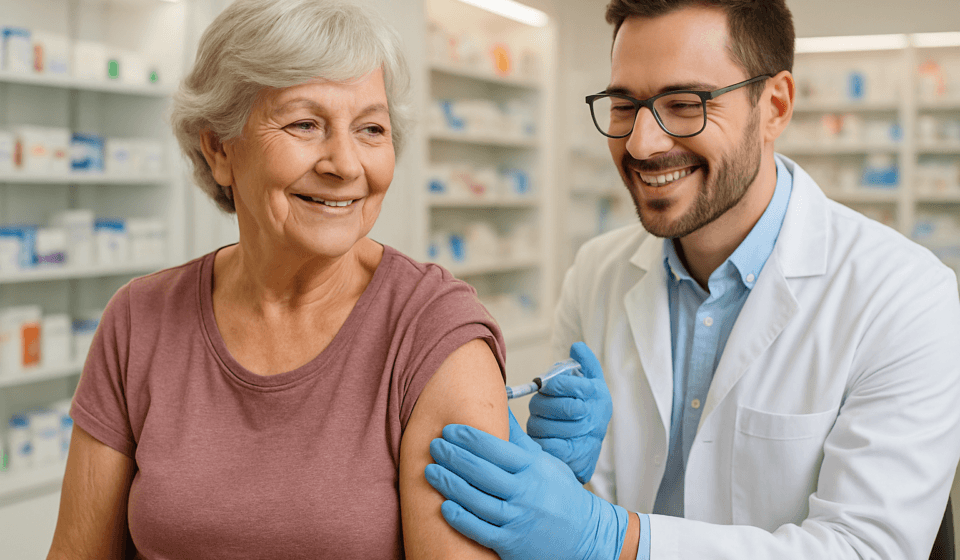

If you are 50 or older and have not received the shingles vaccine, this is the most important health action you can take in 2026. Shingles affects roughly 1 in 3 Americans during their lifetime, with the risk rising sharply after age 50. The nerve pain it causes — called post-herpetic neuralgia — can last for months or years and is described by patients as one of the most debilitating conditions they have ever experienced. The good news: the shingles vaccine Shingrix is 97% effective and covered at $0 on Medicare Part D. There is simply no reason to wait.
What Is Shingles and Why Seniors 2026 Are at Highest Risk
Shingles (herpes zoster) is caused by the varicella-zoster virus — the same virus that causes chickenpox. After you recover from chickenpox, the virus lies dormant in nerve tissue near your spinal cord and brain. Decades later, it can reactivate as shingles, causing a painful blistering rash that typically appears as a stripe of blisters wrapping around one side of the torso, face, or eye.
The shingles vaccine seniors 2026 story is urgent because of a single biological fact: immune function declines with age. This immune weakening — called immunosenescence — creates conditions where the dormant virus can reactivate. According to the CDC, your risk of shingles doubles between ages 50 and 60, and by age 80, half of all people will have experienced a shingles episode if unvaccinated.
The Real Danger: Post-Herpetic Neuralgia (PHN)
The rash from shingles typically heals within 3–5 weeks. The lasting damage is often the nerve pain that remains long after the rash is gone — a complication called post-herpetic neuralgia (PHN). PHN affects approximately 10–18% of people who develop shingles, but this rises to 30–50% in adults over 80.
PHN is not ordinary pain. Patients describe burning, stabbing, electric-shock sensations so severe that even a light breeze across the skin is unbearable. It causes depression, sleep disruption, significant weight loss, and functional decline. In a study from the Journal of Pain, PHN patients reported greater quality-of-life impairment than patients with congestive heart failure or diabetes. It can last months and, in some cases, becomes a permanent condition. Shingrix prevents both shingles and PHN with remarkable effectiveness.
Shingrix Effectiveness: What the 2026 Data Shows
| Age Group | Shingrix Efficacy Against Shingles | Shingrix Efficacy Against PHN |
|---|---|---|
| Ages 50–59 | 97% | 91% |
| Ages 60–69 | 97% | 89% |
| Ages 70–79 | 91% | 89% |
| Ages 80+ | 91% | 85% |
| Immunocompromised adults 18+ | 68–91% | Data ongoing |
The protection is long-lasting. Research tracking Shingrix patients 7 years after vaccination found that immunity remained high. In contrast, the older shingles vaccine (Zostavax) was only 51% effective and wore off substantially after 5 years. Zostavax is no longer available in the United States.
Who Should Get the Shingles Vaccine in 2026?
The CDC Advisory Committee on Immunization Practices (ACIP) recommends Shingrix for:
- All adults age 50 and older — regardless of prior chickenpox history or prior shingles episode
- Adults age 19 and older who are immunocompromised — including those on chemotherapy, immunosuppressive medications, or with HIV
- Anyone who previously received Zostavax — Shingrix is still recommended even if you had the older vaccine
- Anyone who has had shingles before — getting the vaccine after recovery reduces the risk of recurrence and future PHN
The Shingrix Schedule: Two Doses, 2–6 Months Apart
Shingrix is administered as a two-dose series. The second dose should be given 2–6 months after the first. For immunocompromised individuals, the two doses can be given as early as 1–2 months apart. Both doses are necessary to achieve full protection — one dose alone provides incomplete immunity.
Where to get it: Shingrix is available at your doctor’s office, most pharmacies (CVS, Walgreens, Rite Aid, Walmart, Costco), and health department clinics. You do not need a prescription in most states. In 2026, walk-in availability at major pharmacies is excellent — most offer same-day scheduling.
Does Medicare Cover the Shingles Vaccine in 2026? Yes — at $0
This is the most important coverage fact every senior needs to know: Medicare Part D covers Shingrix at $0 out-of-pocket cost for all beneficiaries. This is the result of the Inflation Reduction Act, which eliminated cost-sharing on all ACIP-recommended adult vaccines for Medicare Part D enrollees beginning in 2023.
| Coverage Type | Shingles Vaccine Coverage | Your Cost |
|---|---|---|
| Medicare Part D | Fully covered — all plans required | $0 |
| Medicare Advantage (with Part D) | Fully covered | $0 |
| Medicare Part B (Original Medicare only) | NOT covered (only Part D covers it) | Full cost if no Part D |
| Without any Medicare Part D | Not covered through Medicare | ~$200–250 per dose (without insurance) |
Critical note: If you have Original Medicare (Parts A and B) but have NOT enrolled in a Part D drug plan, you will not have Shingrix covered. This is one of the most compelling reasons for seniors without Part D to enroll during the next Open Enrollment Period (October 15–December 7 each year). One shingles course can cost $200–250 without coverage.
Side Effects of Shingrix: What to Expect
Shingrix commonly causes temporary side effects that indicate your immune system is responding vigorously:
- Sore arm at injection site — occurs in about 78% of recipients; typically resolves in 2–3 days
- Fatigue, headache, shivering — occurs in about 17% of recipients
- Low-grade fever, muscle aches — occurs in about 10% of recipients
- Stomach upset — mild and self-limiting
These are signs of a healthy immune response, not a sign that something is wrong. Side effects after the second dose tend to be stronger than after the first. Plan to schedule your second dose on a day when you can rest afterward if needed. Serious allergic reactions (anaphylaxis) are very rare, occurring in fewer than 1–2 per million doses.
Special Considerations: Immunocompromised Seniors
For seniors on immunosuppressive medications (including methotrexate, TNF inhibitors, prednisone above 20 mg/day, or JAK inhibitors), or receiving chemotherapy, the timing of Shingrix requires coordination with your specialist. In general, Shingrix is safe and recommended for most immunocompromised adults — but timing around treatment cycles can optimize immune response. Discuss the optimal timing with your oncologist, rheumatologist, or primary care physician.
Unlike live vaccines (such as the older Zostavax), Shingrix is a non-live recombinant vaccine, which means it is safe for people with compromised immune systems.
5 Steps to Get Vaccinated Against Shingles This Week
- Check your Medicare Part D or Medicare Advantage coverage: Call the number on your insurance card and confirm Shingrix is covered at $0 under your plan.
- Call your pharmacy: CVS, Walgreens, and most grocery store pharmacies carry Shingrix. Confirm it’s in stock before going (supply can occasionally be limited).
- Bring your Medicare card: The pharmacist will bill your Part D plan directly.
- Schedule the second dose immediately: Book your 2-month follow-up appointment before you leave after the first dose.
- Rest after dose 2: Block off 1–2 days in case of side effects. Most people feel fine, but some experience a 24–48 hour flu-like response.
Shingles can strike any unvaccinated senior, and the pain it causes can be life-altering. With a vaccine that is 97% effective, free on Medicare, and available at your local pharmacy with no appointment required, there is no good reason to remain unprotected in 2026.
Sources
- CDC — Shingles Vaccination: What You Need to Know
- NCOA — Does Medicare Cover the Shingles Vaccine?
- Shingrix.com — Cost & Coverage Information
Related Articles You May Find Helpful
- Flu Vaccine for Seniors 2026: Which Shot Is Most Effective?
- Pneumonia Vaccine for Seniors 2026: Prevnar 20 & Free Medicare Coverage
- Medicare Annual Wellness Visit 2026: Free Benefits Most Seniors Miss
- How to Boost Immunity After 65 in 2026: 10 Proven Strategies
- Medicare Part D’s $2,100 Drug Cap in 2026: How Seniors Save Thousands