
Seated marching for seniors may be the most underrated exercise in healthy aging. From a sturdy chair—no special equipment, no risk of falling—you can build leg strength, boost circulation, and train the very balance reactions that prevent falls. As a senior health writer, I love recommending it because almost anyone can do it: people recovering from illness, those with limited mobility, and even seasoned exercisers using it as a warm-up. Research on progressive marching shows it improves lower-limb strength and lowers fall risk, and combining strength with balance work cuts fall risk by nearly 30% in older adults. Let me show you how to do it right.
Table of Contents
- What Is Seated Marching?
- 5 Benefits for Seniors
- How to Do It Correctly
- A Simple Weekly Plan
- How to Progress
- Safety Tips
- Frequently Asked Questions
What Is Seated Marching?
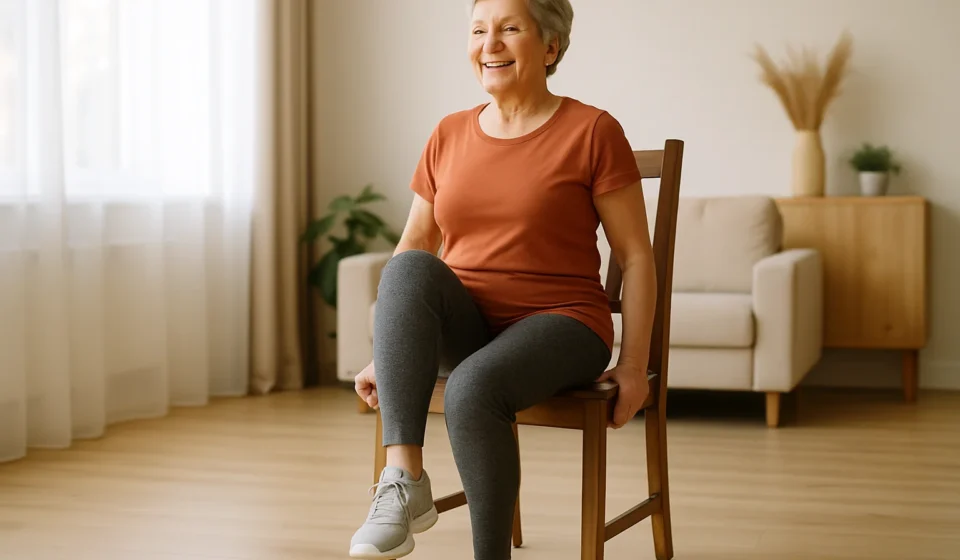
Seated marching for seniors is exactly what it sounds like: marching your legs while sitting in a stable chair, lifting one knee at a time as if walking in place. Because your body weight is supported, it removes the fear of falling that keeps many older adults from exercising—while still activating the hip flexors, thighs, and core. It’s the perfect entry point for anyone easing back into movement, and a smart warm-up before standing exercises.
5 Benefits of Seated Marching
| Benefit | Why it matters for seniors |
|---|---|
| Leg strength | Stronger hip flexors and thighs make walking and standing easier |
| Better circulation | Leg-muscle pumping moves blood upward, easing swelling and stiffness |
| Fall prevention | Trains the rhythmic stepping pattern used to recover from a stumble |
| Heart health | Raises heart rate gently for safe, low-impact cardio |
| Confidence | A no-fall starting point that rebuilds trust in your body |
That circulation benefit is especially valuable for seniors who sit for long stretches. Gentle, repeated contractions act like a second pump, helping return blood from the legs and reducing the heavy, stiff feeling that comes with inactivity.
How to Do Seated Marching Correctly
- Sit tall in a sturdy, armless chair with both feet flat on the floor, hips back.
- Engage your core and keep your back straight—don’t slump or lean back.
- Lift one knee toward the ceiling as high as is comfortable, then lower with control.
- Alternate legs in a smooth marching rhythm.
- Breathe steadily—never hold your breath. Add a gentle arm swing once you feel stable.
Start with 10–15 lifts per leg. Quality beats speed: a controlled lift and lower does far more than fast, sloppy reps.
A Simple Weekly Plan
Consistency is what produces results. Try this gentle starting structure and build from there.
| Level | Sets × reps (per leg) | Frequency |
|---|---|---|
| Beginner | 2 × 10 | 3 days/week |
| Intermediate | 3 × 15 | 4–5 days/week |
| Advanced | 3 × 20 + arm swing | most days |
Seated marching pairs beautifully with other gentle routines. Alternate it with our chair yoga for seniors on rest days, and add calf raises once you’re ready for standing work.
How to Progress Safely
As marching becomes easy, increase the challenge gradually: lift the knees higher, add a light ankle weight, hold the top of each lift for a second, or extend the duration. The natural next step is to graduate to standing movements that demand more balance, like the moves in our balance exercises for seniors over 70. Progress is the goal—but only after the basics feel secure.
How Seated Marching Fits Into a Bigger Routine
Seated marching is excellent, but it works best as part of a varied weekly routine rather than your only exercise. Health guidelines for older adults recommend a mix of aerobic activity, strength training, and balance work each week. Seated marching contributes to all three in a gentle way, which makes it a perfect anchor for beginners—but as your strength and confidence grow, your body benefits from new challenges. Think of it as the foundation you build the rest of your fitness on.
A balanced week might pair seated marching with a few minutes of upper-body movement using light weights or resistance bands, some standing balance practice while holding a counter, and short walks as tolerated. Variety keeps more muscle groups engaged, prevents boredom, and addresses the different systems—heart, muscle, and balance—that all decline with age if unused. The beauty of starting seated is that it makes adding these other pieces feel achievable instead of overwhelming. Seniors who begin with a single, safe movement are far more likely to stick with exercise long term, and consistency is ultimately what protects independence.
If you care for an older loved one, seated marching is also one of the easiest activities to do together. You can sit side by side, set a gentle pace, and turn it into a daily ritual paired with a favorite show or a cup of tea. For seniors recovering from a hospital stay, surgery, or a bout of illness that left them deconditioned, it offers a safe first step back toward strength—often one a physical therapist will endorse. And because there’s no equipment to buy and no gym to travel to, the barriers that derail so many good exercise intentions simply don’t exist. That accessibility, more than any single physical benefit, is why seated marching earns a permanent place in senior fitness.
Why Seated Exercise Works When Standing Feels Scary
Fear of falling is one of the biggest barriers to senior fitness, and it’s a self-reinforcing trap: the less you move, the weaker and less steady you become, which makes falling more likely and the fear more justified. Seated marching breaks that cycle. By removing the fall risk entirely, it lets you rebuild strength and confidence in a safe position first. Research on initiating exercise in older adults specifically recommends starting with low-impact, seated movements so participants can regain trust in their bodies before progressing to standing work. In other words, the chair isn’t a limitation—it’s the on-ramp.
Common Mistakes to Avoid
- Slumping back in the chair. Sit tall with your core engaged; a slouched posture removes most of the benefit and strains your back.
- Rushing the reps. Fast, swinging knee lifts use momentum instead of muscle. Slow and controlled builds real strength.
- Holding your breath. Breathe steadily throughout—holding your breath can spike blood pressure.
- Only lifting a few inches. Bring the knee as high as is comfortable to fully engage the hip flexors.
- Skipping days. Consistency matters more than intensity; short sessions most days beat one long session a week.
Avoiding these mistakes turns a simple movement into a genuinely effective workout. Many seniors keep seated marching in their routine for years precisely because it’s easy to do correctly and easy to fit into daily life—during TV commercials, while waiting for the kettle, or as a warm-up before a walk.
Safety Tips
- Use a stable chair on a non-slip surface; avoid chairs with wheels.
- Wear supportive shoes, not socks alone.
- Stop if you feel chest pain, dizziness, or sharp joint pain.
- Check with your doctor first if you have heart disease, severe arthritis, recent surgery, or a balance disorder.
Seated marching is a cornerstone of any good fall prevention plan—safe enough to start today, valuable enough to keep for life.
Frequently Asked Questions
Is seated marching good exercise for seniors?
Yes. Seated marching builds leg strength, improves circulation, and trains balance reactions while keeping you safely supported. Research shows progressive marching improves lower-limb strength and reduces fall risk, making it ideal for beginners and those with limited mobility.
How long should seniors do seated marching?
Begin with 2 sets of 10 lifts per leg, three days a week, and build toward 3 sets of 15–20 most days. Even a few minutes several times a day adds up, especially if you sit for long periods.
Can seated marching help with leg swelling?
It can help. The rhythmic muscle contractions act as a pump that moves blood and fluid out of the legs, which may ease mild swelling and stiffness. Persistent or one-sided swelling should be evaluated by a doctor.
Who should avoid seated marching?
It’s very safe, but anyone with significant heart disease, severe hip or knee arthritis, recent surgery, or acute leg pain and swelling should check with a doctor before starting. Stop immediately if you feel chest pain or dizziness.
Can seated marching replace walking?
It complements walking rather than fully replacing it. Walking provides weight-bearing benefits for bone density and a different cardiovascular challenge that seated work can’t fully match. But on days when walking isn’t possible—bad weather, fatigue, illness, or limited mobility—seated marching keeps your legs active and your circulation moving. Think of it as a reliable backup that ensures you never miss a day, and a stepping stone toward walking for those rebuilding their strength.
How quickly will I see results from seated marching?
Many seniors notice easier movement and less stiffness within two to three weeks of consistent practice, while measurable strength and balance gains typically build over six to twelve weeks. As with any exercise, regularity matters more than intensity—short sessions most days of the week produce far better results than occasional long ones.
Related Articles You May Find Helpful
- Senior Fitness & Exercise Guide 2026
- Balance Exercises for Seniors Over 70
- Chair Yoga for Seniors 2026
- Calf Raises for Seniors 2026
- Fall Prevention for Seniors 2026
Sources
- NCBI/PMC — Effect of Progressive Step Marching Exercise on Balance Ability in the Elderly (RCT)
- Johns Hopkins Medicine — Fall Prevention: Balance and Strength Exercises for Older Adults
- CDC — STEADI: Older Adult Fall Prevention
This article is for educational purposes only and is not a substitute for professional medical advice. Please review our Medical Disclaimer and consult your physician before starting a new exercise program.
Related guides