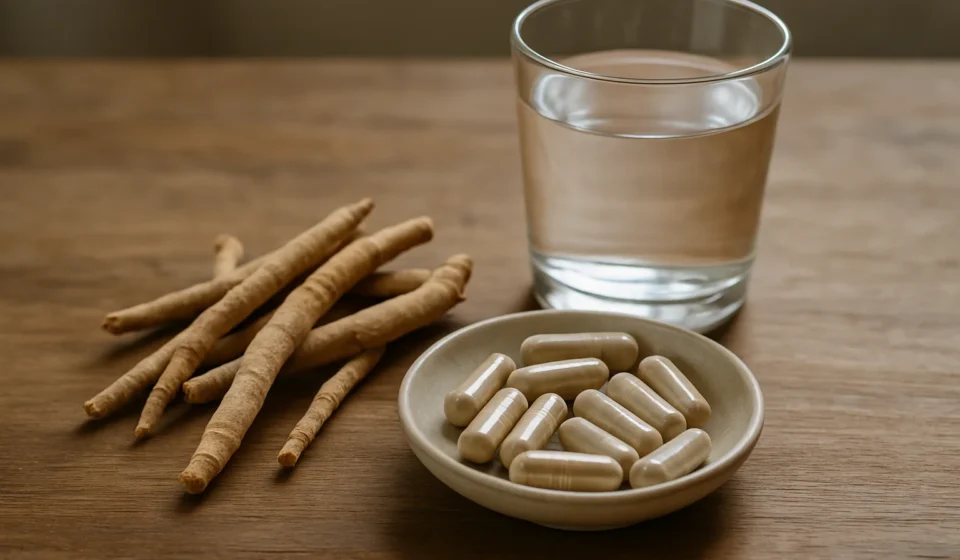

Ashwagandha for seniors has become one of the most talked-about herbal supplements, promoted for better sleep, less stress, sharper memory, and even stronger muscles. Some of that buzz is backed by real clinical trials, and some of it outruns the evidence. More importantly, this adaptogenic herb interacts with several conditions and medications common in older adults, so it is not a “natural, therefore harmless” choice. As a senior health writer, let me give you the balanced picture: what the research supports, the right dose, and the specific people who should avoid it.
Table of Contents
- What ashwagandha is
- What the evidence supports
- Dose, timing, and quality
- Who should avoid it
- How it fits with other sleep and stress aids
- Frequently asked questions
What Ashwagandha Is
Ashwagandha (Withania somnifera) is a root extract used for centuries in Ayurvedic medicine and classified today as an “adaptogen,” meaning it is thought to help the body manage stress. Most modern research uses a standardized root extract, often around 600 mg per day. For ashwagandha for seniors, the appeal is obvious: it targets sleep, stress, mood, and strength, the very areas that decline with age. But the quality of evidence varies a lot by claim, so it helps to separate the well-studied benefits from the hopeful ones.
What the Evidence Supports
Several randomized trials and reviews give us a reasonable read on where ashwagandha helps most. The strongest signals are for stress and sleep, with promising but earlier-stage evidence for cognition and strength.
| Claim | Strength of evidence | What trials suggest |
|---|---|---|
| Sleep quality | Moderate | Small but significant improvement, strongest at ~600 mg/day for 8+ weeks |
| Stress and anxiety | Moderate | Reduced perceived stress and lower cortisol in several short trials |
| Cognition / mild cognitive impairment | Early | Possible gains in memory and processing speed; small studies, needs confirmation |
| Muscle strength and fitness | Early | Some gains in strength and cardiorespiratory fitness when paired with exercise |
The honest summary: ashwagandha is most credible as a sleep and stress aid, where benefits, while modest, show up consistently. The memory, mood, and muscle findings are encouraging but rest on smaller studies. Evidence specifically in older adults is still limited, so individual results vary. It is a possible helper, not a cure, and it works best alongside the basics, good sleep habits, exercise, and a nutritious diet.
Dose, Timing, and Quality
Most positive trials used a standardized root extract of about 300 to 600 mg per day, taken for at least 8 weeks before judging results. For sleep, an evening dose is common; for daytime stress, it may be split. A few practical rules protect you.
- Start low and go slow. Begin at the lower end and give it weeks, not days, to assess.
- Choose verified products. Supplements are loosely regulated, so look for third-party seals such as USP, NSF, or ConsumerLab to confirm the label.
- More is not better. The safety of high doses in healthy adults is not well established, and higher amounts raise the risk of side effects like stomach upset, drowsiness, and rare liver injury.
- Tell your doctor. Always add it to your medication list so interactions can be checked.
Who Should Avoid It
This is the part the marketing skips, and it matters most for seniors who often take multiple medications. Avoid ashwagandha, or use it only under medical guidance, if any of the following apply.
- Thyroid disease. Ashwagandha can raise thyroid hormone levels and may interfere with thyroid medication.
- Autoimmune conditions (such as rheumatoid arthritis or lupus), because it may stimulate immune activity.
- Hormone-sensitive cancers, where any hormone-active supplement warrants caution.
- Liver disease, given rare reports of ashwagandha-linked liver injury.
- Low blood pressure or diabetes, because it can add to the effect of blood pressure and blood sugar medications.
- Sedative use or upcoming surgery. It can intensify sedatives; stop it well before any scheduled operation and tell your anesthesiologist.
If your main goal is calmer mood and better sleep, also rule out treatable causes first. Persistent low mood deserves real evaluation, as our guide on depression in seniors explains, rather than self-treating with a supplement.
How It Fits With Other Sleep and Stress Aids
Ashwagandha is only one option, and for many seniors it is not the first thing to try. Non-drug habits remain the foundation of better sleep and lower stress, and they carry no interaction risk.
- Sleep hygiene first. A consistent bedtime, a dark cool room, limiting caffeine and afternoon naps, and getting morning light often improve sleep more reliably than any supplement.
- Movement and connection. Daily activity and social contact lower stress hormones and support mood, with broad health benefits beyond sleep.
- Magnesium and other nutrients. Correcting a genuine deficiency can help, though more is not better; our guide on magnesium for seniors covers the details.
- Caution with sedatives. Older adults are especially sensitive to prescription sleep drugs and over-the-counter antihistamine sleep aids, which raise fall and confusion risk; ashwagandha can add to that sedation, so combining them is unwise.
The sensible sequence is to build the habits first, address any nutrient gaps, and only then consider a verified ashwagandha product as an add-on, with your doctor’s knowledge.
Frequently Asked Questions
Is ashwagandha safe for older adults?
At conventional doses it is generally well tolerated, but evidence in seniors is limited and it interacts with thyroid, blood pressure, blood sugar, sedative, and immune-suppressing medications. Anyone with thyroid disease, autoimmune conditions, hormone-sensitive cancer, or liver disease should avoid it unless a doctor approves.
How long before ashwagandha works?
Most trials measured benefits after about 8 weeks of daily use. It is not a fast-acting remedy, so give it at least that long at a steady dose before deciding whether it helps.
Can ashwagandha help with memory?
Early studies suggest possible improvements in memory and processing speed, particularly in people with mild cognitive impairment, but the research is small and not yet conclusive. It should not replace medical evaluation of memory concerns.
Does it interact with blood pressure or thyroid medicine?
Yes. Ashwagandha can lower blood pressure and raise thyroid hormone levels, so combining it with blood pressure or thyroid medication can push those effects too far. Always review it with your prescriber first.
What is the best time of day to take ashwagandha?
It depends on your goal. Many people take it in the evening when using it for sleep, while those targeting daytime stress may split the dose or take it earlier in the day. Taking it with food can reduce the chance of stomach upset, which is one of the more common mild side effects. Whatever the timing, stay consistent and give it several weeks at a steady dose before deciding whether it is genuinely helping you.
Related Articles You May Find Helpful
- Senior Nutrition Guide 2026
- Magnesium for Seniors 2026
- Vitamin K2 for Seniors 2026
- Ginger for Seniors 2026: Benefits & Cautions
- Depression in Seniors 2026: Warning Signs & Treatment
This article is for general education and is not medical advice. Please review our Medical Disclaimer and talk with your doctor before starting any supplement.
Sources
- NIH Office of Dietary Supplements — Ashwagandha health professional fact sheet
- Peer-reviewed clinical trials and reviews (2024–2026) on ashwagandha for sleep, stress, cognition, and strength
- FDA / NIH LiverTox — Safety considerations and supplement quality