
If the word “exercise” makes you picture a gym you’ll never join, here is better news: your backyard or a community plot counts. Gardening for seniors is genuine, full-body physical activity—it builds strength, balance, and flexibility, supports the heart, and lifts mood while lowering the risk of falls and loneliness. Thirty minutes of moderate digging, planting, and weeding delivers many of the benefits people chase with structured workouts, plus tomatoes. As a senior health writer, let me show you how to turn the garden into a safe, effective 2026 fitness routine.
Table of Contents
- Why Gardening Counts as Exercise
- The Whole-Body Benefits
- What Gardening Tasks Do for You
- Building a Safe Garden Workout
- Protecting Joints, Skin & Back
- Frequently Asked Questions
Why Gardening Counts as Exercise
Public-health guidelines ask older adults to aim for about 150 minutes of moderate activity a week, plus strength and balance work. Moderate-intensity gardening checks every one of those boxes at once. Digging and turning soil is resistance training. Carrying a watering can or bag of mulch is loaded strength work. Reaching, kneeling, and standing back up trains balance and mobility, and steady raking or hoeing nudges your heart rate into the aerobic zone—all without it feeling like a workout.
That “doesn’t feel like exercise” quality is exactly why gardening works so well for adherence. Research consistently finds people stick with enjoyable, purposeful movement far longer than with repetitive gym routines, and consistency is what actually protects aging muscle and bone.
There is also a metabolic bonus that surprises people: an hour of mixed garden work can burn roughly as many calories as a brisk walk, while gently working grip strength—a measure researchers link to overall vitality and longevity in older adults. In other words, the garden quietly trains the very things geriatricians track when they assess how well someone is aging.
The Whole-Body Benefits
The evidence base for gardening in later life is broader than most people expect, spanning the body and the mind.
Strength, balance, and fewer falls
The bending, reaching, and squatting in gardening build lower-body strength and improve balance, and stronger, steadier legs translate directly into a lower risk of falls—the leading cause of injury in older adults. It also keeps hands and wrists nimble, which matters for everyday tasks like opening jars and buttoning shirts.
Heart, bones, and vitamin D
Regular moderate gardening has cardiovascular benefits and is associated with reduced risk of heart attack and stroke. Weight-bearing movement supports bone density, and time outdoors gives you sunlight-driven vitamin D, important for bones and immunity—just balance sun exposure with skin protection.
Mood, brain, and connection
Gardening lowers stress and is linked to better cognition and quality of life, and 2025 community-gardening research reported up to a 25% drop in feelings of loneliness among participating seniors within months. Given that loneliness carries health risks comparable to smoking, a shared plot is medicine as much as it is a hobby.
What Gardening Tasks Do for You
| Task | Intensity | Main fitness payoff |
|---|---|---|
| Digging / turning soil | Moderate–vigorous | Strength, cardio |
| Raking / hoeing | Moderate | Cardio, core, arms |
| Weeding / planting | Light–moderate | Balance, flexibility, hands |
| Carrying water / mulch | Moderate | Loaded strength, grip |
| Pruning / deadheading | Light | Fine motor, gentle reach |
Mixing tasks within a session gives you a balanced “workout” without overloading any single muscle group—much like the variety we recommend in our senior fitness and exercise guide.
Building a Safe Garden Workout
Treat gardening like any exercise session. Warm up with a few minutes of easy walking and gentle arm and back circles. Start with 10–15 minutes if you are new to it and build toward 30 minutes most days. Alternate heavier tasks (digging, carrying) with lighter ones (planting, pruning) so you work and recover within the same session, and change position every 15 minutes to avoid stiffening up.
Hydrate before you feel thirsty, garden in the cooler morning or evening hours in summer, and stop if you feel chest pressure, dizziness, or unusual breathlessness. If you have heart disease, recent surgery, or balance problems, clear a new routine with your doctor first—and consider pairing garden days with the kind of fall-prevention strategies that keep you steady on uneven ground.
Protecting Joints, Skin & Back
- Save your back: bend at the hips and knees, not the waist; lift loads close to your body; use long-handled tools so you stand straighter.
- Spare your knees: a kneeling pad or a garden kneeler-seat with handles makes getting up far safer.
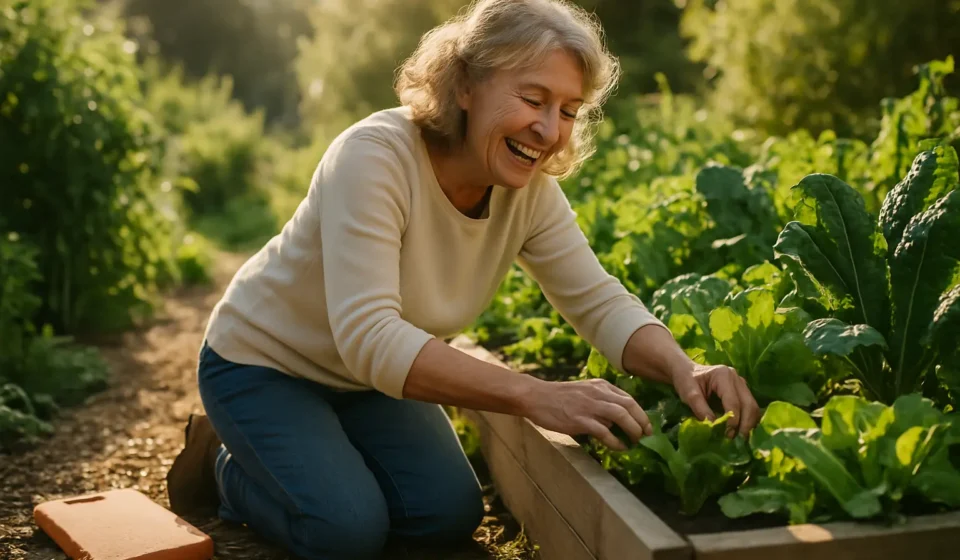
- Go raised: raised beds, vertical planters, and container gardens bring the soil up to you and cut deep bending.
- Ease arthritis: ergonomic, padded-grip tools reduce strain on hands and wrists.
- Protect skin: wear gloves, a hat, sunscreen, and watch for ticks; clean any cuts promptly, which matters more if you have diabetes.
These small adaptations are what let people keep gardening into their 80s and 90s rather than giving it up after one sore weekend.
Easy Wins: Where New Senior Gardeners Should Start
Success early on is what keeps you coming back, so begin with forgiving, fast-rewarding plants. Herbs like mint, basil, and chives thrive in containers on a porch and give you something to snip within weeks. Leafy greens such as lettuce and spinach grow quickly in cool weather, and cherry tomatoes, peppers, and bush beans are productive and hard to kill. Marigolds and zinnias add color, attract pollinators, and ask very little in return.
Start small—one or two containers or a single raised bed—so watering and weeding stay manageable and the activity feels like a pleasure rather than a chore. A modest plot you tend consistently delivers far more health benefit than an ambitious garden that leaves you sore and discouraged. As your strength and confidence grow, so can the garden, and with it the steady, year-round movement that keeps older bodies capable.
Frequently Asked Questions
Is gardening enough exercise on its own?
For many seniors, regular moderate gardening can supply a large share of the recommended 150 weekly minutes of activity plus strength and balance work. To round it out, add a couple of short walks and a few minutes of dedicated balance practice each week.
I have arthritis—can I still garden?
Usually yes, and gentle movement often helps stiff joints. Use ergonomic padded-grip tools, raised beds to limit bending, and shorter sessions with breaks. Garden when your joints feel loosest, often later in the morning, and stop before pain flares.
How do I garden if I can’t kneel or bend easily?
Raised beds, waist-high container gardens, vertical planters, and a rolling garden stool let you tend plants from a standing or seated position. Long-handled, lightweight tools extend your reach so you keep the benefits without the deep squats.
Does community gardening really help with loneliness?
Yes. Shared garden programs combine purposeful activity with regular social contact, and 2025 research reported meaningful drops in loneliness among senior participants—an important benefit given how strongly isolation affects older adults’ health.
Related Articles You May Find Helpful
- Senior Fitness & Exercise Guide 2026
- Fall Prevention for Seniors 2026
- How Many Steps Should Seniors Walk Daily?
- Nordic Walking for Seniors 2026
- How Loneliness Is as Dangerous as Smoking
Sources
- CDC — Physical Activity for Older Adults (gardening as moderate activity)
- National Institute on Aging (NIH) — Exercise and physical activity benefits
- Journal/community-gardening research (2025) — gardening, wellness, and loneliness in seniors
This article is educational and not a substitute for medical advice. Check with your doctor before starting a new activity, especially with heart, balance, or joint conditions. See our Medical Disclaimer.