Does Medicare Cover Podiatry and Foot Care? What Part B Pays, the Routine-Care Exceptions, and the Diabetes Rules

Yes, Medicare Part B covers podiatry when the care is medically necessary, such as treatment for bunions, hammer toes, heel spurs, injuries, infections or ulcers. After the 2026 Part B deductible of $283, you generally pay 20% of the Medicare-approved amount. What Medicare usually doesn’t cover is “routine” foot care: trimming nails, cutting corns and calluses, and soaking or cleaning your feet (Medicare.gov foot care).
There are important exceptions. If diabetes, poor circulation or nerve damage puts your feet at risk, routine-type care can be covered, and people with diabetic nerve damage get a covered foot exam every six months.
What Medicare covers and what it doesn’t

| Service | Original Medicare | What you pay |
|---|---|---|
| Treatment of foot injuries and diseases (bunions, hammer toe, heel spurs, infections, ulcers) | Covered under Part B | 20% after the deductible |
| Routine nail trimming, corns, calluses, soaking | Usually not covered | 100% |
| Routine-type care when a systemic disease affects your feet | Covered if documented findings meet the rules | 20% after the deductible |
| Painful fungal (mycotic) toenails | Covered with documented pain, infection or trouble walking | 20% after the deductible |
| Foot exam for diabetic neuropathy with loss of protective sensation | Once every 6 months | 20% after the deductible |
| Therapeutic shoes and inserts for diabetes | One pair plus inserts per year | 20% after the deductible |
| Flat-foot treatment and most orthopedic shoes | Not covered | 100% |
If you get care in a hospital outpatient department, you may also owe a facility copayment. Ask whether the podiatrist’s office is hospital-owned before you book.
When routine foot care is covered
The details sit in the CMS Medicare Benefit Policy Manual, Chapter 15, section 290 (CMS manual PDF). Routine care can be paid in three main situations.
1. It’s part of treating something else. Trimming or debriding near an ulcer, wound or infection is covered as part of that treatment.
2. A systemic condition makes it risky for you to do it yourself. The manual lists conditions such as diabetes, arteriosclerosis of the legs, Buerger’s disease, chronic thrombophlebitis, and peripheral neuropathy linked to diabetes, kidney disease, vitamin deficiency, alcoholism, cancer, drugs or multiple sclerosis. For several of these, you must be under the active care of an MD or DO for the condition. A podiatrist can usually meet this if you’ve seen that doctor in the past six months.
The podiatrist also has to document how severe the circulation or nerve problem is. CMS uses “class findings”:
- Class A: a nontraumatic amputation of all or part of a foot
- Class B: an absent posterior tibial pulse, an absent dorsalis pedis pulse, or advanced skin and nail changes (at least three of: thin shiny skin, redness, discoloration, thickened nails, reduced hair growth)
- Class C: claudication, cold feet, swelling, abnormal sensations, or burning
Coverage is presumed with one Class A finding, two Class B findings, or one Class B plus two Class C findings.
3. Painful fungal nails. Even without a systemic disease, treatment of mycotic nails can be covered if the doctor documents the infection and that it causes marked trouble walking, pain, or secondary infection (or pain or infection if you can’t walk).
In plain terms: if your feet are numb, your circulation is poor, or a thick infected nail hurts when you walk, ask the podiatrist whether your visit qualifies. If none of that applies, expect to pay for routine trimming yourself.
The diabetes foot benefits
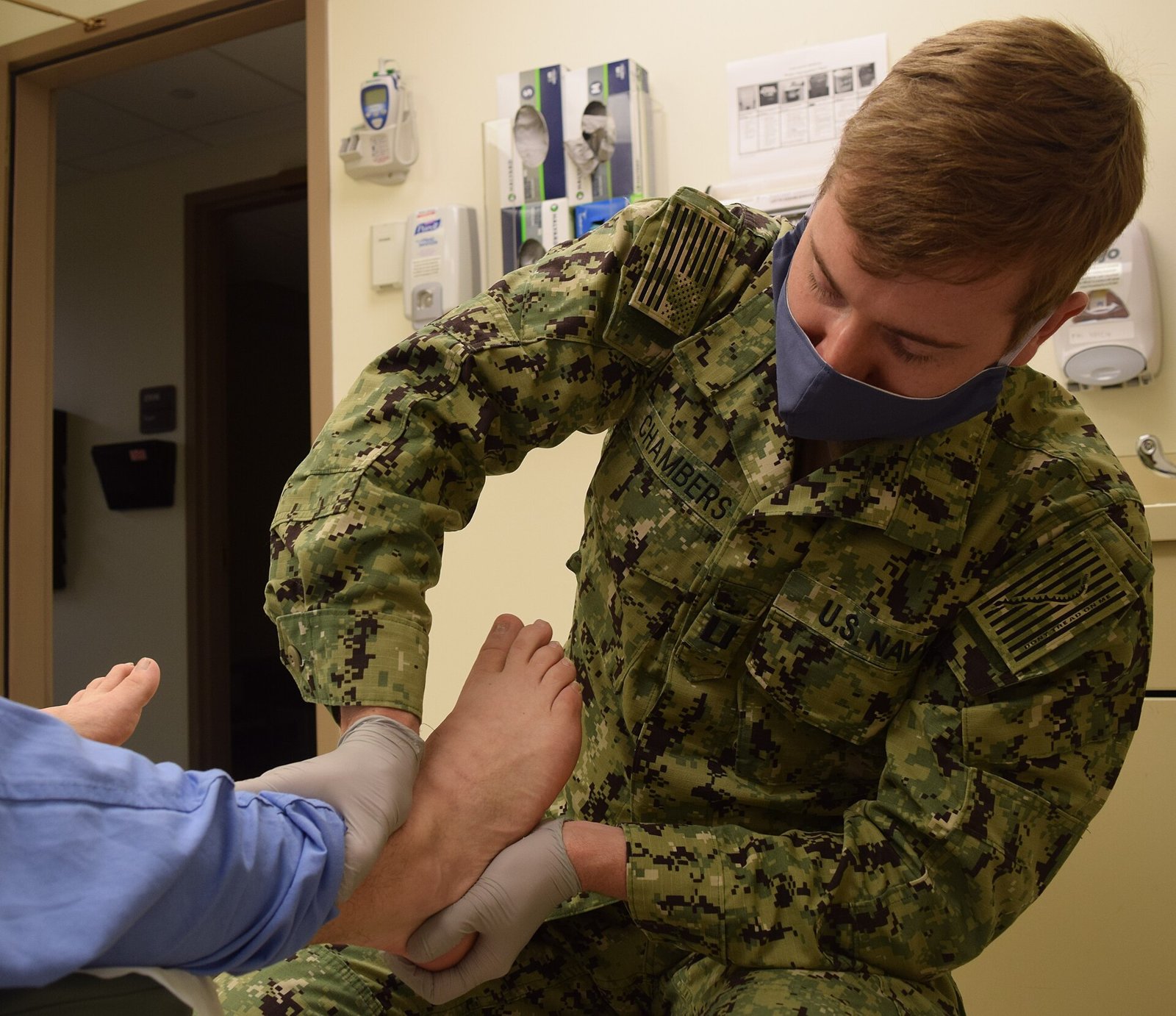
People with diabetes get the most help. Medicare’s diabetes guide says Part B covers one foot exam every six months by a podiatrist or other foot care specialist if you have diabetic peripheral neuropathy with loss of protective sensation, as long as you haven’t seen a foot care professional for another reason in between. More frequent visits may be covered after a non-traumatic amputation or if your feet change in a way that signals serious disease (Medicare & Your Diabetes Supplies, CMS Product 11022).
Therapeutic shoes and inserts
If you have diabetes and severe diabetic foot disease, Part B covers each calendar year either one pair of custom-molded shoes plus two extra pairs of inserts, or one pair of extra-depth shoes plus three pairs of inserts (Medicare.gov therapeutic shoes). The doctor treating your diabetes must certify the need, and a podiatrist or other qualified doctor must order them. Buy from a Medicare-enrolled supplier that accepts assignment, or you could be charged more than the approved amount. My neuropathy shoe guide explains what to look for.
For meters, strips and other supplies, see my guide to Medicare diabetic supplies.
What you’ll pay in 2026
- Part B deductible: $283 for the year (Medicare.gov costs)
- Coinsurance: usually 20% of the approved amount for covered visits, procedures, shoes and inserts
- Routine care that isn’t covered: 100%
A Medigap policy pays most or all of that 20%. My Medigap comparison shows which plans cover what.
Medicare Advantage plans must cover everything Original Medicare does, and some add a limited routine podiatry benefit, such as a set number of visits a year. Check your plan’s Evidence of Coverage, the network, and whether you need a referral. Open Enrollment runs October 15 to December 7, so this is the time to compare if foot care matters to you.
How to avoid a surprise bill
- Tell the office why you’re coming in. “My toenail is thick and painful when I walk” is a different visit from “I’d like my nails trimmed.”
- Make sure your diagnoses are on record. If you have diabetes, neuropathy or poor circulation, make sure the doctor managing it is named and that you’ve seen them recently.
- Ask about cost before routine care. If the office expects Medicare not to pay, staff may ask you to sign an Advance Beneficiary Notice (ABN). Ask what you’ll owe before you agree.
- Check the claim. Your Medicare Summary Notice shows what was billed and paid. If a covered service was denied, you can appeal.
For bunion care specifically, see my bunions guide.
Common questions
Does Medicare cover podiatrist visits?
Yes, when the visit is medically necessary to diagnose or treat a foot injury or disease. You pay 20% of the approved amount after the Part B deductible ($283 in 2026).
Does Medicare pay for toenail trimming?
Usually not. Routine nail trimming is excluded unless a systemic condition such as diabetes or poor circulation makes it risky, with documented findings, or you have painful fungal nails that meet Medicare’s rules.
How often does Medicare cover a diabetic foot exam?
Once every six months if you have diabetic peripheral neuropathy with loss of protective sensation and haven’t seen a foot care professional for another reason in between.
Does Medicare cover orthotics or special shoes?
Most orthopedic shoes and flat-foot devices aren’t covered. People with diabetes and severe diabetic foot disease can get therapeutic shoes and inserts each year under Part B.
Do Medicare Advantage plans cover routine foot care?
Some do, often with limits on the number of visits. Check the plan’s Evidence of Coverage and network before you enroll.
Written by Khasim Basha Shaik. I research and compare Medicare coverage rules for readers. I’m not a licensed insurance agent, podiatrist or medical professional. This article summarizes Medicare.gov and CMS materials and isn’t medical or legal advice. Last reviewed October 14, 2026.