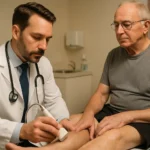

Edema in seniors — the medical word for swelling caused by excess fluid trapped in body tissues — is one of the most common complaints I hear in older adults, and one of the most misunderstood. Puffy ankles at the end of a hot day are usually harmless. But swelling that is new, one-sided, painful, or climbing up the leg can be the first visible sign of heart failure, a blood clot, kidney disease, or a medication side effect. Knowing how to read your own swelling is one of the most useful skills a senior can have. This guide explains exactly why legs and feet swell after 65, how doctors grade it, and the warning signs that mean you should call your clinician today.
Table of Contents
- What Edema Is and Why It Happens More After 65
- The 6 Most Common Causes of Edema in Seniors
- Medications That Cause Swelling
- Pitting vs. Non-Pitting: How Doctors Grade Swelling
- Red Flags: When Swelling Is an Emergency
- Treatment: What Actually Reduces Swelling
- Medicare and Compression Coverage in 2026
- Frequently Asked Questions
What Edema Is and Why It Happens More After 65
Edema occurs when fluid leaks out of small blood vessels (capillaries) and collects in the surrounding tissue faster than the body can drain it back through the veins and lymphatic system. In a younger body, vein valves and the calf-muscle pump push fluid efficiently back toward the heart. With age, three things change: vein valves weaken, the calf pump becomes less forceful as we sit more, and the kidneys and heart handle salt and water less efficiently. The result is that gravity wins, and fluid pools in the lowest part of the body — the ankles and feet when upright, or the lower back (sacrum) in someone confined to bed.
Edema in seniors is therefore not a disease itself but a signal. The clinical task is always to identify whether the cause is local (a problem in the leg) or systemic (a problem in the heart, kidneys, or liver). That single distinction — local versus systemic, one leg versus both — drives nearly every decision your doctor will make.
The 6 Most Common Causes of Edema in Seniors
1. Chronic Venous Insufficiency
This is the single most common cause of chronic leg swelling in older adults, affecting an estimated 1 in 3 people over 70. Damaged vein valves let blood flow backward and pool, producing bilateral swelling, brownish skin staining (hemosiderin deposits) around the ankles, and over time, venous skin ulcers. It is usually worse at the end of the day and better after a night with the legs flat.
2. Heart Failure
When the heart cannot pump forcefully enough, pressure backs up into the veins and forces fluid into the tissues. Heart-failure edema is classically bilateral (both legs), pitting, and accompanied by shortness of breath when lying flat, waking at night gasping, rapid weight gain (2–3 pounds in a day), and fatigue. Any senior with new bilateral swelling plus breathlessness needs prompt evaluation — see our guide to heart failure warning signs in seniors.
3. Kidney Disease
Failing kidneys retain sodium and water and may lose protein into the urine, dropping blood albumin and allowing fluid to escape vessels. Kidney-related edema often appears around the eyes in the morning as well as in the legs. If you have been told your kidney function (eGFR) is reduced, swelling deserves a same-week call — review our chronic kidney disease guide.
4. Deep Vein Thrombosis (DVT)
A blood clot in a deep leg vein causes sudden, one-sided swelling, often with warmth, redness, and calf pain. This is a medical emergency because the clot can travel to the lungs (pulmonary embolism). Unilateral swelling is the cardinal warning that separates a benign cause from a dangerous one — read blood clots and DVT warning signs and seek care the same day.
5. Lymphedema
Damage to or removal of lymph nodes (often after cancer treatment) blocks lymph drainage, producing firm, non-pitting swelling that frequently involves the toes (a positive “Stemmer sign,” when you cannot pinch a fold of skin at the base of the second toe).
6. Poor Circulation and Inactivity
Prolonged sitting, long flights, or reduced mobility lets fluid stagnate. This overlaps with arterial disease; if you also have leg cramping when walking or cold feet, see warning signs of poor circulation and our peripheral artery disease guide.
Medications That Cause Swelling
Drug-induced edema is enormously common and frequently overlooked. Before assuming the worst, review this list with your pharmacist — the culprit is often a pill, not your heart.
| Medication class | Common examples | Why it swells |
|---|---|---|
| Calcium channel blockers | Amlodipine, nifedipine | Dilate small arteries, raising capillary pressure |
| NSAIDs | Ibuprofen, naproxen | Cause sodium and water retention |
| Gabapentin / pregabalin | Neurontin, Lyrica | Peripheral edema in 5–10% of users |
| Thiazolidinediones | Pioglitazone (Actos) | Fluid retention; can worsen heart failure |
| Steroids | Prednisone | Salt and water retention |
| Some antidepressants | Certain SSRIs, trazodone | Less common, dose-related |
Important: never stop a prescribed medication on your own. Amlodipine-related ankle swelling, for example, is harmless but bothersome and can often be reduced by switching agents or adding an ACE inhibitor — a conversation for your doctor.
Pitting vs. Non-Pitting: How Doctors Grade Swelling
Press a fingertip firmly into the swollen area for about 5 seconds. If it leaves a dent that slowly fills back in, that is pitting edema, typical of heart, kidney, venous, and medication causes. If the tissue is firm and springs back, that is non-pitting edema, pointing toward lymphedema or thyroid disease. Clinicians grade pitting depth from 1+ (slight, rebounds immediately) to 4+ (deep dent lasting more than 20 seconds).
Red Flags: When Swelling Is an Emergency
Call 911 or go to the emergency room if swelling comes with any of the following:
- Sudden swelling in one leg with pain, warmth, or redness (possible DVT)
- Shortness of breath, chest pain, or coughing up blood (possible pulmonary embolism or acute heart failure)
- Swelling after a new medication with hives, lip or tongue swelling (allergic reaction)
- A swollen leg that is hot and tender with fever (possible cellulitis)
- Rapid weight gain of more than 2–3 pounds in 24 hours if you have heart failure
Treatment: What Actually Reduces Swelling
Treatment depends entirely on the cause, but several evidence-based measures help most seniors with chronic, non-emergency edema:
- Leg elevation: Raise the legs above the level of the heart for 30 minutes, three to four times daily. Gravity does the work.
- Graduated compression stockings: 20–30 mmHg knee-high stockings are first-line for venous insufficiency and lymphedema. They must be put on first thing in the morning before swelling builds. Avoid them if you have significant arterial disease — check with your doctor first.
- Movement and calf pumps: Ankle circles and standing heel raises activate the calf-muscle pump. On long trips, stand and walk every hour.
- Sodium reduction: Keeping dietary sodium under about 2,000 mg daily reduces fluid retention, especially in heart and kidney disease.
- Diuretics (“water pills”): Useful for heart and kidney edema but inappropriate and even harmful for pure venous insufficiency or lymphedema. They require monitoring of potassium and kidney function.
- Skin care: Keep swollen skin moisturized and inspect daily for cracks; swollen legs are prone to infection.
Medicare and Compression Coverage in 2026
Here is news many seniors miss: since the Lymphedema Treatment Act took effect January 1, 2024, Medicare Part B covers standard and custom compression garments and bandaging supplies for people with a diagnosis of lymphedema. After your annual Part B deductible, you pay 20% of the Medicare-approved amount. Compression stockings prescribed for venous insufficiency alone are generally not covered, but the lymphedema benefit is a meaningful expansion. Office visits, vascular ultrasound to rule out a clot, and treatment of the underlying heart or kidney condition are all covered under standard Part B and Part A rules.
Frequently Asked Questions
Is leg swelling in seniors always serious?
No. Mild, end-of-day swelling in both ankles after standing or in hot weather is usually harmless. Swelling becomes concerning when it is sudden, in one leg only, painful, accompanied by shortness of breath, or paired with rapid weight gain.
Why are my ankles swollen but only one is painful?
One-sided swelling with pain, warmth, or redness raises concern for a deep vein thrombosis (blood clot) or skin infection (cellulitis). Both need same-day medical evaluation rather than waiting to see if it improves.
Can drinking more water reduce edema?
Counterintuitively, mild dehydration can make the body hold onto fluid, so staying adequately hydrated while reducing salt often helps more than restricting fluids. Do not restrict fluids without medical advice, especially if you take diuretics.
Does Medicare cover compression stockings for swelling?
Medicare Part B now covers compression garments for a diagnosed lymphedema condition (since January 2024), with you paying 20% after the deductible. Stockings for venous insufficiency without lymphedema are generally not covered.
Related Articles You May Find Helpful
- Senior Health Conditions Guide 2026 (Complete Resource)
- Blood Clots & DVT in Seniors 2026: Warning Signs
- Heart Failure in Seniors 2026: Warning Signs & Treatments
- Chronic Kidney Disease in Seniors 2026
- Warning Signs of Poor Circulation in Seniors
Sources
- National Institutes of Health (MedlinePlus) — Edema and Leg Swelling
- Centers for Medicare & Medicaid Services — Lymphedema Compression Treatment Items (effective January 1, 2024)
- American Heart Association — Heart Failure Signs and Symptoms
This article is educational and not a substitute for professional medical advice. See our Medical Disclaimer and Editorial Guidelines. Always consult your physician about new or worsening swelling.